Dog myths, checked
Dogs: what does the science actually say?
Raised bowls, dog years, the “guilty look.” Short answers to the things everyone says about dogs, each one checked against veterinary guidance and published research.

Anatomy & Body
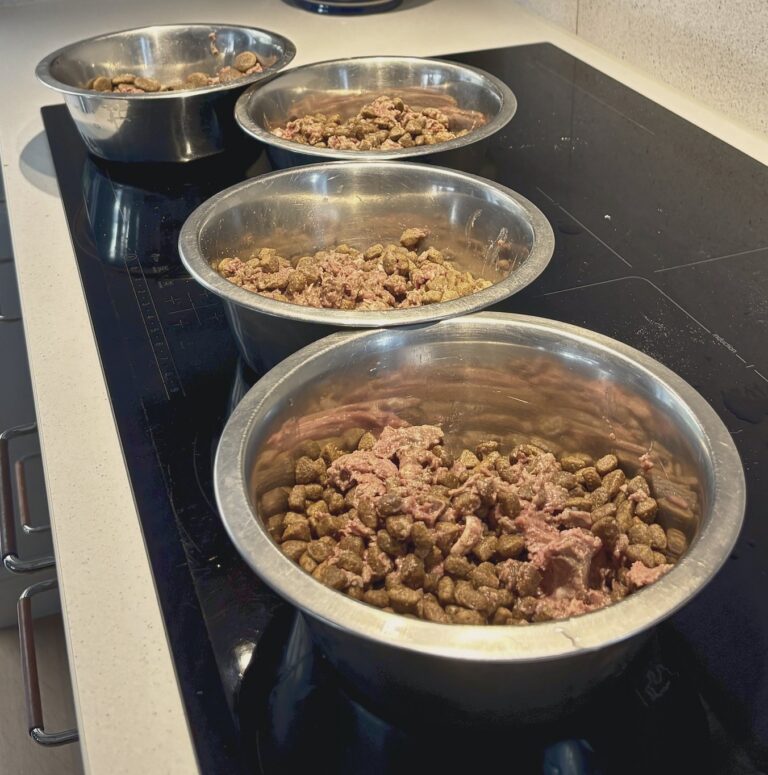
Do big dogs need a raised food bowl?
Myth
Evidence SOME STUDIES Three observational studies, mixed results
Raised bowls were linked to MORE bloat, not less.
Three studies have looked at bowl height. None found that raising it lowers the risk. Floor level is fine unless your vet says otherwise.
See sources (6)
Glickman et al. 2000 (JAVMA): non-dietary risk factors for GDV · Raghavan et al. 2004 (JAAHA): diet-related risk factors for GDV · Pipan et al. 2012 (JAVMA): internet survey of GDV risk factors · Buckley 2017 (Veterinary Evidence): raised bowls and GDV · Merck Veterinary Manual: Gastric dilation and volvulus · German & Zentek, Encyclopedia of Canine Clinical Nutrition (IVIS): GDV
Dog’s Needs
Is raw meat what a dog’s body is built to eat?
It’s complicated
Evidence GOOD Contamination studies, AVMA review
Dogs aren’t wolves, and raw meat’s main risk is bacteria.
Most dogs carry extra copies of a starch-digesting gene, gained as they lived alongside early farmers. Raw diets can carry Salmonella and Listeria, for the dog and for people at home.
See sources (6)
Axelsson et al. 2013 (Nature): dog domestication and starch · Arendt et al. 2016 (Heredity): AMY2B copies follow prehistoric farming · Ollivier et al. 2016 (Royal Society Open Science): AMY2B in ancient dogs · Freeman et al. 2013 (JAVMA): risks and benefits of raw meat-based diets · van Bree et al. 2018 (Veterinary Record): pathogens in 35 raw diets · AVMA policy: Raw or undercooked animal-source protein in pet diets

Training
Do dogs need punishment to learn?
Myth
Evidence GOOD Observational studies, two reviews, AVSAB
Rewards work. Harsh methods add stress, not results.
Veterinary behaviorists recommend reward-based training for everything. Studies link punishment to stress and more behavior problems, with no evidence it works better.
See sources (5)
AVSAB: Humane Dog Training position statement (2021) · Ziv 2017 (J Vet Behav): review of aversive training, 17 studies · Guilherme Fernandes et al. 2017 (Appl Anim Behav Sci): literature review · Vieira de Castro et al. 2020 (PLoS ONE): 92 dogs, 7 training schools · Herron, Shofer & Reisner 2009 (Appl Anim Behav Sci): confrontational methods

Training
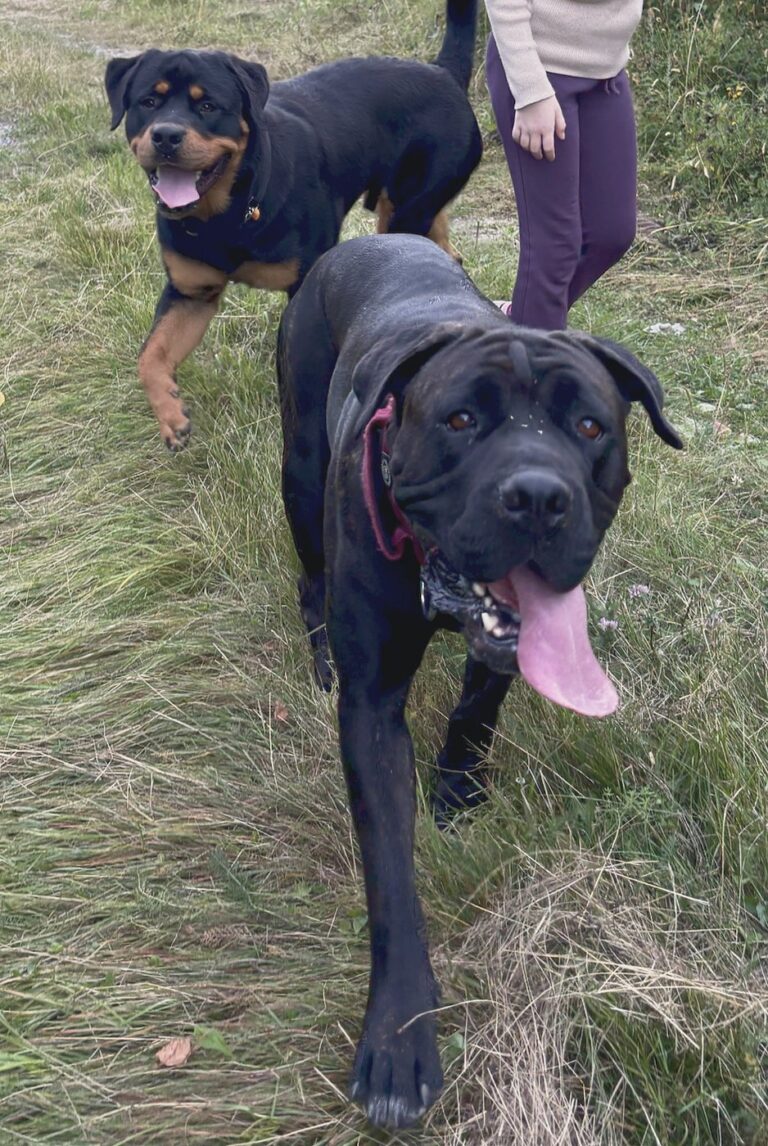
You can’t teach an old dog new tricks?
Myth
Evidence SOME STUDIES A handful of studies, mostly two breeds
Old dogs learn. They just need more repetitions.
In 95 Border collies, older dogs remembered just as well six months later, and reasoning by exclusion even improved with age, though few dogs of any age mastered it.
See sources (6)
Wallis et al. 2016 (AGE): 95 Border collies, learning, reasoning, memory · Wallis et al. 2014 (Frontiers in Psychology): attention across the lifespan · Chapagain et al. 2017 (Front Aging Neurosci): lifelong training protects attention · Milgram et al. 2005 (Neurobiology of Aging): enrichment preserves learning in aged dogs · Tapp et al. 2003 (Learning & Memory): age and reversal learning · Piotti et al. 2018 (Learning & Behavior): 107 family dogs
Related: The senior breeding dog: aging, health checks and quality of life
Dog Psychology
Do you need to be your dog’s “alpha”?
Myth
Evidence GOOD AVSAB review of the research
Dominance is a relationship, not a personality.
Most “dominant” behavior is better explained by learning, fear or excitement. Veterinary behaviorists warn that “alpha” handling can increase fear and aggression.
See sources (7)
AVSAB: Dominance theory position statement · Bradshaw, Blackwell & Casey 2009 (J Vet Behav): dominance in domestic dogs · Bradshaw, Blackwell & Casey 2016 (J Vet Behav): response to Schilder et al. · Mech 1999 (Canadian Journal of Zoology): alpha status in wild wolf packs · Herron, Shofer & Reisner 2009 (Appl Anim Behav Sci): ‘alpha roll’ and aggression · Schilder, Vinke & van der Borg 2014 (J Vet Behav): the opposing view · van der Borg et al. 2015 (PLoS ONE): dominance signals between dogs

Dog Psychology
Does your dog know it did something wrong?
Myth
Evidence SOME STUDIES Three small experiments
The “guilty look” is a reaction to you.
In an experiment, dogs looked guiltiest when owners scolded, even when they had done nothing wrong. Scolding afterward doesn’t teach the lesson.
See sources (5)
Horowitz 2009 (Behavioural Processes): the ‘guilty look’ · Hecht, Miklósi & Gácsi 2012 (Appl Anim Behav Sci): guilt behaviors (author summary) · Ostojić, Tkalčić & Clayton 2015 (Behavioural Processes): 96 dogs · Herron, Shofer & Reisner 2009 (Appl Anim Behav Sci): scolding and aggression · Morris, Doe & Godsell 2008 (Cognition & Emotion): owners report guilt, the opposing view

Dog Psychology
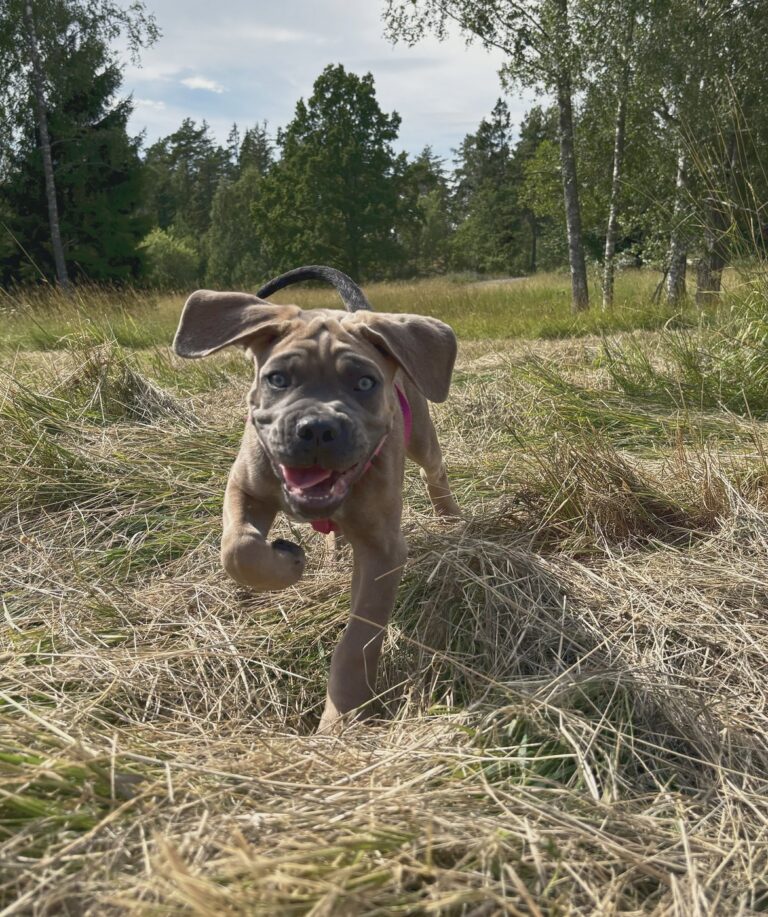
Does comforting a scared dog make the fear worse?
Myth
Evidence EXPERT CONSENSUS Expert opinion, a few small vet-visit studies
You can’t reward fear. Calm comfort is fine.
Fear is an emotion, not a trick. In one trial, petting and talking lowered dogs’ heart rate during a vet exam.
See sources (6)
Csoltova et al. 2017 (Physiology & Behavior): owner contact during vet exam · Stellato et al. 2020 (JAVMA): owner presence and fear at the vet · Helsly et al. 2022: dog and owner behaviour in vet consultations, Part II · dvm360: Comforting your pet (Dr. Sara Bennett, DACVB) · Tufts Your Dog: It’s okay to comfort your dog · Fear Free (reviewed by a DACVB): comforting a fearful pet
Dog Psychology
Does a wagging tail mean a happy dog?
Partly true
Evidence SOME STUDIES Small studies, mixed results
A wag means arousal, not always happiness.
In one study dogs wagged more to the right toward their owner and more to the left toward an intimidating dog. Read the whole body.
See sources (5)
Quaranta, Siniscalchi & Vallortigara 2007 (Current Biology) · Siniscalchi et al. 2013 (Current Biology): dogs read left vs right wags · Leonetti et al. 2024 (Biology Letters): why dogs wag their tails, review · Leaver & Reimchen 2008 (Behaviour): robotic dog, 492 dogs · University of Victoria 2011 (Laterality): asymmetric wags on a robotic dog

Anatomy & Body
Is one dog year seven human years?
Myth
Evidence SOME STUDIES A few studies, different methods
Dogs age fast at first, then slow down.
In a DNA study of Labradors, a one-year-old dog matched a human of about 30. Times seven doesn’t fit.
See sources (5)
Wang et al. 2020 (Cell Systems): epigenetic clock in Labradors · Patronek, Waters & Glickman 1997 (J Gerontol): 23,535 dogs · Kraus, Pavard & Promislow 2013 (American Naturalist): why large dogs die young · Creevy et al. 2019 (JAAHA): AAHA Canine Life Stage Guidelines · AVMA: Pets age faster than people (poster)
Anatomy & Body
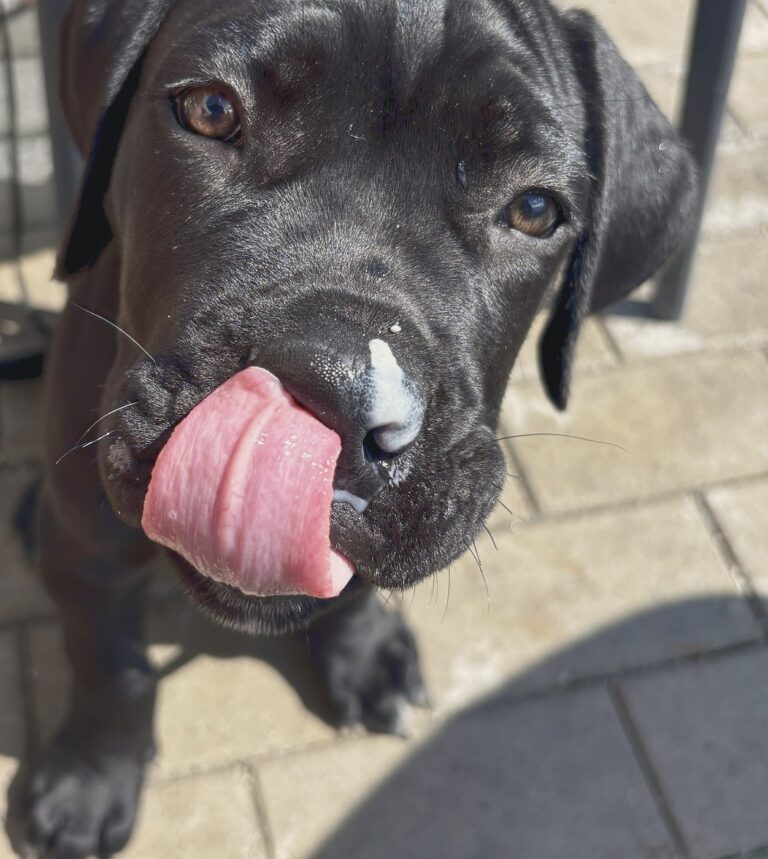
Does a warm, dry nose mean your dog is sick?
Myth
Evidence EXPERT CONSENSUS Veterinary expert opinion, no direct studies
A dry nose tells you almost nothing.
A dog’s nose changes through the day, and sick dogs can have wet noses. Appetite, energy and behavior tell you far more.
See sources (5)
Tufts Your Dog: Does a warm, dry nose indicate illness? · University of Melbourne (U-Vet): Does a wet nose mean a healthy dog? · Texas A&M Vet Med: Truths and myths of canine nasal health · Kröger & Goiricelaya 2017 (J Thermal Biology): dog nose temperature dynamics · Bálint et al. 2020 (Scientific Reports): the cold nose senses heat
Related: When to call the vet: warning signs in a young puppy

Anatomy & Body
Do dogs only see in black and white?
Myth
Evidence STRONG Consistent vision studies since 1989
Dogs see color, mostly blues and yellows.
They have two kinds of color cones, not three. Reds and greens look grayish or brownish, much like red-green color blindness.
See sources (6)
Neitz, Geist & Jacobs 1989 (Visual Neuroscience) · Jacobs et al. 1993 (Visual Neuroscience): photopigments of dogs and foxes · Miller & Murphy 1995 (JAVMA): Vision in dogs · Kasparson, Badridze & Maximov 2013 (Proc R Soc B) · Siniscalchi et al. 2017 (Royal Society Open Science) · Byosiere et al. 2018 (Psychonomic Bulletin & Review)
Related: Enrichment and environmental design

Dog’s Needs
Should puppies stay off the stairs?
Partly true
Evidence SOME STUDIES One stairs study; others on weight and diet
Early stairs were linked to more hip dysplasia.
In a study of four large breeds, stairs before three months raised the risk. Off-leash play on soft, uneven ground lowered it.
See sources (7)
Krontveit et al. 2012 (Am J Vet Res) · Krontveit et al. 2010 (Prev Vet Med): growth and HD cohort · Sallander, Hedhammar & Trogen 2006 (J Nutr) · Smith et al. 2006 (JAVMA): lifelong diet restriction · Fries & Remedios 1995 (Can Vet J) review · Veterinary Ireland Journal: Exercising pups, myths vs science · AKC: Genetics of hip dysplasia, a guide for breeders
Dog’s Needs
Is grain-free food healthier?
It’s complicated
Evidence SOME STUDIES Mixed studies, no proven cause
No good evidence grain-free is healthier.
The FDA investigated heart disease (DCM) in dogs on diets high in peas and lentils. By its last update in 2022, no cause had been established.
See sources (7)
U.S. FDA: Investigation into diet and canine DCM (update Dec 2022) · Freid et al. 2021 (J Vet Intern Med): retrospective, 71 dogs · Freeman et al. 2022 (J Vet Intern Med): prospective, 76 dogs · Smith et al. 2021 (Scientific Reports): foodomics of DCM-linked diets · Quilliam et al. 2023 (PLoS ONE): 28-day pulse vs grain trial · Morris et al. 2025 (J Anim Sci): 18-month randomized trial, 60 dogs · McCauley et al. 2020 (J Anim Sci): review of 150+ studies

Breeding & Health
Should a female have one litter before she’s spayed?
Myth
Evidence EXPERT CONSENSUS Expert consensus, few direct studies
A litter brings no proven health benefit.
Veterinary groups find no evidence that it helps. In a Swedish study of 196,000 insured females, 2% had a claim for a difficult birth.
See sources (7)
Veterinary Ireland & ISPCA: Spay Aware Q&A · British Veterinary Association: Neutering policy (2019) · Bergström et al. 2006 (Veterinary Surgery): dystocia in 195,931 bitches · Beauvais, Cardwell & Brodbelt 2012 (J Small Anim Pract): systematic review, neutering and mammary tumours · Niskanen & Thrusfield 1998 (Veterinary Record): pyometra and parity in 11,613 dogs · Blue Cross: Neutering myths debunked · BC SPCA: Should my pet have a litter before being spayed?
Related: Spaying and neutering after a breeding career: timing and evidence
Breeding & Health
Are mixed breeds always healthier?
Myth
Evidence GOOD Four large studies, 100,000+ dogs
Mixed breeds aren’t automatically healthier.
In 27,254 dogs, 13 of 24 inherited conditions were just as common in mixed breeds. Health-tested parents matter more than the label.
See sources (5)
Bellumori et al. 2013 (JAVMA): 27,254 cases · Oberbauer et al. 2015 (Canine Genetics and Epidemiology) · Donner et al. 2018 (PLoS Genetics): 100,000+ dogs · Forsyth et al. 2023 (Front Vet Sci): Dog Aging Project, 27,541 dogs · O’Neill et al. 2013 (Veterinary Journal): longevity, 102,609 dogs
Related: DNA tests and genetic disease: what they can and can’t tell you

Breeding & Health
Does a female’s temperature always drop before she whelps?
Partly true
Evidence GOOD Several clinical studies, mixed accuracy
Often, but not always, and not on cue.
Most females drop to about 37 °C (98.8 °F) 8–24 hours before labor. In one study the drop missed up to nearly half of births.
See sources (7)
MSD Veterinary Manual: Whelping and queening (Davidson, June 2025) · Tsutsui & Murata 1982 (Jpn J Vet Sci): body temperature before parturition in 45 bitches · Veronesi et al. 2002 (J Vet Med A): body temperature and hormones in the periparturient bitch · Geiser et al. 2014 (Reprod Domest Anim): vaginal temperature to predict whelping · De Cramer & Nöthling 2018 (Theriogenology): predicting parturition, temperature not reliable alone · Nöthling, Joonè & De Cramer 2022 (Reprod Domest Anim): progesterone and PGFM to predict whelping · dvm360 proceedings: Problems of pregnancy and parturition
Related: Signs that whelping is near

Breeding & Health
Does extra calcium during pregnancy prevent eclampsia?
Myth
Evidence EXPERT CONSENSUS Veterinary consensus and physiology, few trials
It can make eclampsia more likely.
Extra calcium in pregnancy can switch off the body’s own calcium control. Feed a balanced puppy diet instead and ask your vet about calcium at whelping.
See sources (5)
MSD Veterinary Manual: Eclampsia in dogs and cats (Hall 2022) · Root Kustritz 2008 (dvm360): Do not institute calcium supplementation during canine pregnancy · Davidson 2012 (Topics in Companion Animal Medicine): reproductive causes of hypocalcemia · SAVA VetNews (March 2023): Feeding for pregnancy and lactation · PetMD (vet-written): Eclampsia in dogs
Related: Postpartum complications: mastitis, metritis and eclampsia

Breeding & Health
Are puppies ready for new homes at six weeks?
Myth
Evidence SOME STUDIES A few studies, plus law and guidelines
Eight weeks is the minimum for a reason.
Puppies separated at 30–40 days showed more problem behaviors later. Sweden, the UK and the EU proposal all set 8 weeks.
See sources (7)
Pierantoni, Albertini & Pirrone 2011 (Veterinary Record): early separation and behavior in 140 dogs · Slabbert & Rasa 1993 (J S Afr Vet Assoc): effects of early separation · Jokinen et al. 2017 (Appl Anim Behav Sci): age at homing and later behavior · UK Animal Welfare (Licensing of Activities Involving Animals) Regulations 2018 · Jordbruksverket SJVFS 2020:8, ch. 6 § 7: puppies stay with the mother until 8 weeks · Svenska Kennelklubben: Basic rules for breeders, 2:6 (8 weeks) · EU proposal on the welfare of dogs and cats (Council doc. 16406/2023)

Breeding & Health
Does a big litter mean the mother is healthy?
Myth
Evidence GOOD Large registry study, several clinical studies
Litter size mostly reflects breed size.
In 10,810 litters, average size ran from 3.5 in miniature breeds to 7.1 in giant breeds. Very large litters bring more small puppies and birth problems.
See sources (6)
Borge, Tønnessen, Nødtvedt & Indrebø 2011 (Theriogenology): litter size in 10,810 litters · Mila et al. 2015 (J Anim Sci): low birth weight and neonatal mortality · MSD Veterinary Manual: Eclampsia in dogs and cats (Hall 2022) · Egloff et al. 2020 (Theriogenology): risk factors for uterine inertia · dvm360 proceedings: Problems of pregnancy and parturition (large litters overstretch the uterus) · Linde Forsberg & Persson 2007 (Acta Vet Scand): dystocia survey

Breeding & Health
Must newborn puppies nurse within the first day?
True
Evidence GOOD Several studies on colostrum and survival
The sooner, the better.
The gut starts closing to antibodies 4–8 hours after birth. Puppies with low antibody levels had 44% mortality versus 5%.
See sources (5)
Chastant-Maillard et al. 2012 (Reprod Domest Anim): timing of colostrum intake in puppies · Mila et al. 2014 (Prev Vet Med): passive immune transfer and puppy mortality · Chastant & Mila 2019 (Anim Reprod Sci): update on the canine neonate · Mila et al. 2015 (J Anim Sci): birth weight, colostrum and neonatal mortality · EU proposal on the welfare of dogs and cats (Council doc. 16406/2023)
Related: Colostrum and passive immunity
Anatomy & Body
Do dogs only cool down by panting?
Partly true
Evidence GOOD Physiology studies since the 1970s
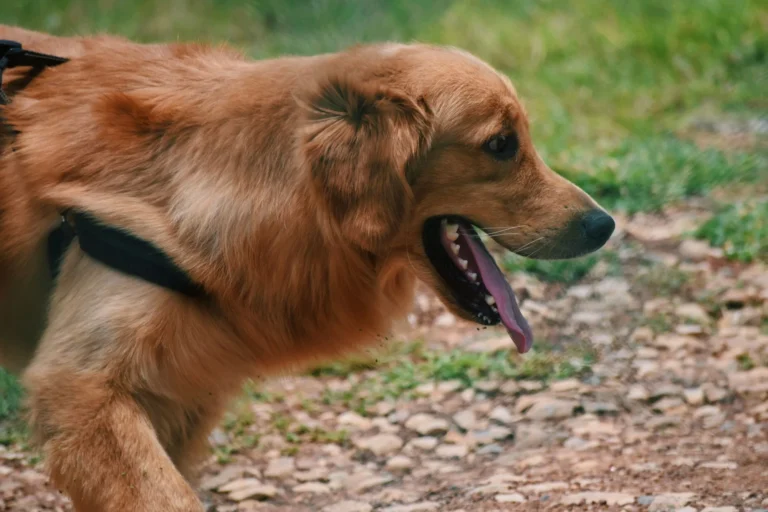
Panting does most of the work.
Dogs do sweat, but only through their paw pads and nose. Panting moves air over the moist tongue and airways, and that is the main way they lose heat.
See sources (5)
Goldberg, Langman & Taylor 1981 (Respiration Physiology): panting in dogs, paths of air flow in heat and exercise · Schmidt-Nielsen, Bretz & Taylor 1970 (Science): panting in dogs, unidirectional air flow over evaporative surfaces · Carrier, Seeman & Hoffmann 2011 (J Am Assoc Lab Anim Sci): hyperhidrosis in beagles; eccrine sweat glands only in footpads and nose · dvm360 (2006): Hot times, hot dog, heat illness and respiratory heat loss in dogs · Live Science: Do dogs sweat? (interview with veterinarian Catherine Carrier)
Related: Heatstroke: protecting breeding dogs, litters and dogs on the move
Anatomy & Body
Is a dog’s mouth cleaner than a human’s?
Myth
Evidence GOOD DNA studies of mouth bacteria in dogs and people
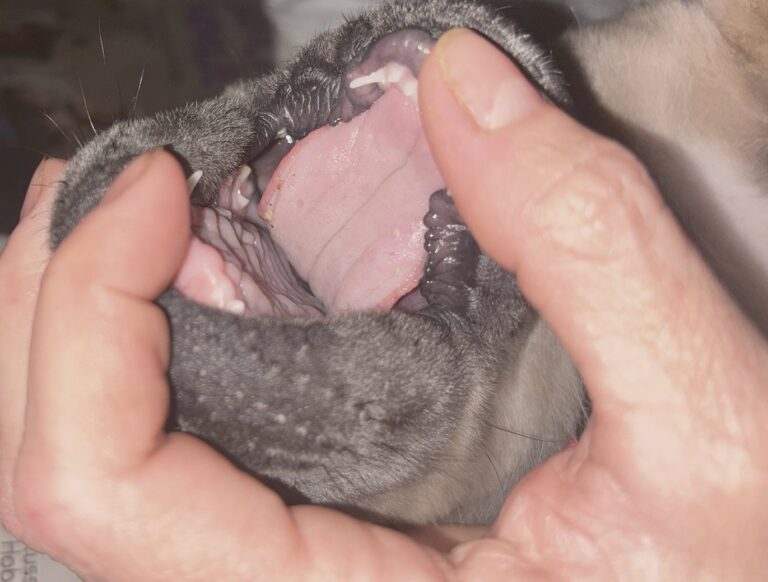
Not cleaner, just different.
A DNA study found hundreds of bacteria types in dog mouths, and only 16% are shared with humans. Some dog mouth bacteria can infect people through bites.
See sources (5)
Dewhirst et al. 2012 (PLoS One): The canine oral microbiome, 353 taxa, 16.4% shared with humans · Davis et al. 2013 (PLoS One): bacterial species in plaque from client-owned dogs · Yamasaki et al. 2012 (Archives of Oral Biology): periodontal bacteria in dogs and their owners · CDC: About Capnocytophaga (bacteria in dog and cat saliva) · American Kennel Club: Is a dog’s mouth cleaner than a human’s? (Prof. Colin Harvey, Penn Vet)
Related: Dental care from puppy to senior: brushing, chews and vet cleanings

Dog Psychology
Do dogs eat grass because they feel sick?
Myth
Evidence SOME STUDIES Large owner surveys, one controlled study
Most grass-eating dogs aren’t sick.
In a survey of 1,571 owners, only 9% of dogs often seemed ill before eating plants and 22% often vomited after. Grass eating looks like normal dog behavior.
See sources (5)
Sueda, Hart & Cliff 2008 (Applied Animal Behaviour Science): characterisation of plant eating in dogs, 1,571 dogs · Hart 2008 (dvm360/Veterinary Medicine): Why do dogs and cats eat grass? · Bjone, Brown & Price 2007 (Recent Advances in Animal Nutrition in Australia): grass eating patterns in 12 dogs · Bjone: Grass-eating behaviour in the domestic dog (PhD thesis, University of New England) · Bosch, Hagen-Plantinga & Hendriks 2015 (British Journal of Nutrition): diets of wild wolves, including plant material in scats
Related: Pica and unusual eating in breeding dogs, including during pregnancy

Anatomy & Body
Can dogs get sunburned?
Myth
Evidence GOOD Long-term studies and veterinary dermatology
Pink, thinly haired skin can burn.
In a study of 991 beagles living outdoors, 37% developed sun damage on the belly. Repeated burns can lead to skin cancer.
See sources (6)
Nikula et al. 1992 (Radiation Research): ultraviolet radiation, solar dermatosis and skin tumors in 991 beagles · Hargis, Thomassen & Phemister 1977 (Veterinary Pathology): chronic dermatosis and squamous cell carcinoma in beagles · VCA Animal Hospitals: Solar dermatitis in dogs · University of Veterinary Medicine Vienna (via ScienceDaily, 2014): sunburn in dogs and cats · BSAVA Manual of Canine and Feline Dermatology: solar-induced dermatitis and neoplasia · Kansas State Veterinary Diagnostic Laboratory (2018): canine solar dermatitis

Dog’s Needs
Is a little chocolate harmless for dogs?
It’s complicated
Evidence GOOD Toxicology data and case series
It depends on the chocolate and the dog.
In 156 dogs that ate chocolate, most had no signs. Most of those that got sick had eaten dark chocolate, which is far richer in theobromine.
See sources (5)
MSD Veterinary Manual: Chocolate toxicosis in animals (Hayes, reviewed 2024) · Weingart, Hartmann & Kohn 2021 (J Small Anim Pract): chocolate ingestion in dogs, 156 events · Noble et al. 2017 (Veterinary Record): heightened risk of canine chocolate exposure at Christmas and Easter · Cortinovis & Caloni 2016 (Frontiers in Veterinary Science): household food items toxic to dogs and cats · BSAVA: Chocolate ingestion in dogs (summary of the JSAP study)
Related: Poisoning risks in the kennel and home: what dogs and puppies actually swallow

Dog’s Needs
Does wheat in dog food cause allergies?
Partly true
Evidence GOOD Systematic reviews of food challenge trials
Possible, but wheat is rarely the culprit.
In 297 dogs with a proven food allergy, 13% reacted to wheat. Beef, dairy and chicken were more common. Food allergy itself is uncommon in dogs.
See sources (7)
Mueller, Olivry & Prélaud 2016 (BMC Veterinary Research): common food allergen sources in dogs and cats, 297 dogs · Olivry & Mueller 2017 (BMC Veterinary Research): prevalence of cutaneous adverse food reactions in dogs and cats · Olivry & Mueller 2019 (BMC Veterinary Research): signalment and cutaneous signs of dogs with food allergy · Olivry & Mueller 2018 (BMC Veterinary Research): discrepancies between ingredients and labels in commercial pet foods · Tufts Petfoodology: What every pet owner should know about food allergies · Tufts Petfoodology: Grain-free diets, big on marketing, small on truth · Gulf Coast Veterinary Specialists (board-certified dermatologists): food allergy myths in dogs and cats
Related: Food allergies in dogs: signs and the elimination diet

Dog’s Needs
Does chicken in dog food cause allergies?
Partly true
Evidence GOOD Systematic reviews of food challenge trials
Chicken can, but beef tops the list.
Chicken was involved in 15% of dogs with a proven food allergy, beef in 34%. Most dogs eat chicken all their lives without problems.
See sources (6)
Mueller, Olivry & Prélaud 2016 (BMC Veterinary Research): common food allergen sources in dogs and cats, 297 dogs · Olivry & Mueller 2018 (BMC Veterinary Research): undeclared ingredients in 0–83% of tested pet foods, median 45% · Olivry & Mueller 2017 (BMC Veterinary Research): prevalence of cutaneous adverse food reactions in dogs and cats · Olivry & Mueller 2019 (BMC Veterinary Research): signalment and cutaneous signs of dogs with food allergy · Tufts Petfoodology: What every pet owner should know about food allergies · Gulf Coast Veterinary Specialists (board-certified dermatologists): food allergy myths in dogs and cats
Related: Food allergies in dogs: signs and the elimination diet

Dog’s Needs
Does garlic keep fleas off dogs?
Myth
Evidence EXPERT CONSENSUS No study shows a flea effect; harm is documented
No proof it works, and it can harm.
An evidence review found no studies showing that garlic prevents fleas on dogs. In an experiment, a week of garlic extract damaged dogs’ red blood cells.
See sources (6)
Buckley 2020 (Veterinary Evidence): Can garlic prevent, repel or kill fleas that infest dogs? Knowledge summary, zero qualifying studies · Baker & Farver 1983 (JAVMA): Failure of brewer’s yeast as a repellent to fleas on dogs · Lee et al. 2000 (American Journal of Veterinary Research): hematologic changes after garlic extract in dogs · MSD Veterinary Manual: Garlic and onion (Allium spp) toxicosis in animals (Hayes, reviewed 2024) · Merck Veterinary Manual: Allium spp toxicosis in animals, Heinz body hemolytic anemia · Animals 2025: type and concentration of garlic and Heinz bodies in canine red blood cells, in vitro study
Related: Parasite control in the kennel: dams, litters and age limits
Training
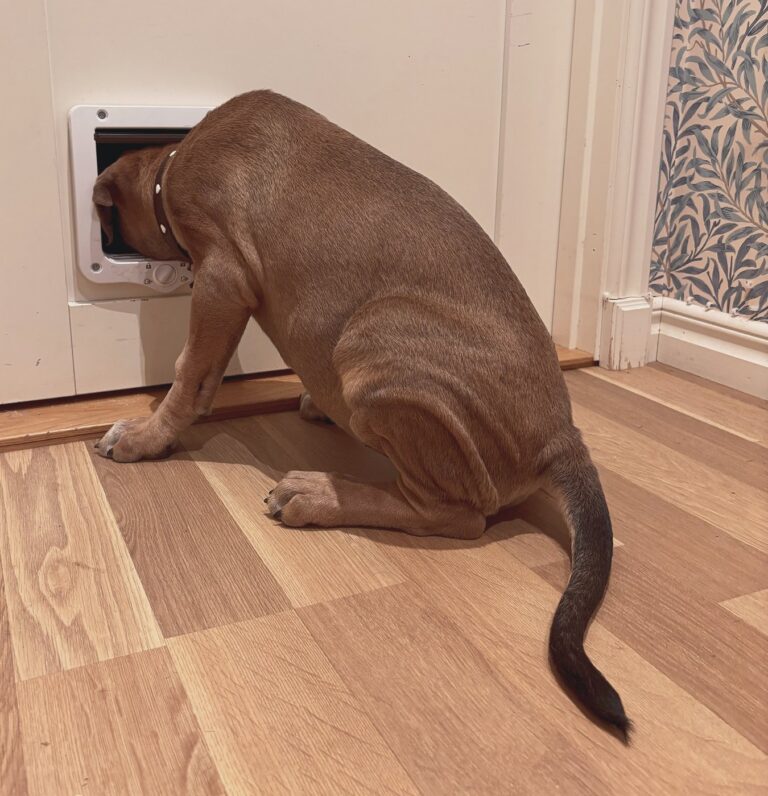
Does rubbing a puppy’s nose in its accident work?
Myth
Evidence EXPERT CONSENSUS Veterinary behaviorists agree; training studies back it
It teaches fear, not where to go.
A puppy can’t link a scolding to a puddle made earlier. Many learn to hide when they pee instead. Rewarding the right spot works better.
See sources (6)
American Veterinary Society of Animal Behavior (AVSAB): Housetraining tips · ASPCA: House training your dog or puppy · UC Davis Veterinary Medicine: Housetraining your puppy (handout) · Ziv 2017 (Journal of Veterinary Behavior): The effects of using aversive training methods in dogs, a review of 17 studies · Vieira de Castro et al. 2020 (PLOS ONE): Does training method matter? Aversive-based methods and companion dog welfare · Guilherme Fernandes, Olsson & Vieira de Castro 2017 (Applied Animal Behaviour Science): do aversive-based training methods compromise dog welfare?

Dog’s Needs
Must a puppy stay home until all its vaccines are done?
Myth
Evidence GOOD A study of 1,012 puppies and veterinary guidelines
Safe socializing can’t wait that long.
In a study of 1,012 puppies with at least one vaccine, those in puppy classes had no higher parvo risk. The socialization window closes around 12–14 weeks.
See sources (6)
Stepita, Bain & Kass 2013 (JAAHA): Frequency of CPV infection in vaccinated puppies that attended puppy socialization classes · AVSAB: Position statement on puppy socialization · AVMA JAVMA News (2008): Behavior society supports early puppy socialization · Day 2018, WSAVA Congress (VIN): dog vaccination, WSAVA guidelines endorse puppy socialization with simple precautions · Day, WSAVA Vaccination Guidelines Group (VIN): core vaccination of puppies, final dose at 16 weeks or older · Veterinary Practice: Socialisation for pre-vaccination puppies
Related: Socialization: the breeder’s most important behavioral work

Training
Is crate training cruel?
It’s complicated
Evidence SOME STUDIES Owner surveys and a few small studies
A tool, not a home. How you use it decides.
In a survey of 1,305 owners, crated dogs showed little distress, except when the crate was used for behavior problems. Long daily confinement is another matter.
See sources (6)
Bleuer-Elsner & Masson 2024 (Applied Animal Behaviour Science): the cage as an educational and therapeutic tool for dogs, 1,305 owners · Proschowsky et al. 2025 (EAAP, Centre for Companion Animal Welfare, Copenhagen): how Danish dog owners use cages · Rooney, Gaines & Bradshaw 2007 (Physiology & Behavior): habituation to kennelling and cortisol in 31 dogs · Hetts & Estep, CAAB (Animal Behavior Society): the right and wrong way to use a dog crate · ASPCA Pet Health: how to crate train a puppy, time limits by age · Swedish Board of Agriculture, SJVFS 2020:8 (L102): keeping dogs and cats, ch. 2 § 1

Dog’s Needs
Do bones keep a dog's teeth clean?
It’s complicated
Evidence SOME STUDIES Two small beagle studies; injury case series
They scrape off tartar, but can break teeth.
In two small studies, beef bones removed much of the tartar within days. But bones are the most common thing stuck in dogs' esophagus, and hard chews crack teeth.
See sources (7)
Marx et al. 2016 (Australian Veterinary Journal): raw beef bones as chewing items to reduce dental calculus in beagles · Pinto et al. 2020 (PLoS ONE): tooth injuries in beagles from autoclaved beef bones used to remove calculus · Veterinary Evidence knowledge summary: do raw dietary treats reduce or prevent periodontal disease in dogs? · Australian Veterinary Journal 2019: complications after removal of oesophageal foreign bodies, 349 cases · U.S. FDA consumer update: No bones (or bone treats) about it · Lewis, DAVDC (Veterinary Practice News): durable treats are not worth the risk of tooth fractures · Nemec, VOHC Council (Veterinary Focus): the VOHC seal and daily brushing as the gold standard
Related: Dental care from puppy to senior: brushing, chews and vet cleanings

Dog Psychology
Is a tired dog a good dog?
Partly true
Evidence SOME STUDIES Large owner surveys and small experiments
Activity helps. Exhausting your dog isn't the goal.
Dogs with less daily exercise had more noise fear and separation problems. But training, sniffing and sleep mattered as much as miles.
See sources (5)
Tiira & Lohi 2015 (PLoS ONE): early life experiences and exercise associate with canine anxieties, 3,264 dogs · Hakanen et al. 2020 (Scientific Reports): active and social life is associated with lower non-social fearfulness in pet dogs · Duranton & Horowitz 2019 (Applied Animal Behaviour Science): nosework induces positive judgment bias in pet dogs · Kis et al. 2017 (Scientific Reports): sleep and learning in dogs, EEG and behavioral study (AAHA NEWStat summary) · Zilocchi & Gazzano 2016 (Dog Behavior): effects of physical activity on dog behavior, preliminary survey
Related: Enrichment and environmental design

Training
Should puppy training wait until six months?
Myth
Evidence GOOD Several studies of puppy classes, plus AVSAB guidance
Start at 8 weeks, with rewards and short sessions.
Dogs that trained before six months had lower odds of aggression and destructive behavior. Puppy classes can start at 7–8 weeks.
See sources (6)
AVSAB: Position statement on puppy socialization · Dinwoodie, Zottola & Dodman 2021 (Animals): pre-adolescent training and canine behavior, 1,023 dogs · Kutsumi et al. 2013 (Journal of Veterinary Medical Science): importance of puppy training for future behavior · González-Martínez et al. 2019 (Journal of Veterinary Behavior): puppy classes and adulthood behavior · Duxbury et al. 2003 (JAVMA): retention in the home and puppy socialization classes · American Kennel Club: when to start training your puppy

Breeding & Health
Is inbreeding fine if both parents are healthy?
Myth
Evidence GOOD Genetic studies across and within breeds
Healthy parents can still share hidden risks.
More inbreeding meant smaller litters, more vet visits across breeds and shorter lives in golden retrievers, even when parents looked healthy.
See sources (5)
Chu et al. 2019 (Mammalian Genome): inbreeding depression causes reduced fecundity in golden retrievers · Bannasch et al. 2021 (Canine Medicine and Genetics): the effect of inbreeding, body size and morphology on health in dog breeds · Yordy et al. 2020 (Conservation Genetics): body size, inbreeding and lifespan in domestic dogs · de Andrade et al. 2021 (Revista Brasileira de Zootecnia): inbreeding and litter size in German Spitz, 105 litters · The Kennel Club (UK), Breeding for Health leaflet: inbreeding coefficients and the breed average

Dog’s Needs
Are a few grapes safe for dogs?
Myth
Evidence EXPERT CONSENSUS Case series and veterinary toxicology references
There’s no known safe number.
Most dogs that eat a few grapes are fine, but some get kidney failure, and nobody can predict which. Only 53% of 43 poisoned dogs survived.
See sources (5)
Merck Veterinary Manual (Hayes & Brutlag, 2024): grape, raisin and tamarind toxicosis in dogs · Eubig et al. 2005 (Journal of Veterinary Internal Medicine): acute renal failure after grape or raisin ingestion, 43 dogs · Reich et al. 2020 (JVECC): clinical course after grape or raisin ingestion, 139 dogs (Clinician’s Brief summary) · Wegenast et al. 2022 (JVECC): tartaric acid as the proposed toxic principle in grapes (Clinician’s Brief summary) · Schweighauser et al. 2020 (Journal of Veterinary Internal Medicine): grape or raisin toxicosis with kidney injury and neurological signs, 15 dogs
Related: Poisoning risks in the kennel and home: what dogs and puppies actually swallow
Training
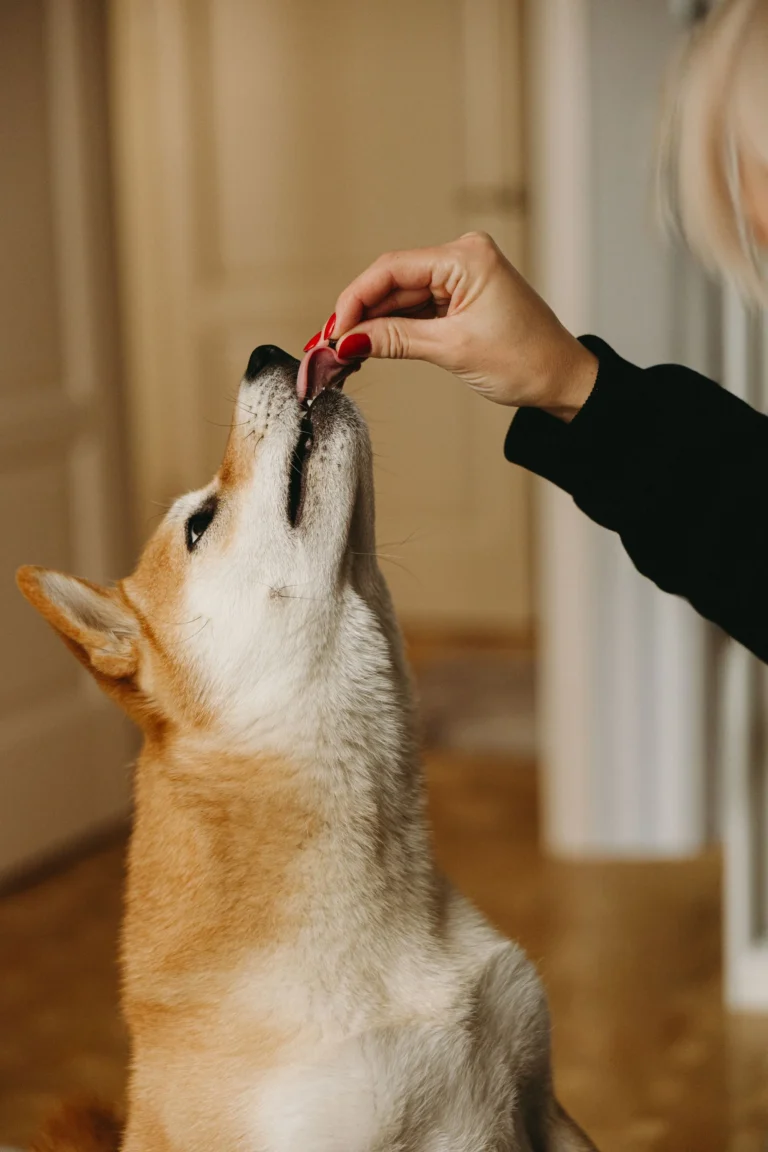
Do treats make a dog work only for food?
Myth
Evidence SOME STUDIES Owner surveys and small preference studies
Food teaches fast. It doesn’t replace you.
Dogs trained with more rewards obeyed better and learned new tasks faster. In choice tests, many went to their owner first, not the food.
See sources (6)
Hiby, Rooney & Bradshaw 2004 (Animal Welfare): dog training methods, their use, effectiveness and interaction with behaviour and welfare, 326 owners · Rooney & Cowan 2011 (Applied Animal Behaviour Science): training methods and owner–dog interactions, 53 dogs · Feuerbacher & Wynne 2015 (JEAB): shut up and pet me, dogs prefer petting to vocal praise · Isernia et al. 2022 (PeerJ): dogs’ preference for owners vs food when deprivation is equalized · Vieira de Castro et al. 2020 (PLoS ONE): aversive-based training and companion dog welfare, 92 dogs (UFAW summary) · AVSAB 2021: position statement on humane dog training

Breeding & Health
Does a pedigree guarantee a healthy puppy?
Myth
Evidence EXPERT CONSENSUS Kennel clubs and vets agree; a study of 27,254 dogs
Papers prove the parents, not the health.
Registration records who the parents are. In 27,254 dogs, purebreds had a higher risk of 10 of 24 inherited disorders and the same risk of 13.
See sources (5)
American Kennel Club: veterinary outreach program, what registration does and doesn’t mean · RSPCA: health problems in pedigree dogs and what Kennel Club registration stands for · Cornell Riney Canine Health Center: selecting a purebred puppy · Bellumori et al. 2013 (JAVMA): inherited disorders in mixed-breed and purebred dogs, 27,254 cases (Institute of Canine Biology summary) · The Royal Kennel Club: health standard, health testing vs. being healthy
Related: Pedigree and family analysis: reading beyond the individual

Breeding & Health
Is hip dysplasia all genetics?
Myth
Evidence STRONG Large breed databases, cohort studies and a lifelong trial
Genes set the risk. Growth and life matter too.
Genes explain 20–60% of the differences in hips. Lean-fed Labradors got hip arthritis 6 years later, and stairs before 3 months raised the risk.
See sources (5)
Merck Veterinary Manual (Lafuente, 2025): hip dysplasia in dogs · Smith et al. 2006 (JAVMA): lifelong diet restriction and hip osteoarthritis in 48 Labrador retrievers · Krontveit et al. 2012 (American Journal of Veterinary Research): housing and exercise risk factors for hip dysplasia, 501 dogs · Oberbauer, Keller & Famula 2017 (PLoS ONE): genetic selection reduced hip and elbow dysplasia in 60 breeds (dvm360 summary) · American Kennel Club: the genetics of hip dysplasia, a guide for breeders
Related: Polygenic and complex traits: why most things aren’t simple
Breeding & Health
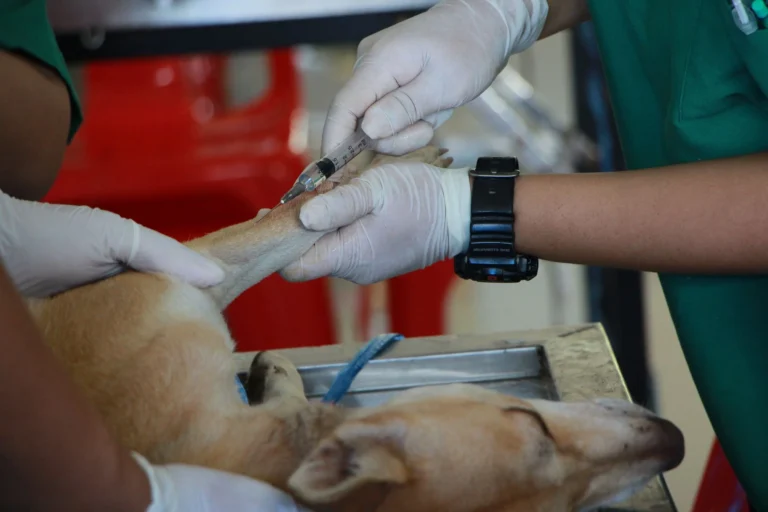
Do health-tested parents always give healthy puppies?
Myth
Evidence STRONG Large hip databases and kennel club guidance
Testing lowers the risk. It can’t remove it.
Even with two excellent-hip parents, 3.5% of puppies were dysplastic. And a clear DNA test only rules out the disease tested.
See sources (6)
Keller, OFA (VIN): the use of genetic databases to reduce disease prevalence, hip outcomes in 152,589 progeny · American Kennel Club: the genetics of hip dysplasia, a guide for breeders · The Royal Kennel Club: breeding advice for DNA test results · The Royal Kennel Club: health standard, health testing vs. being healthy · Oberbauer, Keller & Famula 2017 (PLoS ONE): genetic selection reduced hip and elbow dysplasia in 60 breeds (dvm360 summary) · Smith et al. 2006 (JAVMA): hip osteoarthritis develops throughout life, not only by screening age
Related: Health screening and health schemes: hips, elbows, eyes and beyond
The Breeder’s Notebook
Practical tips from The Breeder Collective, by email.
These are short summaries, not veterinary advice. Where the evidence is limited or mixed, we say so. If you’re worried about your own dog, talk to your veterinarian. Last checked November 2026.