DNA testing can’t see a joint, an eye, or a heart. That’s what physical health screening is for — imaging, examination and clinical scoring by trained specialists, feeding into schemes that let breeders compare results against a breed and a population, not just a single vet’s opinion. This guide covers what the major schemes actually assess and how to use the results.
The most important first
- Screening covers physical and structural health DNA tests can’t reach.
- Hip and elbow scoring, eye testing and cardiac screening are the most widespread schemes.
- Results are usually scored or graded, not simply pass/fail.
- Screening only works if it’s done at the right age, by an approved assessor, and acted on honestly.
- Screening and DNA testing complement each other; neither replaces the other.
Why physical screening exists alongside DNA testing
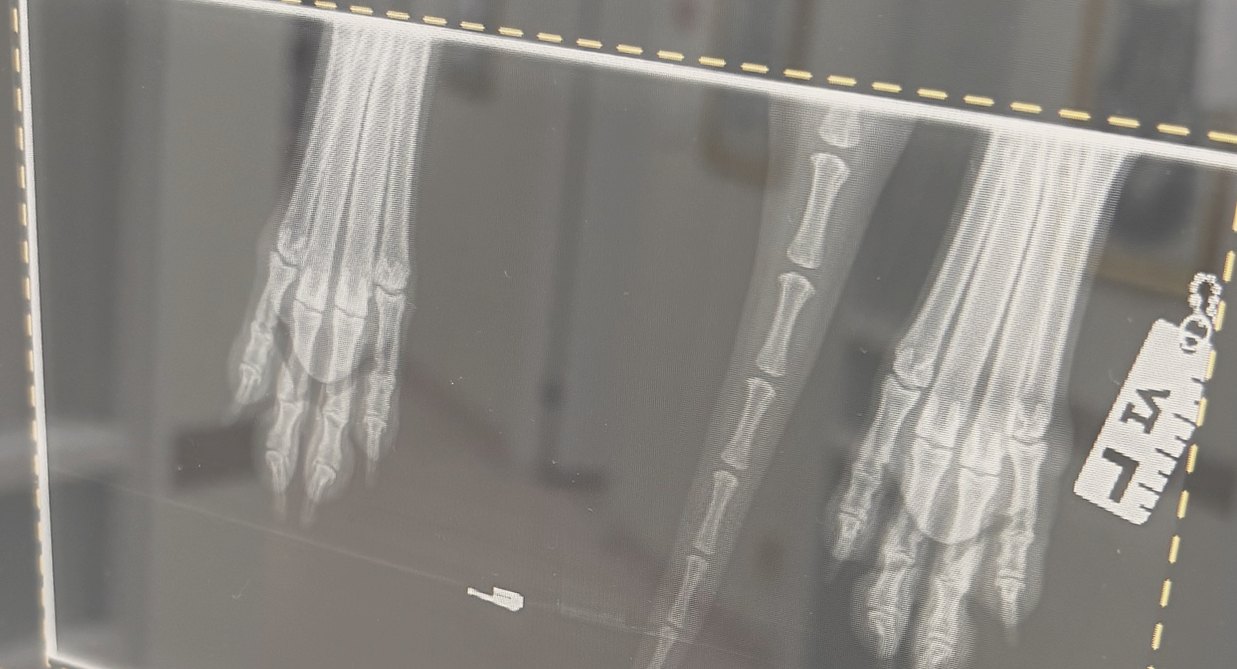
Hip and elbow dysplasia, most eye conditions and many cardiac conditions are polygenic or structural, not the product of one identifiable mutation — which is exactly why polygenic and complex traits can’t simply be DNA tested away. Health screening steps in where genetics can’t: a hip or elbow score comes from reading an X-ray against defined criteria, an eye test comes from a veterinary ophthalmologist’s direct examination, a cardiac screen from auscultation or echocardiography. These are physical assessments of the dog in front of the vet, not predictions from DNA.
The major schemes, in outline
Hip and elbow schemes (such as national kennel club hip/elbow schemes, or PennHIP in North America) score radiographs against defined criteria, usually producing a numerical or graded score that can be compared against breed averages — lower scores or better grades generally indicating sounder joints, though exact scales vary by scheme and country. Eye schemes involve a veterinary ophthalmologist examining the dog for a defined panel of inherited eye conditions, with results valid for a limited period since some conditions develop with age (OFA eye certification, for example, lasts 12 months). Cardiac screening ranges from a vet listening for murmurs to specialist echocardiography for breeds with known inherited heart conditions. Each scheme has its own required age, its own approved examiners, and its own re-testing interval — using the correct one for your breed and country matters as much as testing at all.
Minimum ages differ by scheme. In the US, the OFA certifies hips and elbows only from 24 months of age, though it offers preliminary evaluations from 4 months. In the UK (BVA/Kennel Club) and Australia (Dogs Australia CHEDS), dogs can be scored from 12 months — but a UK or Australian age does not qualify a dog for OFA certification. OFA cardiac certification starts at 12 months, and OFA eye certification is valid for 12 months, with yearly re-examination recommended because some eye conditions appear later in life. In the UK, litters of some breeds can also have their eyes screened at 5–12 weeks.
Scales are not interchangeable. The OFA grades hips in seven categories: Excellent, Good and Fair (normal), Borderline, and Mild, Moderate and Severe (dysplastic). The BVA/KC scheme scores nine features per hip, from 0 to 53 each, so totals run from 0 to 106 and lower is better; the scheme advises breeding from dogs at or below the breed median. Elbows are graded 0–3 under the BVA/KC scheme, the dog’s overall grade is that of its worse elbow, and the scheme recommends breeding only from grade 0. PennHIP measures hip looseness instead, as a “distraction index,” and is performed by PennHIP-certified vets.
A basic cardiac exam is a stethoscope check by any licensed vet. An advanced exam is done by a board-certified veterinary cardiologist and, under OFA rules, includes an echocardiogram. Some breeds, such as Boxers and Doberman Pinschers, also need a 24-hour heart recording (Holter) for adult-onset clearance. Ask your breed club which level it requires.
In practice
A breeder has a young dog’s hips X-rayed for a preliminary evaluation, well before the age at which the scheme will certify (24 months for the OFA), gets a poor result, and almost withdraws him from breeding. Retested at the correct age under proper conditions, his score is respectable. The first test wasn’t wrong, exactly — it was simply too early to be a reliable readout of adult joint conformation.
(Illustrative, composite scenario.)
Using scores honestly
A screening scheme is only as useful as the honesty applied to it. That means testing every breeding dog, not only the ones you expect to pass; recording and disclosing results even when they’re disappointing; and selecting mates that offset a weakness rather than compounding it — pairing a dog with a middling hip score against one with an excellent score, for instance, rather than doubling up two moderate scores. Screening data only improves a breed if enough breeders actually use and share it, which is also the foundation of the health databases covered later in this area.
Hip and elbow dysplasia are shaped by both genes and environment. Keeping growing puppies lean and avoiding excessive exercise during growth helps the dog in front of you, whatever its parents scored, and a dog that is lame or stiff needs a vet whatever its score. Good scores lower the risk across a breed; they do not guarantee every puppy. Long-term US data show that this steady approach works: hip and elbow dysplasia have declined across dozens of breeds since screening began.
Talk to your vet when planning: plan screening radiographs with your vet, since they need sedation or anesthesia, and ask whether a borderline or abnormal result means the dog needs treatment.
Work on it
A few minutes here will teach you more than re-reading the article.
Ask yourself
- Do I know which health screening schemes are recommended, or required, for my breed?
- Am I testing at the correct age and with an approved assessor, not just at a convenient time?
- Would I disclose a disappointing screening result as readily as a good one?
Find out & check
- Find out the minimum testing age and re-testing interval for each scheme relevant to your breed.
- Check your breeding dogs’ screening history against your breed club’s or kennel club’s current recommendations.
Do one thing
- Book or schedule one overdue health screen for a dog in your program.
Was this article helpful?
Anonymous. We do not store your name, email or IP address.
Sources & further reading
- Orthopedic Foundation for Animals (OFA) — Hip Dysplasia. ofa.org
- Orthopedic Foundation for Animals (OFA) — Elbow Dysplasia. ofa.org
- Orthopedic Foundation for Animals (OFA) — Eye Certification (CAER). ofa.org
- Orthopedic Foundation for Animals (OFA) — Cardiac. ofa.org
- Orthopedic Foundation for Animals (OFA) — FAQs. ofa.org
- British Veterinary Association — Canine Health Schemes: Hip, Elbow and Eye Schemes. Hip · Elbow · Eye (bva.co.uk)
- Dogs Australia — CHEDS — Canine Hip and Elbow Dysplasia Scheme. dogsaustralia.org.au
- Oberbauer AM, Keller GG, Famula TR (2017) — Long-term genetic selection reduced prevalence of hip and elbow dysplasia in 60 dog breeds, PLOS ONE 12(2):e0172918. pmc.ncbi.nlm.nih.gov
- University of Pennsylvania study via AAHA NEWStat — Study compares PennHIP vs OFA hip dysplasia tests. aaha.org
Where evidence is limited, recommendations rest on established practice and expert judgment, and may be updated as knowledge develops.
Next steps
- Read next: Inbreeding, relatedness and genetic diversity.
- Related: Polygenic and complex traits · DNA tests and genetic disease.
- Return to the area hub: Genetics and inherited health.