When a dog itches, licks its paws or has a sensitive stomach, food is often the first suspect. Food allergy is real, but it is less common than many owners think, grains other than wheat are not among the usual causes, and there is only one reliable way to find it: a strict elimination diet followed by a food challenge, planned with your veterinarian.
The most important first
- Food allergy affects about 1 to 2% of all dogs seen by veterinarians, but it is far more common among dogs with itchy skin: Olivry and Mueller found it in 9 to 40% of itchy dogs in the studies they reviewed.
- The foods most often behind food allergy in dogs are beef, dairy products, chicken and wheat, according to the review by Mueller, Olivry and Prélaud. Grains other than wheat were not among the most common.
- Blood, hair and saliva tests cannot diagnose food allergy. In one test, a hair and saliva service gave results for a fake fur sample and water that were no different from those for real dogs.
- The diagnosis is an elimination diet of at least 8 to 12 weeks for skin signs, followed by a challenge with the old food. Most food-allergic dogs flare within two weeks of the challenge.
- Many over-the-counter “limited ingredient” foods contain ingredients that are not on the label, so the diet for a trial should be chosen with your veterinarian.
Last updated: November 8, 2026

What a food allergy looks like
A food allergy is an immune reaction to a protein in the diet. Veterinarians group it with other adverse food reactions, which can also be non-immune, such as a sensitive stomach after a sudden change of food. In their review of 825 dogs with skin-related food reactions, Olivry and Mueller found that most dogs were itchy, often all over, with the ears, feet and belly commonly affected. The problem usually showed up as recurring skin infections, ear infections or signs that look like atopic dermatitis. Signs began by 6 months of age in 22% of dogs and by 12 months in 38%, but some dogs were first affected as late as 13 years. German shepherds, West Highland white terriers and Labrador and golden retrievers made up about 40% of the affected dogs in that review.
Food allergy can also affect the gut. Mueller and Olivry’s review of non-skin signs found that diarrhea and frequent bowel movements were the signs most often shown to respond to diet in dogs, and they recommend considering an elimination diet early in dogs with chronic vomiting and diarrhea.
The signs overlap with environmental allergy and flea allergy, so the order of investigation matters. Our article on seasonal allergies in dogs covers pollen, mites and fleas.
How common is it?
Less common than the shelves of “hypoallergenic” food suggest. Olivry and Mueller’s review found food allergy in 1 to 2% of dogs presented to a veterinarian for any reason. Among dogs with skin disease the range was 0 to 24%, among itchy dogs 9 to 40%, and among dogs diagnosed with atopic dermatitis 9 to 50%. That is high enough, the authors conclude, to rule food allergy out with a diet trial in any dog with non-seasonal itching or signs of allergic skin disease. Lisa Freeman of the Tufts veterinary nutrition team describes food allergies as quite uncommon overall.
The usual culprits
Mueller, Olivry and Prélaud reviewed the published cases to find which foods were most often responsible. In dogs, the most likely allergens were beef, dairy products, chicken and wheat. Grain-free diets are often marketed for allergic dogs, but apart from wheat, grains were not among the most common culprits, and the proteins in rice, corn, peas and potatoes still count when a diet is assessed for a trial.
Why the tests don’t work
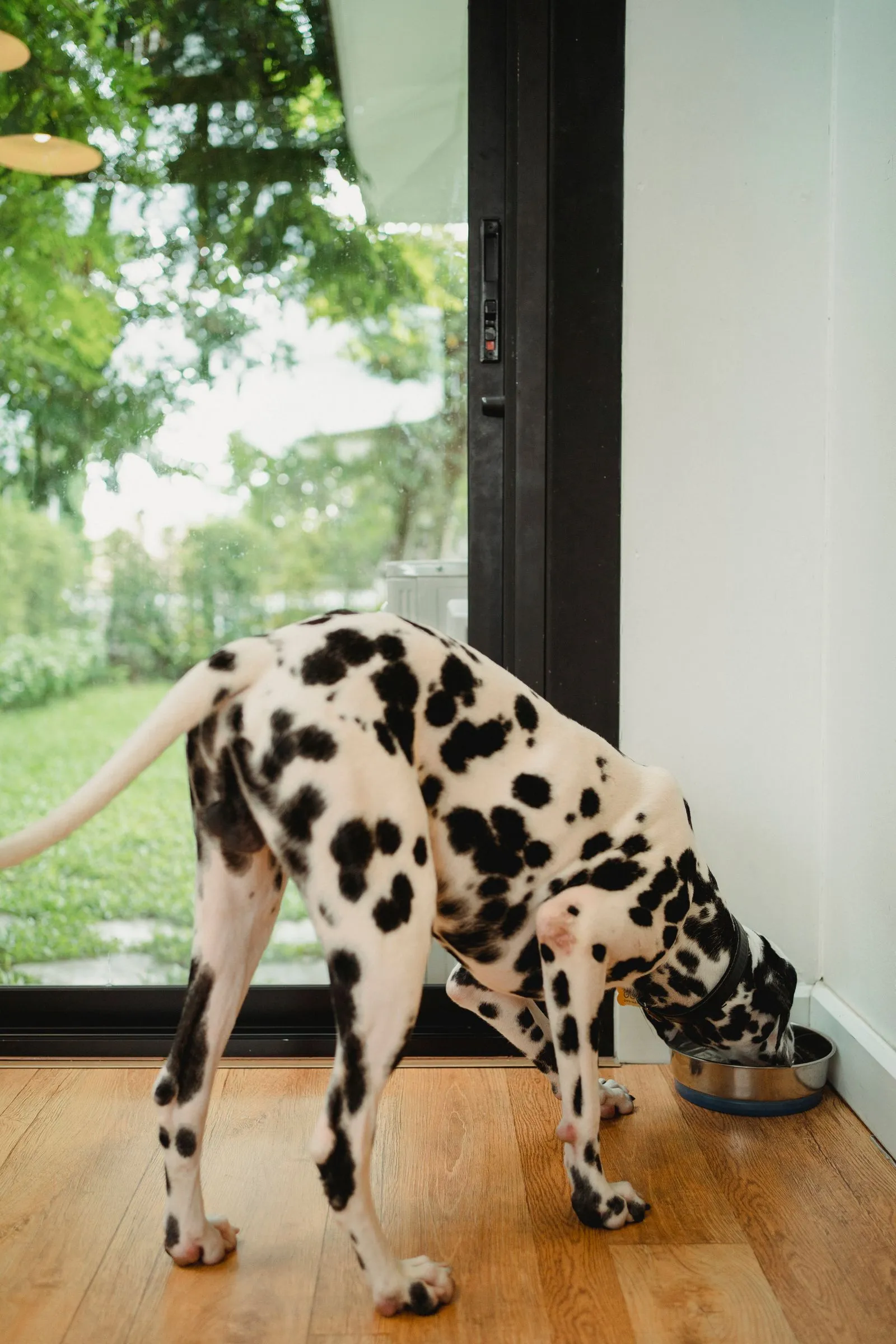
Blood tests, hair tests and saliva tests are sold for food allergy, but none of them diagnoses it. Coyner and Schick sent repeated fur and saliva samples from an allergic dog and a non-allergic dog, plus fake fur samples and water, to one hair and saliva testing company. The results did not differ from what chance would produce, and repeat samples from the same dog gave inconsistent results. Their conclusion: hair and saliva tests should not be used. The Tufts nutrition team describes blood and saliva tests as highly inaccurate for food allergy.
How the elimination diet works
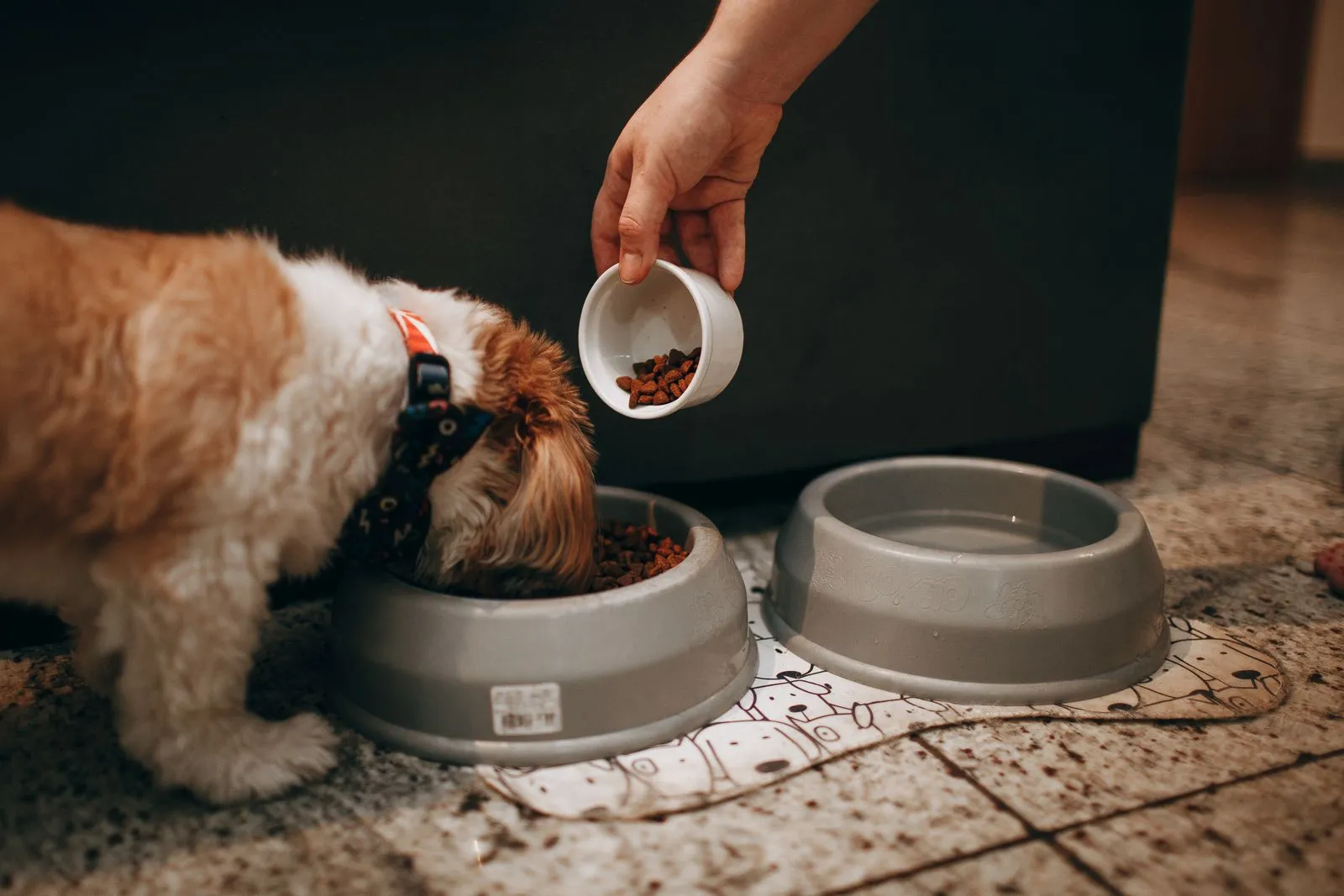
An elimination diet removes every protein the dog may be allergic to, for long enough to see whether the signs settle, and then puts the old food back to see whether they return. Freeman’s guidance from Tufts sets out the main points:
- The diet: either a veterinary diet with protein sources the dog has never eaten, or an extensively hydrolyzed diet in which the proteins are broken down so the immune system does not recognize them. A home-cooked diet is recommended only if a board-certified veterinary nutritionist formulates it. Few of these diets suit growing puppies, so the choice is your veterinarian’s.
- Nothing else: treats, chews, rawhides, dental chews, flavored toothpaste, table food, supplements and flavored medications can all ruin the trial. Keep a diary of signs and of any slip-ups.
- Long enough: at least 8 to 12 weeks for skin signs and 3 to 4 weeks for digestive signs.
Why over-the-counter “limited ingredient” foods are risky. Olivry and Mueller reviewed studies that tested pet foods for ingredients and found ingredients not on the label in 0 to 83% of the foods tested, with a median of 45%. In foods sold as having novel or limited ingredients for elimination diets, the share was 33 to 83%. Hydrolyzed diets were rarely mislabeled.
The challenge. If the signs improve, the next step is to feed the old food again. Olivry and Mueller pooled 315 challenges in dogs and found that half of food-allergic dogs flared within 5 days and 90% within 14 days, so a dog that is still fine two weeks after the challenge is unlikely to be allergic to that food. Testing single ingredients one at a time then shows which ones to avoid. Mueller, Olivry and Prélaud suggest starting the challenges with beef and dairy.
In practice
A two-year-old retriever has itchy paws and ear infections all year round. Her owner has already switched to a grain-free food with no change. With her veterinarian she starts a hydrolyzed diet, stops the dental chews and the flavored heartworm tablet in favor of an unflavored option the vet suggests, and keeps a diary. After ten weeks the itching is much better. Two weeks after a challenge with her old chicken-based food, it flares, and they continue with single-ingredient challenges to find the cause.
(Illustrative, composite scenario.)
When to call your veterinarian
- Itching, licking or ear problems that last more than a few weeks, keep coming back or are not seasonal.
- Chronic or recurring vomiting or diarrhea.
- Before starting any elimination diet, so the diet, the length and the challenge are planned properly — especially for a growing puppy.
- Swelling of the face, hives, collapse or difficulty breathing after eating: this is an emergency.
- If in doubt, call — your vet would rather hear from you early.
Work on it
A few minutes here will teach you more than re-reading the article.
Ask yourself
- Are my dog’s signs year-round, or do they follow the seasons?
- Have I already tried a food change without a proper trial?
- What does my dog eat besides its main food?
Find out & check
- Write down every food, treat, chew, supplement and flavored medication your dog has had, and take the list to your veterinarian.
Do one thing
- Before buying another “sensitive” food, book an appointment to plan a proper elimination diet.
Was this article helpful?
Anonymous. We do not store your name, email or IP address.
Sources & further reading
- Mueller RS, Olivry T, Prélaud P. Critically appraised topic on adverse food reactions of companion animals (2): common food allergen sources in dogs and cats. BMC Veterinary Research 2016. doi.org
- Olivry T, Mueller RS. Critically appraised topic on adverse food reactions of companion animals (3): prevalence of cutaneous adverse food reactions in dogs and cats. BMC Veterinary Research 2017. doi.org
- Olivry T, Mueller RS. Critically appraised topic on adverse food reactions of companion animals (5): discrepancies between ingredients and labeling in commercial pet foods. BMC Veterinary Research 2018. doi.org
- Mueller RS, Olivry T. Critically appraised topic on adverse food reactions of companion animals (6): prevalence of noncutaneous manifestations of adverse food reactions in dogs and cats. BMC Veterinary Research 2018. doi.org
- Olivry T, Mueller RS. Critically appraised topic on adverse food reactions of companion animals (7): signalment and cutaneous manifestations of dogs and cats with adverse food reactions. BMC Veterinary Research 2019. doi.org
- Olivry T, Mueller RS. Critically appraised topic on adverse food reactions of companion animals (9): time to flare of cutaneous signs after a dietary challenge in dogs and cats with food allergies. BMC Veterinary Research 2020. doi.org
- Coyner K, Schick A. Hair and saliva test fails to identify allergies in dogs. Journal of Small Animal Practice 2019. doi.org
- Freeman LM. Think your pet has a food allergy? Eliminating mistakes in elimination diet trials. Petfoodology, Tufts Cummings School of Veterinary Medicine, 2022. sites.tufts.edu
Where evidence is limited, recommendations rest on established practice and expert judgment, and may be updated as knowledge develops. This is general information, not veterinary advice: talk to your veterinarian about your own dog.
Next steps
- Read next: Seasonal allergies in dogs.
- Related: Before your puppy comes home.