The aim of this part of your work is not a puppy that never startles — startling is a functioning nervous system — but a puppy that startles, checks and goes back to what it was doing, because recovery is the trainable part.
The most important first
- Fear is normal and adaptive; what marks out a robust puppy is the speed of its recovery, not the absence of a reaction.
- Flooding — exposing a puppy at a level that triggers the fear response and holding it there — is never recommended, and can make a fearful animal worse.
- Graduated exposure works the other way: start below the level that produces a reaction, and increase only while the puppy stays relaxed and eating.
- The sensitive period is well supported, but the popular “fear period” dates are not: in one study of 98 puppies, both the onset of fear-related avoidance and the proportion showing it differed sharply between breeds.
- Normal wariness and pathological fear differ, and a puppy with the second should not be expected to grow out of it without help — which is where this article stops and a veterinary behavior referral begins.
What a good recovery looks like
A metal bowl falls on a tiled floor next to a seven-week-old litter. Every puppy jumps, because that is what a startle reflex is for; what happens next is the information. One freezes, orients to the bowl and mouths it. Another retreats two meters, watches, then comes back. A third leaves the room and will not eat near that spot the next day.
The first two are startles with recovery, and the litter has just had a useful experience. The third is a frightening experience that has produced a learned association now needing undoing. The distinction is whether the puppy returned to normal on its own — as a practical rule of thumb, within a couple of minutes — which is why habituation and environmental exposure is better judged by recovery than by items ticked off a list.
Sensitive periods, fear periods and what the evidence supports
Two claims get run together, and they are not equally well supported. The first — that early development contains a sensitive period in which learning about the world happens unusually readily, and that it closes — is well established, and underpins critical developmental periods and windows. Veterinary behavior guidelines place the readiest period for exploring novel environments in roughly the first three to four months, and puppies that miss it may be much less willing to explore new places later. Exactly when it closes varies between breeds and individuals and has not been pinned down by research.
The second is the popular “fear period” schedule — typically a first at around eight to eleven weeks and a second between six and fourteen months. Something real sits behind it: wariness of the unfamiliar does increase as puppies mature. But the precision of those dates is weaker than most training material implies. The controlled work that exists found onset differing significantly between breeds, and the proportion showing a fear response at all varying enormously — 78% of Yorkshire terriers, 53% of Cavalier King Charles spaniels and 26% of German shepherd dogs, in 98 puppies tested between four and ten weeks. Some veterinary guidance still describes a fear period around eight to ten weeks; the safer reading is that wariness rises at different ages in different puppies, so watch the puppy, not the calendar. Do not schedule socialization around a date, and do not dismiss what you see because it is “the wrong week”.
Graduated exposure, and why flooding fails
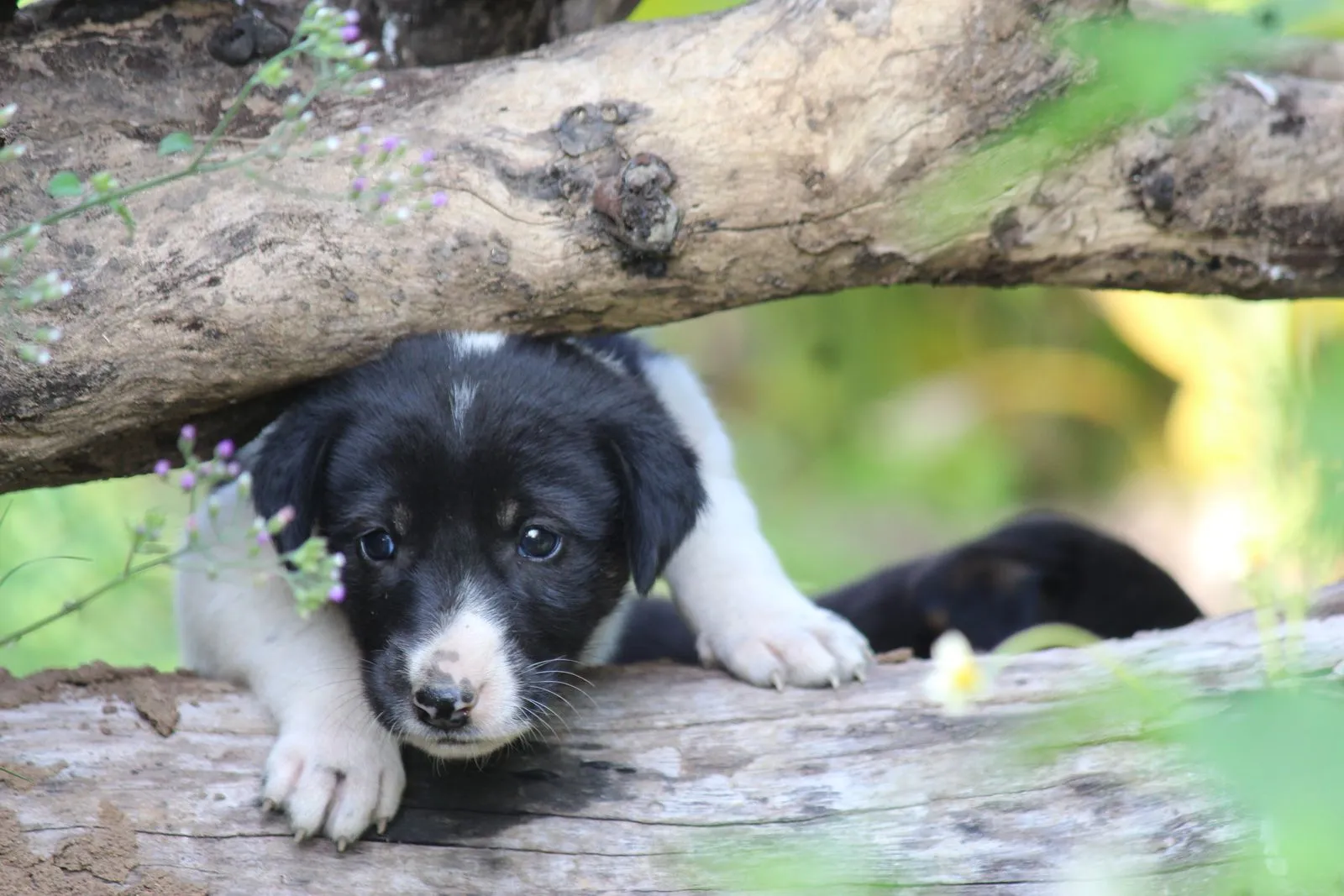
Desensitization means exposing the puppy to a stimulus at a level so low that it is not frightened, and raising it only as the puppy stays comfortable — distance first, then intensity, then duration — with food or play to make the experience a positive one. Flooding exposes the animal at a level that triggers the response, assuming it will settle; veterinary behavior guidelines are unambiguous that this is never recommended, and that overexposing a fearful dog can create a behavioral emergency.
The everyday versions are not dramatic — carrying a puppy into a crowd so it gets used to people, holding a frightened puppy while the vacuum runs, coaxing it towards something it has refused to approach — and in each case the puppy cannot leave, which is the part that does the damage.
The alternative is unglamorous: begin at a distance at which the puppy is relaxed, let it set the pace, feed while the stimulus is present, and move closer only when it looks interested rather than braced. Refusing food it would normally take is the most reliable indicator that you have gone too far, along with trembling, a tucked tail, lip licking and attempts to escape. Then take the puppy out and let it recover — removal is not reinforcing the fear, it is ending an experience that taught the wrong lesson.
In practice
A breeder introduces the vacuum cleaner at six weeks by running it in the next room while the litter eats, and by the second week most of the puppies ignore it. One does not: it leaves its food and goes to the back of the box. Rather than running the machine closer until the puppy gets over it, the breeder leaves it switched off in the room as furniture, feeds beside it for days, then runs it two rooms away. By eight weeks the puppy eats with it running in the same room.
(Illustrative, composite scenario.)
Building recovery on purpose
Resilience is not built by exposure alone, and three things within your control do most of the work. The first is control itself: a puppy that can choose to approach and to leave learns faster than one that cannot, which argues for cover, platforms and escape routes in the pen, and against picking puppies up to meet things. The second is mild, solvable difficulty — small obstacles, a new surface, an awkward feeding puzzle — since challenges a puppy overcomes by itself build a history of coping, the territory of frustration tolerance and problem-solving and enrichment and environmental design. The third is recovery rather than volume: fewer novel things, spaced out, each followed by a return to calm. Sleep belongs here too, since an over-tired litter startles more and recovers less well; and so does method, because aversive training is associated with aggression towards people and dogs and with anxiety-related behaviors.
Where the breeder’s part ends
Eight weeks of careful work does not immunize a dog against fear. Genetics contribute, adolescence brings its own wariness, and one badly handled experience in the new home can undo a good deal. What you hand over is a puppy with a history of recovering, plus an honest note of what each found difficult — the noise-sensitive one, the one that needed three days to approach the stairs — and what you did about it, so the new owner continues a method rather than inventing one. Fear out of proportion needs a veterinary assessment, not more exposure.
Check for pain first
A puppy that suddenly becomes fearful, shy of being touched in one place, or reluctant to move may be in pain or unwell. Pain is common in dogs seen for behavior problems, so the first step is a veterinary check, not more exposure.
Fear is out of proportion when a puppy panics, will not eat, has not recovered by the next day, starts reacting to more and more situations, injures itself trying to escape, or growls or snaps when frightened. Stop all deliberate exposure and talk to your veterinarian. They may refer you to a board-certified veterinary behaviorist (ACVB in North America, ECAWBM in Europe). Medication prescribed by a veterinarian can be part of treatment and is not a last resort. These puppies should not be expected to grow out of it without help.
Work on it
A few minutes here will teach you more than re-reading the article.
Ask yourself
- For the last new thing I introduced, did I record which puppies recovered and how long it took — or only that they were exposed?
- Is there any point in my routine where a puppy cannot leave what worries it?
- Am I judging a puppy by its reaction or by its recovery?
Find out & check
- Ask your veterinary practice what their behavior referral route is, and what they would want to know about a puppy you were worried about.
Do one thing
- Add a recovery column to your socialization notes and use it today: what the puppy met, and how long until it went back to normal.
Was this article helpful?
Anonymous. We do not store your name, email or IP address.
Sources & further reading
- American Animal Hospital Association — 2015 AAHA Canine and Feline Behavior Management Guidelines. aaha.org
- VCA Animal Hospitals — Puppy Behavior and Training: Socialization and Fear Prevention. vcahospitals.com
- Morrow M et al. — Breed-dependent differences in the onset of fear-related avoidance behavior in puppies, Journal of Veterinary Behavior, 2015. sciencedirect.com
- American Veterinary Society of Animal Behavior — Position Statement on Puppy Socialization. avsab.org
- McEvoy V et al. — Canine Socialisation: A Narrative Systematic Review, Animals, 2022. mdpi.com
- Merck Veterinary Manual — Behavior Problems of Dogs. merckvetmanual.com
- Merck Veterinary Manual (pet owner version) — Behavior Problems in Dogs. merckvetmanual.com
- American Veterinary Society of Animal Behavior — Position Statement on Humane Dog Training, 2021. avsab.org
Where evidence is limited, recommendations rest on established practice and expert judgment, and may be updated as knowledge develops. This article describes management and early learning; it is not a substitute for veterinary behavioral assessment of a fearful animal.
Next steps
- Read next: Frustration tolerance and problem-solving.
- Related: Habituation and environmental exposure · How the puppy brain and behavior develop.
- Return to the area hub: Behavior and development.