Dog breeding systems — linebreeding, outcrossing and inbreeding — are the tools you use to turn goals and pedigrees into actual combinations. Each concentrates or diversifies genes in a different way, with different rewards and risks. This guide explains them as strategic choices; the underlying genetics, including inbreeding coefficients and diversity, are covered in depth in the Genetics area.
The most important first
- These are tools in service of goals, not identities to belong to.
- Linebreeding concentrates traits — the good and the bad — and reduces diversity.
- Outcrossing adds diversity and can introduce or hide traits.
- Close inbreeding raises risk sharply and is increasingly restricted by law.
- Choose the system for the goal and the pair, not by dogma.
The dog breeding systems, in plain terms
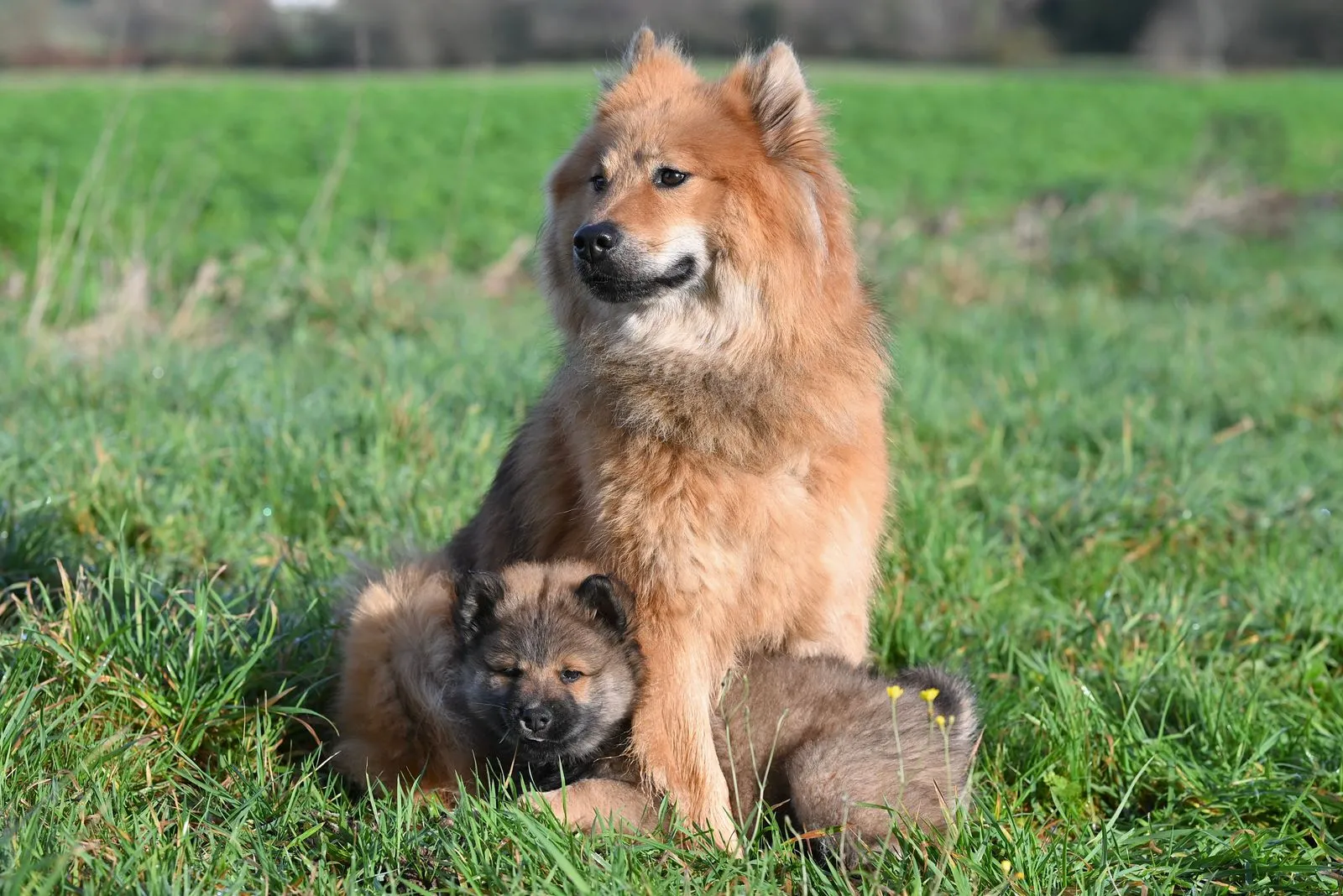
The three systems differ in how closely related the parents are. Outcrossing pairs relatively unrelated dogs; it maintains or increases genetic diversity and can bring in traits you lack, but results are less predictable, and it hides recessive problems rather than removing them: affected puppies become less likely, but carriers can still be produced and passed on. Linebreeding pairs dogs that share ancestors a few generations back; it concentrates the traits of those ancestors and makes results more predictable — but it concentrates faults and health risks just as faithfully as virtues, and it reduces diversity. Inbreeding is linebreeding taken close (parent–offspring, full siblings); it concentrates hardest of all and carries the highest risk.
Kennel clubs measure relatedness with the coefficient of inbreeding (COI), an estimate of how likely a puppy is to inherit two copies of a gene variant from the same ancestor. As a guide, the Royal Kennel Club puts a half-sibling or grandparent–grandchild mating at about 12.5% and a full-sibling or parent–offspring mating at about 25%. Inbreeding that builds up over several generations can take a COI higher still. A COI is only as good as the pedigree behind it: if only three generations are recorded, which is common for imported dogs, the true figure is probably higher.
Rewards and risks — and why they’re two sides of one coin
The central truth of breeding systems is that concentration and risk rise together. The same closeness that fixes a virtue also fixes a fault and erodes the genetic diversity a line needs for long-term health. There is no free predictability. This is why the choice is always a balance — enough concentration to make progress, not so much that you damage health or diversity — and why it must be read alongside the genetics of relatedness and inbreeding in the Genetics area.
The cost of concentration can be measured. A 2021 study across more than 200 breeds found that breeds with higher genomic inbreeding needed more veterinary care than mixed-breed dogs, and body size added to the effect. COI is still a measure of risk, not a verdict on any one dog’s health. A practical rule many kennel clubs give is to aim for a mating at or below your breed’s average COI, and lower where you can.
In most breeds, diversity is lost less through deliberate close matings than through one popular stud being used again and again. UK research found popular sires to be the main driver of rising inbreeding, and the FCI recommends that no single dog’s offspring exceed about 5% of a breed’s registrations over five years.
In practice
A breeder linebreeds tightly on a dog with a wonderful front and gets, reliably, wonderful fronts — and, just as reliably, the same dog’s tendency to a nervy temperament, now doubled. The system delivered exactly what it promised: concentration, without choosing which traits to concentrate.
(Illustrative, composite scenario.)
Choosing a system for the goal
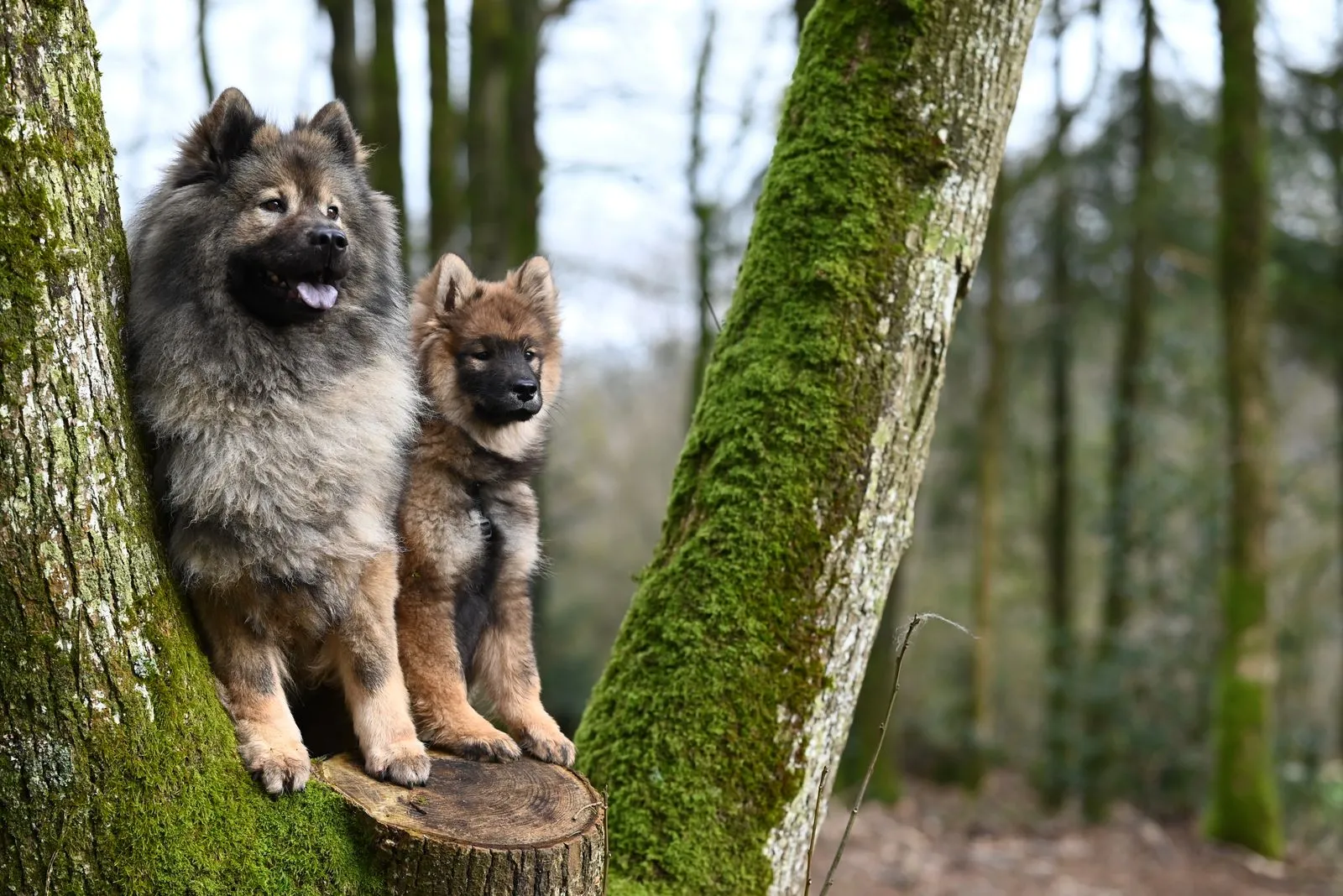
The system should follow the goal and the pair, never the other way round. Want to fix and stabilize a trait a family reliably carries, in dogs healthy enough to bear the concentration? A measured degree of linebreeding may serve. Need to bring in something your line lacks, or open up a narrowed gene pool? Outcross. And note the floor. Several bodies restrict the closest matings. The FCI advises that sibling, mother–son and father–daughter matings should never be done. The Royal Kennel Club will not register them except in rare cases with a proven welfare reason. In the European Union, Regulation (EU) 2026/1818 bans breeding between parents and offspring, siblings, half-siblings, and grandparents and grandchildren, unless the competent authority approves it to preserve a local breed with a very small gene pool. So the tightest inbreeding is not just risky but, increasingly, not permitted. Check when and how these rules apply in your country — see dog breeding laws.
What the kennel clubs say
Some national clubs ban these matings outright. The Swedish Kennel Club (SKK), for example, does not allow father–daughter, mother–son or full-sibling matings.
Source: Swedish Kennel Club (SKK), Basic rules (Grundregler), in force from January 1, 2026.
Last updated: November 8, 2026
Rules change, so always check with your own kennel club.
In practice
A line has become narrow and health markers are creeping the wrong way. Rather than linebreed again on the usual dogs, the breeder deliberately outcrosses to add diversity, accepting less predictable type this generation as the price of a healthier line next. The goal — long-term health — chose the system.
(Illustrative, composite scenario.)
Work on it
A few minutes here will teach you more than re-reading the article.
Ask yourself
- Am I choosing a breeding system for a specific goal, or out of habit or identity?
- If I’m concentrating traits, have I honestly accounted for the faults I’m concentrating too?
- Do I know my line’s diversity is holding up, not quietly narrowing?
Find out & check
- Find out the inbreeding coefficient of a planned combination and how it compares to your breed’s average.
- Check which close matings are restricted by law where you breed.
Do one thing
- For your next planned mating, write down which system it is, and the specific goal that system serves.
Was this article helpful?
Anonymous. We do not store your name, email or IP address.
Sources & further reading
- Fédération Cynologique Internationale — International Breeding Strategies. fci.be
- European Union — Regulation (EU) 2026/1818 on the welfare of dogs and cats and their traceability (Art. 8). eur-lex.europa.eu
- The Royal Kennel Club — Inbreeding calculators. royalkennelclub.com
- Bannasch D et al. (2021), Canine Medicine and Genetics 8:12 — The effect of inbreeding, body size and morphology on health in dog breeds. doi.org
- Lewis TW, Abhayaratne BM, Blott SC (2015), Canine Genetics and Epidemiology 2:13 — Trends in genetic diversity for all Kennel Club registered pedigree dog breeds. link.springer.com
- Farrell LL et al. (2015), Canine Genetics and Epidemiology 2:3 — The challenges of pedigree dog health: approaches to combating inherited disease. link.springer.com
The genetics behind these systems — coefficients, diversity, risk — are covered in the Genetics area. Recommendations may be updated as knowledge develops.
Next steps
- Read next: Designing a long-term breeding program.
- Related: Pedigree and family analysis · Dog breeding laws.
- Return to the area hub: Building a breeding program.