Every breeder reaches the day when a dog’s last litter is behind her. For some dogs the best retirement is staying exactly where they are. For others, especially in a busy kennel, a quieter home with more one-to-one attention is the kinder choice. Neither is wrong. What matters is that the decision is made for the dog, planned in advance, and followed through with care.
The most important first
- Decide on the dog’s long-term interest, not on convenience or kennel space. Some dogs are happiest staying; others thrive as an only dog.
- A dog raised mainly in a kennel may find a house frightening at first. Expect fear, house-soiling and a slow start, and choose a home that is ready for that.
- Settle spay or neuter status, health records and a vet check before the dog moves.
- Put everything in a written agreement, including what happens if the home does not work out. Your responsibility does not end at the door.
Keep or rehome: making the decision
Researchers at Purdue University’s canine welfare program frame retirement as an ethical obligation: whether the dog stays or goes, the breeder is responsible for her well-being at the end of her breeding career, and the decision should rest on her long-term interest. They recommend setting clear criteria for both physical and behavioral health, and assessing each dog early and often against them.
Questions worth asking honestly:
- Does she get enough individual time, exercise and enrichment here, now that she is not the center of a litter?
- How does she cope with the other dogs? Is she being pushed around by younger females, or is she the settled matriarch who keeps the peace?
- Is she relaxed in a house, or does she only feel safe in the kennel routine she knows?
- Does she have a health problem that a new family would need to manage, and could they?
A dog with significant fear or health problems may need work before she is ready to move, and some should not be rehomed at all. Keeping her is a valid decision. So is placing a dog who would blossom with a family of her own.
Kennel-raised dogs and house dogs adjust differently
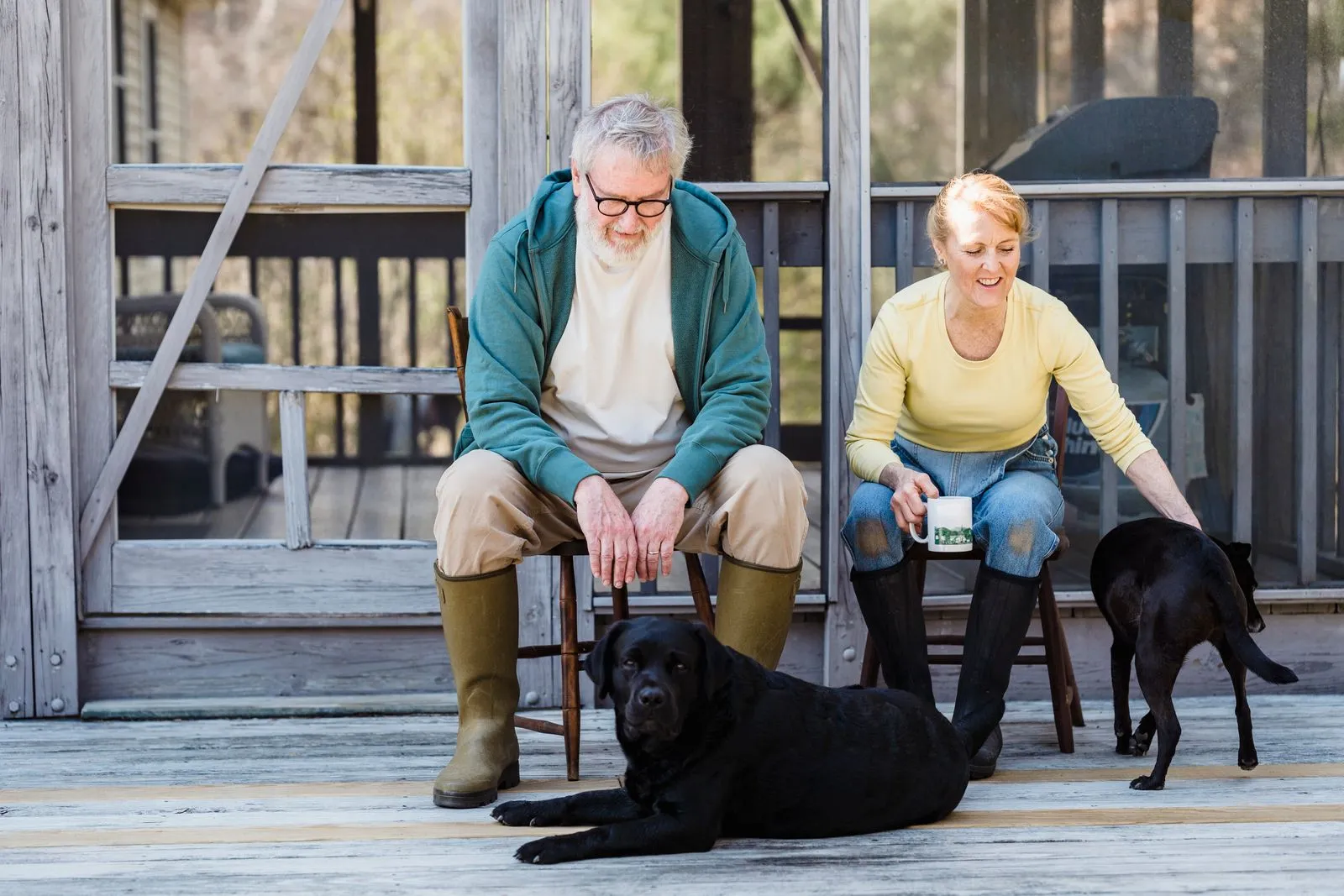
A dog who has lived in the house, traveled to shows and met visitors will often move with little fuss. A dog raised mainly in a kennel may never have climbed stairs, heard a dishwasher or been touched by a stranger.
The best data come from commercial breeding kennels, which are not the same as most hobby and show kennels, so read them as a warning rather than a prediction. In a 2011 study of 1,169 dogs formerly kept as breeding stock in commercial establishments, owners reported significantly higher social and nonsocial fear, more house-soiling and more compulsive staring than in matched pet dogs. In a later Purdue study of 590 dogs in 30 commercial kennels, most dogs were friendly when a person approached but became more fearful when someone opened the pen or reached to touch them. Dogs who were friendly in the kennel were more trainable and less fearful in their new homes, and all 32 adopters surveyed were satisfied with their dog.
The practical lesson is that preparation starts long before retirement. The Purdue team stresses that lifelong, gentle socialization and exposure to household life are what prevent later problems with fear and anxiety. Adult dogs in many kennels get less socialization and training than puppies do. If you plan to rehome retired dogs, start bringing them into the house, walking them on a leash and handling them in new places well before their last litter.
Choosing the right home
A retired breeding dog is not a puppy, and the right home for her may not be the right home for a puppy. Look for:
- Patience and realistic expectations. A fearful dog may take weeks or months to settle. People who want an instantly cuddly companion may be disappointed.
- A calm household. For many retired dogs, an adult home without small children is easier at first. A confident, friendly resident dog can help a nervous one, but only if she actually likes other dogs.
- Time. Someone home for much of the day makes house-training and settling far easier.
- A secure yard and a well-fitted harness. Frightened dogs can bolt.
Meet the family more than once, ideally with the dog. The Royal Kennel Club’s Code of Ethics asks breeders to sell only where the dog can reasonably be expected to have a happy, healthy life, and Dogs Australia’s Code of Practice requires members to make sure the person taking a dog understands its needs and has the time and facilities to meet them. The same standard applies to a retired adult.
Preparing the dog and planning the move
Croney and Shreyer recommend low-stress handling, reward-based training of basic skills (walking on a leash, sit, come), and gradual acclimation to a home setting. In the weeks before the move, bring her into the house for longer periods, practice car travel and handling by strangers, and send her bed, a familiar blanket and her usual food with her.
In the new home, advise the family to give her a quiet, secure resting area, keep the routine predictable, and ideally set up her space to resemble what she knows. Expect possible setbacks: fearfulness, house-training lapses, picky eating and unexpected health costs. Ask the family to keep visitors low for the first couple of weeks and to house-train her as if she were a puppy.
A trial period before the placement is final gives both sides a clear moment to say “this is working” or “this is not.”
Health records, spay status and a vet check
Before she leaves, arrange a full veterinary examination and bring her vaccinations, parasite control and dental care up to date. Give the family copies of her health records, test results, litter history and any known conditions. The Purdue team lists sharing health and behavioral records as part of setting the new family up to succeed. Dogs Australia requires members to supply a current vaccination certificate and microchip transfer details, and, for a dog with a known health issue, a signed acknowledgement from the new owner.
Most breeders spay or neuter retired dogs before placement, which the Purdue guidance recommends to prevent any further breeding, intentional or not. For bitches there is a health reason as well: pyometra is typically seen in intact bitches over six years old, often within weeks of a heat. If you decide not to spay, for example because of an anesthetic risk your vet has identified, tell the new family about pyometra and its warning signs in writing. See our articles on spay and neuter after breeding and pyometra.
Transfer the microchip and, where your registry allows it, the registration papers.
The written agreement and the return clause
Put the arrangement in writing, even when the dog is going to a friend. A clear agreement usually covers the dog’s identity and health status, any trial period, spay or neuter status, any fee, what happens if the new owner can no longer keep her, and how you will stay in touch.
The most important clause for most breeders is a return clause: if the home cannot keep her, she comes back to you rather than going to a shelter or a stranger. This mirrors kennel club ethics. The Royal Kennel Club asks breeders to help rehome a dog if circumstances change. Dogs Australia says a member who places a dog with another person remains ultimately responsible for that dog, and bars members from handing dogs to pounds or refuges. If you cannot take a dog back yourself, breed club rescues are a fallback; in the United States, the AKC Rescue Network links more than 450 groups, most of them run by national breed clubs.
A note on legal information
This is general information, not legal advice; rules differ by country and change — check your registry and local law.
Whether a return clause, a right of first refusal or a no-breeding condition can be enforced once ownership has transferred depends on where you live. Have a lawyer or your registry check your wording. Our article on buy-backs, returns and rehoming goes further.
Staying in touch
Agree in advance how often you will hear from the family, and make it easy: a message after the first night, the first week and the first month, then occasional photos. Dogs Australia expects breeders to maintain reasonable contact with buyers and offer continued advice, and the Purdue guidance recommends reassessing after the move and adjusting the plan if needed. If a problem comes up, an early call to you is far better than a quiet decision to give her up.
When to call your vet
- Before the move, for a full check, vaccinations, dental assessment and any spay or neuter decision.
- An intact bitch who seems unwell, drinks or urinates more, vomits or has a vaginal discharge in the weeks after a heat (possible pyometra).
- She has not eaten for more than a day or two after the move, or is losing weight.
- Vomiting, diarrhea or straining that lasts more than a day, or any blood in vomit or stool.
- House-soiling that continues or suddenly worsens after she seemed to be settling, which can have a medical cause.
- Fear or anxiety so severe that she cannot eat, rest or be handled. Ask for a referral to a veterinary behaviorist.
- If in doubt, call — your vet would rather hear from you early.
Work on it
A few minutes here will teach you more than re-reading the article.
Ask yourself
- For each dog nearing retirement: is she happiest here, or would she thrive as someone’s only dog? What would change your mind?
- How much of her life has she spent in the house, and how would she cope with a busy home tomorrow?
Find out & check
- What does your registry say about transferring an adult dog, and do its ethics rules require you to help with rehoming?
- Ask a lawyer or your registry whether your return-clause wording is enforceable where you live.
Do one thing
- Pick one dog who will retire within a year and start bringing her into the house for an hour a day this week.
Was this article helpful?
Anonymous. We do not store your name, email or IP address.
Sources & further reading
- Purdue University Canine Welfare Science (Croney & Shreyer) — Rehoming Breeding Dogs (2021). caninewelfare.centers.purdue.edu
- Purdue University Canine Welfare Science — Retiring & Rehoming: Behavioral Considerations. caninewelfare.centers.purdue.edu
- Purdue University, Croney Research Group — Management and behavioral factors associated with rehoming outcomes of dogs retired from commercial breeding kennels. caninewelfare.centers.purdue.edu
- Faunalytics — Mental Health of Dogs Formerly Used as “Breeding Stock” in Commercial Breeding Establishments (summary of McMillan, Duffy & Serpell, Applied Animal Behaviour Science, 2011). faunalytics.org
- The Royal Kennel Club — The Royal Kennel Club Code of Ethics. royalkennelclub.com
- Dogs Australia — Code of Practice (July 2023). dogsaustralia.org.au
- American Kennel Club — AKC Rescue Network. akc.org
- American Kennel Club (Erin Rakosky, DVM) — The Danger of Pyometra in Intact Females. akc.org
Where evidence is limited, recommendations rest on established practice and expert judgment, and may be updated as knowledge develops. This article is general information and does not replace an examination by your veterinarian. If you suspect an emergency, contact a veterinarian immediately.
Next steps
- Read next: When to retire a breeding dog.
- Related: Spay and neuter after breeding.
- Related: Buy-backs, returns and rehoming.