A puppy that sleeps well is easier to live with, learns faster and chews less — and a puppy that learns early that short spells alone are safe is far less likely to struggle with being left as an adult dog.
The most important first
- Expect a lot of sleep. Young puppies sleep for much of the day and night, in many short naps. Protect those naps from children, visitors and noise.
- Give your puppy one safe place to rest: a crate or a small pen, in a quiet spot, with a soft blanket and a chew. Make it a good place, never a punishment.
- Keep the crate near you at first, so you hear when your puppy wakes and needs the toilet at night.
- Teach time alone in tiny steps, from seconds to minutes, starting in the first week. Move on only while your puppy stays calm.
- Do not punish crying, accidents or chewed things when you come back. Punishment makes a worried puppy more worried.
How much sleep is normal
Figures vary between sources. The American Kennel Club describes puppies sleeping 18 to 20 hours a day, while VCA Animal Hospitals gives 10 to 14 hours and says that variation is normal. What they agree on is that puppies sleep a great deal, in many naps: the AKC describes naps roughly every hour, lasting from half an hour to two hours.
Sleep matters more than the exact number. A puppy that is kept awake by games, visitors or a busy room often becomes nippy and wild rather than tired — the “overtired puppy” many owners recognize. Build quiet times into the day after play, meals and walks, and teach children to leave a sleeping puppy alone.
Sleepiness is normal; dullness is not. A puppy that is suddenly much sleepier than usual, will not play, or is eating less should be checked by your veterinarian. VCA also notes that flat-faced breeds can have breathing problems during sleep; loud snoring or gasping is worth mentioning to your vet.
A crate or a pen
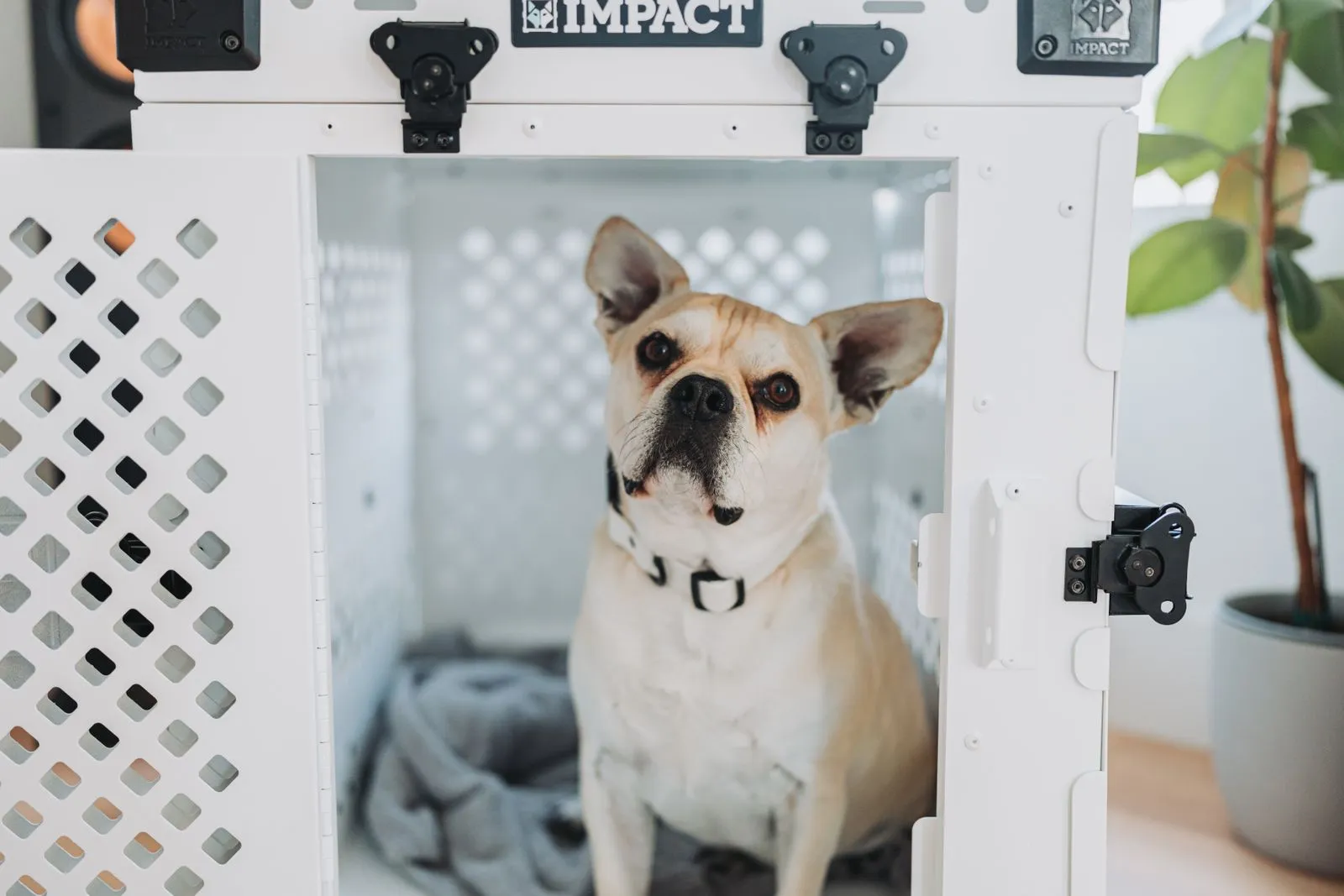
A crate or a small puppy pen gives your puppy a safe place to sleep and somewhere to be when you cannot watch it. It also helps house-training, because most puppies avoid soiling the place where they sleep.
- Size: the AKC advises a crate just large enough for your puppy to stand up, turn around and lie down comfortably. Too much space lets a puppy toilet at one end and sleep at the other. Many owners buy a crate for the adult size and use a divider.
- Place: somewhere quiet but not isolated. At night, many owners keep it in or near the bedroom for the first weeks.
- Inside: a cheap, washable blanket rather than an expensive bed — puppies chew — and a safe chew toy. Remove anything torn. More on what puppies swallow is in puppies and swallowed objects.
- Never as punishment. Humane World for Animals is clear that the crate should never be used to punish, and should be linked with good things instead.
Some puppies are used to a crate from the breeder; others have only known a pen. Ask your breeder what your puppy is used to, and start from there.
Introducing the crate
Go slowly, and let your puppy choose to go in.
- Leave the door open and toss a treat or a piece of kibble inside whenever your puppy goes near it. The AKC suggests giving treats every few seconds while your puppy stays inside.
- Feed meals in or beside the crate, and give a stuffed chew toy only there.
- Close the door for a few seconds while your puppy is busy eating or chewing, then open it before it wants to come out.
- Build up the time gradually, with you nearby at first, then out of sight for short moments.
Do not force your puppy in or leave it to “cry it out.” If it panics, go back a step.
How long in the crate
A crate is for resting and short spells, not for most of the day. Humane World for Animals advises that puppies under six months should generally not be crated for more than three or four hours at a time, because they cannot control bladder and bowels for longer. The AKC’s rule is simpler: never longer than your puppy is comfortable or can hold its bladder. A dog that spends most of its time in a crate gets too little exercise and company. If your days are long, plan for someone to come in, or for daycare.
The first nights
Most puppies cry in the first nights: everything is new, and they have never slept without their littermates. Keep the crate near your bed so your puppy can hear and smell you. Take it to the toilet last thing before bed and when it wakes in the night. Humane World for Animals advises not letting a puppy out just because it whines, but if the crying goes on for several minutes and it may need to go, take it out for a quiet, boring toilet trip — no play — and back to bed. The toilet routine at night is covered in house-training your puppy, and the first night more broadly in the first day and the first week.
Teaching your puppy to be alone
Many adult dogs find being left hard. The RSPCA says eight in ten dogs struggle when left alone, and half show no obvious signs. Bristol’s veterinary behaviour clinic describes separation-related problems as common but, in most cases, preventable — which is why practice starts with a young puppy.
- Start while you are at home. Let your puppy settle in its bed or crate with a chew while you sit nearby. Reward calm.
- Move away for a few seconds, come back, and reward calm. Then go out of sight briefly.
- Practice leaving the room and closing the door, then going out of the house for a minute or two. Vary the time.
- Build up slowly. Move on only while your puppy is calm; if it whines or scratches, go back to the last easy step.
- Make leaving boring and coming back calm. No long goodbyes, no excited greetings.
Before longer absences, give your puppy exercise, a toilet trip and a small meal or a stuffed chew. The RSPCA advises that adult dogs should not be left for more than four hours; a young puppy needs much shorter spells.
If you are not sure what happens when you are out, film your puppy. Barking, howling, chewing at doors, accidents, drooling, pacing or not touching a chew can all be signs of distress. Never punish what you find when you come home: the RSPCA and the Bristol clinic both warn that it makes dogs more anxious about being left and about your return.
In practice
A couple with a twelve-week-old puppy both go back to work after two weeks at home. In the first days the puppy cries whenever they leave the room. They start again with tiny steps: a chew in the pen, one of them walking to the door and back, then out of the room for ten seconds, then a minute. By the end of the second week the puppy settles with its chew while they go out for twenty minutes, and they film it to check. For workdays, a neighbor comes in at lunchtime for a toilet trip and play.
(Illustrative scenario · Details changed.)
When to call your veterinarian
- Your puppy is suddenly much sleepier or duller than usual, will not play, or is eating less.
- It snores very loudly, gasps or seems to struggle to breathe while asleep.
- It has swallowed bedding, part of a toy or anything else from its crate.
- It is so distressed when left that it hurts itself, damages its mouth or nails, or soils every time — ask about a veterinary behaviorist.
- If in doubt, call — your vet would rather hear from you early.
Work on it
A few minutes here will teach you more than re-reading the article.
Ask yourself
- Where does my puppy sleep during the day, and is it really undisturbed?
- Does my puppy go into its crate or pen by choice?
- Have I practiced leaving it alone, even for a minute, this week?
Find out & check
- Ask your breeder whether your puppy is used to a crate, a pen or neither, and how it slept with the litter.
Do one thing
- Film your puppy for ten minutes the next time you leave the room, and watch what it does.
Was this article helpful?
Anonymous. We do not store your name, email or IP address.
Sources & further reading
- American Kennel Club (Stephanie Gibeault, MSc, CPDT) — Everything You Need to Know About Crate Training Your Dog. akc.org
- Humane World for Animals — How to crate train your dog or puppy. humaneworld.org
- American Kennel Club (Jan Reisen) — How to Make Sure Your Puppy Gets Enough Sleep. akc.org
- VCA Animal Hospitals — How Much Sleep Do Puppies Need. vcahospitals.com
- RSPCA (England and Wales) — Training your dog to be left alone. rspca.org.uk
- Animal Behaviour Clinic, University of Bristol — Separation related behaviours (leaflet). bristol.ac.uk
- PDSA — Your first day (and night) with a new puppy. pdsa.org.uk
Where evidence is limited, recommendations rest on established practice and expert judgment, and may be updated as knowledge develops. If your puppy is very distressed when left, ask your veterinarian for help or a referral to a qualified behavior professional. This is general information and does not replace advice from your veterinarian.
Next steps
- Read next: House-training your puppy.
- Related: The first day and the first week with your puppy.
- Return to the guide: Your new puppy.
How we choose sources, date reviews and correct mistakes: How we research and review →