Choosing where a puppy goes is decided in conversation rather than on a form — and the conversations that tell you most are the ones where you ask little, say almost nothing for long stretches, and pay more attention to what the person volunteers than to what they answer.
The most important first
- Ask open questions and then stop talking: what someone offers unprompted is worth more than their answer to a question they could see coming.
- The Kennel Club’s guidance for its Assured Breeders scheme, which closed on 31 December 2024, expected breeders to take suitable precautions over a purchaser’s suitability, to work from a standard set of questions, to consider visiting the prospective home, and not to sell where there is reasonable doubt.
- Speak to everyone who will live with the dog, not only the person who wrote to you — one video call around a kitchen table is worth three email exchanges with a single household member.
- Decline early, in one clear message, without itemizing the reasons: a kindly worded no that is final is easier to receive than a maybe that never resolves.
- Write down what was said and what each side promised. This article is about running the conversation; the judgment you bring to it is in assessing prospective puppy buyers.
What the interview is actually for
Screening is usually described as filtering, and that description produces poor interviews. A breeder who believes the task is elimination asks closed, slightly prosecutorial questions, gets short defensive answers, and learns little except how well the applicant performs under suspicion. The breeders who do this well are not interrogating anyone; they are having an unhurried conversation with someone who may be in their life for fourteen years.
The conversation has three jobs. The first is to collect information no questionnaire will surface — the aside about the landlord, the sentence that reveals the dog is really a present for someone else, the pause before the answer about who will walk it in February. The second is to give the buyer enough honest detail about the breed and about this litter that they can withdraw without embarrassment; a well-run interview should occasionally end with the buyer deciding against you, and that is a success. The third is to set the tone of a working relationship: how you behave now is what they will expect when something goes wrong at eighteen months.
It sits between the triage described in inquiries and managing a waiting list and the later decision about which puppy suits which approved home, in matching puppy to home.
Questions that cannot be answered with yes
The single most useful change most breeders can make is to stop asking questions with an obvious right answer. “Will the dog be left alone all day?” invites the word no, and teaches you nothing. “Talk me through a normal Tuesday in your house, from waking up to bedtime” invites a description, and descriptions contain detail that people do not think to edit. “Tell me what you think a week of coat care looks like” works the same way, where “Are you prepared for the grooming?” does not.
Then let the silence sit. Most people fill a pause with the thing they were hesitating over, and that is usually the most informative part of the call. Follow up rather than moving on: ask what happened with the last dog they owned, what they found hardest, what they would do differently. Take the answers to a written set of themes so the same ground is covered with everyone — a full set is in the buyer interview question set — but use it as a guideline rather than a script. The American Kennel Club’s account of how experienced breeders screen buyers describes exactly that pattern: a questionnaire used as a guide, always followed by speaking to the buyer directly, because tone carries information that text does not. The same account describes breeders taking up references, including trainers and previous puppy owners, and acting on what those references say.
Home visits, video calls and meeting the household
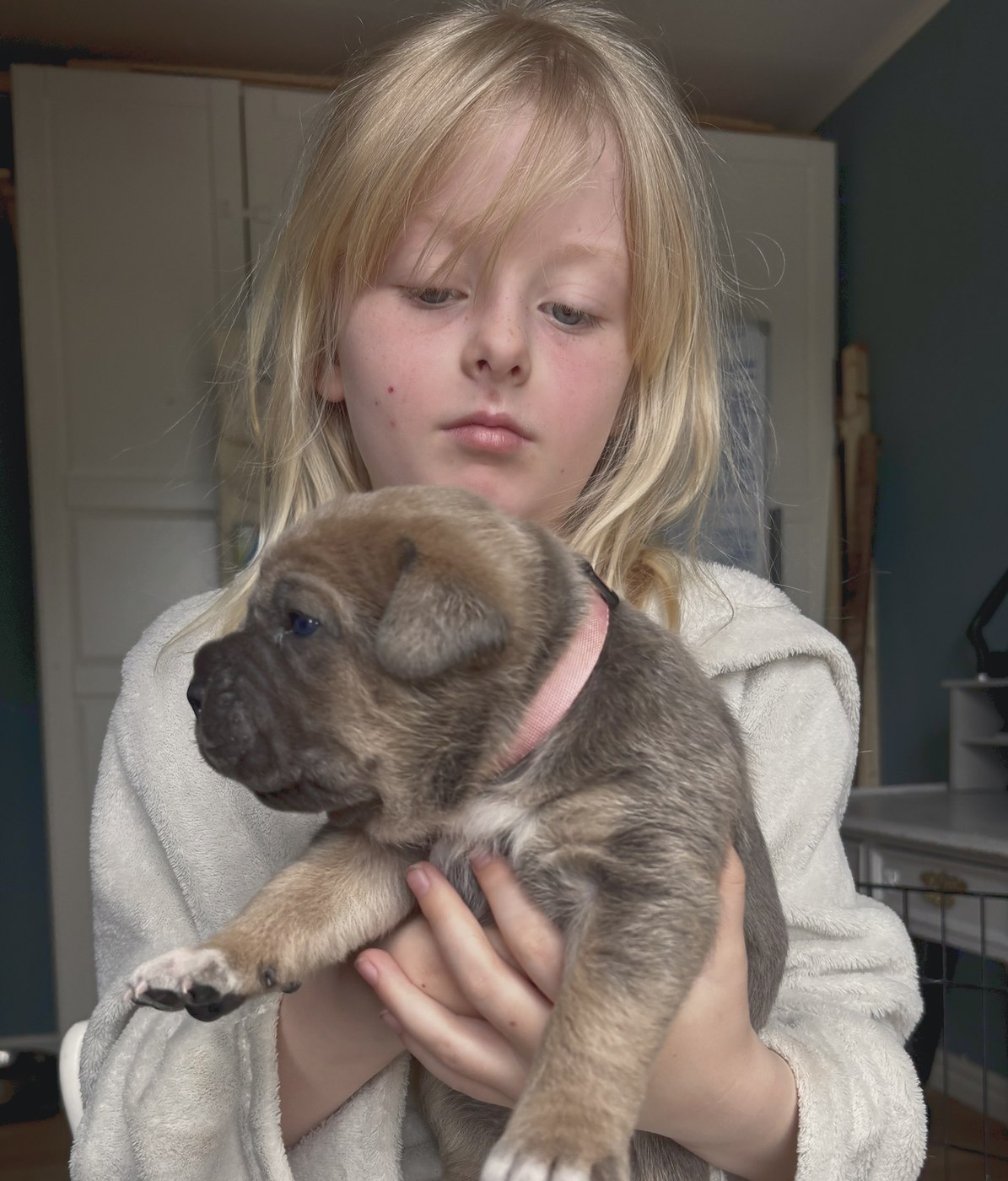
A home visit is not an inspection of someone’s taste. You are looking at specific things: what the garden boundary actually is, where the dog would sleep, whether the stairs and floors suit the breed, who is in the house during the day, and how the existing animals behave when a stranger arrives. Ten minutes in a hallway answers questions twenty messages cannot.
Visits are not always practical, and a video call is a reasonable substitute if you ask for the same things: have them walk you round the garden, show you the boundary and the room the puppy will be in. The traffic runs both ways, too — buyers are told by kennel clubs to come and see the litter with the dam, so a buyer who does not want to visit deserves as much thought as one you cannot visit. If they are coming before the puppies are fully protected, manage it rather than refusing it, as set out in infection control and biosecurity for the litter.
Visits work both ways. Before anyone comes to your home, ask for their full name and a photo ID, and where you can, have another adult present — the Royal Kennel Club gives the same advice. Keep visits to the litter calm and clean: hand washing on arrival, outdoor shoes off before the puppy area, and ask people not to come straight from another kennel, a shelter or a dog that is unwell.
Insist on meeting the whole household. Children who will live with the dog should be there for part of it, because how a six-year-old behaves around a litter is not information you can get secondhand. So should the adult who has not said much: placing a puppy with an enthusiastic person whose partner is quietly unconvinced is a common and avoidable failure.
In practice
A breeder approves a family after two long telephone calls and a detailed questionnaire, all with the same parent. A video call is arranged mainly as a formality, and the second parent joins for the first time. Within minutes it is clear the family is moving abroad within the year and has not established whether the breed can be housed where they are going. Nobody had lied; the question had never been asked in front of the person who knew the answer. The placement is postponed rather than refused, and they come back the following year.
(Illustrative, composite scenario.)
Saying no
Most breeders handle this badly by handling it slowly. A decision left vague becomes months of hope, and more resentment than an early refusal would have caused. Decline in writing, promptly, in one short message, and say the decision is final.
Do not supply a list of faults. An itemized refusal reads as an argument to be won, and you will spend two weeks defending each point. “Having thought about it carefully, I do not think one of my puppies is the right dog for your household, and I will not be able to help you” is complete. Be useful in the same message where you can: point them toward a breed that suits their circumstances better, or another breeder whose dogs might, which is what experienced breeders in the AKC’s account describe doing. Keep the refusal separate from money — a deposit taken before you had decided is dealt with on the terms you set out, which is why those terms belong in pricing, deposits and payment.
A written record of what was discussed
Write your notes up the same day, while you can still remember the tone. Keep them short and factual: who you spoke to, when, what they told you about work patterns and other animals, what you told them about the breed’s health and temperament, and anything either side undertook to do. Two years later, when a buyer is certain you promised something, the only thing that settles it calmly is a contemporaneous note or the summary email you sent afterwards — and a short confirming email after every substantial call is the cheapest protection either of you will get.
Keep it proportionate. You are holding personal information about people, and data protection rules in many countries expect you to collect only what you need, hold it securely and not keep it indefinitely. Notes on approved homes stay with the puppy’s record; notes on people you declined do not need keeping for years.
Work on it
A few minutes here will teach you more than re-reading the article.
Ask yourself
- How many of my standard questions can be answered with a single word, and what would the open version sound like?
- Have I ever placed a puppy without speaking to every adult in the household?
- When I last declined someone, how long did they wait, and did I give them a list to argue with?
Find out & check
- Read your own registry’s or scheme’s current expectations on vetting purchasers, and check that your process meets them rather than assuming it does.
Do one thing
- Rewrite three of your closed questions as open ones, and use them on the next inquiry.
Was this article helpful?
Anonymous. We do not store your name, email or IP address.
Sources & further reading
- American Kennel Club — Screening Puppy Buyers: How Top Breeders Find the Best Homes. akc.org
- American Kennel Club — AKC’s Guide to Responsible Dog Breeding. akc.org
- The Royal Kennel Club — Kennel Club announces registrations model update and closure of the ABS (July 2024). royalkennelclub.com
- The Royal Kennel Club — Questions to ask the breeder. royalkennelclub.com
- The Royal Kennel Club — Selling your puppies. royalkennelclub.com
- Dogs Australia (ANKC) — National Code of Practice of Responsible Dog Ownership (July 2023). dogsaustralia.org.au
- UK Information Commissioner’s Office — A guide to the data protection principles. ico.org.uk
Where evidence is limited, recommendations rest on established practice and expert judgment, and may be updated as knowledge develops. This is general information, not legal or financial advice: requirements differ between countries and change over time — have your own documents reviewed by a qualified professional in your jurisdiction.
Next steps
- Read next: Buyer interview question set.
- Related: Assessing prospective puppy buyers · Handling difficult questions from puppy buyers.
- Return to the area hub: From first inquiry to settled puppy.