Biosecurity for a litter is mostly unglamorous: what comes in on shoes and hands, whether the floor was cleaned before it was disinfected, and who gets to visit in the weeks when the puppies are least protected.
The most important first
- Puppies between roughly six weeks and six months are the most susceptible group there is — old enough to have lost maternal protection, too young to have finished their vaccinations.
- Parvovirus survives indoors at room temperature for at least two months, and outdoors, protected from sunlight, for many months and possibly years.
- Cleaning and disinfecting are two different jobs: organic matter must be physically removed first, or the disinfectant will not work.
- Quaternary ammonium products are not reliable against parvovirus; dilute bleach, potassium peroxymonosulfate and accelerated hydrogen peroxide are.
- Work from the most vulnerable animals to the least — healthy puppies first, sick animals last, never the other way around.
What you are actually protecting against
The organism that shapes breeder biosecurity is canine parvovirus, because of how it behaves outside a host. It is shed in feces and spreads either by direct contact or indirectly on contaminated objects — bowls, bedding, boots, hands, wheels, a visitor’s trouser leg. Indoors at room temperature it stays infectious for at least two months. Outdoors, sheltered from sunlight and drying, it can persist for many months and possibly years. And the dogs most at risk are exactly the ones in your puppy room: young, unvaccinated or incompletely vaccinated.
That combination is why a litter’s protection cannot rest on vaccination alone. The series is not complete until well after the puppies have left, as covered in vaccination and immunity in puppies, so for the whole time they are with you, management is doing most of the work.
Parvovirus is not the only concern. Coccidia and Giardia are common in litters and are harder to remove: coccidia eggs resist most disinfectants, and Giardia cysts can infect as soon as they are passed. For these parasites, picking up feces straight away, drying surfaces thoroughly and steam cleaning do more than any spray.
Cleaning first, then disinfecting
These are separate steps and the order is not negotiable. Cleaning is the physical removal of feces, urine, food and bedding debris, followed by washing with detergent. Disinfecting is what you do to an already-clean surface. Organic material inactivates disinfectants, so spraying a soiled floor mostly produces a wet soiled floor.
Contact time is the second thing people skip. Every product has a dwell time it needs to achieve what the label claims; wiping it straight off means it did not have the chance to work. Clean, apply, wait the stated time, then rinse and dry. Diluted bleach needs to stay wet on the surface for at least ten minutes, or for whatever time the product label states, to work against parvovirus. Never mix products: some disinfectants cancel each other out, and some combinations give off harmful fumes. Ventilate, let surfaces dry completely, and keep puppies out until they have.
Choice of product matters as much as technique. Quaternary ammonium disinfectants — the default in many households — are not reliable against parvovirus. Dilute bleach (in the region of one part 5% household bleach to thirty of water), potassium peroxymonosulfate, and accelerated hydrogen peroxide products are the ones used where parvovirus is a real risk. Accelerated hydrogen peroxide is often the practical choice around animals, being gentler than bleach on surfaces and lungs. Whatever you choose, use a product whose label claims efficacy against parvovirus, and follow its dilution and contact time.
One practical detail worth acting on: a scratched or damaged bowl cannot be properly disinfected, however carefully you scrub it. Replace it rather than trusting it.
People, shoes and the order you work in
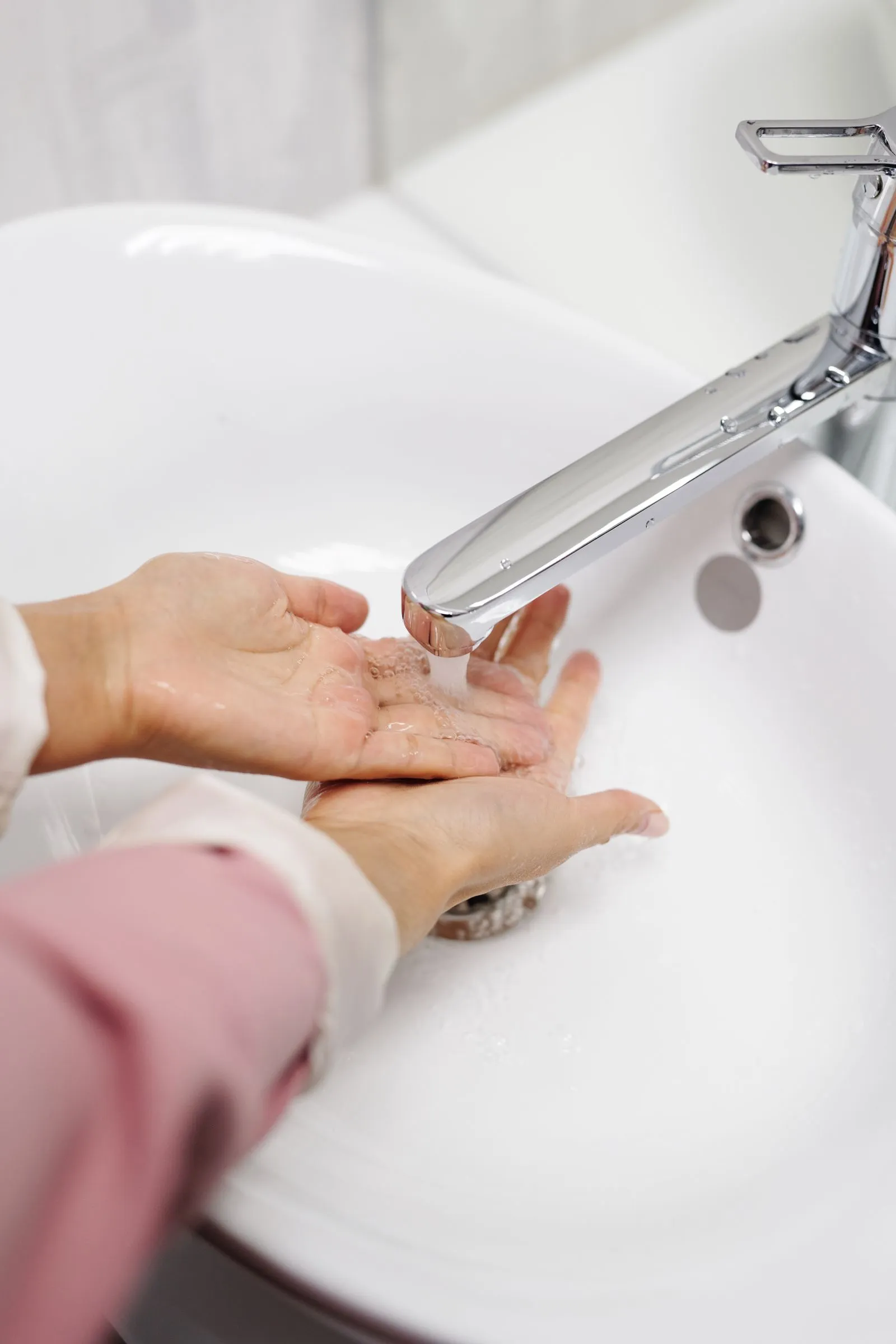
Most infection arrives on people. The straightforward countermeasures are the ones used in veterinary nurseries: clean clothing kept for the puppy room, hands washed or gloved before handling puppies, and footwear that has not been anywhere dogs eliminate. Shoes off, or dedicated shoes, is not fussiness — it is the single cheapest intervention available.
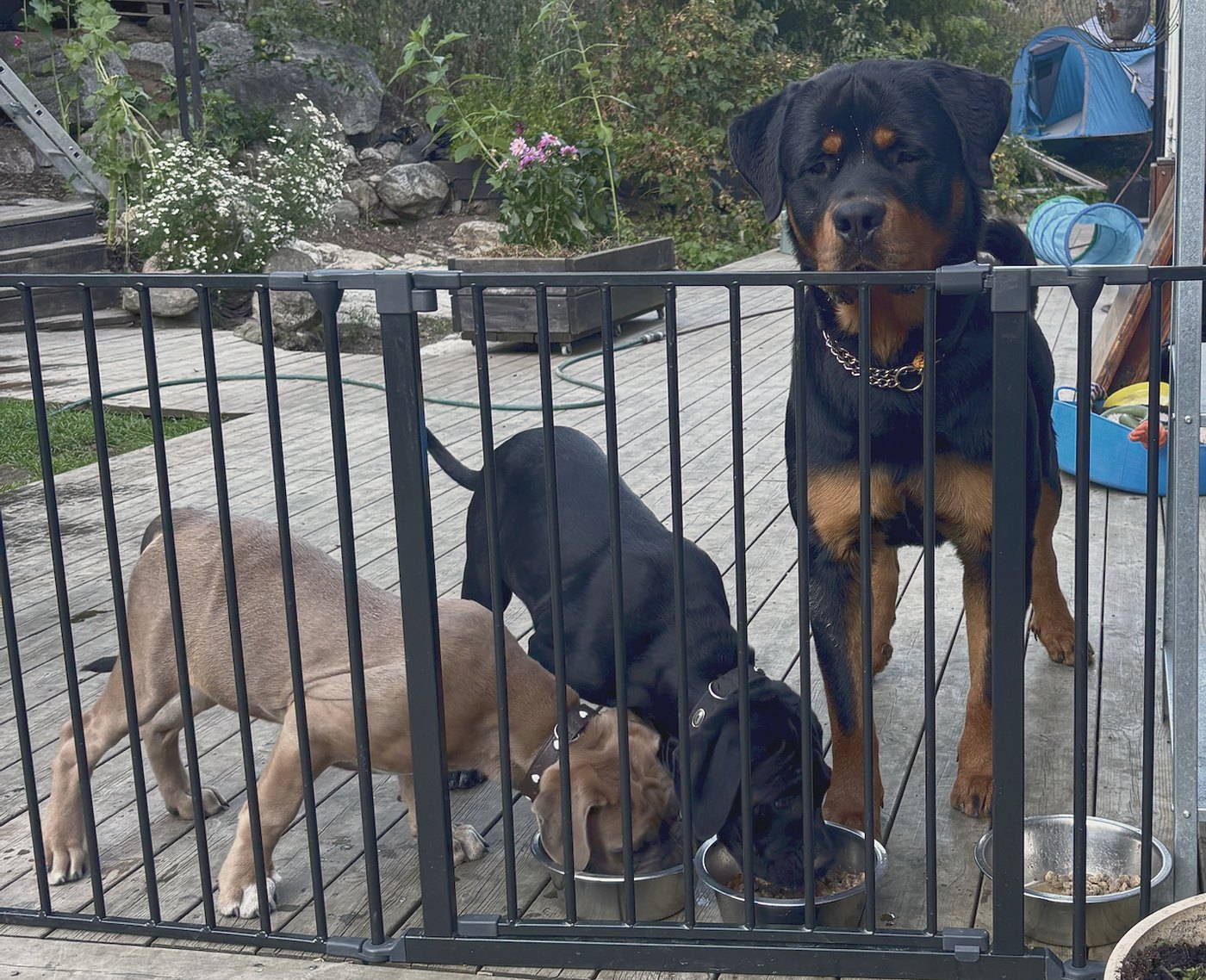
Order of work does the same job inside the house. Deal with healthy puppies first, then healthy adults, then any animal that is unwell — and if you have handled a sick dog, change and wash before going back. A sick puppy in the litter should be cared for last, in its own space, with its own bowls and bedding.
A puppy that has had parvovirus keeps shedding the virus for up to about two weeks after it seems better. Keep it in its own space, with its own equipment, and clean its area last until your vet says isolation can end.
Dogs that leave and return are the other main route in. A dog coming back from a show, a training class, a boarding kennel or a veterinary waiting room has been where large numbers of unknown dogs have been. Keeping that dog away from the litter for a period, and out of the puppy room in its travel clothes and shoes, closes an obvious door. If an adult dog in your home has been in contact with a dog that later turned out to be sick, ask your vet how long to keep it away from the litter — signs can take up to two weeks to appear.
In practice
A breeder is meticulous inside: separate bowls, disinfected floors, clean clothing. The puppies still go down with a gastrointestinal infection at six weeks. The likely route, on reflection, was the garden — the same patch of grass where an adult dog who travels to shows eliminates, walked across daily in outdoor shoes and then brought inside. The indoor routine was excellent; the map of where things traveled from was incomplete.
(Illustrative, composite scenario.)
Outdoor areas, which you cannot disinfect
Grass and soil cannot be disinfected, only rested and left to sunlight. That argues for giving the litter its own outdoor area that unknown dogs have never used, picking up feces immediately, and not taking incompletely vaccinated puppies to places where many dogs eliminate — parks, verges, service areas, the strip of grass outside a veterinary clinic.
Visitors, and the balance to strike
The weeks when the litter is most vulnerable to infection are also the weeks when meeting people does the most developmental good, which is a genuine conflict rather than a rule to be memorized. It is usually resolvable: a limited number of known, healthy visitors, who arrive without having been around sick dogs, shelters or shows that day, take off their shoes, wash their hands before touching puppies, and do not bring their own dog. That gives the litter the human variety it needs, at a fraction of the risk. The developmental half of the question is covered in behavior, development and enrichment.
Do not let biosecurity become a reason to raise a litter in isolation. A puppy that never met a stranger is a problem you will have handed to the buyer for life; a well-managed visit is not.
When to call your vet
- Any puppy has vomiting and diarrhea, especially with blood — isolate it at once and call before you travel so the clinic can prepare
- A dog in your household has been in contact with a dog later confirmed to have parvovirus or another infectious disease
- Diarrhea keeps coming back in the litter despite cleaning and worming
- You need advice on which disinfectant to use and for how long, or when an isolated puppy can rejoin the others
- A puppy that has already gone home becomes ill and the new owner contacts you
- If in doubt, call — your vet would rather hear from you early.
Work on it
A few minutes here will teach you more than re-reading the article.
Ask yourself
- Does my disinfectant actually work against parvovirus, and am I giving it the contact time it needs?
- Do I clean before I disinfect, every time, or sometimes just spray?
- Can I trace every route into the puppy room — shoes, garden, visiting dogs, my own other dogs?
Find out & check
- Check the label of the product you use for its efficacy claims and its stated contact time.
Do one thing
- Set up a shoes-off point and a handwashing point at the entrance to the puppy area, before the litter needs it.
Was this article helpful?
Anonymous. We do not store your name, email or IP address.
Sources & further reading
- Merck Veterinary Manual — Canine Parvovirus Infection (Parvoviral Enteritis in Dogs). merckvetmanual.com
- ASPCApro — Sanitation for Disease Prevention in Animal Shelters. aspcapro.org
- ASPCApro — Shelter Sanitation Part 2 (webinar slides). aspcapro.org
- VCA Animal Hospitals — Parvovirus in Dogs. vcahospitals.com
- Cornell University College of Veterinary Medicine, Riney Canine Health Center — Coccidia in dogs. vet.cornell.edu
- Companion Animal Parasite Council (CAPC) — Giardia guidelines. capcvet.org
- Companion Animal Parasite Council (CAPC) — Ascarid guidelines. capcvet.org
- American Veterinary Society of Animal Behavior (AVSAB) — Position Statement on Puppy Socialization. indoorpet.osu.edu
Where evidence is limited, recommendations rest on established practice and expert judgment, and may be updated as knowledge develops. Disinfectant products, dilutions and availability differ between countries — follow the label and your veterinarian’s advice.
Next steps
- Read next: Common illnesses in the growing litter.
- Related: Daily care and hygiene routines · Spring in the kennel: mud, drainage, giardia and coccidia.
- Return to the area hub: Raising a healthy litter.