You don’t need a genetics degree to breed responsibly, but you do need enough of the vocabulary to read a test result and understand what it means for a pairing. This is that starting point.
The most important first
- Every dog carries two copies of each gene — one from each parent — and which copies it passes on is a matter of chance.
- A carrier has one copy of a recessive variant and is typically healthy, but can pass that variant to its puppies.
- Two carriers bred together can produce affected puppies even though neither parent shows any sign of the condition.
- Most traits that matter in breeding are polygenic — influenced by many genes — not simple single-gene switches.
- Genetic diversity is a breeding decision in its own right, not just a side effect of avoiding disease.
The basics
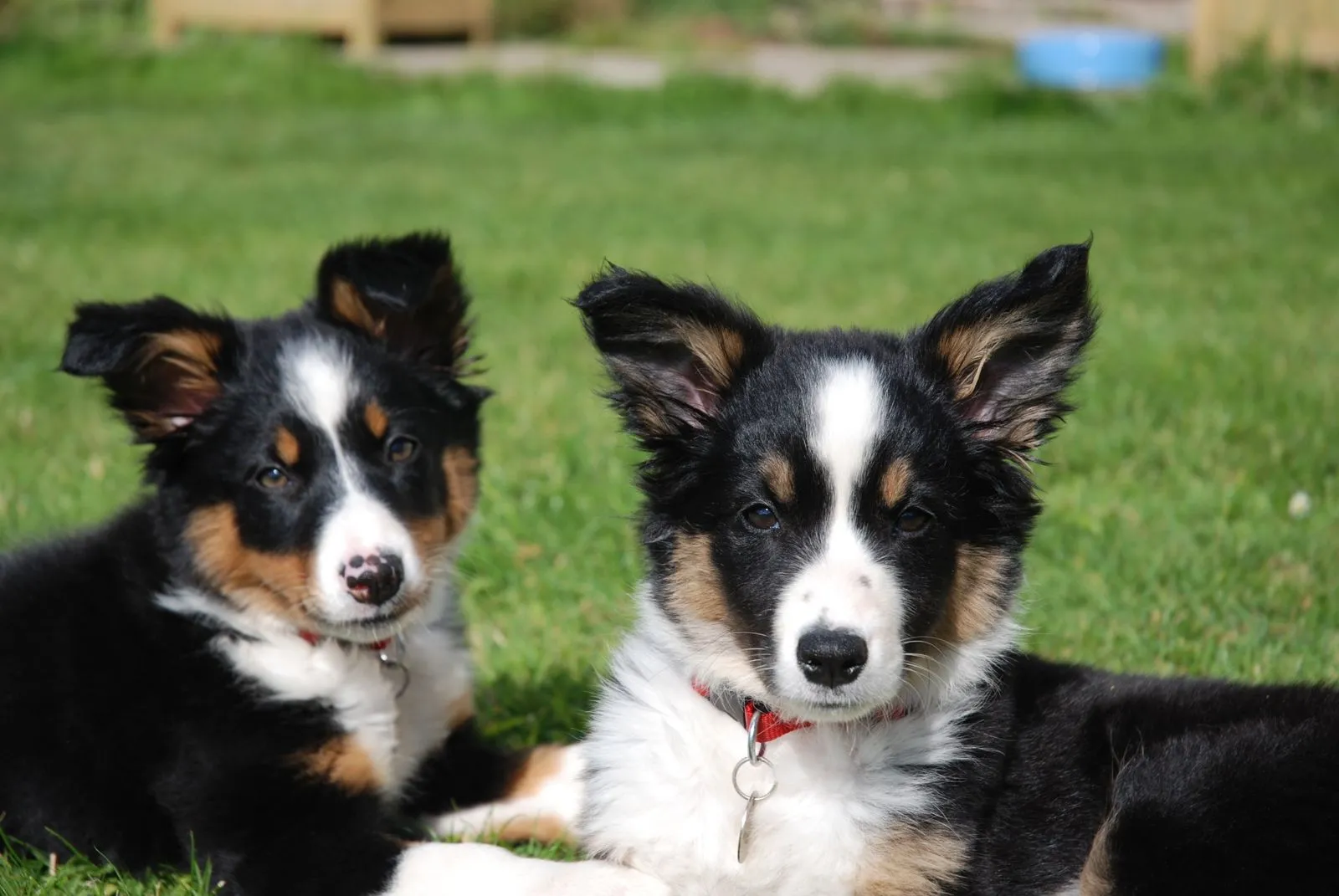
A dog inherits two copies of each gene, one from each parent. Different versions of a gene are called alleles, and which of its two copies a dog passes to any given puppy is essentially a coin flip. This is why littermates differ from each other despite sharing the same parents — each puppy gets its own particular combination.
What makes this practically useful is that different conditions follow different inheritance patterns. Modes of inheritance covers these in detail; the short version is that knowing which pattern a condition follows is what lets you predict the risk in a given pairing rather than guess at it.
Dominant, recessive, and carriers
A dominant variant only needs one copy to have an effect — a dog with it will typically show the trait or condition. A recessive variant needs two copies, one from each parent, before it has an effect. A dog with just one copy of a recessive variant is a carrier: usually completely healthy, showing nothing at all, but able to pass that copy on.
This is the single most consequential idea in practical breeding genetics. Two healthy carriers bred together can produce affected puppies, and neither parent gives any outward clue this was possible. It’s precisely why DNA testing exists for recessive conditions — the test finds what observation cannot, and interpreting DNA results covers what to do with a carrier result once you have one.
When two carriers of the same recessive condition are mated, each puppy has about a 25% chance of being affected, a 50% chance of being a carrier, and a 25% chance of inheriting neither copy. Some conditions sit on the X chromosome instead; because males have only one X, they are affected more often, while females are usually carriers.
In practice
A breeder has two dogs with clean health records and no history of a particular condition anywhere in either pedigree, and assumes the pairing is safe on that basis. Both turn out to be carriers of the same recessive variant. Understanding that carriers are healthy and invisible without testing — and that pedigree history alone cannot rule them out — is what makes the DNA test worth running before the mating rather than after the litter arrives.
(Illustrative, composite scenario.)
Why diversity matters
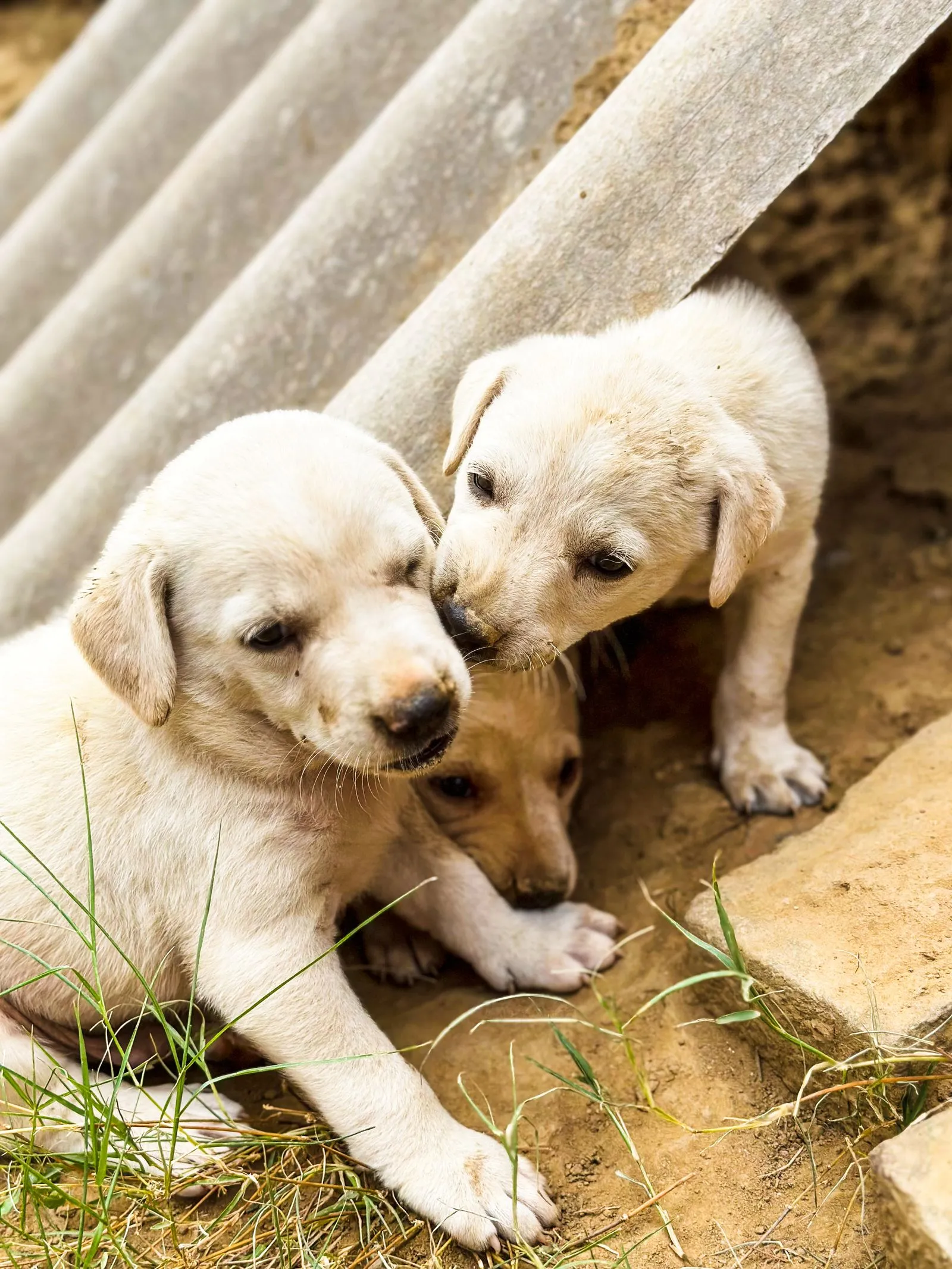
Beyond specific conditions, the overall genetic diversity of your line and your breed matters. Closely related matings increase the chance that a puppy inherits two copies of the same variant from a shared ancestor — which is the mechanism behind recessive disease appearing in a line. It also narrows the genetic variation available to the breed as a whole over generations.
This is measured, imperfectly but usefully, through the coefficient of inbreeding, and thought about more broadly in inbreeding, relatedness and genetic diversity. Neither gives you a single right answer, but both turn a vague instinct into something you can actually weigh.
Putting it together
Most of what breeders actually care about — temperament, structure, working ability, longevity — isn’t controlled by one gene. These are polygenic traits, shaped by many genes plus environment, which is why they don’t follow neat inheritance ratios and why selection for them works gradually across generations rather than immediately. Polygenic and complex traits covers what this means for how you select.
The practical takeaway: use DNA tests for the single-gene conditions where they give a clear answer, use screening schemes and family history for the complex traits where they don’t, and treat diversity as a decision you’re making deliberately rather than one that happens to you.
Work on it
A few minutes here will teach you more than re-reading the article.
Ask yourself
- Could I explain to a puppy buyer what a carrier is, and why a carrier is not a sick dog?
- Do I know which conditions in my breed are simple recessives and which are polygenic?
- Am I treating genetic diversity as an active decision, or just as whatever happens?
Find out & check
- Find out which recessive conditions have reliable DNA tests available in your breed.
- Check the coefficient of inbreeding for a pairing you are currently considering.
Do one thing
- Read modes of inheritance next — it turns this vocabulary into something you can apply to an actual pairing.

Was this article helpful?
Anonymous. We do not store your name, email or IP address.
Sources & further reading
- American Kennel Club (Claire Wiley, VMD, DACVIM) — Understanding Genetic Modes of Inheritance: an Introduction. akc.org
- PennGen, University of Pennsylvania School of Veterinary Medicine — Genetics for Breeders. vet.upenn.edu
- VCA Animal Hospitals — Genetics Basics: Modes of Inheritance. vcahospitals.com
- American Kennel Club (Matthew Breen, PhD) — Canine Genetics for Dog Breeders: Part 1. akc.org
- The Royal Kennel Club — Inbreeding calculators. royalkennelclub.com
- The Royal Kennel Club — Manage and maintain genetic diversity. royalkennelclub.com
Where evidence is limited, recommendations rest on established practice and expert judgment, and may be updated as knowledge develops.
Next steps
- Read next: Modes of inheritance.
- Related: Coefficient of inbreeding · Polygenic and complex traits.
- Return to the area hub: Genetics and inherited health.