Every purebred dog is related to every other dog of its breed, to some degree — that’s what makes a breed a breed. The question that matters for health isn’t whether relatedness exists, but how much of it accumulates in a given mating, and across a population over time. This guide connects the individual-mating view from breeding systems to the population-level picture.
The most important first
- Relatedness is a matter of degree, not a yes/no question.
- Inbreeding concentrates genes, including harmful recessive ones, and reduces diversity.
- Diversity loss is cumulative across a population, not just a single-litter concern.
- A breed can lose meaningful diversity even when no single mating looks extreme.
- Managing diversity is a population-level responsibility, not only an individual breeder’s.
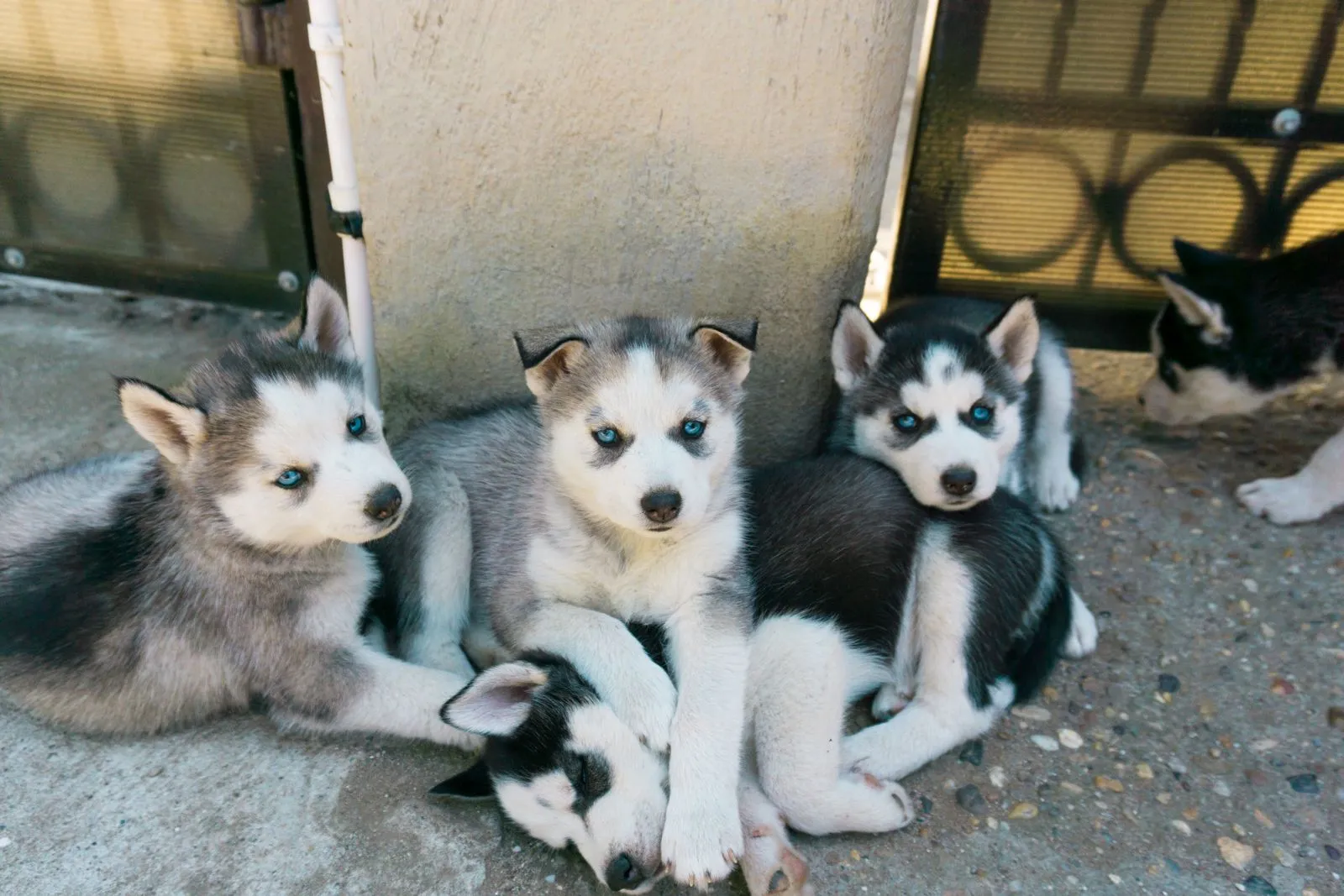
Relatedness as a spectrum
Two dogs are related if they share ancestors, and the closeness of that relationship is a matter of degree: full siblings share, on average, about half their genes; grandparent and grandchild share roughly a quarter; more distant relatives share progressively less. Those are figures for how related two dogs are; the puppies of a full-sibling mating would have a coefficient of inbreeding of about 25%, half-siblings about 12.5% and first cousins about 6.25%. (The FCI’s international breeding strategies advise never mating full siblings or a parent to its offspring.) Every mating within a breed sits somewhere on this spectrum, because a closed studbook — a breed registry that doesn’t admit outside dogs — means the entire breed descends from a limited founding population. Managing relatedness, then, isn’t about avoiding it entirely, which is impossible, but about not letting it concentrate too far, too fast, in any one line or across the breed as a whole.
What the kennel clubs say
Some national clubs ban these matings outright. The Swedish Kennel Club (SKK), for example, does not allow father–daughter, mother–son or full-sibling matings.
Source: Swedish Kennel Club (SKK), Basic rules (Grundregler), in force from January 1, 2026.
Last updated: November 8, 2026
Rules change, so always check with your own kennel club.
Why diversity matters beyond any one mating
Genetic diversity is what gives a population options: the capacity to select against emerging health problems, to adapt, and to avoid the compounding harm of many individually-recessive conditions becoming common because the population’s gene pool has narrowed. A breed can lose diversity gradually, over many generations of individually reasonable-looking matings, especially when a small number of popular sires are used heavily — a pattern known as the popular sire effect, where one dog’s genes come to dominate a disproportionate share of the population, quietly narrowing the effective gene pool even though no single mating looked extreme.
Population geneticists look less at a single litter’s COI and more at how fast inbreeding rises across generations. A UK study of every Kennel Club breed found that most breeds had a small “effective population size” — the number of dogs actually passing on genes — even when thousands were registered each year. The main driver was the heavy use of a few popular sires. Using a popular sire’s son or brother instead does little, because they carry much of the same genetics.
In practice
A breed has several outstanding, heavily-used sires across two decades. Individually, none of their matings looked unusually close. Population data eventually shows the breed’s effective diversity has shrunk substantially, because so much of the gene pool now traces back to a handful of popular males. No single breeder did anything wrong in isolation — the effect only shows up at the population level, which is exactly why it’s easy to miss litter by litter.
(Illustrative, composite scenario.)
What breeders can actually do
At the level of an individual mating, this means using tools like the coefficient of inbreeding to check relatedness before committing to a pairing, and favoring outcrosses when a line has become narrow. At the level of a breed, it means breed clubs and registries tracking population-wide diversity metrics, encouraging the use of under-represented but sound bloodlines, and — where genuinely necessary and permitted — considering outcross programs to widen a badly narrowed gene pool. Individual decisions add up to population outcomes; a breeder who checks relatedness before every mating is doing their part of a collective job.
The FCI’s international breeding strategies suggest that no dog should produce more than about 5% of a breed’s registered puppies over five years. When you compare COI figures, check how many generations each calculation used and how complete the pedigrees are: a COI based on five generations will look lower than one based on ten, but the dogs have not changed.
COI is a guide, not a verdict. Veterinary geneticists point out that health problems come from the specific harmful genes a line carries, not from a number alone, so use COI alongside health testing and screening, not instead of them. Watch your own records too: research in several breeds links higher inbreeding with smaller litters and lower survival, so shrinking litters or more puppy losses in a line are worth discussing with your vet.
Work on it
A few minutes here will teach you more than re-reading the article.
Ask yourself
- Do I think about relatedness only at the level of one mating, or also across my breed as a whole?
- Have I ever checked whether my line relies heavily on a small number of popular ancestors?
- Would I recognize the popular sire effect happening in my breed before it became a crisis?
Find out & check
- Find out whether your breed club or registry publishes population-level diversity data.
- Check how many distinct sire lines your breed’s recent generations actually trace back to.
Do one thing
- Calculate the coefficient of inbreeding for one mating you’re considering, using the next guide, before committing to it.
Was this article helpful?
Anonymous. We do not store your name, email or IP address.
Sources & further reading
- Lewis TW, Abhayaratne BM, Blott SC (2015) — Trends in genetic diversity for all Kennel Club registered pedigree dog breeds, Canine Genetics and Epidemiology 2:13. doi.org
- Fédération Cynologique Internationale (FCI) — International Breeding Strategies. fci.be
- Jerold S. Bell DVM — Small population breeds and issues of genetic diversity, Tufts 2011, via VIN. vin.com
- Bannasch D, et al. (2021) — The effect of inbreeding, body size and morphology on health in dog breeds, Canine Medicine and Genetics 8:12. doi.org
- Leroy G, Phocas F, Hedan B, Verrier E, Rognon X (2015) — Inbreeding impact on litter size and survival in selected canine breeds, The Veterinary Journal. sciencedirect.com
- Institute of Canine Biology (Carol Beuchat PhD) — COI FAQs: understanding the coefficient of inbreeding. instituteofcaninebiology.org
- International Working Dog Registry — Genetic diversity: managing inbreeding, further reading. iwdr.org
Where evidence is limited, recommendations rest on established practice and expert judgment, and may be updated as knowledge develops.
Next steps
- Read next: Coefficient of inbreeding: how to read and use it.
- Related: Breeding systems · Pedigree and family analysis.
- Return to the area hub: Genetics and inherited health.