A dog that eats socks, stones or bedding is not just being naughty. Pica can point to a medical problem, it can be a behavior problem, and it can end in emergency surgery. In a pregnant bitch, a blocked intestine puts both her and the litter at risk. This article covers what is known, what a vet will look for, and how to manage it.
The most important first
- Pica means repeatedly eating things that are not food. Coprophagia means eating feces. Both deserve a vet check before you treat them as “just behavior.”
- Medical causes a vet will want to rule out include gut disease, parasites, anemia, poor or unbalanced nutrition, diabetes, Cushing’s disease and some medications.
- A bitch cleaning up after her young puppies, including eating their feces and urine, is normal maternal behavior.
- Evidence on pica in pregnant bitches specifically is very limited. Treat new pica in pregnancy as a reason to call your vet, not as a normal craving.
- A fabric blockage in a pregnant bitch is an emergency for her and her litter.
What pica and coprophagia are
Pica is the persistent eating of non-food items such as plastic, paper, fabric, sticks, stones or mulch. It is different from a puppy mouthing and chewing things while exploring, which the Merck Veterinary Manual describes as common investigative behavior in young dogs. In pica, the dog swallows, and keeps doing it.
Coprophagia is eating feces. It is common. In a UC Davis study of more than 3,000 survey responses, 16% of dogs were reported to eat stools frequently, defined as being seen doing it at least six times, and almost always fresh stools no more than two days old. Commercial products and training approaches reported by owners almost never stopped it. Eating feces can be entirely normal: bitches normally consume the feces and urine of their young puppies to keep the nest clean. Only occasionally does coprophagia have a medical cause.
Medical causes your vet will want to rule out
The Merck Veterinary Manual is clear that medical causes should be ruled out first. A vet will usually take a history, examine the dog and run blood, urine and fecal tests, and may use X-rays, ultrasound or endoscopy. Conditions linked to pica include:
- gut disease, such as inflammatory bowel disease, intestinal parasites or exocrine pancreatic insufficiency
- a liver shunt
- anemia
- malnutrition or an unbalanced diet
- diabetes mellitus
- Cushing’s disease (hyperadrenocorticism)
- brain conditions that change appetite
- medications that increase appetite, such as corticosteroids and phenobarbital
Simple hunger belongs on the list too. A dog on too little food, or on a diet that does not keep her full, will scavenge. The Merck Veterinary Manual also notes that weight loss from poor absorption of nutrients can show up as eating feces or non-food objects. Pain is another factor vets now look for in behavior problems generally.
Behavioral causes
When medical causes are ruled out, pica is often linked to anxiety, frustration or a lack of stimulation. Some dogs learn that grabbing an object brings a chase or attention, and swallow it to keep it. Dogs kept confined with little to do may learn to eat feces. A smaller group of dogs with pica have a compulsive disorder, and a veterinary behaviorist can help with those. Punishment tends to make things worse, because it adds anxiety and can teach a dog to swallow faster.
Breeding dogs have their own triggers. A move into the whelping area, a change of routine, time apart from her usual companions, or a kennel that has become busier and noisier can all add stress. Keep a short note in each dog’s record of when unusual eating starts and stops, what she ate, and what else was happening at the time. That pattern is often the most useful thing you can bring to your vet.
Pregnancy, lactation and appetite
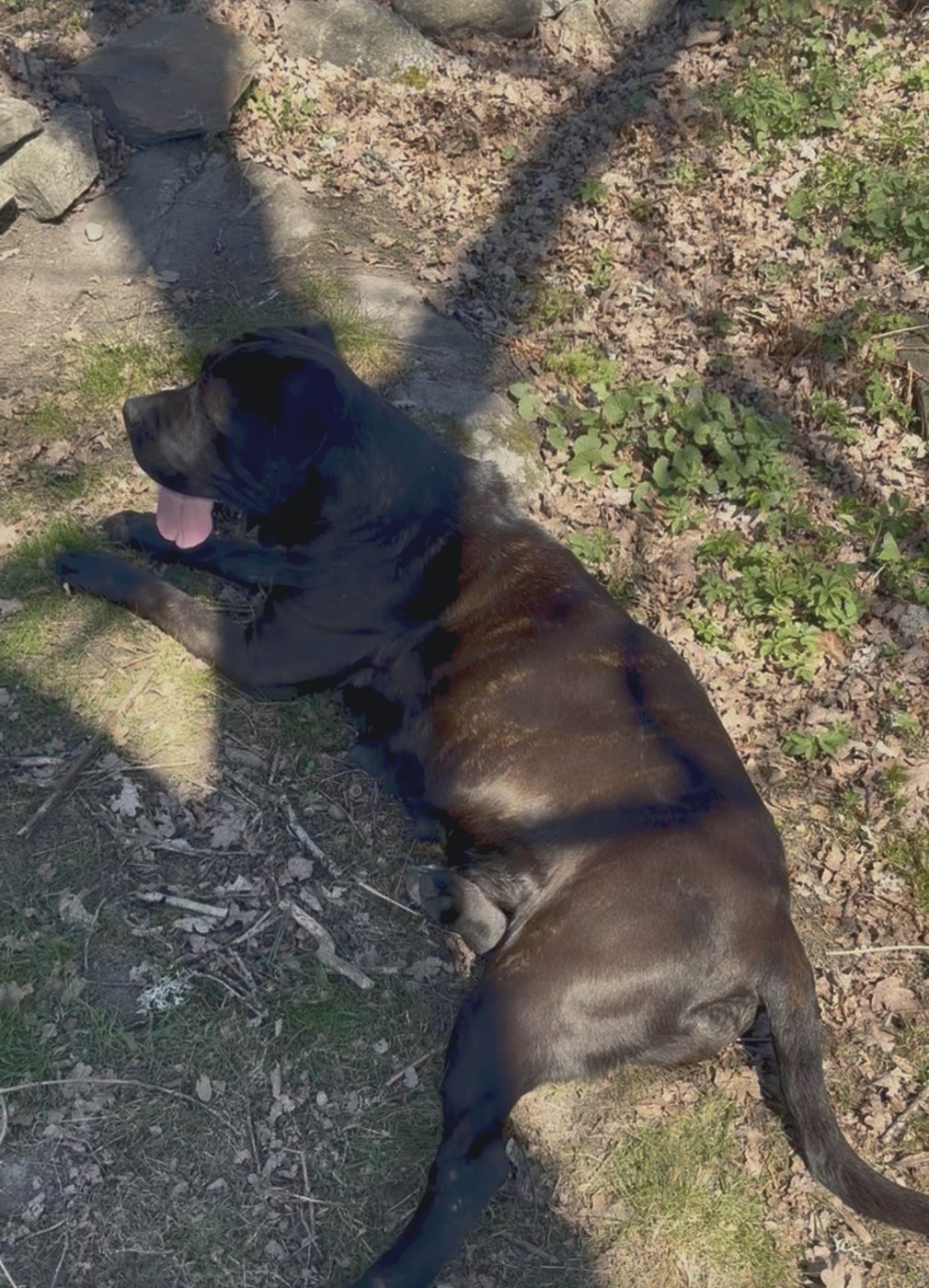
Appetite does change through pregnancy. VCA advises that food intake should stay much the same for roughly the first two-thirds of pregnancy and rise after about week six, reaching up to about 1.5 times normal in the last three weeks, with smaller, more frequent meals as the puppies take up space. Purdue’s theriogenology service describes reduced appetite, restlessness, panting and nesting as signs that whelping is near. For feeding detail, see our article on feeding and body condition through pregnancy.
What we could not find is good evidence on pica in pregnant bitches specifically. We found no published study that measures how often it happens or why. Increased appetite, the nesting drive and hormonal change are plausible explanations, but they are untested. Be cautious of any source that presents pregnancy pica in dogs as a known, normal phenomenon. If a pregnant bitch starts eating non-food items, tell your vet. It may be harmless, or it may be the first sign of something that needs treating.
From a breeder
“One of my bitches ate all kinds of things while she was pregnant, fabric among them. She never did it when she wasn’t pregnant.” One dog’s story cannot tell us how common this is or why it happens, but it shows the pattern is worth watching for.
(The owner’s own experience, not research.)
Why fabric is dangerous, especially in pregnancy
Fabric and socks are among the objects most often removed from dogs’ stomachs and intestines. Strips of fabric can also act as a linear foreign body, which bunches the intestine and can cut through it. Signs of a blockage include vomiting, lethargy and loss of appetite, sometimes with a painful or swollen belly. Surgery is usually needed, and dogs tend to do well when the problem is found and treated quickly.
A pregnant bitch has less margin. Under anesthesia she is more prone to stomach reflux and aspiration, and her oxygen level drops faster when breathing is depressed. The puppies depend entirely on her blood pressure and oxygen supply. Data on surgery during canine pregnancy are limited, and much of what is known is drawn from other species. This is not a reason to delay surgery that she needs. It is a strong reason to prevent the problem and to call early, so any procedure happens before she is dehydrated and in shock. Do not mistake vomiting and poor appetite in late pregnancy for normal pre-whelping signs without checking with your vet.
Prevention and management
- Supervise and manage the space. Pick up socks, towels, toys and anything she targets. When you cannot watch her, confine her in a safe area with only items she cannot shred.
- Choose bedding with care. Use bedding she cannot tear into strips, and check it daily during pregnancy and in the whelping box.
- Offer safe chewing. Rotate suitable chew items so they stay interesting, and supervise her with any new chew.
- Make food work. Feeding part of her ration from food toys or as training rewards adds activity and slows eating.
- Teach and reward. Reward “leave it” and “drop it” and trade for a treat rather than chasing her.
- Review her diet with your vet. Make sure she is on a complete and balanced diet suited to her stage, and that she is not simply hungry.
- Pick up feces promptly, especially in multi-dog kennels, since coprophagic dogs target fresh stools.
- Ask for referral. If pica persists after medical causes are ruled out, ask your vet about a veterinary behaviorist.
When to call your vet
- Your dog starts eating non-food items, or the habit gets worse, especially during pregnancy.
- You know or suspect she has swallowed fabric, string, a sock or anything sharp.
- She vomits repeatedly, retches without producing anything, or stops eating.
- Her belly is painful or swollen, or she strains without passing stool.
- She is lethargic, weak or seems unwell, or her temperature is above 103 °F (39.5 °C).
- A pregnant bitch shows any of these signs: call the same day, and do not assume it is the start of labor.
- If in doubt, call — your vet would rather hear from you early.
Work on it
A few minutes here will teach you more than re-reading the article.
Ask yourself
- Has any of my dogs ever eaten something odd during pregnancy, lactation or a stressful period, and did I note it in her records?
Find out & check
- Check what your breeding dogs’ bedding is made of and whether it tears into strips.
- At your bitch’s next pregnancy check, ask your vet whether her diet and amount suit her stage.
Do one thing
- Walk through your whelping area and remove anything she could chew into pieces and swallow.
Was this article helpful?
Anonymous. We do not store your name, email or IP address.
Sources & further reading
- Merck Veterinary Manual — Behavior Problems of Dogs (Eating Disorders). merckvetmanual.com
- VCA Animal Hospitals (Williams K, DVM) — Pica in Dogs. vcahospitals.com
- Hart BL, et al., Veterinary Medicine and Science 2018 — The paradox of canine conspecific coprophagy. pubmed.ncbi.nlm.nih.gov
- Purdue University College of Veterinary Medicine (Koziol JH, DVM, DACT) — What to Expect When… Your Dog is Expecting. extension.purdue.edu
- VCA Animal Hospitals (Barnes C, Weir M, Ward E) — Breeding for Pet Owners: Pregnancy in Dogs. vcahospitals.com
- Kushnir Y, Epstein A, Israel Journal of Veterinary Medicine 2012 — Anesthesia for the Pregnant Cat and Dog. ijvm.org.il
- Di Palma C, et al., Animals 2022 — Endoscopic and Surgical Removal of Gastrointestinal Foreign Bodies in Dogs: An Analysis of 72 Cases. mdpi.com
- Merck Veterinary Manual, Pet Owner Version — Disorders of the Stomach and Intestines in Dogs. merckvetmanual.com
Where evidence is limited, recommendations rest on established practice and expert judgment, and may be updated as knowledge develops. This article is general information and does not replace an examination by your veterinarian. If you suspect an emergency, contact a veterinarian immediately.