Dental disease is one of the most common problems in dogs, and most of it starts quietly, below the gumline, years before anyone notices bad breath — so the habits you build in the first months, above all regular brushing and a look in the mouth at every vet visit, matter for the rest of your dog’s life.
The most important first
- Brushing is the most effective home care. Daily is best, but several times a week still helps.
- Start while your puppy is young, with short, gentle sessions and dog toothpaste only. Human toothpaste may contain xylitol, which is poisonous to dogs.
- Chews and dental diets can help, but don’t replace brushing. Look for products with the Veterinary Oral Health Council (VOHC) seal.
- A proper cleaning needs anesthesia, because most disease is under the gumline.
Last updated: November 8, 2026
Why dental care matters
Periodontal disease is inflammation and infection of the tissues around the teeth, caused by plaque bacteria. Left alone, it progresses from red, swollen gums to loss of the bone that holds the teeth in place, with pain and tooth loss. In a study of more than 22,000 dogs under primary veterinary care in the UK, O’Neill and colleagues found that 12.5% had periodontal disease diagnosed within a single year, and that risk varied strongly by breed: small breeds such as the Toy Poodle and the King Charles Spaniel had higher odds than crossbreeds. Because many cases are never examined closely, the real number is likely higher.
Brushing: how often, and how to start
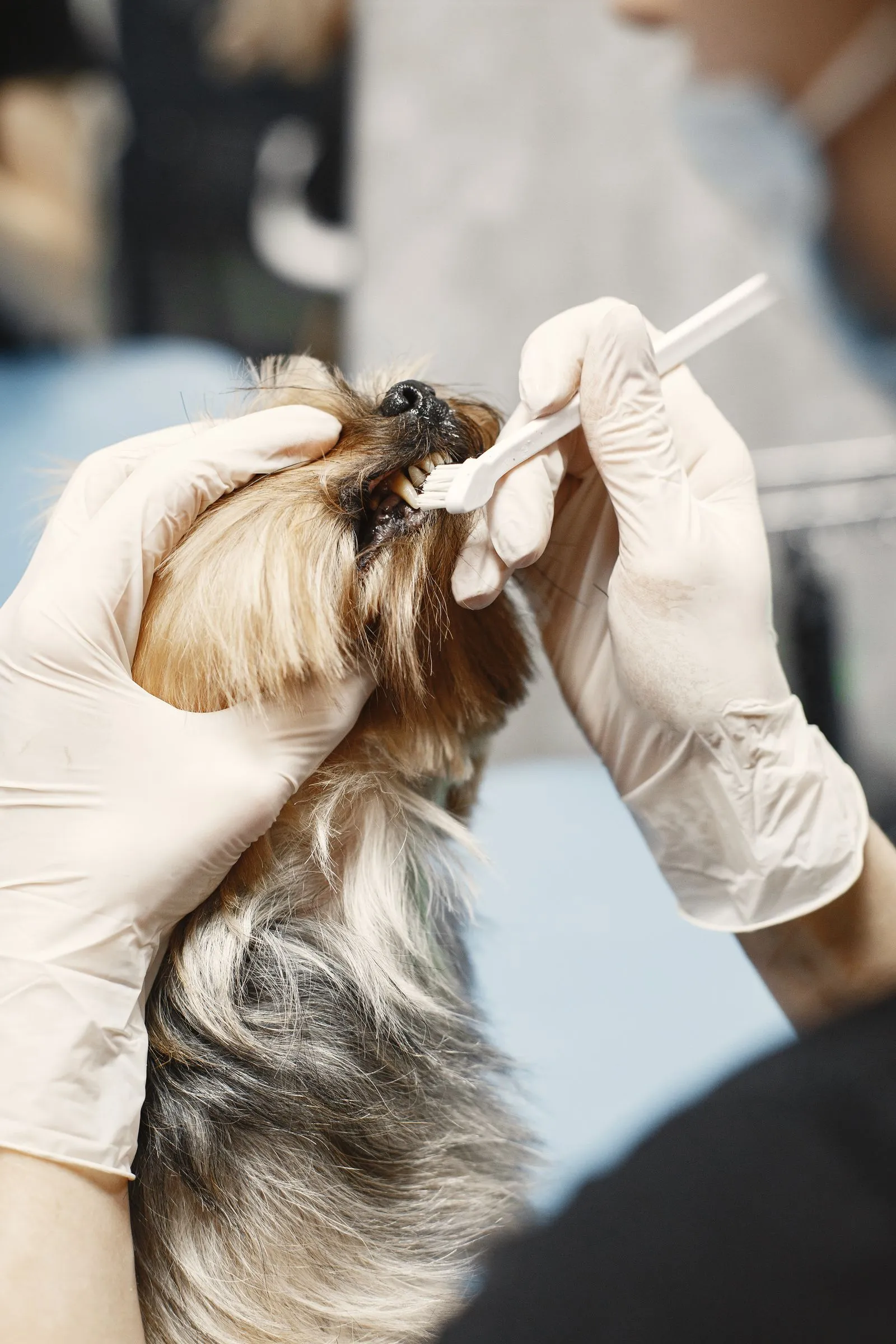
The American Veterinary Medical Association calls brushing the single most effective thing owners can do between veterinary cleanings, and says daily brushing is ideal but several times a week still helps. Research supports both. In a laboratory study by Watanabe and colleagues, beagles whose teeth were brushed daily after a professional scaling had significantly fewer oral bacteria over eight weeks than dogs that were scaled only. In a controlled trial in 160 racing greyhounds, Rooney and colleagues found that both weekly and daily brushing by kennel staff reduced gingivitis and calculus compared with no brushing over two months.
How to start with a puppy:
- Make it easy. Sit on the floor, use a soft finger brush or small dog toothbrush, and lift the lip to reach the outer surfaces of the back teeth, where plaque builds up most.
- Short and positive. A few seconds, then praise or play. Build up over weeks.
- Dog toothpaste only. The US Food and Drug Administration warns that toothpaste and mouthwash made for people can contain xylitol and advises using only pet toothpaste.
- Brush through teething, gently. VCA’s veterinary dental specialists note that puppies’ gums are sensitive while teeth are erupting, so gentle cleaning is the goal then.
Chews, diets and water additives
Many products claim to clean teeth; not all of them work. The Veterinary Oral Health Council reviews data submitted by manufacturers and awards its seal to products that meet its standards for controlling plaque, tartar or both. The council itself describes daily brushing as the gold standard and advises choosing a chew sized for your dog and only giving chews when you can watch. The AVMA suggests asking your veterinarian before buying dental treats, diets or additives.
Avoid very hard items such as bones, antlers and hard nylon chews, which can fracture teeth.
Signs of dental trouble
According to the AVMA, see your veterinarian sooner than the yearly check if you notice:
- bad breath, discolored teeth or tartar
- broken, loose, extra or retained baby teeth
- red or bleeding gums, swelling around the mouth or face
- chewing on one side, dropping food, drooling or reluctance to eat
- pawing at the mouth or a change in behavior
Puppies change all their teeth between about four and seven months of age. If a baby tooth is still there when the adult tooth comes through, have it checked promptly.
Professional cleanings
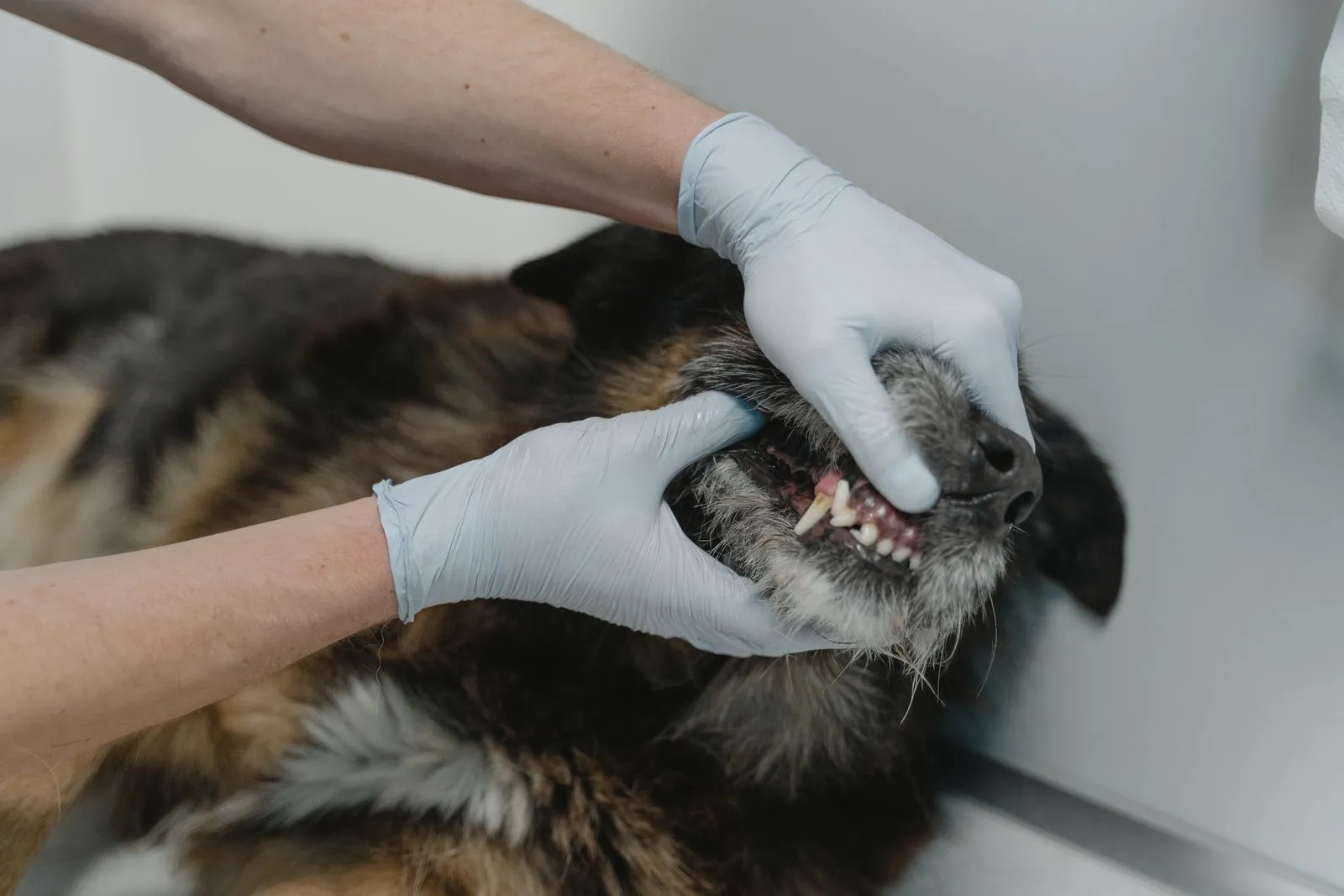
Most dental disease is below the gumline, so a thorough cleaning, probing and dental X-rays require general anesthesia. The AVMA explains that anesthesia makes the cleaning more complete and less stressful and allows clear X-rays, and that the risks for a healthy dog are low. Anesthesia-free cleanings only scrape the visible crown; the AVMA notes that the American Veterinary Dental College does not recommend them, because they cannot clean or assess below the gumline and can injure the dog. How often your dog needs a cleaning depends on breed, age and home care; small breeds often need it earlier and more often.
In practice
A family brings their two-year-old Cavalier for a checkup. The dog eats well, but the vet finds tartar on the back teeth and red gums. After a cleaning under anesthesia, the family start brushing every evening after the walk, with a VOHC-accepted chew on the days they forget. At the next annual check the gums look healthy.
(Illustrative, composite scenario.)
When to call your veterinarian
- Bleeding gums, a broken tooth, facial swelling or a tooth that looks gray or pink.
- Your dog stops eating, drops food or chews on one side.
- A baby tooth is still in place when the adult tooth has come through.
- If in doubt, call — your vet would rather hear from you early.
Work on it
A few minutes here will teach you more than re-reading the article.
Ask yourself
- When did someone last look properly at my dog’s back teeth?
- Could I brush three times a week?
- Do my dog’s chews carry the VOHC seal?
Find out & check
- Ask your veterinarian to show you where tartar builds up in your dog’s mouth.
Do one thing
- Buy a dog toothbrush and dog toothpaste, and do a ten-second session tonight.
Was this article helpful?
Anonymous. We do not store your name, email or IP address.
Sources & further reading
- O’Neill DG, Mitchell CE, Humphrey J, Church DB, Brodbelt DC, Pegram C (2021) — Epidemiology of periodontal disease in dogs in the UK primary-care veterinary setting. Journal of Small Animal Practice 62:1051–1061. doi.org
- Watanabe K, Hayashi K, Kijima S, Nonaka C, Yamazoe K (2015) — Tooth brushing inhibits oral bacteria in dogs. Journal of Veterinary Medical Science 77:1323–1325. doi.org
- Rooney NJ, Wonham KL, McIndoe KS, Casey RA, Blackwell EJ, Browne WJ (2021) — Weekly and daily tooth brushing by care staff reduces gingivitis and calculus in racing greyhounds. Animals 11:1869. doi.org
- American Veterinary Medical Association — Pet dental care. avma.org
- Veterinary Oral Health Council — VOHC Seal of Acceptance. vohc.org
- US Food and Drug Administration — Paws Off Xylitol; It’s Dangerous for Dogs. fda.gov
- Hunter T, Hiscox L, Bellows J, VCA Animal Hospitals — Persistent Deciduous Teeth (Baby Teeth) in Dogs. vcahospitals.com
Where evidence is limited, recommendations rest on established practice and expert judgment, and may be updated as knowledge develops. This is general information and does not replace advice from your veterinarian.
Next steps
- Read next: Puppy warning signs: when to call the vet.
- Related: Before your puppy comes home · Poisoning risks in the kennel and home.
- Return to the guide: Breeder’s Library.