Easter puts chocolate eggs in baskets, under cushions and all over the garden, and dogs are very good at finding them before the children do — so a safe Easter means counting the eggs you hide, keeping baskets and baked treats out of reach, and knowing which spring plants and garden products need care.
The most important first
- Easter is a peak time for chocolate poisoning in dogs. Keep eggs and baskets up high and count the eggs in every hunt.
- Hot cross buns and simnel cake contain raisins, which can damage a dog’s kidneys.
- Check sugar-free treats for xylitol, which can cause a dangerous drop in blood sugar.
- Plastic Easter grass and foil wrappers can block the gut.
- Call your veterinarian at once if your dog eats any of these. Don’t wait for signs.
Last updated: November 8, 2026

Chocolate eggs and bunnies
Noble and colleagues, analyzing veterinary records in the UK, found a heightened risk of chocolate exposure in dogs at Christmas and Easter. Chocolate contains theobromine and caffeine; the Merck Veterinary Manual explains that cocoa powder and dark or baking chocolate contain the most, milk chocolate less and white chocolate very little, and that signs usually appear 6 to 12 hours after eating. The ASPCA lists stomach upset, pancreatitis, hyperactivity, tremors, seizures and a fast heart rate among the effects. Rich, fatty treats can also trigger pancreatitis on their own.
Hot cross buns, raisins and sugar-free treats
- Raisins, currants and sultanas in hot cross buns, simnel cake and chocolate-covered raisins can cause kidney damage in dogs. The ASPCA names tartaric acid as the suspected toxin. There is no amount known to be safe.
- Xylitol in sugar-free chocolate, sweets, gum and baking can cause low blood sugar within 10 to 60 minutes and, as the US Food and Drug Administration notes, other serious effects up to 12 to 24 hours later.
- Macadamia nuts and alcohol turn up in Easter treats and drinks; the ASPCA lists both as dangerous to dogs.
Plastic grass, foil and toys
The ASPCA warns that plastic Easter grass can lodge in the digestive tract, with vomiting, diarrhea, poor appetite, lethargy and stomach pain. Foil wrappers, plastic eggs and small plush toys from baskets can do the same. Use paper shred instead of plastic grass and put wrappers straight into a closed bin. Puppies are most at risk; see puppies and swallowed objects.
Lilies, bulbs and spring garden products
The FDA explains that true lilies and daylilies, including the Easter lily, can cause fatal kidney failure in cats after even a small exposure, while in dogs they usually cause only mild stomach upset. Lily-of-the-valley, however, is dangerous to both cats and dogs because it can cause abnormal heart rhythms. If you have a cat, keep lilies out of the house altogether.
Easter is also when gardening starts. The ASPCA advises storing fertilizers and herbicides where pets can’t chew or puncture the containers, keeping pets inside while you apply them, and keeping them off treated areas until the product has been watered in or the ground is dry. Spring bulbs that dogs dig up can also upset their stomachs; poisoning risks in the kennel and home covers garden products in more detail.
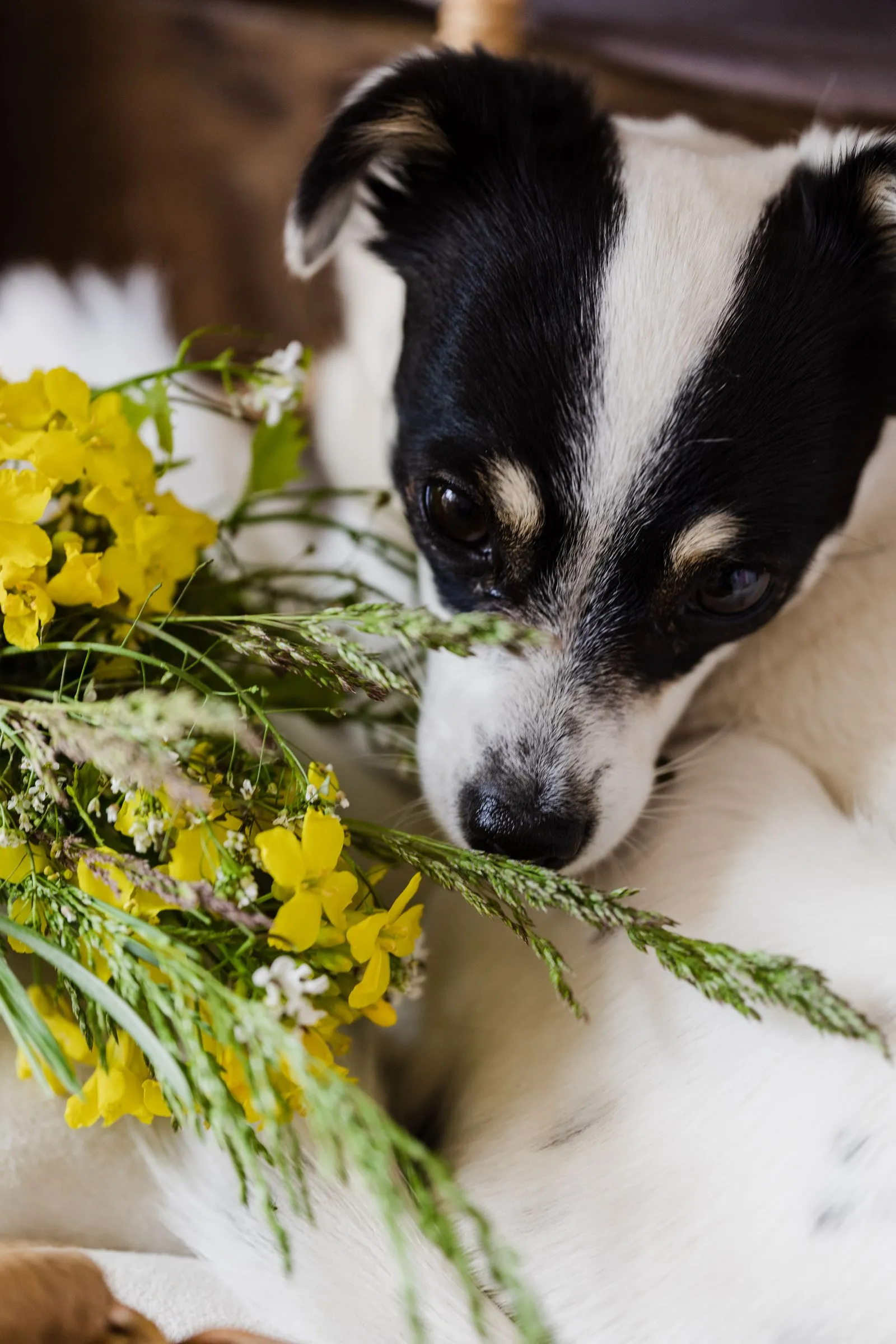
A dog-safe egg hunt
- Count the eggs you hide, and count them back in.
- Keep dogs indoors or on a lead until the hunt is over and the garden has been checked.
- Hide eggs above dog height indoors, never under sofas or in low plant pots.
- Give your dog its own hunt with dog treats or a stuffed food toy.
- Collect baskets and put them on a high shelf or in a closed room.
In practice
After an egg hunt, a family realizes they hid 24 eggs and found 21. Their young spaniel is suddenly very interested in a flower bed. They search with the dog on a lead, find two eggs and one empty foil wrapper, and call their vet with the dog’s weight and the type of chocolate. The vet advises them on what to watch for and when to come in.
(Illustrative, composite scenario.)
When to call your veterinarian
- Your dog has eaten chocolate, hot cross buns or anything with raisins, sugar-free sweets or gum, or alcohol, even if it seems fine.
- Vomiting, restlessness, trembling, a racing heart or weakness after a holiday treat.
- Vomiting, a painful belly or not eating after chewing plastic grass, foil or toys.
- Collapse or a seizure: this is an emergency.
- If in doubt, call — your vet would rather hear from you early.
Work on it
A few minutes here will teach you more than re-reading the article.
Ask yourself
- Where will Easter treats be stored in my home?
- Who is in charge of counting eggs?
- Do visitors know not to feed the dog?
Find out & check
- Read the labels of sugar-free treats in the house for xylitol.
Do one thing
- Swap plastic basket grass for paper shred, and save your emergency clinic’s holiday hours in your phone.
Was this article helpful?
Anonymous. We do not store your name, email or IP address.
Sources & further reading
- Noble PM, Newman J, Wyatt AM, Radford AD, Jones PH (2017) — Heightened risk of canine chocolate exposure at Christmas and Easter. Veterinary Record 181(25):684. doi.org
- Merck Veterinary Manual — Chocolate Toxicosis in Animals. merckvetmanual.com
- ASPCA (2026) — Pet Safety Tips for Easter. aspca.org
- ASPCA Animal Poison Control — People Foods to Avoid Feeding Your Pets. aspca.org
- US Food and Drug Administration — Paws Off Xylitol; It’s Dangerous for Dogs. fda.gov
- US Food and Drug Administration — Lovely Lilies and Curious Cats: A Dangerous Combination. fda.gov
Where evidence is limited, recommendations rest on established practice and expert judgment, and may be updated as knowledge develops. This is general information and does not replace advice from your veterinarian.
Next steps
- Read next: Valentine’s Day and your dog.
- Related: Poisoning risks in the kennel and home · Puppies and swallowed objects.
- Return to the guide: Breeder’s Library.