Ticks wake up as the weather warms and wait on grass and undergrowth for a passing dog, and while most bites are harmless, some ticks carry infections that can make a dog seriously ill weeks later — so a daily tick check after walks, prompt removal and a preventive product chosen with your veterinarian are the three habits that matter most.
The most important first
- Check your dog every day after time outdoors, especially the ears, eyelids, collar area, armpits, toes, groin and tail.
- Remove ticks promptly with fine tweezers or a tick tool, close to the skin, with a slow, steady pull. Don’t crush or twist.
- Use a tick preventive your veterinarian recommends for your dog’s age, weight and area. Many experts now recommend year-round use.
- Watch for illness for weeks afterward. Signs of tick-borne disease can take 7 to 21 days or longer to appear.
Last updated: November 11, 2026
When and where ticks are a risk
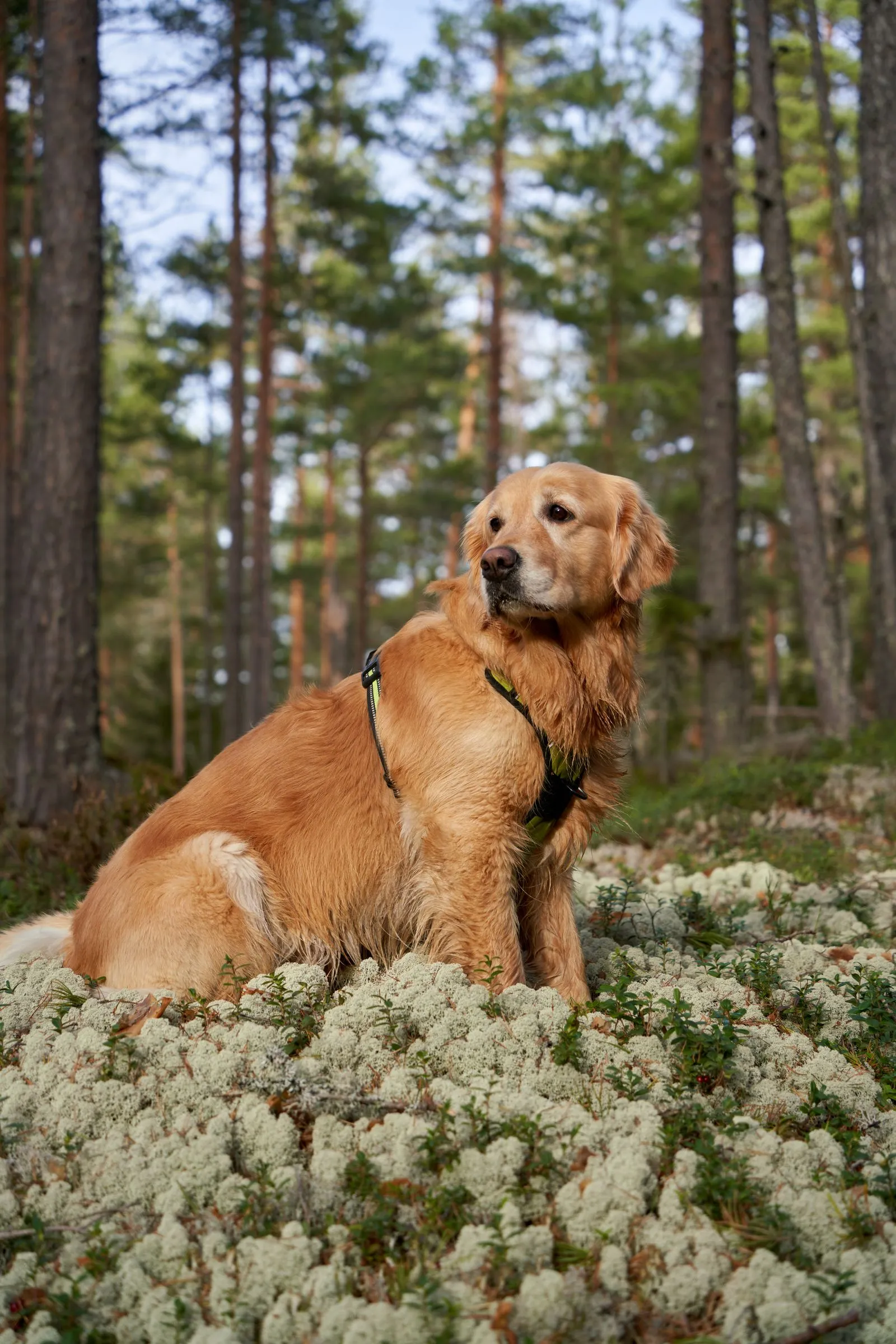
Ticks are found in grass, woodland edges and undergrowth, and in some regions in gardens too. Their activity rises in spring and stays high into summer, with a second peak in autumn in many areas. How common are they? In a large UK survey in spring and early summer 2015, Abdullah and colleagues asked veterinary practices to examine randomly selected dogs; of 12,096 dogs examined, about 30% carried at least one attached tick, though the authors note that the way practices were recruited probably inflated that figure.
In the United States, the Companion Animal Parasite Council (CAPC) recommends treating all dogs year-round, throughout life, because seasonal or reactive use allows ticks to establish themselves, including in homes. In eastern Australia, the paralysis tick Ixodes holocyclus is a serious seasonal risk; Teo and colleagues, studying emergency hospital records from South East Queensland and Sydney’s Northern Beaches, found that thousands of dogs and cats present each year with tick paralysis and that weather determined how intense each season was.
Diseases ticks spread
According to CAPC and the Merck Veterinary Manual, ticks can transmit:
- Lyme disease (Borrelia burgdorferi), spread by Ixodes ticks
- Anaplasmosis (Anaplasma phagocytophilum), also spread by Ixodes ticks
- Ehrlichiosis (Ehrlichia canis), spread by the brown dog tick
- Rocky Mountain spotted fever (Rickettsia rickettsii), spread by Dermacentor ticks and the brown dog tick
- Tick paralysis, caused by toxins from certain ticks
Which of these matter depends on where you live and travel. The brown dog tick can live and breed indoors and in kennels, which the CDC notes is one reason prevention matters even for dogs that spend most of their time inside.
In Europe, babesiosis matters too. The European Scientific Counsel Companion Animal Parasites (ESCCAP, 2024) describes canine babesiosis, caused by Babesia canis and spread by the ornate dog tick (Dermacentor reticulatus), as endemic in parts of western, southern and central Europe. Its range has expanded in central Europe up to the Baltic region, and it is one of the most frequently imported diseases in central Europe. ESCCAP lists fever, lethargy, loss of appetite, jaundice, vomiting and red-colored urine as acute signs; untreated cases can lead to kidney failure. Tick control reduces the risk.
Tick checks
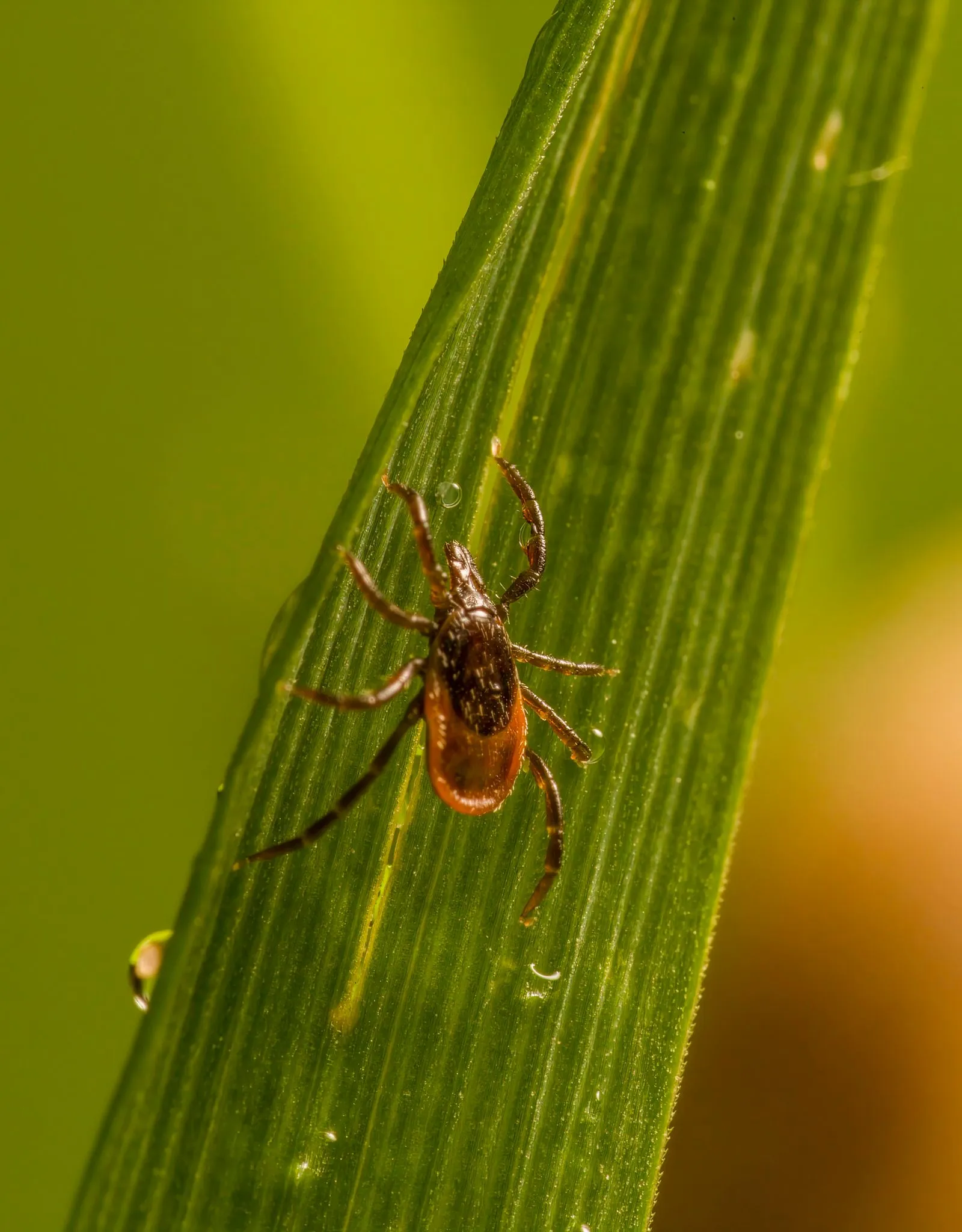
The CDC advises checking dogs that go outdoors every day, paying close attention to the ears, eyelids, collar area, armpits, toes, groin and tail, and notes that ticks are easier to miss in long or dark coats. Run your fingers slowly through the coat against the direction of hair growth and feel for small bumps. The Merck Veterinary Manual explains that newly attached ticks look flat, while ticks that have fed for longer look rounded.
Removing a tick safely
CAPC recommends removing ticks with fine forceps, grasping as close to the skin as possible and pulling slowly and steadily, wearing gloves, without crushing or twisting the tick. The Merck Veterinary Manual warns never to remove ticks with bare hands and not to use hot matches. Afterward, watch the bite site: if it becomes red or swollen, see your veterinarian.

Choosing a preventive
Tick products come as chews, spot-ons and collars. Which is right depends on your dog’s age and weight, local tick species, other pets in the home (some products are dangerous to cats) and your dog’s health history. The CDC points out that a vaccine exists for only one tick-borne disease in dogs, Lyme disease, so a preventive product is still needed.
The US Food and Drug Administration has alerted owners and veterinarians that products in the isoxazoline class have been associated with neurologic events such as tremors, loss of coordination and seizures in some dogs, while stating that the products continue to be safe and effective for the majority of animals. If your dog has a history of seizures, tell your veterinarian before choosing a product.
For puppies, check the minimum age and weight on the label, and ask your breeder what the litter has already received.
In practice
After a spring walk, an owner finds a small gray bump on her young dog’s ear. She removes the tick with a tick tool, puts it in a sealed bag with the date, and notes it in her phone. Three weeks later the dog is lame and quiet, and she tells her vet about the tick. Testing confirms a tick-borne infection and the dog recovers with treatment.
(Illustrative, composite scenario.)
When to call your veterinarian
- Your dog is lethargic, off food, feverish, lame or has swollen joints in the weeks after a tick bite.
- Weakness in the back legs, a change in bark, coughing or difficulty breathing or swallowing, especially in areas with paralysis ticks: this is an emergency.
- A bite site that becomes red, swollen or painful, or a tick you cannot remove.
- Tremors, wobbliness or a seizure after a flea and tick product.
- If in doubt, call — your vet would rather hear from you early.
Work on it
A few minutes here will teach you more than re-reading the article.
Ask yourself
- Do I check my dog for ticks after every walk in tick season?
- Do I know which tick-borne diseases occur where I live?
- Is my dog’s product suitable for its age, weight and health?
Find out & check
- Ask your veterinarian which tick species and diseases are common locally, and whether year-round prevention is advised.
Do one thing
- Put a tick removal tool and a pair of gloves in your dog walking bag today.
Was this article helpful?
Anonymous. We do not store your name, email or IP address.
Sources & further reading
- Companion Animal Parasite Council — Ticks (guidelines). capcvet.org
- Centers for Disease Control and Prevention — Preventing Ticks on Pets. cdc.gov
- Merck Veterinary Manual — Ticks of Dogs. merckvetmanual.com
- Abdullah S, Helps C, Tasker S, Newbury H, Wall R (2016) — Ticks infesting domestic dogs in the UK: a large-scale surveillance programme. Parasites & Vectors 9:391. doi.org
- Teo EJM, Russell H, Lambert T, Webster R, Yappa A, McDonagh P, Harper G, Barker D, Nakao R, Barker SC (2024) — The weather determined how “hot” the tick paralysis season was in eastern Australia: 2018–2024. Veterinary Parasitology 331:110252. doi.org
- US Food and Drug Administration — Animal Drug Safety Communication: FDA alerts pet owners and veterinarians about potential for neurologic adverse events associated with certain flea and tick products. fda.gov
- ESCCAP (2024) — Guideline 05: Control of vector-borne diseases in dogs and cats (5th edition). esccap.org
Where evidence is limited, recommendations rest on established practice and expert judgment, and may be updated as knowledge develops. Product choice depends on your dog and your region; ask your veterinarian. This is general information and does not replace advice from your veterinarian.
Next steps
- Read next: Parasites and worming schedules.
- Related: Puppy warning signs: when to call the vet · Poisoning risks in the kennel and home.
- Return to the guide: Breeder’s Library.