Single-gene traits are tidy: one gene, a clear pattern, a definitive test. Most of what breeders actually select for isn’t like that. Hip and elbow conformation, most temperament traits, and many common health conditions are polygenic — shaped by many genes together, often alongside environment — which means they behave less like a switch and more like a dial. This guide is about thinking correctly about traits that don’t have a single answer.
The most important first
- Polygenic traits are shaped by many genes, each with a small effect.
- Environment and chance also shape the outcome — genetics sets a range, not a guarantee.
- There is usually no single DNA test for a polygenic trait.
- Heritability tells you how much of the variation is genetic — not how any one dog will turn out.
- Selection still works on polygenic traits, but it’s gradual and probabilistic, not immediate.
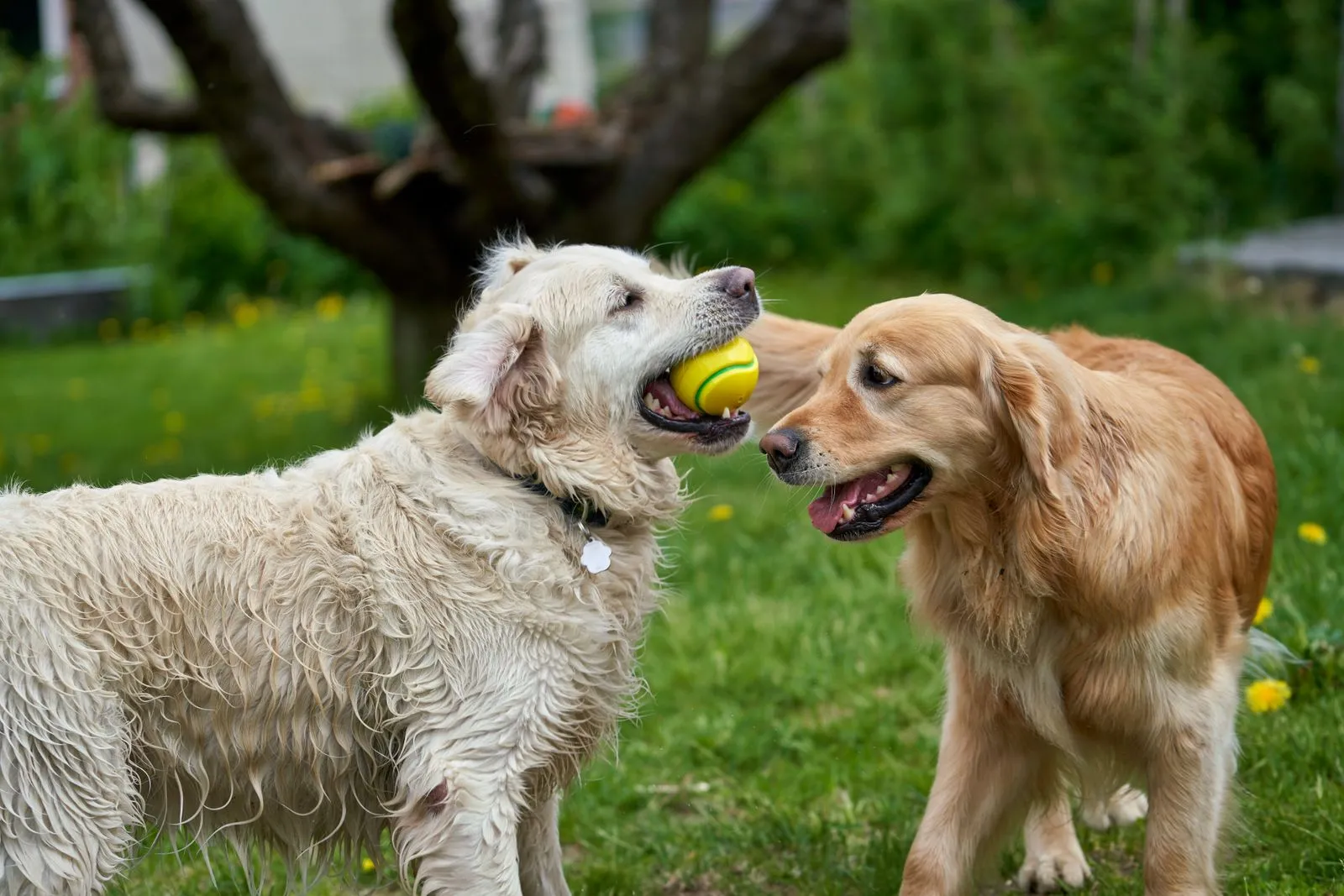
What makes a trait polygenic
A polygenic trait is influenced by variation at many genes at once, each contributing a small part of the overall outcome, rather than one gene determining it outright. Hip dysplasia is the standard teaching example: research has repeatedly shown it doesn’t follow a simple dominant or recessive pattern, but is influenced by numerous genes plus environmental factors such as growth rate, weight and exercise during development. The practical consequence is that there is no single “hip dysplasia gene” a DNA test can rule in or out — which is exactly why physical health screening (hip and elbow scoring) remains essential alongside, not instead of, DNA testing.
Heritability: a population idea, not a promise about one dog
Heritability is a term breeders hear often and frequently misunderstand. It describes what proportion of the variation in a trait, across a population, is explained by genetic differences rather than environment — it is not a percentage that applies to any single dog, and it is not a guarantee. A trait can have high heritability and still be strongly influenced by upbringing in an individual case; a breeder can select hard for a polygenic trait across generations and still see one particular litter deviate from what the parents’ averages would predict, purely from the random assortment of which gene variants each puppy actually inherits.
For hip dysplasia, published heritability estimates range from roughly 20% to 60% depending on the breed and how hips are measured. In one large study of Finnish Rottweilers, heritability was about 0.58 for hip dysplasia and 0.31 for elbow dysplasia. That means selection works, but slowly, and the environment still matters.
In practice
A breeder selects two structurally excellent parents, both scoring well on hip screening, expecting excellent puppies. One puppy in the litter still develops hip dysplasia. Nothing was done wrong — hip conformation is polygenic and environmentally influenced, so even excellent parents carry a spread of possible outcomes, not a guarantee. The breeder’s selection still improves the odds across many litters, which is how polygenic selection actually works.
(Illustrative, composite scenario.)
Selecting for polygenic traits
Because no single test exists, selection on polygenic traits relies on different tools: screening the dog’s own phenotype (structure, temperament, health outcomes), reading its pedigree for what relatives consistently produce, and — where available — statistical tools like estimated breeding values that combine an individual’s data with its relatives’ to predict genetic merit more reliably than any one dog’s appearance can. Progress on polygenic traits is real but gradual: it shows up as a shift in the population average over generations, not a guarantee for any individual mating.
Where your kennel club publishes estimated breeding values, use them. An EBV of zero is the breed average; below zero means lower genetic risk. Check the confidence figure — an EBV built only on parents’ scores is much less certain than one that includes the dog’s own score. Where EBVs aren’t available, the UK BVA/Kennel Club schemes suggest breeding from dogs at or below the breed median hip score and from dogs with elbow grade 0; other national schemes give their own guidance. Look across the whole family — siblings, half-siblings and previous offspring — not only at the two parents. Dogs with normal hips can still produce affected puppies.
What you can control in puppies
Rapid growth, diet and exercise during development all affect how hip and elbow dysplasia show up. Give puppy buyers clear guidance on steady growth and sensible exercise, and encourage them to follow their own veterinarian’s advice.
Talk to your vet when planning: ask when and how to screen hips and elbows for your breed, and get any young dog that limps or bunny-hops examined before breeding.
Work on it
A few minutes here will teach you more than re-reading the article.
Ask yourself
- Can I name which traits in my breed are polygenic rather than single-gene?
- Do I understand that heritability describes a population, not a promise about one puppy?
- Am I relying on phenotype and pedigree data for polygenic traits, not hoping for a DNA test that doesn’t exist?
Find out & check
- Find out which of your breed’s key health and structural traits are known to be polygenic.
- Check whether breed-specific heritability estimates or breeding-value tools exist for your breed.
Do one thing
- List three traits you select for and mark which are single-gene, which are polygenic, and which tools you actually use to assess each.
Was this article helpful?
Anonymous. We do not store your name, email or IP address.
Sources & further reading
- American Kennel Club — Genetics of Hip Dysplasia in Dogs: A Guide for Breeders. akc.org
- Zhang Z et al. (2009), American Journal of Veterinary Research 70(4):483 — Estimation of heritabilities, genetic correlations, and breeding values of four traits that collectively define hip dysplasia in dogs. avmajournals.avma.org
- Mäki K, Liinamo AE, Ojala M (2000), Journal of Animal Science 78(5):1141–1148 — Estimates of genetic parameters for hip and elbow dysplasia in Finnish Rottweilers. pubmed.ncbi.nlm.nih.gov
- Merck Veterinary Manual — Hip Dysplasia in Dogs. merckvetmanual.com
- The Royal Kennel Club — Estimated breeding values. royalkennelclub.com
- Fédération Cynologique Internationale — International Breeding Strategies. fci.be
- BVA/Kennel Club Canine Health Schemes — Hip scheme. bva.co.uk
- Australian Shepherd Health & Genetics Institute — Polygenetic Traits. ashgi.org
Where evidence is limited, recommendations rest on established practice and expert judgment, and may be updated as knowledge develops.
Next steps
- Read next: DNA tests and genetic disease: what they can and can’t tell you.
- Related: Modes of inheritance · Evaluating conformation.
- Return to the area hub: Genetics and inherited health.