Evaluating conformation is where the breed standard meets the actual dog in front of you. It is the skill of assessing a dog’s structure — how it is built and how that lets it move — as objectively as a loving owner can. This guide is about seeing structure clearly, judging it against function, and not fooling yourself.
The most important first
- Conformation is about structure and movement, not just a pretty outline.
- Assess against function: can this build move soundly and do the job?
- Watch the dog move, not just stand — movement reveals what a stack hides.
- Compare honestly and, where you can, measure rather than guess.
- The hardest part is objectivity about your own dogs.
How to evaluate conformation objectively
Start with structure, not beauty. The useful question is not “is this a handsome dog?” but “how is it built, and what will that build let it do over a lifetime?” Look at the skeleton beneath the coat — angles of shoulder and hip, the strength and level of the topline, the balance front to rear — because that is what determines soundness. A grounding in canine anatomy is what makes this possible; without it, you’re reacting to outline, not reading structure.
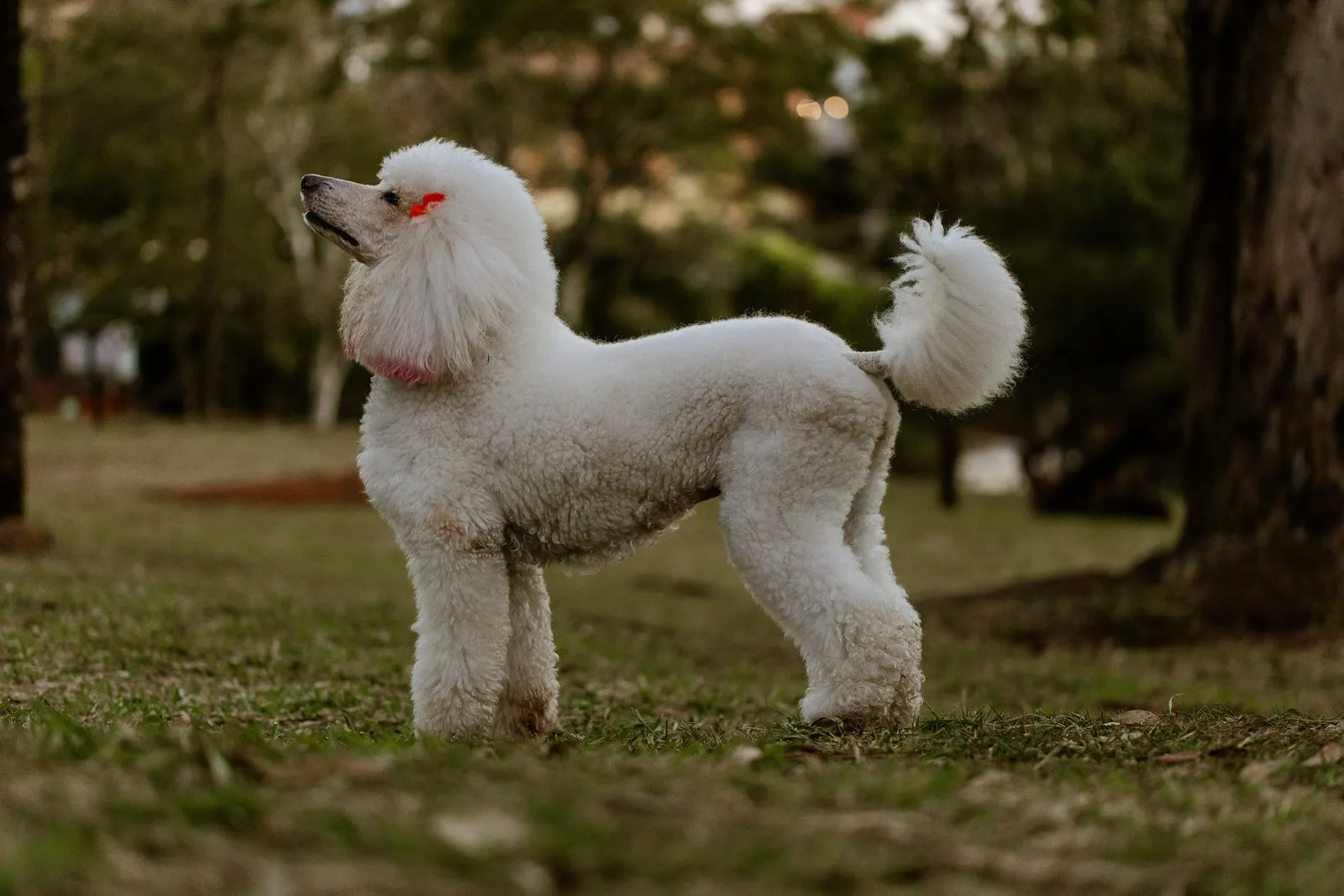
Standing versus moving
A dog can be posed to look better than it is. Movement is harder to fake and tells you more: whether the angles actually work together, whether the dog drives and reaches efficiently, whether it holds a firm topline in motion. Assess a dog both stacked and moving, from the side and coming and going, and when the two disagree, give movement heavy weight — after checking that what you see is not caused by footing, fitness, handling or discomfort.
Movement tells you a great deal, but only if the conditions are fair. Watch the dog on good footing, in fit condition, and more than once. A dog that looks unsound may be tired, poorly handled or uncomfortable. If you see uneven movement, a head bob, stiffness or a dog that tires or breathes hard unusually fast, treat it as a possible health question first and a structural question second.
In practice
A dog stacks beautifully, and a breeder half-decides to use him. Watching him move changes the picture: a straight shoulder shows up as a short, choppy stride the stack concealed. The standing photo sold the dog; the movement told the truth.
(Illustrative, composite scenario.)
Objectivity: measuring and comparing
The enemy of good conformation assessment is the same one that haunts the whole area — wanting your dog to be better than it is. Push back with method: compare against the standard and against excellent dogs, use hands-on assessment and, where useful, actual measurements rather than impressions, and invite outside eyes. Faults you can name and measure are faults you can breed away from; faults you refuse to see are faults you pass on.
In practice
Two breeders assess the same bitch. One relies on a fond impression and calls her “well balanced”; the other puts hands on her and finds a steep croup and a slightly short upper arm. Same dog — but only the second breeder now knows what to look for in a stud to complement her.
(Illustrative, composite scenario.)
What you cannot see
Hands-on assessment finds a lot that the coat hides, but it cannot show you the hip or elbow joints, the spine or the eyes. For those, use the screening your breed club recommends — in the US, the OFA’s CHIC program lists breed-specific tests; in the UK, the BVA/Kennel Club schemes. Treat a well-built outline as one piece of evidence alongside those results, not a substitute for them.
Exaggeration is a conformation fault
Kennel clubs increasingly ask judges to look for visible signs that a feature has gone too far — noisy or labored breathing, eye problems, heavy skin folds, or a body that limits movement. The Royal Kennel Club’s Breed Watch and the Nordic kennel clubs’ Breed Specific Instructions list the risk areas breed by breed. Check your breed’s entry and evaluate your own dogs against it as strictly as a judge would.
Work on it
A few minutes here will teach you more than re-reading the article.
Ask yourself
- When I assess a dog, am I reading structure — or reacting to a nice outline?
- Do I judge movement as carefully as I judge the stack?
- Could I name my own best dog’s three real conformation faults?
Find out & check
- Find out which structural faults most affect soundness and function in your breed.
- Check your assessments against a mentor or judge whose eye you trust.
Do one thing
- Assess one of your own dogs standing and moving, and write down three genuine faults.
Was this article helpful?
Anonymous. We do not store your name, email or IP address.
Sources & further reading
- Fédération Cynologique Internationale — International Breeding Strategies. fci.be
- The Royal Kennel Club — Breed standards. royalkennelclub.com
- American Kennel Club — Guidelines for Writing Breed Standards (2024). akc.org
- American Kennel Club — Conformation. akc.org
- The Royal Kennel Club — Breed Watch. royalkennelclub.com
- Nordic Kennel Union (published by the FCI) — Breed Specific Instructions (BSI) regarding exaggerations in pedigree dogs, 3rd ed. (2023). fci.be
- Orthopedic Foundation for Animals — CHIC Program. ofa.org
Where evidence is limited, recommendations rest on established practice and expert judgment, and may be updated as knowledge develops.
Next steps
- Read next: Assessing temperament and working ability.
- Related: Canine anatomy for breeders · Reading the breed standard · Retained puppy teeth and bite faults: what they mean for breeding.
- Return to the area hub: Building a breeding program.