Parvovirus is one of the infections breeders fear most, and with good reason: it survives for months in the environment, travels on shoes and equipment, and strikes puppies hardest in the weeks when their mother’s protection is fading and their own is not yet in place — which is exactly when many litters are going to new homes.
The most important first
- Puppies from about 6 weeks to 6 months are most at risk, especially before their vaccination course is complete.
- Maternal antibodies protect early but fade unpredictably, and can block vaccines. Plan your litter’s vaccinations with your vet.
- The virus lasts at least 2 months indoors and possibly much longer outdoors. Clean first, then use a disinfectant that works against parvovirus.
- Control what comes in: visitors’ shoes and hands, new dogs, shared equipment.
- Vomiting, bloody diarrhea, lethargy or refusing food in a puppy is an emergency. Isolate and call your vet.
Last updated: November 8, 2026
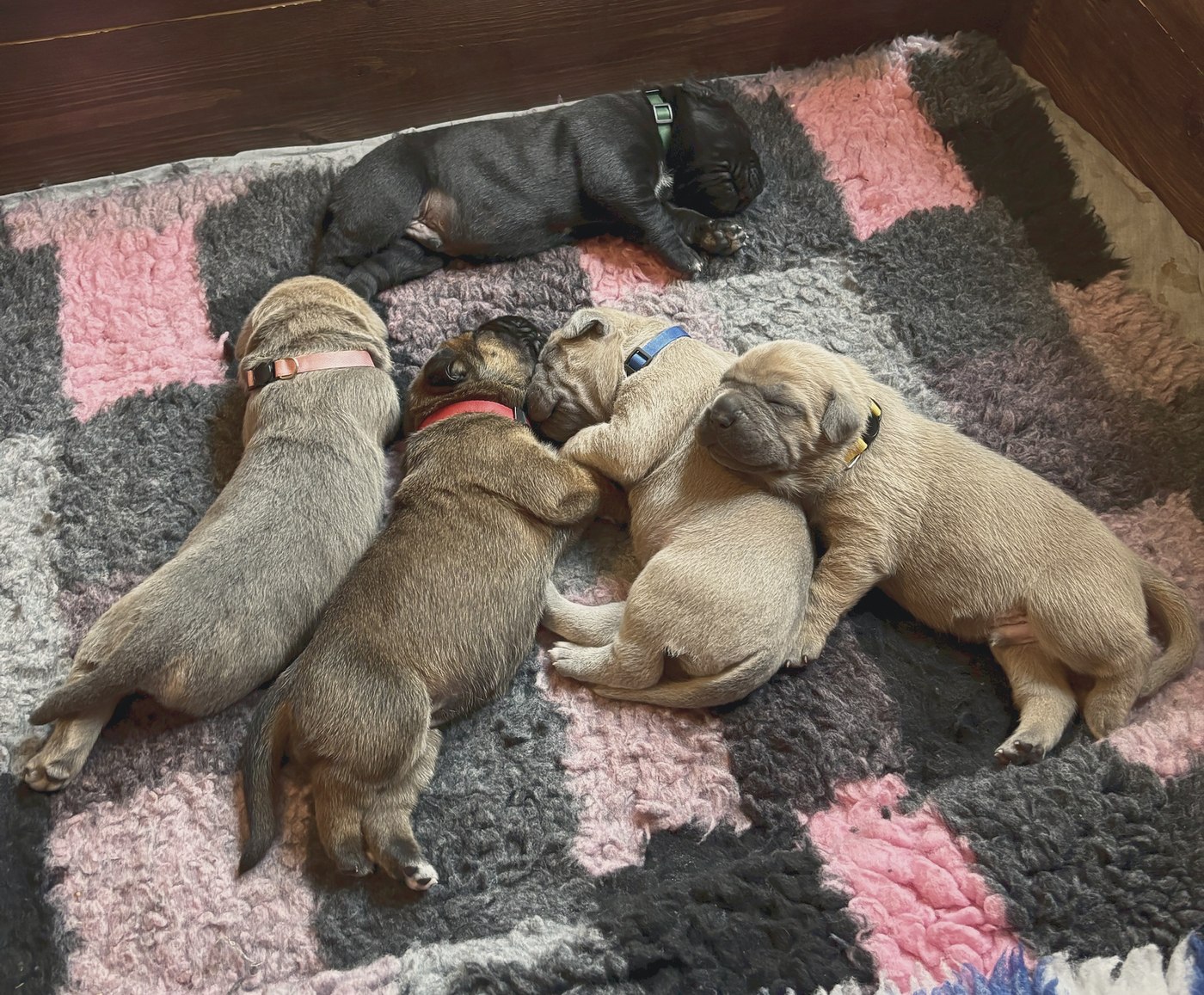
Why puppies are so vulnerable
The Merck Veterinary Manual explains that canine parvovirus spreads through contact with infected feces, or indirectly through contaminated environments, people and equipment. Young dogs aged about 6 weeks to 6 months, and dogs that are unvaccinated or incompletely vaccinated, are most susceptible. Merck also lists Rottweilers, Doberman Pinschers, English Springer Spaniels, German Shepherd Dogs and pit bull-type dogs as breeds with increased risk.
Puppies that drink enough colostrum are protected by maternal antibodies for their first few weeks. As those antibodies fade, susceptibility rises. The World Small Animal Veterinary Association (WSAVA) vaccination guidelines (2024) note that maternal antibodies interfere substantially with most core puppy vaccines, and that antibody levels vary widely both within and between litters. That is why puppies receive a series of vaccinations rather than one, and why your vet — not a fixed calendar — should set your litter’s plan.
The gap between fading maternal protection and a puppy’s own immunity is often called the immunity gap. In a 2026 review, Idbarka and colleagues conclude that current vaccines cross-protect well against circulating parvovirus strains, and that most vaccine failures are explained by maternal antibody interference, incomplete vaccination, poor vaccine handling and high infection pressure in the environment.
Is there a parvo season?
Cases occur year-round, but heat may play a part. In a national survey of Australian veterinary hospitals, Kelman and colleagues (2020) found that socioeconomic disadvantage was strongly linked to parvovirus cases and euthanasia, that lower rainfall was associated with more hospitals reporting cases, and that high temperatures may also contribute. For breeders, the practical message is that warm months, busy puppy-buying seasons and more visitors are a time to tighten biosecurity, not relax it.
How dangerous is it?
With good supportive care, the Merck Veterinary Manual reports that 70–90% of dogs survive, and above 90% with intensive hospital treatment. Young age matters: in a 2026 study of 205 treated dogs at a veterinary teaching hospital in Ghana, Opoku and colleagues found mortality of 26.9% in puppies aged 12 weeks or under and 31.5% at 13–24 weeks, compared with 5.9% in older dogs. Mortality fell as the number of vaccinations a dog had received rose.
Very rarely, parvovirus affects newborns. Jarolmasjed and colleagues (2026) describe a litter of six one-day-old German Shepherd puppies, from a reportedly vaccinated first-time mother, that all died of parvoviral heart inflammation — a reminder that a vaccinated dam does not make a kennel immune to outbreaks.
Biosecurity in the kennel
Clean, then disinfect. The Merck Veterinary Manual advises removing organic matter first, then using a disinfectant that inactivates parvovirus, such as diluted bleach, potassium peroxymonosulfate or accelerated hydrogen peroxide. It notes that quaternary ammonium disinfectants are not reliable against parvovirus. Follow the label for dilution and contact time.
Respect how long it lasts. Merck notes the virus survives indoors at room temperature for at least 2 months and, outdoors and shielded from sunlight and drying, possibly for months or years. Grass and soil can’t be disinfected, so keep young puppies off ground used by unknown dogs.
Control the entrance.
- Visitors change or cover shoes and wash hands before touching puppies.
- Ask visitors not to come straight from shelters, dog parks or shows.
- Keep a separate area, clothing and equipment for new or returning dogs.
- Don’t share crates, bowls or toys with other kennels without disinfecting them.
Isolate early. Merck advises that suspected or confirmed cases be isolated immediately, with dedicated clothing, gloves and equipment. Infected dogs shed virus from 4–5 days after exposure until about 10 days after recovery.
In practice
A breeder hosts weekend visits for a litter of seven-week-old puppies. She asks every family to arrive in clean shoes, slip on shoe covers at the door and wash their hands, and she schedules visits so no family comes straight from another kennel. When one puppy turns quiet and refuses breakfast the next week, she isolates it, calls her vet the same morning and keeps the rest of the litter’s routine unchanged until the test result is back.
(Illustrative, composite scenario.)
What to tell your puppy buyers
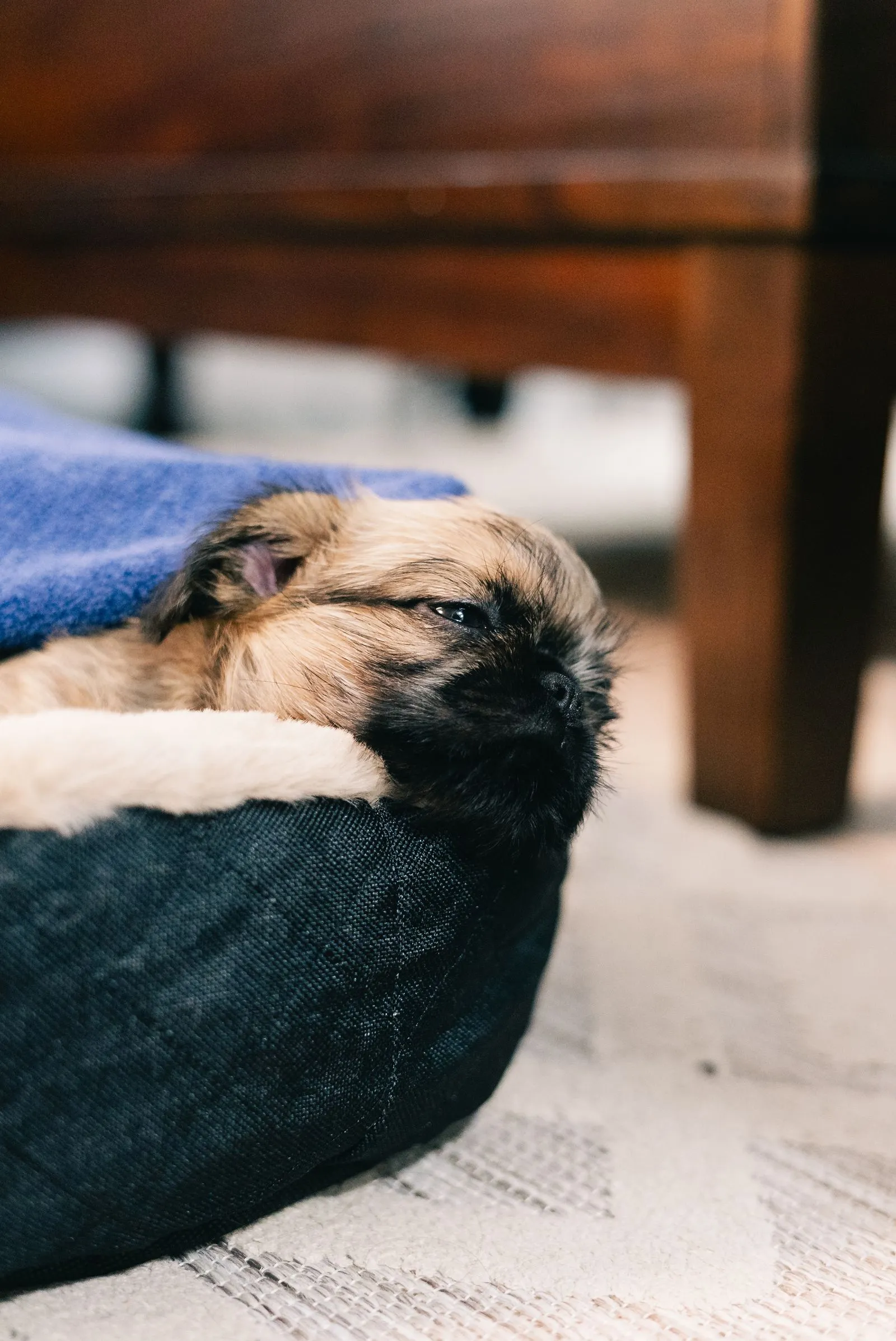
- Their puppy isn’t fully protected yet. Explain where their puppy is in its vaccination course, and that their vet will complete it.
- Be careful where the puppy goes until their vet says it is protected: avoid dog parks, pet store floors and places where unknown dogs toilet, while still socializing safely.
- Know the signs and call the vet immediately if they appear.
When to call your veterinarian
- A puppy that is lethargic, refuses food, vomits or has diarrhea — especially if it contains blood.
- A puppy with a fever or that seems cold, weak or dehydrated.
- Any sudden death in a litter.
- Before planning your litter’s vaccinations, and before taking in a new dog.
- If in doubt, call — your vet would rather hear from you early.
Work on it
A few minutes here will teach you more than re-reading the article.
Ask yourself
- Do my disinfectants actually work against parvovirus?
- Do visitors’ shoes and hands go anywhere near my puppies unchecked?
- Is my litter’s vaccination plan agreed with my vet?
Find out & check
- Read the label on your disinfectant and check whether it lists canine parvovirus.
Do one thing
- Put shoe covers and hand sanitizer at the door before your next litter’s visiting weeks.
Was this article helpful?
Anonymous. We do not store your name, email or IP address.
Sources & further reading
- Gallagher A, Merck Veterinary Manual (2025) — Canine Parvovirus Infection (Parvoviral Enteritis in Dogs). merckvetmanual.com
- Squires RA, Crawford C, Marcondes M, Whitley N (2024) — 2024 guidelines for the vaccination of dogs and cats – compiled by the Vaccination Guidelines Group (VGG) of the World Small Animal Veterinary Association (WSAVA). Journal of Small Animal Practice 65:277–316. doi.org
- Idbarka A, Soulhi I, Azrib R, Kadiri A, Daden R, Piro M, El Allali K (2026) — Canine parvovirus in Africa: Explaining persistent disease despite vaccination. Veterinary and Animal Science 34:100853. doi.org
- Kelman M, Barrs VR, Norris JM, Ward MP (2020) — Socioeconomic, geographic and climatic risk factors for canine parvovirus infection and euthanasia in Australia. Preventive Veterinary Medicine 174:104816. doi.org
- Opoku ED, Folitse RD, Kodie DO, et al. (2026) — Survival patterns and prognostic factors associated with canine parvovirus infection in dogs presented at the KNUST Veterinary Teaching Hospital in Kumasi, Ghana. BMC Veterinary Research 22:591. doi.org
- Jarolmasjed S, Ghorani M, Shahbazfar AA, Sepehr H, Zamzam SH, Soleimani S (2026) — Fatal Myocarditis Caused by Canine Parvovirus in a Litter of One-Day-Old German Shepherd Puppies: Molecular and Histopathological Findings. Veterinary Medicine and Science 12:e71010. doi.org
Where evidence is limited, recommendations rest on established practice and expert judgment, and may be updated as knowledge develops. Vaccination plans should always be set with your veterinarian. This is general information and does not replace advice from your veterinarian.
Next steps
- Read next: Kennel parasite control for dams and litters.
- Related: Spring in the kennel: mud, drainage, giardia and coccidia · Puppy warning signs: when to call the vet.
- Return to the guide: Raising a healthy litter.