A typical dog lives to about 12 or 13, but the range is wide. Size, breed, face shape and sex all make a difference, and so do some things owners control, above all keeping a dog lean. Large studies of hundreds of thousands of dogs now give a much clearer picture than the old rules of thumb.
The most important first
- In a UK study of more than 580,000 dogs, the median lifespan was 12.5 years. Studies from England and the United States have found similar figures.
- Small dogs tend to live longer than large ones. One analysis concluded that large dogs die young mainly because they age faster.
- Flat-faced (brachycephalic) breeds had shorter lives on average in the UK study, and female dogs lived slightly longer than males.
- Whether mixed breeds live longer depends on the study: two large studies found an advantage for crossbreeds, while a large UK study found the opposite.
- Owners can influence lifespan: obese dogs had shorter life expectancy in one large US study, and in a lifelong study of Labrador Retrievers the dogs kept leaner lived longer.
Last updated: November 8, 2026
How long dogs live on average
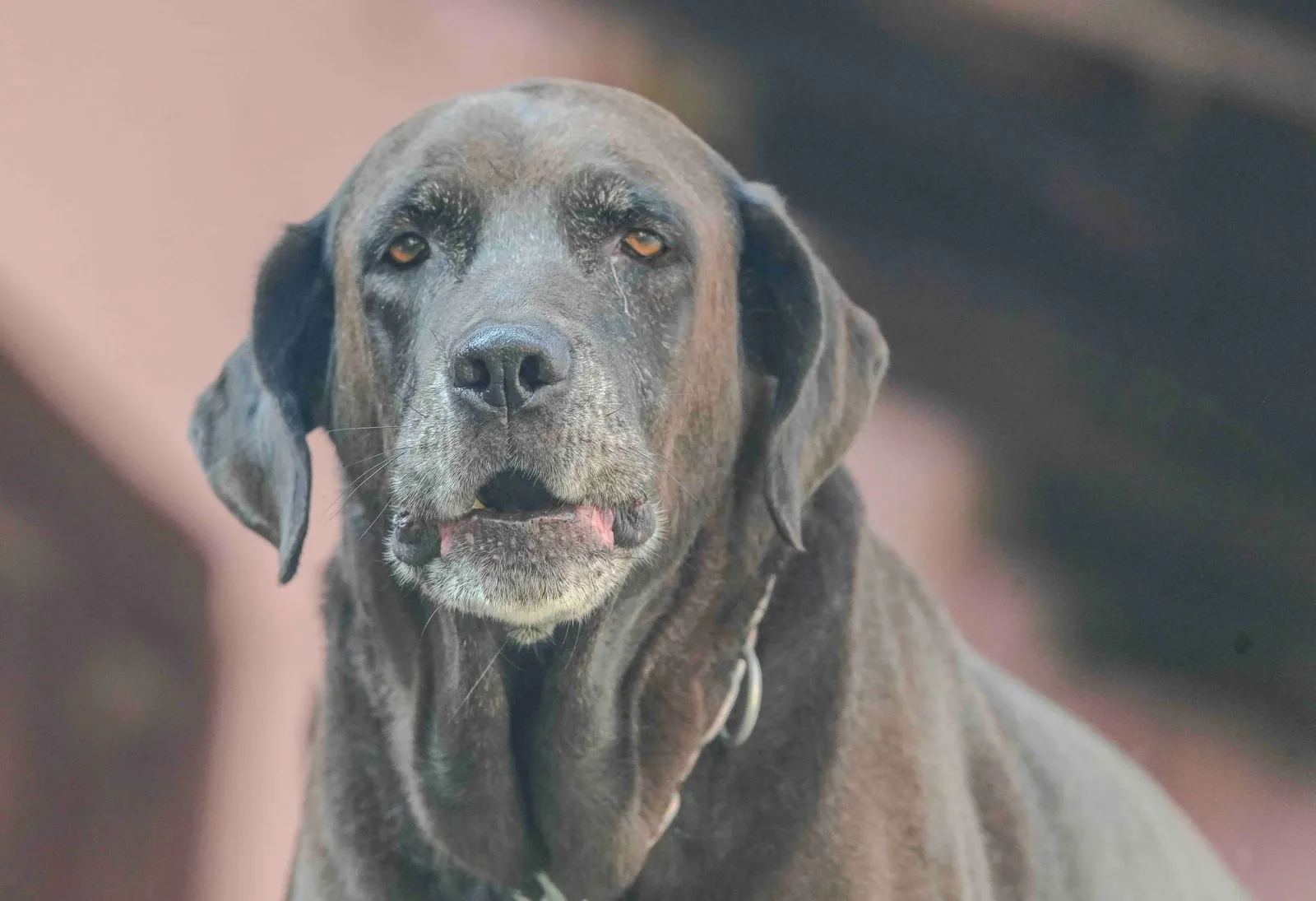
McMillan and colleagues analyzed records of 584,734 dogs in the United Kingdom, 284,734 of which had died. The median lifespan across all dogs was 12.5 years. O’Neill and colleagues, using records from first-opinion veterinary practices in England, found a median of 12.0 years among 5,095 dogs that had died. In the United States, Montoya and colleagues built life expectancy tables from the records of more than 13 million dogs seen at Banfield Pet Hospitals and found a life expectancy at birth of 12.69 years. The figures differ a little because the studies use different populations and methods, but they agree that a typical dog lives to about 12 or 13.
Size: why small dogs tend to live longer
Across mammal species, larger animals usually live longer. Within dogs, it is the other way round. In McMillan’s study, the median lifespan was 12.7 years for small purebred breeds, 12.5 years for medium breeds and 11.9 years for large breeds. O’Neill’s study likewise found that heavier body weight was linked with shorter life, and Montoya found that life expectancy increased as size decreased.
Kraus and colleagues looked at why. Fitting mortality models to death data from 74 breeds, they found no clear link between size and the age at which aging starts, and only a slightly higher baseline risk of death in large dogs. The main driver was the rate of aging: large dogs, they conclude, die young mainly because they age quickly.
Breed and face shape
Breed matters a great deal. In McMillan’s study, breeds with the shortest median lifespans included the Caucasian Shepherd Dog (5.4 years), Presa Canario (7.7), Cane Corso (8.1) and Mastiff (9.0), and the Bulldog and French Bulldog (both 9.8). Breeds with the longest included the Lancashire Heeler (15.4), Tibetan Spaniel (15.2), Shiba Inu (14.6) and Papillon (14.5). These are medians for dogs in the UK records: individual dogs, and dogs in other countries, can differ.
Face shape mattered too. Purebreds with a medium-length muzzle (mesocephalic) had a median of 12.8 years, compared with 11.2 years for flat-faced (brachycephalic) breeds and 12.1 years for long-nosed (dolichocephalic) breeds.
For breeders, these differences are a reminder that health and longevity are part of what a breeding program selects for. Our article on inbreeding, diversity and longevity looks at the genetic side, and the senior breeding dog at caring for older breeding dogs.
Sex
Female dogs lived slightly longer than males in McMillan’s study: a median of 12.7 years for females and 12.4 years for males. Montoya also found a small but significant difference in favor of females in the United States.
Do mixed breeds live longer?
The answer depends on the study. O’Neill found that crossbred dogs in England lived 1.2 years longer than purebreds, and Urfer and colleagues, studying more than 2.3 million dogs seen at US primary care hospitals, found that mixed-breed dogs lived significantly longer, with a larger difference in bigger dogs. McMillan’s UK study found the opposite overall: a median of 12.7 years for purebreds and 12.0 years for crossbreds, with almost half of the 155 breeds studied living longer than the crossbred group and about a quarter living shorter lives. “Crossbred” covers many different dogs, and purebred breeds vary widely, so the comparison says more about particular breeds than about mixed breeding as such.
“One dog year equals seven human years”
The seven-year rule is a simplification. Wang and colleagues compared age-related chemical changes to DNA (methylation) in 104 Labrador Retrievers with those in people and found that the relationship between dog and human age is not linear, so a single multiplier cannot describe it.

What owners can influence
Keep your dog lean. In Montoya’s US study, obese dogs had a life expectancy of 11.71 years, compared with 13.18 years for dogs at an ideal body condition. Kealy and colleagues followed 48 Labrador Retrievers in pairs from puppyhood until death, feeding one dog in each pair less than its pair-mate. The dogs kept leaner lived significantly longer, and the signs of chronic disease generally appeared later. Ask your vet how to judge your dog’s body condition and what it should weigh.
Look after the teeth. Among dogs that lived to two years of age in Urfer’s study, the risk of death fell as the frequency of dental scaling rose. This is an association, not proof that dental care itself adds years.
Keep up preventive care. Regular checkups help find problems early. Our article on working with your vet covers how breeders and owners can make the most of them.
Urfer’s study also found that dogs that had been neutered lived longer than intact dogs. This, too, is an association; talk through the pros and cons of neutering for your own dog with your vet.
In practice
A family buying a puppy of a giant breed asks the breeder how long it is likely to live. The breeder explains that large breeds have shorter lives on average, shows them what is known about longevity in her lines, and talks them through keeping the dog lean and booking regular checkups. The family goes ahead with realistic expectations and a plan for the dog’s later years.
(Illustrative, composite scenario.)
When to call your veterinarian
- Your dog is gaining weight, or you can no longer feel its ribs easily.
- Your dog has bad breath, red gums, or difficulty chewing.
- Your older dog drinks or urinates more, loses weight, or slows down noticeably.
- If in doubt, call — your vet would rather hear from you early.
Work on it
A few minutes here will teach you more than re-reading the article.
Ask yourself
- What is the typical lifespan of my breed, and what are its common health problems?
- Is my dog at a healthy weight?
- When did my dog last have its teeth checked?
Find out & check
- Ask your breeder or breed club what is known about longevity in your breed and in the lines your dog comes from.
Do one thing
- Ask your vet to show you how to score your dog’s body condition at the next visit.

Was this article helpful?
Anonymous. We do not store your name, email or IP address.
Sources & further reading
- McMillan KM, Bielby J, Williams CL, Upjohn MM, Casey RA, Christley RM. Longevity of companion dog breeds: those at risk from early death. Scientific Reports 2024. doi.org
- O’Neill DG, Church DB, McGreevy PD, Thomson PC, Brodbelt DC. Longevity and mortality of owned dogs in England. The Veterinary Journal 2013. doi.org
- Montoya M, Morrison JA, Arrignon F, Spofford N, Charles H, Hours MA, Biourge V. Life expectancy tables for dogs and cats derived from clinical data. Frontiers in Veterinary Science 2023. doi.org
- Kraus C, Pavard S, Promislow DEL. The size–life span trade-off decomposed: why large dogs die young. The American Naturalist 2013. doi.org
- Urfer SR, Wang M, Yang M, Lund EM, Lefebvre SL. Risk factors associated with lifespan in pet dogs evaluated in primary care veterinary hospitals. Journal of the American Animal Hospital Association 2019. doi.org
- Kealy RD, Lawler DF, Ballam JM, et al. Effects of diet restriction on life span and age-related changes in dogs. Journal of the American Veterinary Medical Association 2002. doi.org
- Wang T, Ma J, Hogan AN, et al. Quantitative translation of dog-to-human aging by conserved remodeling of the DNA methylome. Cell Systems 2020. doi.org
Where evidence is limited, recommendations rest on established practice and expert judgment, and may be updated as knowledge develops. This is general information, not veterinary advice: talk to your veterinarian about your own dog.
Next steps
- Read next: Inbreeding, diversity and longevity.
- Related: The senior breeding dog · Working with your vet.