If you ever have to leave home in a hurry — for a wildfire, flood, hurricane or gas leak — the dogs who fare best are the ones whose owners already know where they’re going, have a bag packed and can be identified if they get separated, so an hour of planning now is worth a great deal later.
The most important first
- Never leave your dog behind. If it isn’t safe for you, it isn’t safe for your dog.
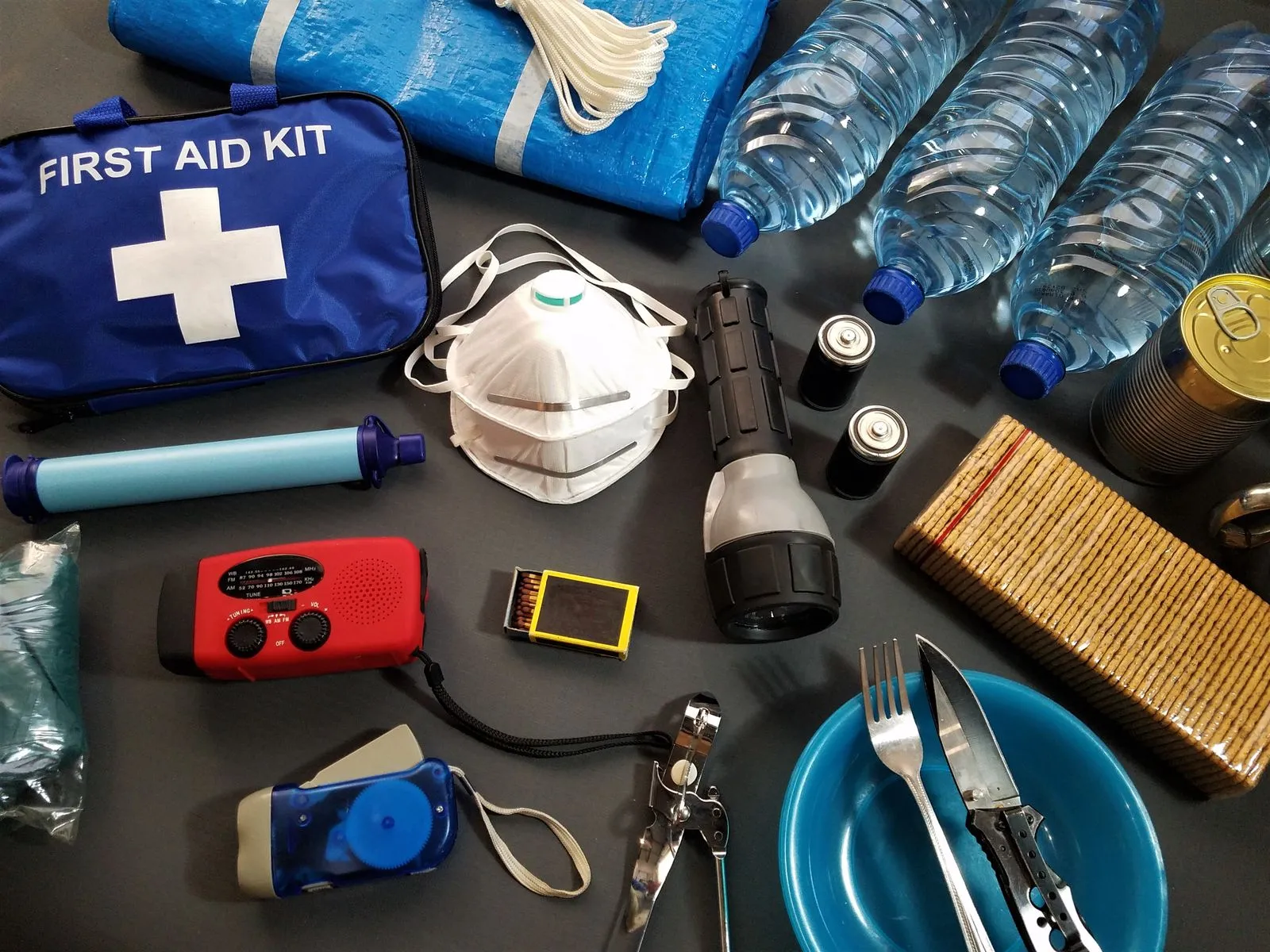
- Pack a grab-and-go kit: food, water, medications, records, leash, crate, photos.
- Know where you’ll go. Many evacuation centers don’t take pets; line up friends, family, boarding or pet-friendly hotels.
- Set up a buddy who can collect your dog if you’re not home.
- Keep ID current: tag with your mobile number and an up-to-date microchip registration.
Last updated: November 8, 2026
Why planning matters
Heath and Linnabary (2015) write that pet ownership is one of the biggest reasons people fail to evacuate in US disasters, because owners won’t leave without their animals. A 2025 scoping review by Moslehi and colleagues found that many disaster programs still focus on people and overlook pets. In the US, the PETS Act passed after Hurricane Katrina requires state and local emergency plans to include pets, and Glassey (2018) found it has helped shift emergency response towards including animals — but it is not a guaranteed place for your dog.
Speed is the other problem. Colorado’s Marshall Fire in December 2021 killed more than 1,000 pets; Irvine and Andre (2023) found that many owners simply couldn’t get home in time to rescue them. A plan — including a neighbor who can step in — is what bridges that gap.
Your dog’s grab-and-go kit
The US Centers for Disease Control and Prevention (CDC) advises packing vaccination records, prescription medications and medical history, the number of a vet near where you’ll stay, and your dog’s name and your contact details on the carrier. A practical kit also includes:
- Food and water for several days, plus collapsible bowls
- Medications with written instructions
- Records: vaccinations, microchip number, medical history — paper in a waterproof bag and a copy on your phone
- Recent photos of your dog, ideally with you, to prove ownership and help if you’re separated
- Leash, spare collar with tag, harness
- Crate or carrier labelled with your details
- Waste bags, cleaning supplies, towel, blanket
- First aid kit — see first aid basics
- Something familiar: a toy or blanket that smells of home
Check the kit twice a year and replace food, water and medication before they expire.
Where will you go?
The CDC notes that pets may not be allowed in local shelters unless they are service animals, and that many evacuation centers, including Red Cross centers, don’t accept pets. Plan ahead:
- Ask your local emergency management office whether it has accommodation for owners and pets.
- Identify friends or family outside your area, boarding kennels, veterinary clinics and pet-friendly hotels along your evacuation routes.
- Your dog’s breeder may be able to help, too — it’s worth asking.
A buddy system
The CDC suggests arranging for a trusted neighbor to check on your animals and evacuate them if you can’t get home. Give them a key, a copy of your plan and your vet’s number, and agree on where you’ll meet.
ID that works
Microchips only help if the details are right. In a US study of microchipped animals entering shelters, Lord and colleagues (2009) found that the most common reason owners couldn’t be found was an incorrect or disconnected phone number, and only 58.1% of animals checked with a registry were actually registered. Make sure your dog wears a tag with your mobile number, and log in to check the registration.
In practice
A family in a flood-prone area keeps a backpack by the door with their dog’s food, medication, records and a printed photo. Their neighbor has a key and knows to take the dog to the family’s cousins 50 miles away if a warning comes while they’re at work. When the warning does come one autumn afternoon, the dog is safely on the road within half an hour.
(Illustrative, composite scenario.)
When to call your veterinarian
- To get copies of your dog’s vaccination and medical records for your kit.
- To check your dog’s microchip can be read and is registered to you.
- To get enough medication for your kit, with written instructions.
- After any evacuation, if your dog was exposed to smoke, floodwater or injury, or seems unwell.
- If in doubt, call — your vet would rather hear from you early.
Work on it
A few minutes here will teach you more than re-reading the article.
Ask yourself
- Where would my dog and I go tonight if we had to leave?
- Who could collect my dog if I couldn’t get home?
- Is my phone number on my dog’s tag and microchip correct?
Find out & check
- Find out whether your local evacuation shelters accept pets.
Do one thing
- Pack your dog’s grab-and-go bag this weekend.
Was this article helpful?
Anonymous. We do not store your name, email or IP address.
Sources & further reading
- Centers for Disease Control and Prevention (2024) — Pet Disaster Preparedness. cdc.gov
- Heath SE, Linnabary RD (2015) — Challenges of Managing Animals in Disasters in the U.S. Animals 5:173–192. doi.org
- Irvine L, Andre C (2023) — Pet Loss in an Urban Firestorm: Grief and Hope after Colorado’s Marshall Fire. Animals 13:416. doi.org
- Moslehi S, Tavan A, Narimani S, Soleimanpour S (2025) — Progress and challenges in pet management in disasters: recommended strategies for developing countries – a scoping review. BMC Veterinary Research 21:562. doi.org
- Lord LK, Ingwersen W, Gray JL, Wintz DJ (2009) — Characterization of animals with microchips entering animal shelters. Journal of the American Veterinary Medical Association 235:160–167. doi.org
- Glassey S (2018) — Did Harvey Learn from Katrina? Initial Observations of the Response to Companion Animals during Hurricane Harvey. Animals 8:47. doi.org
Where evidence is limited, recommendations rest on established practice and expert judgment, and may be updated as knowledge develops. Always follow instructions from local emergency services. This is general information and does not replace professional advice.
Next steps
- Read next: A first aid kit and first aid basics for dog owners.
- Related: Moving house with a dog · Road trips and camping with your dog.
- Return to the guide: For your puppy buyers.