Most pregnancies proceed without incident, but knowing what’s a normal part of pregnancy versus a genuine warning sign is what lets you act quickly on the rare occasion something goes wrong. This guide covers both.
The most important first
- Mild appetite and behavior changes are common and usually not concerning on their own.
- A normal mucus plug or minor discharge is clear or white, sometimes slightly pink-tinged, and odorless.
- Blood, pus or a strong odor are reasons to call a vet the same day; green or black discharge before the first puppy is an emergency.
- Normal body temperature runs about 99.5–102.5 °F (37.5–39.2 °C); above 103 °F (39.5 °C) is a fever. A drop signals labor is expected within about 24 hours, not that it has started.
- Any time you sense genuine pain or distress, rather than ordinary discomfort, it’s worth a vet call.
A note on day counts: day numbers in this article are approximate and counted from ovulation, the date progesterone testing pins down. The LH surge comes about two days before ovulation, so a count “from the LH surge” runs about two days higher. If you only know the mating dates, her true day of pregnancy may be several days earlier or later, so allow a margin either way. The overdue rule below is given both ways: from the first mating and from the LH surge.
What’s normal
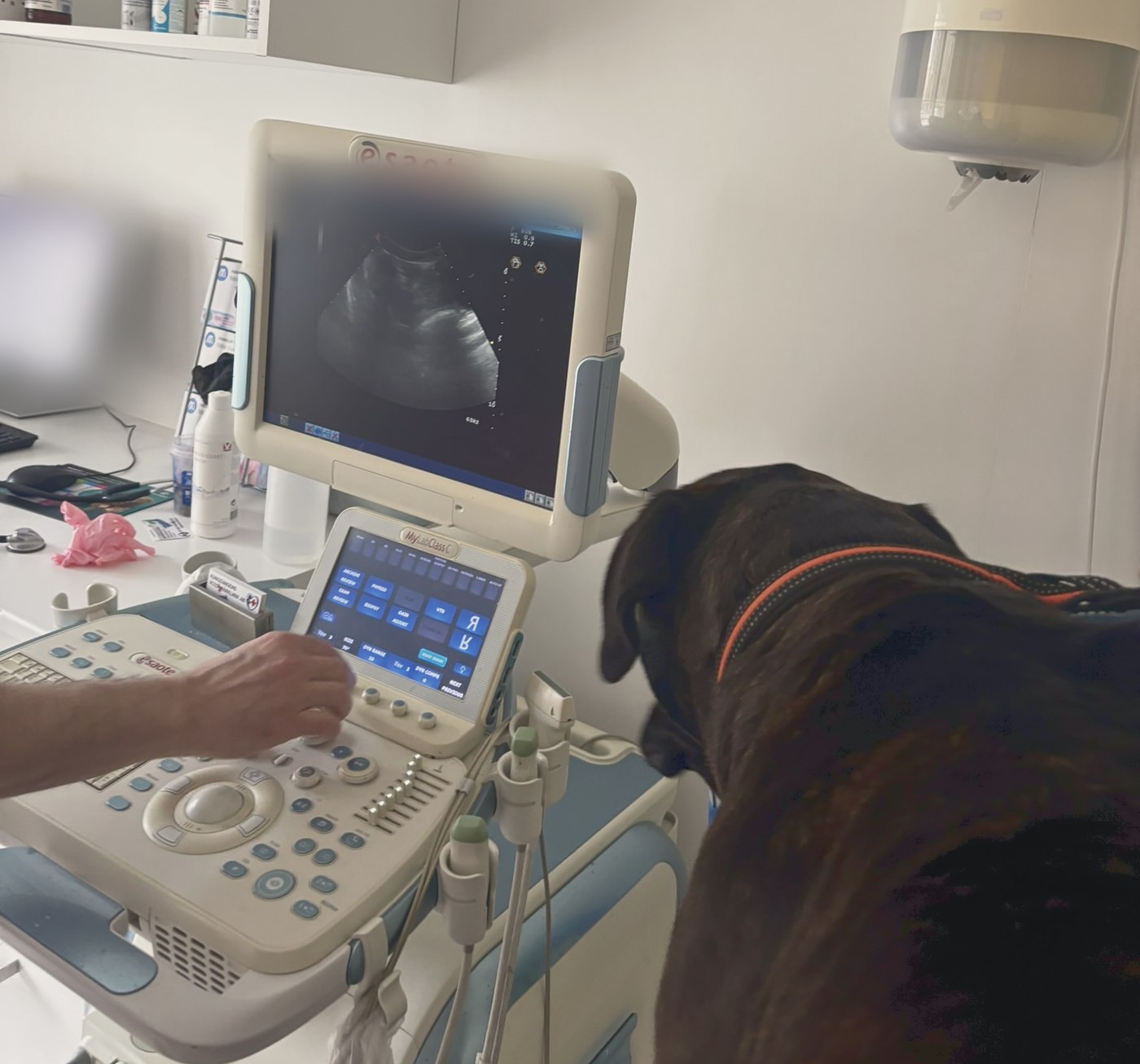
Mild changes in appetite, occasional lethargy, and shifts in bathroom habits are common through pregnancy and generally not, on their own, cause for concern. A small amount of clear or mucus-like, sometimes slightly pink-tinged, odorless discharge is also normal, typically from about day 30–35 onward. Many bitches eat a little less for a few days around day 45 and again in the last day or two before whelping. As she approaches labor, heavier panting, pacing and nesting are typical and expected signs, not red flags by themselves.
A normal adult dog’s rectal temperature is about 99.5–102.5 °F (37.5–39.2 °C), and in the last week it can run slightly below her usual baseline. From around day 58–60, take her temperature twice a day at the same times so you know her own baseline. In about four out of five bitches, temperature then drops noticeably, often to around 98–99 °F (36.7–37.2 °C), roughly 12–24 hours before labor starts. The drop is a warning that labor is coming, not proof that it has begun, and some bitches never show it. If labor has not started within 24 hours of the drop, call your vet.
What’s a warning sign
Vaginal discharge that’s bloody, pus-like or has a significant odor warrants a same-day call to your vet — a normal discharge is clear or white and effectively odorless, so anything markedly different from that is worth checking rather than watching. Green or black discharge before the first puppy has been born is an emergency: it can mean a placenta is separating, so call your vet immediately. Body temperature is a useful, objective signal: a temperature above 103 °F (39.5 °C) at any stage is a fever and needs a call, and any other unexplained change from her baseline is worth flagging with your vet rather than assumed to be part of a normal pattern.
Losing some or all of a litter often happens without any visible sign. Sometimes the only clue is a smaller count than expected, or a discharge she licks away. If you suspect a loss, ask your veterinarian about testing for infections such as Brucella canis and canine herpesvirus. Brucella can also infect people and other dogs in the kennel.
In practice
A breeder notices a small amount of discharge midway through pregnancy and, having read that some discharge can be normal, decides to simply monitor it. The discharge has a distinct odor and a greenish tinge — details that, on reflection, don’t match the “normal” description of white and odorless. A same-day vet call, rather than a wait-and-see approach, is the right response to discharge that doesn’t clearly match what’s described as normal.
(Illustrative, composite scenario.)
When to call, not wait
As a general principle, if you sense she’s in genuine pain or distress — not ordinary late-pregnancy discomfort, but something that reads as more than that — it’s worth a vet call rather than waiting to see if it resolves. This applies throughout pregnancy, not only in the final stretch: possible pregnancy loss, a sudden marked change in her demeanor, or any of the discharge or temperature signs above are all reasons to seek veterinary advice promptly rather than waiting for the next scheduled check.
Contact your veterinarian the same day, or your emergency clinic out of hours, if she:
- has a temperature above about 103 °F (39.5 °C);
- has a bloody, pus-like or foul-smelling discharge at any stage, or any green or black discharge before a puppy has been born — treat green-black discharge as an emergency;
- is lethargic, vomiting, or has stopped eating for more than a brief dip;
- pants, trembles, walks stiffly or seems restless and disoriented in late pregnancy — these can be early signs of eclampsia (low blood calcium), which occasionally starts before whelping and needs urgent treatment;
- reaches about 70 days after the first mating (about day 66 from the LH surge) with no signs of labor, or shows a clear temperature drop and then no labor within 24 hours.
When to call your vet
- Her temperature rises above 103 °F (39.5 °C).
- Green or black discharge before the first puppy is an emergency — call your vet immediately.
- She has a bloody, pus-like or foul-smelling discharge at any stage.
- She is lethargic, vomiting, or off her food for more than a brief dip.
- Panting, trembling, stiffness, restlessness or seizures in late pregnancy — possible eclampsia, call immediately.
- Labor has not started within 24 hours of the temperature drop, or she reaches about 70 days after the first mating (about day 66 from the LH surge).
- If in doubt, call — your vet would rather hear from you early.
Work on it
A few minutes here will teach you more than re-reading the article.
Ask yourself
- Could I describe what normal discharge looks like versus what would concern me?
- Do I know her normal temperature range, and would I recognize the drop that signals labor is about 12–24 hours away?
- Do I have my vet’s contact information (including out-of-hours) readily accessible?
Find out & check
- Find out your vet’s preferred way to be contacted for a pregnancy concern outside normal hours.
- Check that you know how to take and read her temperature accurately.
Do one thing
- Write down the specific warning signs from this article somewhere you’ll actually see them during late pregnancy.
Was this article helpful?
Anonymous. We do not store your name, email or IP address.
Sources & further reading
- Merck Veterinary Manual — Normal Rectal Temperature Ranges. merckvetmanual.com
- VCA Animal Hospitals — Breeding for Dog Owners: Problems at Birth. vcahospitals.com
- Colorado State University Veterinary Teaching Hospital — Pregnancy and Whelping for Dogs. csuveterinaryhealth.org
- AKC Canine Health Foundation (Dr. Cindy O’Connor) — Whelping and Dystocia (podcast transcript). akcchf.org (PDF)
- Farstad WK (DECAR), congress proceedings — Time of Embryonic and Foetal Death. vin.com
- American Kennel Club — The Reproductive Cycle in Dogs: From Breeding to Birthing. akc.org
- Merck Veterinary Manual (J.A. Hall) — Puerperal Hypocalcemia in Small Animals. merckvetmanual.com
- Dogs Victoria (ANKC member body, Australia) — Caring for Your Pregnant Bitch (fact sheet B16). dogsvictoria.org.au (PDF)
Where evidence is limited, recommendations rest on established practice and expert judgment, and may be updated as knowledge develops.
Next steps
- Read next: Medications and risk factors in pregnancy.
- Related: Exercise, environment and daily life during pregnancy.
- Related: Pica and unusual eating in breeding dogs, including during pregnancy.
- Return to the area hub: Pregnancy: managing the pregnant bitch week by week.