Understanding how a bitch’s reproductive system actually works is what makes the rest of this area — heat cycles, timing, mating, pregnancy — make sense rather than feel like a set of rules to memorize. This guide covers the anatomy and how it changes across the cycle, in plain terms.
The most important first
- The ovaries, uterus, cervix and vagina each play a distinct role across the cycle.
- The uterus is Y-shaped in dogs, with two horns joining at a body near the cervix.
- Ovulation timing, not mating timing, is what ultimately determines fertility.
- Understanding this anatomy makes the heat cycle and progesterone testing make sense.
- Structural problems, such as a narrowing of the vaginal canal, can interfere with mating or whelping and are one cause of unexplained infertility.
The key structures
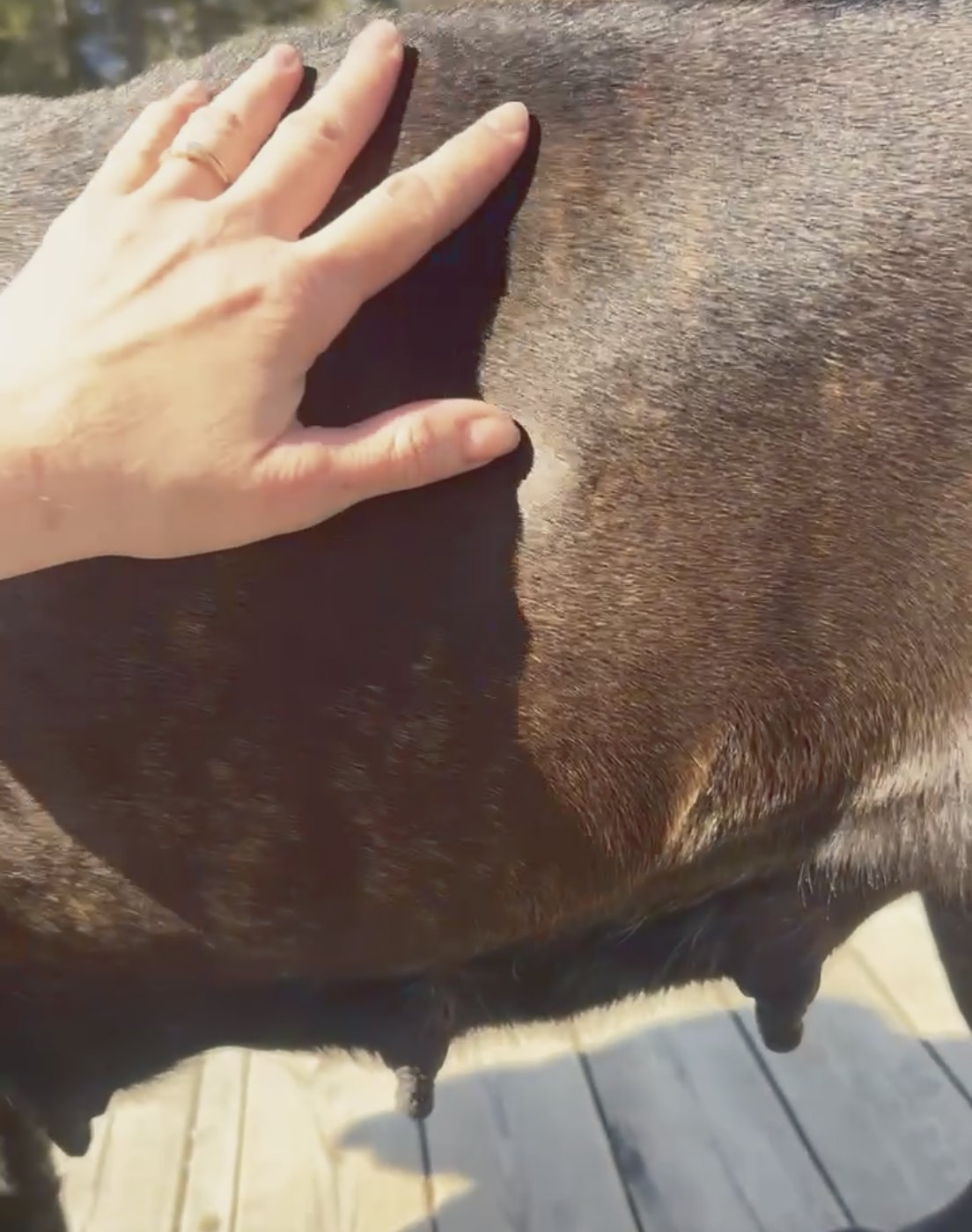
The bitch’s reproductive tract runs from the ovaries — where eggs mature and hormones are produced — through the oviducts, into a uterus that is distinctively Y-shaped in dogs: two long uterine horns extend from the ovaries and join at a shorter uterine body near the cervix, the muscular valve that separates the uterus from the vagina. This Y-shape is why a litter can distribute across both horns rather than sitting in a single chamber, and why whelping involves puppies descending from either horn in sequence.
How the anatomy drives the cycle
Each part of this system has a specific job across the reproductive cycle. The ovaries release eggs at ovulation and produce the hormones — estrogen and progesterone — that drive the physical and behavioral changes of heat. The uterine lining thickens in preparation for a possible pregnancy each cycle, with or without an actual mating. The cervix is open during the fertile period to let sperm through and closes again roughly a week after the LH surge, helping protect the uterus from infection outside the fertile window. Understanding this sequence is what makes the heat cycle and reproductive hormones intelligible as a process, rather than a set of dates to track blindly.
In practice
A new breeder is confused about why a bitch can be willing to mate for several days but only truly fertile for a narrower window within that. Once they understand that ovulation — not just behavioral receptivity — is what determines the fertile window, and that the two don’t always align exactly, the case for progesterone testing over calendar guesswork becomes obvious.
(Illustrative, composite scenario.)
(Illustrative, composite scenario.)
When anatomy becomes a fertility issue
Most bitches have entirely normal reproductive anatomy, but structural problems — a partial or complete blockage, a malformed structure, scarring from a prior infection — do occur and are one of the causes investigated when infertility is worked up. Recognizing that anatomy, not just hormones or timing, can be the underlying issue is part of why a proper veterinary investigation matters when repeated matings fail to produce a pregnancy.
A pre-breeding examination, especially for a maiden bitch, usually includes a check of the vaginal canal for narrowing (strictures) that could make mating or whelping difficult, and a look at the nipples. Some narrowing in a maiden bitch can be normal and may be rechecked during heat.
Pyometra: the risk after every heat
Because the uterine lining thickens under progesterone after every heat, an intact bitch is at risk of pyometra — a uterine infection that usually appears one to two months after a season. Contact your veterinarian the same day if a bitch becomes lethargic, goes off her food, vomits, drinks or urinates much more than usual, or has a pus-like or bloody discharge after her heat. When the cervix is closed there may be no discharge at all, which can make the condition harder to spot and more dangerous. Pyometra is an emergency.
Some bitches develop swollen vaginal tissue that bulges from the vulva during heat (vaginal hyperplasia). It is driven by estrogen and usually settles once the season ends, but it tends to come back each heat; keep the tissue clean and protected and ask your vet for advice. A heat that seems to last more than about 40 days should also be checked, as it can point to an ovarian cyst.
When to call your vet
- In the one to two months after a heat, she is lethargic, off her food, vomiting, drinking or urinating much more, or has a pus-like or bloody discharge — call the same day; pyometra is an emergency.
- A swollen, pink mass bulges from the vulva during heat — ask your vet how to protect it, and go in promptly if it looks dry, cracked or injured, or if she cannot urinate.
- A season seems to last more than about 40 days.
- A maiden bitch has not been examined before her first planned mating — book a pre-breeding check of the vaginal canal and nipples.
- Mating repeatedly fails, or she shows real pain when the male tries to mount.
- If in doubt, call — your vet would rather hear from you early.
Work on it
A few minutes here will teach you more than re-reading the article.
Ask yourself
- Could I explain, in simple terms, why the uterus’s shape matters for how a litter develops?
- Do I understand the difference between behavioral receptivity and actual fertility?
- Would I recognize the anatomical basis for why progesterone testing matters, not just accept it as a rule?
Find out & check
- Find out what a normal reproductive tract exam involves for a bitch being considered for breeding.
- Check whether your vet has examined your bitch’s reproductive anatomy prior to her first mating.
Do one thing
- Sketch or describe the path an egg takes from ovary to a successful pregnancy, in your own words.
Was this article helpful?
Anonymous. We do not store your name, email or IP address.
Sources & further reading
- Merck Veterinary Manual (Pet Owner Version) — The Gonads and Genital Tract of Dogs. merckvetmanual.com
- BVNA — Reproductive system of the dog and cat – Part 3: Reproductive physiology of the bitch. bvna.org.uk
- Merck Veterinary Manual — Breeding Management of Bitches. merckvetmanual.com
- Concannon PW, Animal Reproduction Science (2011) — Reproductive cycles of the domestic bitch. doi.org
- Merck Veterinary Manual — The Breeding Soundness Examination in Dogs and Cats. merckvetmanual.com
- Merck Veterinary Manual (Pet Owner Version) — Reproductive Disorders of Female Dogs. merckvetmanual.com
- Cornell Richard P. Riney Canine Health Center — Pyometra. vet.cornell.edu
Where evidence is limited, recommendations rest on established practice and expert judgment, and may be updated as knowledge develops.
Next steps
- Read next: The stud dog’s reproductive system explained.
- Related: The heat cycle and reproductive hormones.
- Return to the area hub: Reproduction and fertility.
- Related emergency: Pyometra in the breeding bitch: signs, timing and what to do.