Insurance feels like administration right up to the week it is not — a cesarean at three in the morning, a visitor bitten in your hallway, a puppy that collapses on its fourth day in a new home — and the gaps breeders find are the ones nobody thought to look for.
The most important first
- Cover splits into at least five separate things: the breeding dogs themselves, breeding and whelping risks, the litter, liability towards other people, and your premises and equipment. One policy rarely does all five.
- Breeding-related costs are commonly excluded from ordinary pet policies. In the UK, the Royal Kennel Club’s breeder scheme sells breeding risks cover only as an addition to the dam’s own lifetime policy.
- The free cover you hand a buyer is short and narrow: the same UK scheme gives five weeks, which must be activated up to ten days before the puppy is collected and cannot be activated afterwards.
- If breeding is a licensable activity where you live, assume your household policies were not written for it — in England a license is required for three or more litters in any twelve-month period, or for advertising a business of selling dogs.
- No clause insures you against having said something that was not true, which is why this article sits beside sales contracts and consumer law and the pre-sale health checklist.
What you are actually insuring
Stop thinking about “breeder insurance” as a product and list the distinct things that can go wrong. The first is the dog: illness and injury in the adults you keep, which is ordinary pet cover, with the complication that many policies treat anything connected with breeding as outside the policy. The second is reproduction itself — fertility investigations, a difficult pregnancy, an emergency cesarean — usually a separate add-on that must be bought before mating rather than when a problem appears. The third is the litter, from birth until the puppies leave. The fourth is liability: harm your dogs or your premises cause to other people, their animals and their property. The fifth is everything physical — whelping boxes, pens, a vehicle fitted out for transport — which sits with home or business insurance and is frequently the category voided by the activity going on in the house.
The sixth cannot be bought: your exposure to a dispute with a buyer, which is managed with documents rather than premiums.
The breeding dogs and the litter
Read the exclusions on the dam’s policy before you plan a mating, not after. Know whether whelping complications are covered at all, whether cover must be in place for a set period before mating, and whether a claim affects her cover afterwards. As an illustration of the shape these products take: in the UK the Royal Kennel Club’s breeding risks cover is an optional addition to the mother’s lifetime policy, offering up to £1,000 a year for fertility examination and associated treatment, cover for complications during gestation, pregnancy and whelping including cesarean section (with breed-specific exclusions), and veterinary fees for the puppies from birth until the date of sale or fourteen weeks of age, whichever comes first; the scheme is underwritten by Agria. The figures will differ wherever you are; the questions to ask your own insurer are the same.
If breeding has become a licensed activity for you, the questions widen. In England, the statutory guidance on dog breeding licensing starts with income: if your trading income is below the HMRC trading allowance, you do not need a breeding license. Above it, you need one if you breed three or more litters in any 12-month period (unless you can show none of the puppies were sold) or if you meet the business test of breeding and advertising a business of selling dogs. At that level, cover written for a pet owner is the wrong cover, and you should ask explicitly whether your policies respond to a commercial activity conducted at home.
The few weeks of cover you give the buyer
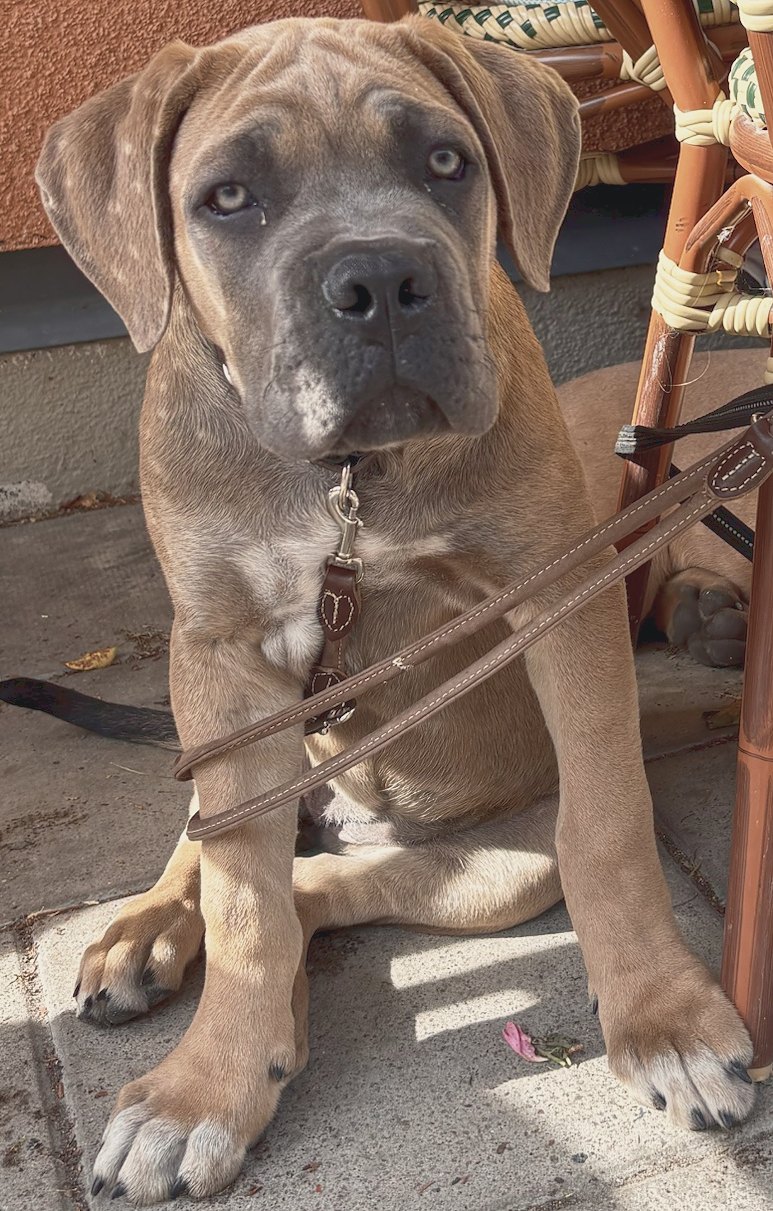
Almost every registry-linked scheme offers a short period of free insurance for the new owner. In the UK that is five weeks with up to £5,000 toward veterinary treatment for illness or injury and up to £2,500 refund of the purchase price if the puppy dies from illness or injury; in the US, the American Kennel Club’s scheme provides thirty days of accident and illness cover triggered by registration. That cover is provided by AKC Pet Insurance (administered by PPI), not by the AKC itself, and waiting periods, limits and exclusions may apply.
Be clear about what that does. It bridges the riskiest days — travel, a new environment, the point at which an unnoticed problem declares itself — so a condition appearing then falls inside a policy period rather than being an uninsured event. It is not a health guarantee and it does not replace your contract, and how the buyer’s own insurer later treats a condition noticed in those weeks is a matter for that insurer, not something to promise.
Two operational details cause most of the trouble. Cover that must be started before collection cannot be rescued the day after handover, and the buyer has to be told, in writing and more than once, what the free period covers, when it ends, and that arranging their own policy is their job.
Liability: what you can be held responsible for
The realistic list is short and mostly not about puppies. Someone is bitten or knocked over by one of your adults. A dog escapes and causes a road accident. A visitor’s dog picks up an infection in your whelping room. A dog still legally yours in a guardian home injures somebody.
Whether any of that lands on you, and on what basis, depends entirely on where you are. As one example of the shape such rules take: in England and Wales the Animals Act 1971 imposes liability on the keeper of an animal for certain damage it causes, defines a keeper as the person who owns or possesses it, and provides that someone who has ceased to own or possess an animal remains its keeper until another person becomes one. That is worth sitting with if you use guardian homes or place a dog without transferring ownership. What the equivalent rule is where you live is a question for a professional there.
In the United States, liability for a dog bite or injury depends on the state. Some states have a dog-bite statute that makes the owner responsible even without prior warning signs; others apply a “one-bite” rule, where the owner is liable if they knew the dog was likely to cause that kind of harm; and negligence can apply anywhere. Many homeowners and renters policies include dog-bite liability up to a set limit, but some insurers exclude certain breeds or a dog that has bitten before, and the average US claim now runs to tens of thousands of dollars. Ask your insurer, in writing, whether breeding, selling puppies and visitors coming to see a litter are covered, or whether they count as a business activity that needs separate cover.
Public liability cover is the ordinary answer to most of that list, either as an extension of home insurance or as part of a business policy. Check not the limit but the definition: whether the policy contemplates paying visitors, animals kept for breeding, and dogs in others’ temporary care.
In practice
A breeder places a puppy on a Friday and hears nothing until Tuesday, when the new owner calls from an emergency clinic with a four-figure estimate and no insurance. The free registry cover had needed activating before collection and was never started, having been mentioned once, verbally, in a conversation about feeding. The breeder pays half the bill to keep the relationship intact, then rebuilds the handover: activation now happens ten days before collection as a fixed task, and the buyer signs a line confirming when the free period ends.
(Illustrative, composite scenario.)
Why disclosure beats any clause
Most disputes breeders end up in are not really about money; they are about what the buyer believes they were told. Insurance does not touch that. Records do. Keep the screening results you relied on, the veterinary check before sale, the written health and worming record, and a dated note of anything you disclosed — a heart murmur being monitored, an umbilical hernia, a litter-wide episode of diarrhea. Vet checks, microchipping and registration and the pre-sale health checklist are what turn an argument into a document. In England, license holders must keep records for at least three years from the date each was created — a reasonable minimum whether or not you are licensed.
Say the awkward thing early, write down that you said it, and let the contract record the consequence. A clause added later to cover something you failed to mention is the least useful sentence in a sales agreement.
Work on it
A few minutes here will teach you more than re-reading the article.
Ask yourself
- If a visitor were injured by one of my dogs today, which policy would I reach for — and have I read its definition of who counts as covered?
- Does my dam’s policy exclude anything connected with breeding, and did I check before the mating or after it?
- Can I show, on paper, what I disclosed to the last buyer and on what date?
Find out & check
- Ask your insurer, in writing, whether your current cover responds to breeding activity at your address, to injuries caused to visitors by your dogs, and to a dog living with someone else while still owned by you.
Do one thing
- Add “activate the buyer’s free cover” to your pre-handover list with a date ten days before collection, and put the certificate in the puppy pack.
Was this article helpful?
Anonymous. We do not store your name, email or IP address.
Sources & further reading
- GOV.UK (Defra) — Dog breeding licensing: statutory guidance for local authorities. gov.uk
- GOV.UK (HMRC) — Tax-free allowances on property and trading income. gov.uk
- The Royal Kennel Club — Pet insurance for dog breeders. royalkennelclub.com
- American Kennel Club — Pet Insurance for Breeders: Helping Your Puppies Stay Healthy. akc.org
- legislation.gov.uk — Animals Act 1971: strict liability for damage done by animals. legislation.gov.uk
- Insurance Information Institute — Spotlight on: Dog bite liability. iii.org
- Dogs Australia (ANKC) — National Code of Practice of Responsible Dog Ownership (July 2023). dogsaustralia.org.au
Where evidence is limited, recommendations rest on established practice and expert judgment, and may be updated as knowledge develops. Policy wordings, licensing thresholds and liability rules differ by country and by insurer, and the figures quoted here are examples of one scheme in one jurisdiction rather than a standard. This is general information, not legal or financial advice: requirements differ between countries and change over time — have your own documents reviewed by a qualified professional in your jurisdiction.
Next steps
- Read next: Guardian homes, breeding rights and co-ownership.
- Related: Sales contracts and consumer law.
- Return to the area hub: From first inquiry to settled puppy.