A good stud dog can look perfectly healthy while his fertility quietly slips. Prostate changes, a past fever or an infection can lower sperm quality long before anything shows on the outside, and you may first notice it as missed litters for other people’s bitches. Caring for a stud is about routine checks, sensible testing and a workload he can sustain, not only about good food and exercise.
The most important first
- Every active stud dog should have a breeding soundness exam, including a semen evaluation, at least once a year.
- Test for Brucella canis at least once a year, and every six months if he is used regularly. Breed him only to bitches with a current negative test.
- Never judge a dog’s fertility on one sample. Ask for a repeat collection at least 48 hours later.
- A fever or illness can reduce sperm production for two months or more. Plan around it.
- Painful or swollen testicles, a penis that will not go back into the sheath, or a sick dog with fever are reasons to call the vet the same day.
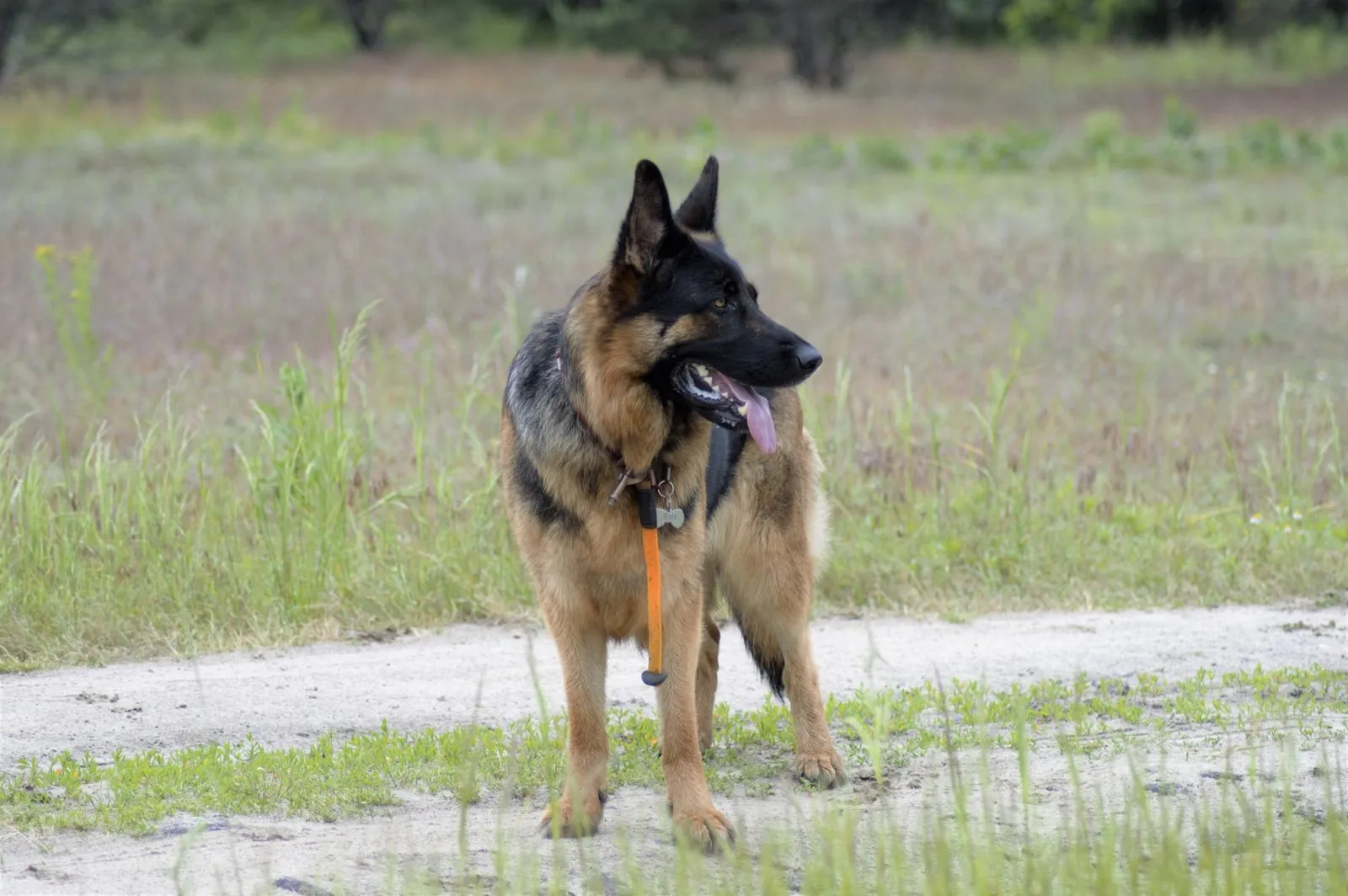
The breeding soundness exam
A breeding soundness exam is a structured fertility check, not just a general health visit. According to the Merck Veterinary Manual, it covers the dog’s general and breeding history, a full physical exam, semen evaluation and Brucella testing. The vet will feel the testes and the epididymides (the coiled tubes where sperm mature), check the penis and sheath, and examine the prostate, usually by rectal palpation. Testes that are small and soft usually go with poor semen quality, and a markedly enlarged testis suggests inflammation or infection.
Active stud dogs should have their semen evaluated at least once a year. Our article on the stud dog’s reproductive system explains the anatomy behind these checks.
What a semen evaluation tells you
A semen evaluation looks at volume, sperm concentration and total sperm count, the share of sperm that are moving forward (progressive motility), and the share with a normal shape (morphology). The Merck Veterinary Manual gives at least 80% normal morphology as the normal value. Your vet will compare the other results against reference values for your dog’s size, because total sperm output rises with body weight and testicular size.
Two rules protect you from false alarms. First, a dog should never be called subfertile or infertile on one collection; repeat collections should be more than 48 hours apart. Second, sperm take time to make. One full cycle of sperm production takes at least about 62 days, and a fever can impair semen production for more than 60 days. A poor sample taken a few weeks after an illness may reflect the illness, not the dog.
Brucella canis: a testing schedule
Brucella canis is a bacterial infection that causes infertility in males and pregnancy loss in females, and it can infect people. In males it can cause an enlarged or irritated scrotum, inflamed testicles and, over time, testicular shrinkage, and some dogs show nothing except infertility. There is no reliable cure. Relapses are common and the infection is considered lifelong; neutering reduces shedding but does not cure it.
Sources set the minimum differently, so here is the range:
- The Merck Veterinary Manual says stud dogs should be tested at least once a year and bred only to currently negative bitches.
- Cornell’s Riney Canine Health Center advises testing breeding animals every six months, and females before every breeding.
- A breeder seminar at Auburn University’s veterinary college advised testing twice a year if the dog is breeding, competing or showing, requiring a confirmed negative from every bitch before a live cover, and testing before every semen freeze.
A practical schedule for a regularly used stud is every six months, plus a test after any possible exposure. Antibody tests can be falsely negative in the first three weeks of an infection, so an early test may need repeating. Wear gloves when handling reproductive fluids. Our article on reproductive infections and Brucella canis covers positive results and what to do next.
Prostate and testicular problems
Benign prostatic hyperplasia (BPH) is enlargement of the prostate driven by male hormones. It is the most common prostate problem in intact dogs, and the Merck Veterinary Manual describes it in intact dogs over five years old. The Merck owner guide, written by a theriogenologist at UC Davis, says it is found in almost all intact dogs over six. Many dogs show no signs, or only blood in the semen or reduced fertility. Others strain to pass feces, have blood in the urine or show a discharge from the sheath. Blood in the ejaculate can lower semen quality.
Prostatitis is usually a bacterial infection. Acute cases cause fever, pain and a dog that seems unwell, and an abscess can lead to dehydration and shock. Chronic cases may show only repeated urinary tract infections. Prostate cancer is much less common than BPH and can also occur in neutered dogs.
Testicular inflammation (orchitis and epididymitis) shows as pain and swelling of the testes, epididymides or scrotum. It can follow injury, infection or testicular torsion, and inflammation can cause permanent damage even with prompt treatment. Some dogs show only infertility.
Paraphimosis, where the penis cannot return into the sheath, happens most often after semen collection or mating. It is a medical emergency, because the exposed penis swells, dries out and becomes painful. Check your dog after every mating or collection.

Workload: how often can a stud be used?
There is less hard evidence here than breeders often assume, and very little of it sets a firm upper limit. What the sources do say:
- In the Auburn seminar, a veterinarian reported that dogs collected every 2 to 3.5 days showed no change in total sperm numbers, and that mating or collecting every other day should not significantly deplete semen output.
- For a fertility evaluation, repeat samples should be at least 48 hours apart.
Beyond that, the right workload depends on the dog, his age and his semen results. A stud used heavily over a short season should have his semen rechecked. In our experience as breeders, a calm routine with good footing and an experienced handler also lowers the risk of injury to both dogs; that is breeder experience, not research.
A very popular sire can also narrow a breed’s gene pool. The FCI’s breeding strategies recommend that no dog’s offspring exceed about 5% of the puppies registered in the breed over five years. The AKC requires a DNA profile for any sire with seven or more litters in his lifetime or more than three in a calendar year, a paperwork rule rather than a welfare limit.
A note on legal information
This is general information, not legal advice; rules differ by country and change — check your registry and local law.
Aging and fertility
Sperm first appear in the ejaculate at about 7 to 9 months of age on average, earlier in small breeds than large ones. Testicular degeneration can occur as part of normal aging, prostate enlargement becomes common after five or six, and semen from older studs survives freezing less well, so bank semen from a valuable dog while he is in his prime. In a UC Davis study of fertile Labrador Retrievers funded by the AKC Canine Health Foundation, normal morphology and sperm speed dropped with age, but only slightly compared with dogs that had real fertility problems. Age alone is not a reason to stop, but it is a reason to test more, not less. For when to stop, see when to retire a breeding dog.
When to call your vet
- Swelling, heat or pain in one or both testicles or the scrotum, or a dog that licks the scrotum constantly. Call the same day.
- The penis stays out of the sheath after mating or collection and does not go back within a few minutes. This is an emergency — call your vet immediately.
- Fever, pain, stiffness or a dog that seems unwell, especially with straining or blood in the urine.
- Blood in the urine, dripping from the penis, or a discharge from the sheath.
- Repeated misses with bitches that are known to be fertile, or a clear drop in libido.
- A positive or unclear Brucella result, or contact with a dog that has tested positive.
- If in doubt, call — your vet would rather hear from you early.
Work on it
A few minutes here will teach you more than re-reading the article.
Ask yourself
- When was my stud’s last semen evaluation and Brucella test, and could I show the results to a bitch owner today?
Find out & check
- Ask your vet for a breeding soundness exam with semen evaluation, and agree on a Brucella testing interval that fits how often the dog is used.
- Check your registry’s rules for frequently used sires.
Do one thing
- Put the next Brucella test and the yearly exam in your calendar now, and write down what you will do if a test comes back positive.
Was this article helpful?
Anonymous. We do not store your name, email or IP address.
Sources & further reading
- Merck Veterinary Manual — The Breeding Soundness Examination in Dogs and Cats. merckvetmanual.com
- Cornell University College of Veterinary Medicine, Riney Canine Health Center — Canine Brucellosis. vet.cornell.edu
- Merck Veterinary Manual (Autumn P. Davidson, UC Davis) — Reproductive Disorders of Male Dogs. merckvetmanual.com
- Merck Veterinary Manual — Prostatic Diseases in Small Animals. merckvetmanual.com
- Auburn University College of Veterinary Medicine (Jay Barrett, DVM) — Stud Dog Management, Canine Breeder Excellence Seminar, 2019. vetmed.auburn.edu
- American Kennel Club — Online Litter Registration Requirements. apps.akc.org
- Fédération Cynologique Internationale — FCI International Breeding Strategies. fci.be
- AKC Canine Health Foundation — New Research in Canine Semen Evaluation and Fertility Outcomes. akcchf.org
Where evidence is limited, recommendations rest on established practice and expert judgment, and may be updated as knowledge develops. This article is general information and does not replace an examination by your veterinarian. If you suspect an emergency, contact a veterinarian immediately.
Next steps
- Read next: The breeding dog’s life: a guide.
- Related: Reproductive infections and Brucella canis.
- Related: When to retire a breeding dog.