Most of what we write and read as breeders is about the litter: the mating, the pregnancy, the whelping, the puppies. But the dog who makes all of that possible lives a whole life around those weeks. She has months between litters, a last litter, and then, we hope, many good years as a retired dog. He may be used for years, then quietly stop. This area of the site is about that whole life: how we look after brood bitches and stud dogs from the first breeding decision to the last day, and how we make sure their welfare is not something we only think about when a litter is due.
The most important first
- A breeding career is a phase, not an identity. Plan the dog’s life before, between and after litters, not only the litters themselves.
- Body condition, health checks and rest between litters matter as much as anything you do during the pregnancy.
- Registries and some governments set limits on age and number of litters. Know the rules that apply to you, and treat them as an outer limit, not a target.
- Decide early how you will judge when a dog should retire, and what retirement will look like for her or him.
What a breeding career looks like, from first litter to last
A breeding career usually begins after the dog is physically mature, health-tested and has shown that temperament and structure are worth passing on (see pre-breeding health checks). For a bitch, it is a series of cycles: a heat, a breeding, about nine weeks of pregnancy, whelping, several weeks of lactation and weaning, and then a recovery period before the next decision. For a stud dog, it can be less visible but just as demanding: repeated collections or matings, regular infectious disease testing and the steady work of staying fit and fertile.
Every career ends. A bitch may retire because she has reached the limit you set or your registry sets, because a pregnancy or whelping went badly, because her litters are getting smaller, or simply because you see she is tired. A stud dog may be retired as his semen quality declines or as health problems appear. The kindest careers are the ones where the ending was planned in advance.
Welfare across the whole career: the Five Domains
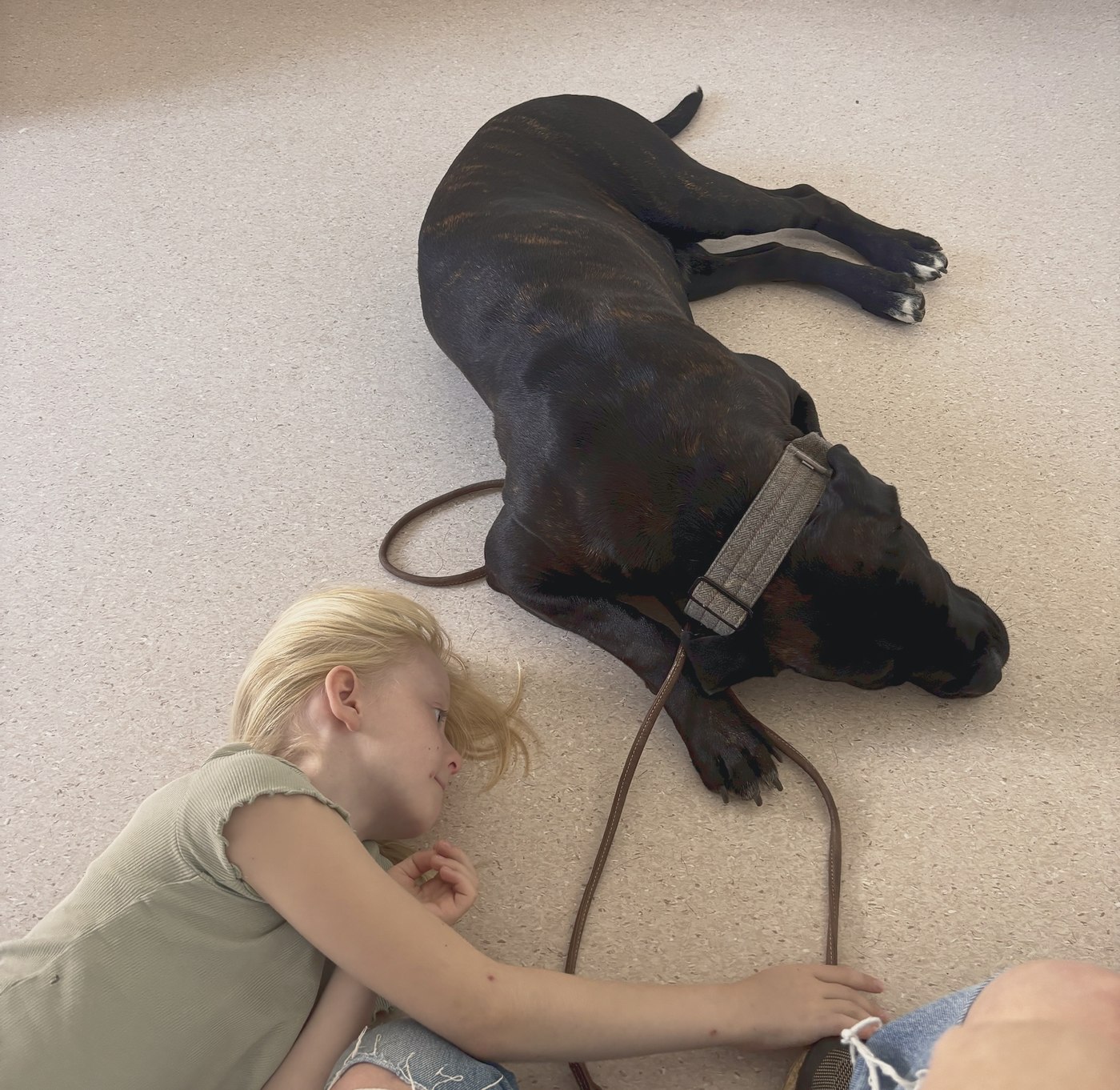
A useful way to think about a breeding dog’s welfare is the Five Domains model, an animal welfare framework updated in 2020 by Mellor and colleagues. It looks at four areas of a dog’s life (nutrition, physical environment, health and behavioral interactions, including interactions with people) and asks what all of that adds up to in the fifth domain: the dog’s mental state. The model’s point is that good welfare is not only the absence of pain, hunger or fear. It also needs positive experiences: comfort, play, exploration, social bonds and a sense of control.
For a breeding dog this is a practical checklist. Is she fed to keep a healthy body condition between litters, not only during pregnancy? Does she have space and comfort that suit her, including after she stops being “useful”? Are her health checks and screening up to date? Does she still get walks, training, games and time with you, or has her life shrunk to the whelping room and the kennel? We go deeper into this in our Five Domains article.
The months between litters
From one breeder to another: the months between litters are where good programs show. After weaning, a bitch needs time to rebuild body condition, muscle and coat, and she needs ordinary life back: exercise, training, outings. A stud dog needs steady condition and fitness all year, because problems with his health or weight can take weeks to show up in his semen and weeks more to clear.
The single most useful habit is regular body condition scoring. The WSAVA body condition score chart uses a 9-point scale where 4–5 is ideal; you score the dog by feeling the ribs and looking at the waist from above and the tuck from the side. Being overweight is linked to breeding problems, including difficult whelpings, and being underweight is no better. Our article on feeding breeding dogs between litters covers this in detail.
The stud dog’s career
Stud dogs are easy to overlook because they do not carry litters. Yet a stud dog used over several years has his own welfare and health needs: yearly examinations, vaccinations and parasite control, screening for the health problems relevant to his breed, and regular testing for Brucella canis if he is in active use. A theriogenologist at Auburn University suggests testing active studs twice a year and freezing semen early in his career, after health clearances, because semen from older dogs tends to freeze less well. See our dedicated article on caring for the stud dog, and our existing pieces on the stud dog’s reproductive system and Brucella canis.
Rules that shape the career
Registries and, in many places, governments set limits on breeding. They vary a great deal, and they are a floor for welfare, not a guide to what is ideal. A few examples, as of November 2026:
- AKC (United States): to register a litter, the dam must be at least 8 months old and the sire at least 7 months old at mating, and neither may be over 12 years.
- The Royal Kennel Club (United Kingdom): its Welfare Standard, which applies to breeders who use its registration services, says a bitch should not be mated under 12 months or bred over eight years, should not have more than four litters or more than one litter a year, and should not be bred after two cesarean sections.
- Irish Kennel Club: a dam under 12 months or over 8 years at mating needs supporting veterinary evidence; no more than three litters in three years, four in her lifetime, and no more than two litters by cesarean.
- Dogs Australia: its Code of Practice limits a bitch to two whelpings in 18 months and six in her lifetime, subject to state law, and requires a recent veterinary health certificate to mate a bitch from eight years of age.
A note on legal information
This is general information, not legal advice; rules differ by country and change — check your registry and local law.
We cover these and other rules, including local licensing laws, in litter limits and age rules and our overview of dog breeding laws and regulations.
What the kennel clubs say
The Swedish Kennel Club (SKK) bars mating a bitch before 18 months or after her 10th birthday, requires a veterinary examination before mating from age 7, and allows at most five litters.
Source: Swedish Kennel Club (SKK), Basic rules (Grundregler), in force from January 1, 2026.
Last updated: November 8, 2026
Rules change, so always check with your own kennel club.
Planning the end from the start
The best time to decide how a dog’s breeding career will end is before it starts. Write down what would make you retire a bitch or stud dog early: a cesarean, a serious complication, a health finding, a change in temperament, or simply age. Decide whether retired dogs stay with you or go to a carefully chosen home, and whether you will spay or neuter them at retirement. And think about the senior years: the dog who gave you your foundation deserves the same attention in her last years as in her best ones.
What each article in this area covers
- Feeding breeding dogs between litters: body condition scoring, recovering after lactation, the stud dog’s needs, weight and fertility, and supplements.
- Caring for the stud dog: health checks, infectious disease testing, fitness and workload across his career.
- Litter limits and age rules: what registries and laws say about age, number of litters and cesareans, and how to set your own limits.
- When to retire a breeding dog: the signs, the decision and how to make it kindly.
- Spaying and neutering after breeding: timing, health considerations and talking it through with your vet.
- Rehoming retired breeding dogs: whether to rehome, how to choose the home and how to help the dog adjust.
- The senior breeding dog: care for former breeding dogs in their later years.
When to call your vet
- Your bitch has not regained a healthy body condition within a couple of months after weaning, or is losing weight without explanation.
- She has a vaginal discharge, is drinking much more than usual or seems unwell in the weeks after a heat (see pyometra).
- Your stud dog has swelling, pain or changes in his testicles or prepuce, or a fall in fertility.
- A pregnancy or whelping was complicated and you are unsure whether to breed her again.
- You see lameness, stiffness, lumps or other changes that could affect her comfort or a future pregnancy.
- You are deciding on retirement, spaying or neutering, and want a health check to guide you.
- If in doubt, call — your vet would rather hear from you early.
Work on it
A few minutes here will teach you more than re-reading the article.
Ask yourself
- If someone looked at each of my breeding dogs today, would they see a dog with a full life, or a dog whose life revolves around litters?
Find out & check
- Look up your registry’s current rules on age, number of litters and cesareans, and any local breeding or licensing law.
- Check each dog’s body condition score and the date of their last health check.
Do one thing
- Write a one-page career plan for each breeding dog: planned number of litters, what would make you stop early, and where she or he will live in retirement.
Was this article helpful?
Anonymous. We do not store your name, email or IP address.
Sources & further reading
- Mellor, D.J. et al. (Animals, MDPI) — The 2020 Five Domains Model: Including Human–Animal Interactions in Assessments of Animal Welfare. mdpi.com
- WSAVA Global Nutrition Committee — Body Condition Score: Dog. wsava.org
- Auburn University College of Veterinary Medicine (Barrett, J., DVM) — Stud Dog Management (Canine Breeder Excellence Seminar, 2019). vetmed.auburn.edu
- VCA Animal Hospitals (Canadian Academy of Veterinary Nutrition) — Feeding the Pregnant Dog. vcahospitals.com
- American Kennel Club — Litter registration glossary (age of sire and dam). apps.akc.org
- The Royal Kennel Club — Welfare Standard. royalkennelclub.com
- Irish Kennel Club — Attention Breeders: New Rules from January 2018 (Rule 233). ikc.ie
- Dogs Australia — Code of Practice (July 2023). dogsaustralia.org.au
Where evidence is limited, recommendations rest on established practice and expert judgment, and may be updated as knowledge develops. This article is general information and does not replace an examination by your veterinarian. If you suspect an emergency, contact a veterinarian immediately.
Next steps
- Read next: Feeding breeding dogs between litters.
- Related: Five Domains of animal welfare in breeding.
- Related: Caring for breeding dogs.