Your puppy grows faster in its first months than at any other time in its life, so what and how you feed it matters more now than it ever will again — but good puppy feeding is mostly about consistency, a food made for growth, and watching your puppy rather than the bowl.
The most important first
- Keep the food your breeder used for the first weeks, at the same times. If you want to change, do it gradually over several days.
- Feed a complete food for growth. The label should say the food is complete and balanced for growth or for all life stages. For a puppy that will be a large adult, choose one that says it covers large-size dogs.
- Judge portions by your puppy’s body, not the bowl. Weigh your puppy regularly and learn to feel its ribs and waist. The amounts on the bag are only a starting point.
- Do not add supplements, especially calcium, unless your veterinarian advises it. Too much calcium can harm a growing large-breed puppy.
- Keep dangerous foods out of reach: chocolate, xylitol (in sugar-free gum and some peanut butters), grapes and raisins, onions and garlic, macadamia nuts, alcohol, raw bread dough and cooked bones.
Start with your breeder’s plan
Most breeders send a puppy home with a written feeding plan and a few days of its usual food. Use it. Moving home is already a big change, and a sudden change of food at the same time is a common reason for an upset stomach in the first week. Keep the same food, the same number of meals and the same times for at least the first couple of weeks, until your puppy has settled. If anything in the plan is unclear, ask your breeder — the first week is a good time for that message.
How many meals, and when
Young puppies have small stomachs and high energy needs, so they eat several small meals a day rather than one or two large ones. The American Kennel Club describes a common pattern: four meals a day for young puppies, dropping to three somewhere between three and six months, and to two from about six months. Your breeder’s plan and your veterinarian may suggest something different for your puppy’s breed and size, and that advice comes first.
Feed at regular times and pick up the bowl after a set time rather than leaving food down all day. Regular meals make it easier to notice if your puppy’s appetite changes — often the first sign that something is wrong — and they help house-training, because what goes in on a schedule tends to come out on one. The toilet trips that follow meals are covered in house-training your puppy.
Changing food without upsetting your puppy
If you need or want to change food, do it gradually over several days by mixing a little of the new food into the old and increasing the share day by day. The AKC notes that sudden changes in diet can cause digestive upset and diarrhea. Talk to your veterinarian and, if you can, your breeder before a major change, especially for a large or giant breed.
Choosing a food for growth
Growing puppies need different amounts of energy, protein, calcium and phosphorus than adult dogs, which is why the AKC and veterinary guidance agree that puppies should eat a food made for growth until they are close to adult size. Two things on the label matter most.
- The nutritional adequacy statement. The World Small Animal Veterinary Association (WSAVA) advises checking that a food is labeled as complete, not as a treat or “complementary” food, and that it matches the dog’s life stage. Foods labeled “for all life stages” are formulated for growth and reproduction.
- Size at maturity. VCA’s veterinary nutritionists explain that puppies cannot regulate how much calcium they absorb the way adult dogs can, so excess calcium can lead to skeletal problems. For a puppy expected to weigh more than about 70 pounds (32 kg) as an adult, look for a food that says it is formulated for growth of large-size dogs.
WSAVA also suggests questions worth asking any manufacturer: who formulates the food, whether they employ a qualified nutritionist, and what quality control they use. A company that cannot answer is a reason for caution. Marketing words such as “premium” or “holistic” are not regulated and tell you little about the food. This site does not recommend brands; your veterinarian can help you choose.
Portions: watch the dog, not the dish
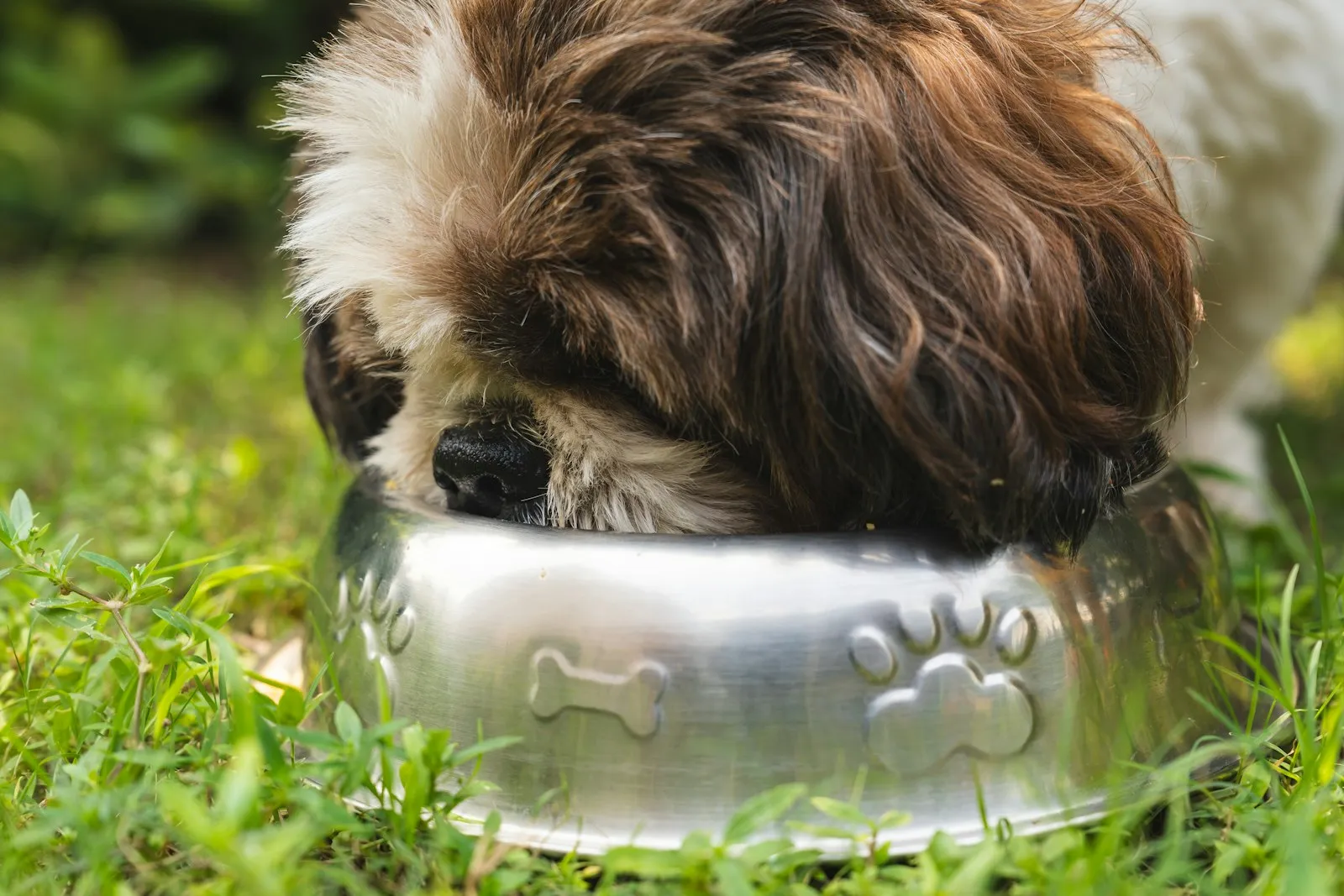
The feeding guide on the bag is an average for a typical puppy. Your puppy may need more or less depending on its metabolism, activity and breed. The AKC’s rule of thumb is to watch the dog, not the dish: body condition, not how much is left in the bowl, should decide the portion.
- Weigh your puppy regularly — for example once a week at home, and at every veterinary visit — and write it down. A puppy weight chart makes the trend easy to see.
- Learn the feel of a good body condition. In WSAVA’s body condition chart, the ideal is ribs you can feel easily without excess fat, a waist you can see from above, and a tummy that tucks up when seen from the side.
- Avoid fast, heavy growth. For large breeds especially, VCA warns that growing too fast stresses developing bones and joints. A lean puppy is a healthier puppy.
If your puppy seems too thin or too round, ask your veterinarian rather than making big changes on your own. Puppies are assessed for growth and body condition at their routine visits.
Treats and table food
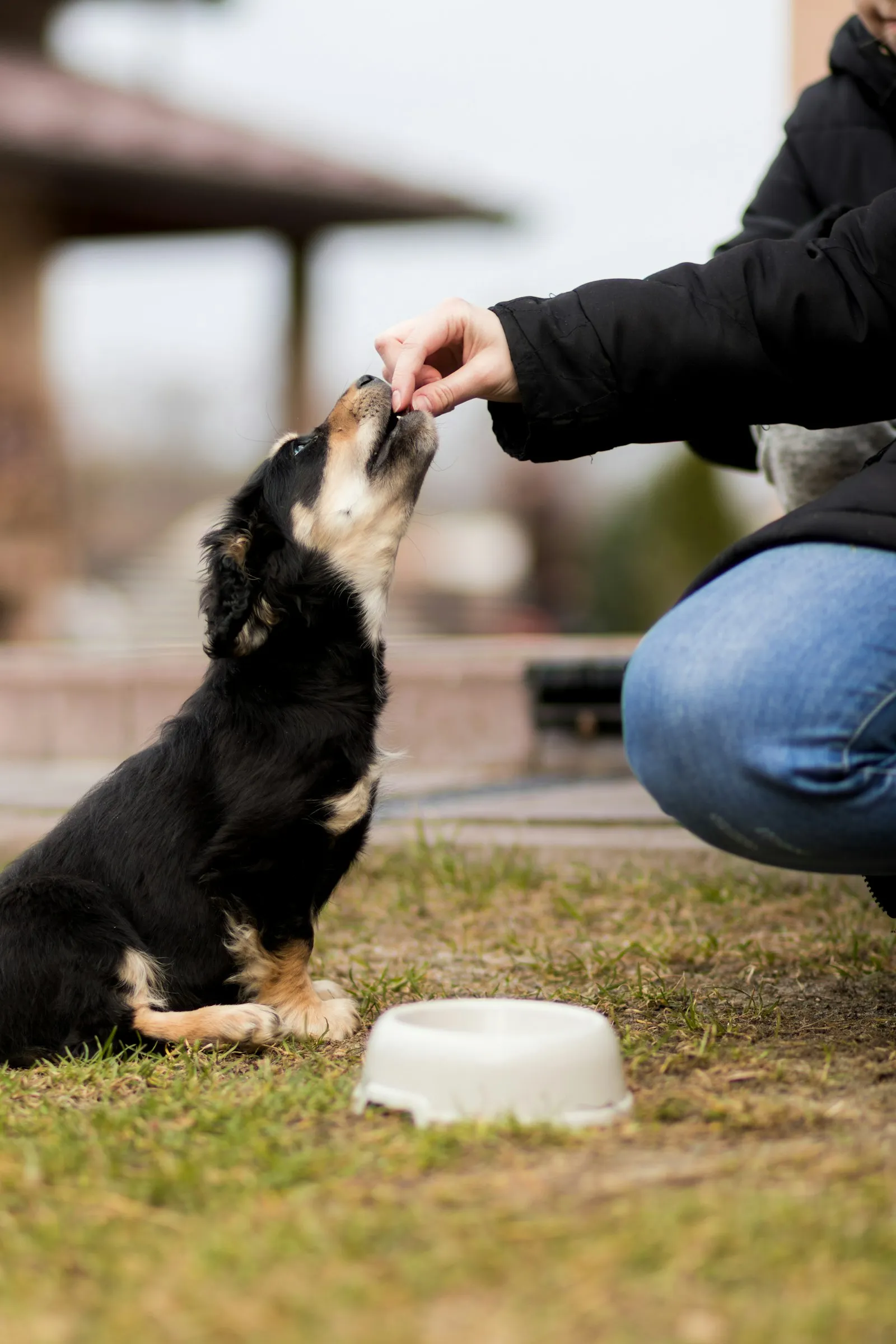
Treats are useful for training, but they add up. VCA’s guidance is that treats and snacks should make up less than 10 percent of your puppy’s daily calories. Use small treats, or set aside part of each meal’s food as rewards, and reduce meals a little on heavy training days. Table scraps are best avoided: they can unbalance a puppy’s diet, encourage begging and include ingredients that are harmful to dogs.
Foods and items that are dangerous for dogs
The ASPCA Animal Poison Control Center lists common foods to keep away from dogs:
- Chocolate, coffee and caffeine — the darker the chocolate, the more dangerous.
- Xylitol, a sweetener in sugar-free gum, sweets, some baked goods and toothpaste. It can cause dangerously low blood sugar and liver damage.
- Grapes and raisins, which can damage the kidneys.
- Onions, garlic and chives, which can damage red blood cells.
- Macadamia nuts, and fatty foods and nuts in general.
- Alcohol and raw yeast dough.
- Cooked bones, which can splinter, and raw meat, eggs and bones, which carry bacteria and can cause injuries or blockages.
Keep bins closed and bags out of reach — puppies explore with their mouths. More about household poisons is in poisoning risks in the kennel and home, and about things puppies swallow in puppies and swallowed objects.
Raw and home-made diets
Some owners want to feed raw or home-cooked food. The American Veterinary Medical Association discourages feeding raw or undercooked animal protein to dogs, because it can carry bacteria such as Salmonella that make dogs and people ill. A home-made diet for a growing puppy is also easy to get wrong, because the balance of calcium, phosphorus and other nutrients is critical during growth. If you want to feed anything other than a complete commercial growth food, plan it with your veterinarian or a board-certified veterinary nutritionist.
Water
Fresh water should always be available. Wash the bowl daily. If your puppy suddenly drinks much more or much less than usual, mention it to your veterinarian.
In practice
A family brings home a ten-week-old puppy of a breed that will be large as an adult. The breeder’s plan says four meals a day of a large-breed puppy food. A week later a neighbor recommends a different brand, and the family switches overnight; the puppy has loose stools for three days. They go back to the breeder’s food, settle the puppy, and then change over again across eight days with their veterinarian’s agreement. They weigh the puppy every Sunday and, at the twelve-week check, ask the veterinarian to show them how its ribs and waist should feel.
(Illustrative scenario · Details changed.)
When to call your veterinarian
- Your puppy refuses food for more than a day, or a very small breed puppy skips more than one meal.
- Vomiting more than once, vomiting with diarrhea, or diarrhea that has not settled within a day.
- Blood in vomit or stools, or a swollen, tight or painful belly.
- Your puppy is weak, wobbly, trembling or unusually sleepy — especially a toy breed, which can develop low blood sugar.
- Your puppy may have eaten something toxic, such as chocolate, xylitol, grapes or raisins. Call even if it seems fine.
- If in doubt, call — your vet would rather hear from you early.
Work on it
A few minutes here will teach you more than re-reading the article.
Ask yourself
- Do I know exactly what, how much and when my breeder fed my puppy?
- Could I describe my puppy’s body condition — ribs, waist, tummy — without guessing?
- Is everything dangerous in my kitchen out of a puppy’s reach?
Find out & check
- Read the label on your puppy’s food and check that it says complete and balanced for growth or all life stages, and for large-size dogs if your puppy will be big.
Do one thing
- Weigh your puppy today, write the date and weight down, and do it again on the same day each week.
Was this article helpful?
Anonymous. We do not store your name, email or IP address.
Sources & further reading
- American Kennel Club (AKC Staff) — Puppy Feeding Fundamentals. akc.org
- World Small Animal Veterinary Association, Global Nutrition Committee — Guidelines on Selecting Pet Foods (2021). wsava.org
- World Small Animal Veterinary Association — Body Condition Score: Dog. wsava.org
- VCA Animal Hospitals (Canadian Academy of Veterinary Nutrition; Grant C, DVM, Dip ECVCN; Llera R, DVM; Buzhardt L, DVM) — Puppy Nutrition: Feeding Large and Giant Breeds. vcahospitals.com
- ASPCA Animal Poison Control Center — People Foods to Avoid Feeding Your Pets. aspca.org
- American Veterinary Medical Association — Raw or undercooked animal-source protein in cat and dog diets (policy). avma.org
- American Animal Hospital Association (Cline MG et al.) — 2021 AAHA Nutrition and Weight Management Guidelines for Dogs and Cats. J Am Anim Hosp Assoc 57:153–178. aaha.org
Where evidence is limited, recommendations rest on established practice and expert judgment, and may be updated as knowledge develops. Follow your breeder’s written feeding plan and ask your own veterinarian about the right food and amount for your puppy. This is general information and does not replace advice from your veterinarian.
Next steps
- Read next: House-training your puppy.
- Related: Before your puppy comes home.
- Related: When to call the vet: warning signs in a young puppy.
How we choose sources, date reviews and correct mistakes: How we research and review →