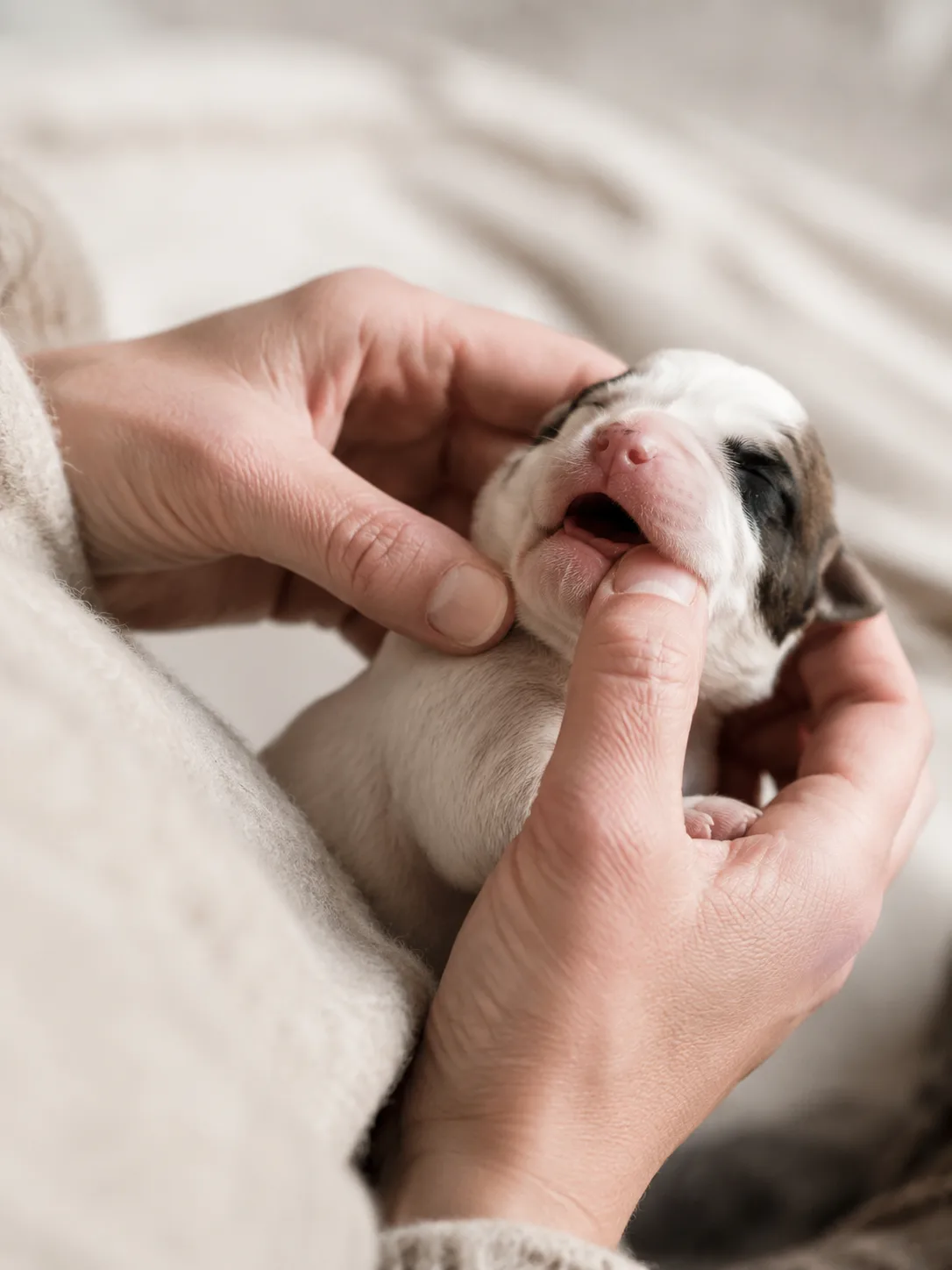
Health testing is where responsible breeding actually begins — before a mating is planned, before a stud is chosen. This is the short version: what the main screening types are, and where to start if you’re new to it.
The most important first
- Every breed carries its own set of inherited conditions — there is no universal test list that fits all breeds.
- Screening splits into three broad types: physical/radiographic screening of the dog itself, DNA tests, and breed-specific panels.
- Your breed parent club, not a commercial lab, is the right starting point for knowing what your breed actually needs.
- Results only become useful when you record them — over time they build a picture of your line’s strengths and weaknesses.
- This is an introduction. Health screening and health schemes covers the same ground in far more depth.
Why health testing matters
Every breed carries its own set of inherited conditions. Screening for issues such as hip and elbow health, eyes, heart, and breed-specific genetic markers helps you make informed pairing decisions and reduces the risk of passing preventable problems to the next generation. Just as importantly, the results you collect across several litters build a picture of your line over time — something a single test result on a single dog can never give you.
The main types of screening
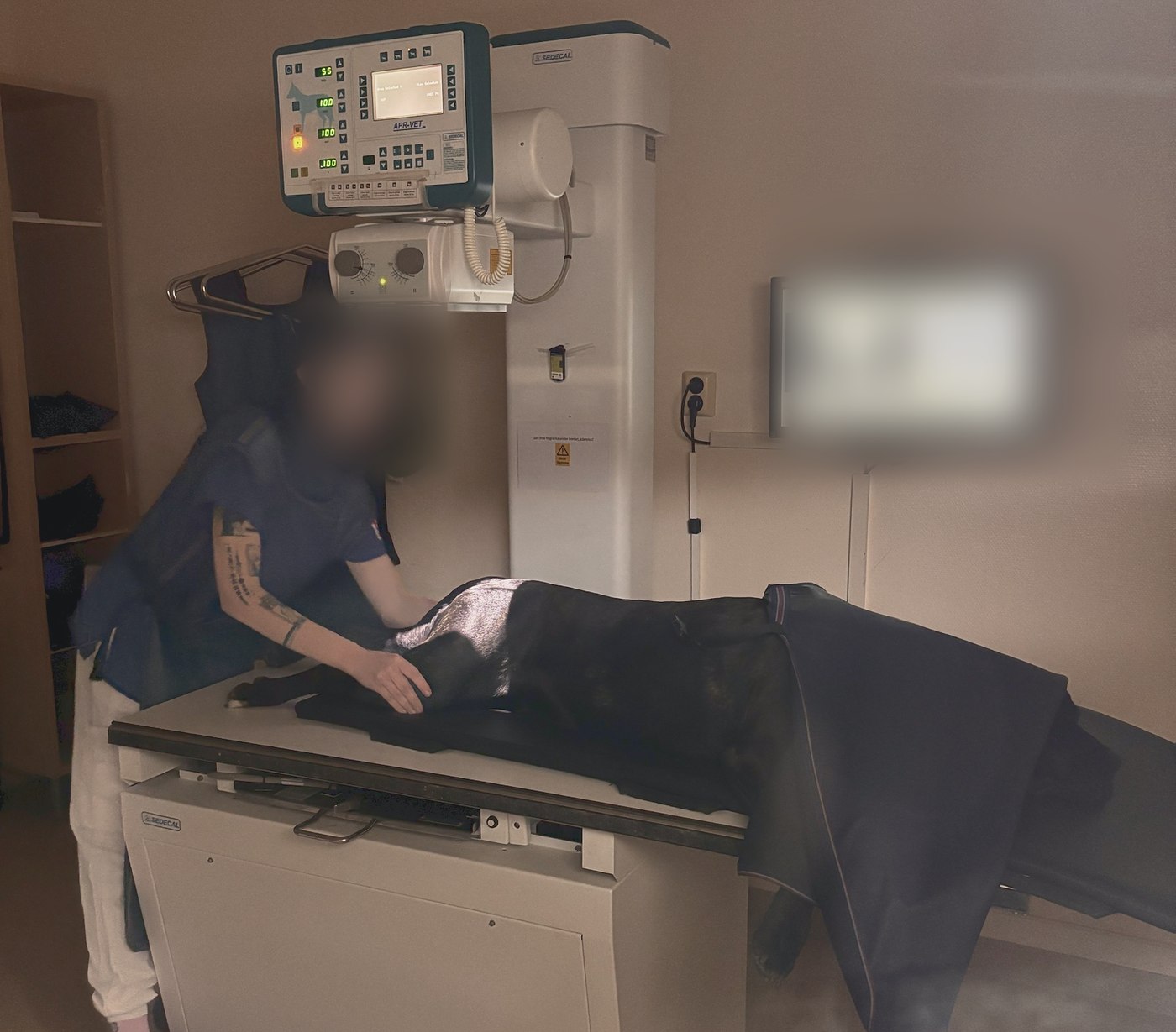
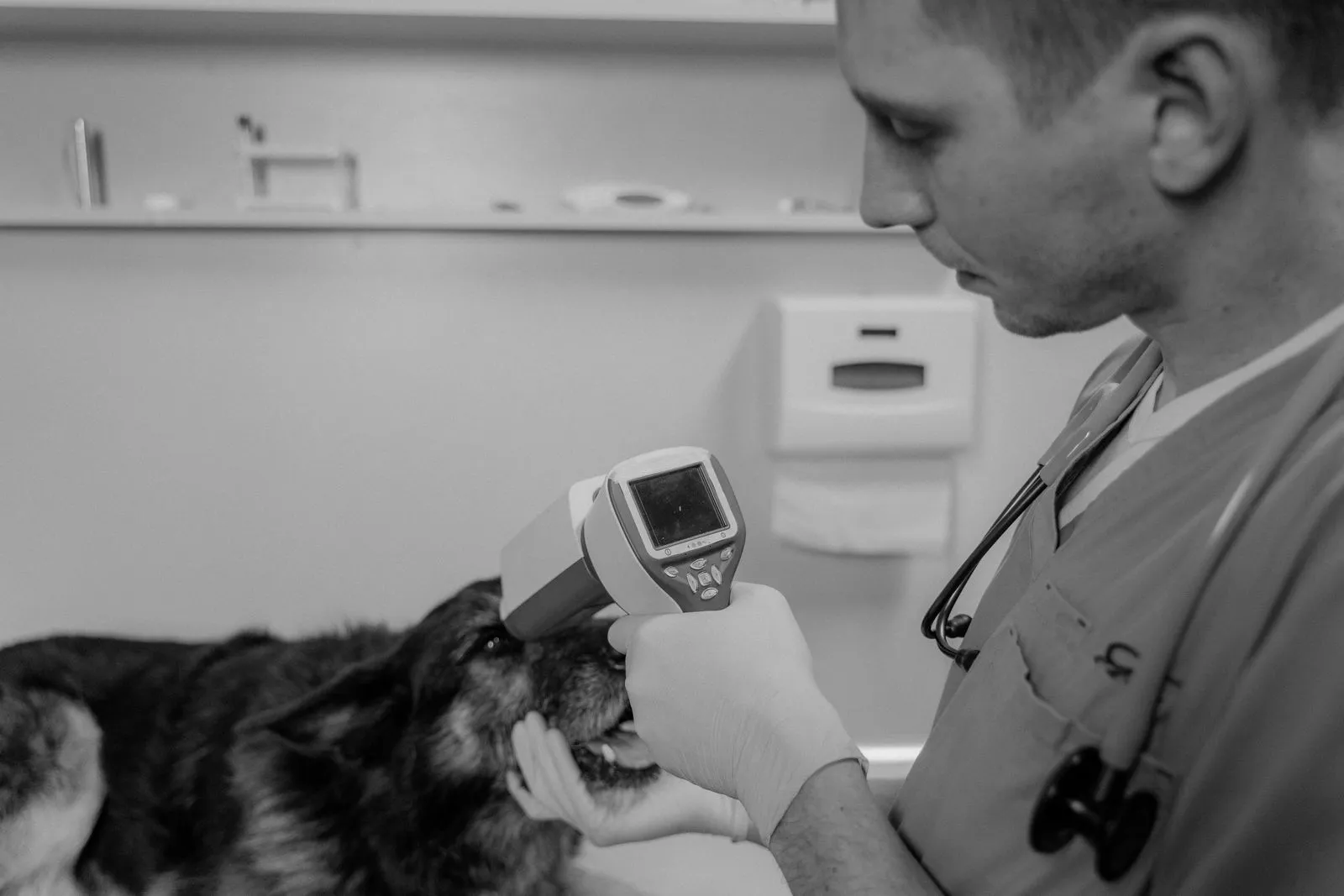
Health testing broadly combines three things. Screening the dog itself — radiographic assessment of hips and elbows, eye examinations by a veterinary ophthalmologist, and cardiac evaluation, all done at a defined age and recorded against a recognized scheme. DNA tests, which can identify carriers of specific inherited conditions before those conditions ever appear. And breed-specific panels, which bundle the tests your particular breed’s parent club considers essential.
The distinction matters because these answer different questions. A hip score describes the dog in front of you; a DNA carrier result describes what that dog can pass on. DNA tests and genetic disease and interpreting DNA results go into what each type can and can’t tell you.
Not every DNA test suits every breed. The WSAVA advises using tests validated for the specific disease and breed, run by a qualified laboratory. If a broad panel flags a condition that is not known in your breed, ask your vet before acting on it.
In practice
A first-time breeder runs a broad commercial DNA panel, sees a long list of “clear” results, and concludes their dog is comprehensively tested. The panel didn’t include the hip and elbow radiographs their breed club considers essential — because those aren’t DNA tests at all. Understanding that DNA panels and physical screening schemes cover different ground is what prevents a gap like this from going unnoticed.
(Illustrative, composite scenario.)
Where to begin
Start with your breed’s parent club rather than a testing provider. The club will publish which tests are considered required or recommended for your breed, at what age, and under which scheme — and that list is what your buyers, and other breeders, will expect to see. From there, book the physical screenings with a vet approved for the relevant scheme, and choose DNA testing to match the club’s list rather than the longest panel available.
In the US, many parent clubs work with the OFA’s Canine Health Information Center (CHIC). A dog earns a CHIC number when it has completed every test its parent club requires and the results are public. The number shows the testing is done; it does not mean every result was normal, so always look at the results themselves. In the UK, the Royal Kennel Club lists recommended tests for each breed and publishes results for registered dogs.
Once you have results, record them somewhere durable and check how they’re published — health databases and how to interpret published results covers how to read what other breeders have registered, which is what makes screening useful for planning rather than just for reassurance.
Put results in an open registry, including the disappointing ones. The FCI’s international breeding strategies ask for this, and it is how a breed builds the data that makes screening and breeding values useful. Before any mating, also book a general veterinary check of both dogs; formal schemes cover specific conditions, not overall fitness to breed.
Talk to your vet when planning: book a pre-breeding check for both dogs, ask which tests your breed needs and when, and discuss any abnormal or borderline result before breeding.
Work on it
A few minutes here will teach you more than re-reading the article.
Ask yourself
- Do I know exactly which tests my breed’s parent club considers essential, as opposed to optional?
- Am I clear on the difference between what a DNA test tells me and what a physical screening tells me?
- Are my results recorded somewhere I could actually retrieve them in five years?
Find out & check
- Find out your breed club’s current required and recommended testing list — these are revised periodically.
- Check which vets in your area are approved to perform screening under the relevant scheme.
Do one thing
- Write down your breed’s full required test list and check each of your breeding dogs against it.
Was this article helpful?
Anonymous. We do not store your name, email or IP address.
Sources & further reading
- Orthopedic Foundation for Animals — Hip Dysplasia. ofa.org
- Orthopedic Foundation for Animals — Eye Certification. ofa.org
- American Kennel Club — Purebred Dogs: Health Testing for a Stronger Breed. akc.org
- Orthopedic Foundation for Animals — CHIC Program. ofa.org
- The Royal Kennel Club — Getting started with health testing and screening. royalkennelclub.com
- WSAVA Hereditary Disease Committee — The role of health-conscious breeding and genetic testing, position paper. wsava.org
- Fédération Cynologique Internationale (FCI) — International Breeding Strategies. fci.be
Where evidence is limited, recommendations rest on established practice and expert judgment, and may be updated as knowledge develops. Testing requirements vary by breed and by country — always check your own kennel club and breed club.
Next steps
- Read next: Health screening and health schemes: hips, elbows, eyes and hearts.
- Related: DNA tests and genetic disease · Interpreting DNA results.
- Return to the area hub: Genetics and inherited health.