The final two weeks of pregnancy are where preparation stops being theoretical and starts being concrete — the whelping space needs to be ready, and both you and the bitch need time to settle into it before labor actually begins.
The most important first
- Begin setting up the whelping area at least two weeks before the expected due date.
- The location should be quiet, private, and away from household traffic and other pets.
- Introducing the space early gives the bitch time to become comfortable with it before labor.
- This is also the window to finalize your due-date estimate and confirm your vet’s out-of-hours plan.
- Supplies and equipment should be ready and checked, not assembled at the last minute.
Why two weeks, not two days
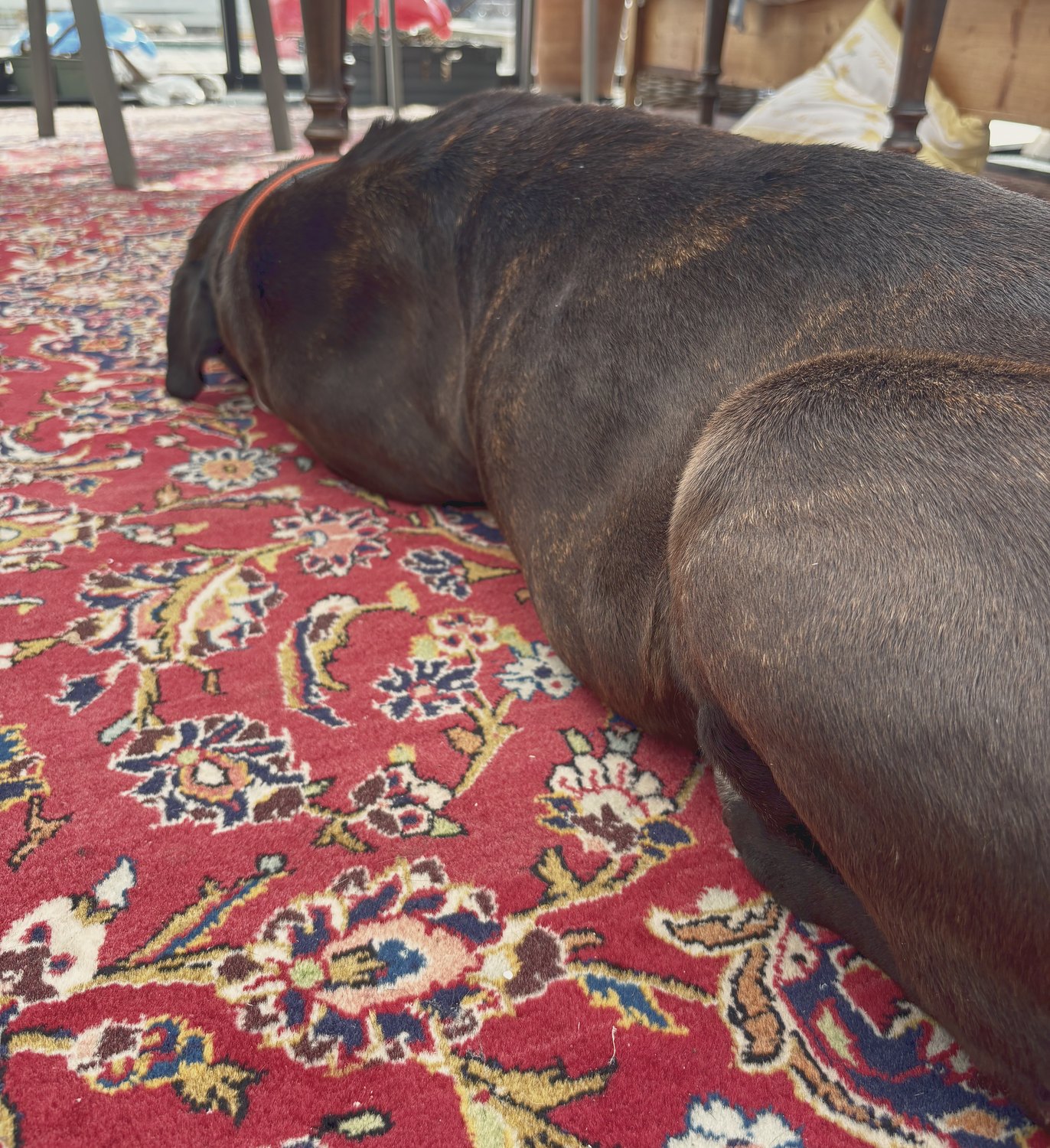
Setting up the whelping area at least two weeks ahead of the expected due date is best practice (some guidance gives a week as the bare minimum) and gives enough time to gather supplies properly, make adjustments based on how the bitch responds to the space, and avoid a last-minute scramble if she goes into labor early. Since calculating the due date always carries some margin — counted from the first mating, normal whelping can fall anywhere from about 58 to 72 days, against roughly 64–66 days from a progesterone- or LH-timed date — “two weeks before the estimated date” in practice often means noticeably more lead time than it sounds.
Choosing and setting up the space
The whelping area should be quiet, private, and away from high-traffic areas of the home and from other pets, so the bitch can settle without feeling exposed or crowded — this is covered in full detail in setting up the whelping area and equipment, but the core principle is worth stating early: the space needs to be chosen and ready well before it’s needed, not improvised on the day.
Letting her get comfortable with it
Once the space is set up, giving the bitch time to explore and settle into it before labor begins matters — a whelping area introduced for the first time during early labor is unfamiliar at exactly the moment familiarity would help her feel secure. If she seems restless or avoids the space, it’s worth reconsidering the location, bedding, or temperature rather than assuming she’ll simply adjust once labor starts.
In practice
A breeder sets up the whelping box just three days before the estimated due date, planning to introduce the bitch to it gradually. She goes into labor a day later than expected but with almost no time spent in the space beforehand, seeming unsettled and repeatedly trying to nest elsewhere in the house. Setting up two full weeks ahead, as generally recommended, would have given her meaningfully more time to treat the space as her own before it mattered.
(Illustrative, composite scenario.)
Finalizing the practical details
The final two weeks are also the point to confirm the practical logistics: your vet’s contact details for both normal and out-of-hours situations, a plan for who’s available around the estimated due date, and a final check that your whelping preparation checklist is actually complete rather than partially done. Treating this stretch as active preparation time, not passive waiting, is what makes the whelping itself feel manageable rather than sprung on you.
From about a week before the due date, take her rectal temperature at the same times two or three times a day and note it in your log. Normal for a pregnant bitch is about 99.5–102.5 °F (37.5–39.2 °C). A sustained drop of about 2 °F (1 °C), often to below 99 °F (37.2 °C), usually comes within 24 hours of labor. The drop can be brief and easy to miss, so a normal reading does not rule labor out.
Book a late-pregnancy check with your vet. An X-ray from about day 55 is the most reliable way to count puppies, and knowing the number tells you when she has finished.
If your breed has a high rate of difficult births — flat-faced breeds such as Bulldogs, Pugs and Boston Terriers, some short-legged breeds, and very small breeds — talk to your veterinarian well before the due date and agree a written plan, including whether to plan a cesarean and what would trigger one. In these last weeks, keep her away from dog parks, boarding kennels and grooming salons to reduce the risk of infections, such as canine herpesvirus, that can harm the puppies.
Warning signs during the final two weeks
Most bitches whelp without trouble, but this is the period when you need to know what is not normal. Contact your veterinarian promptly if she has a dark green or black vaginal discharge before any puppy is born, which can mean a placenta has separated. Call too if her temperature has dropped and labor has not started within 24 hours. Pregnancy running to about 70 days from the first mating (or about day 66 from the LH surge) is another reason to call, as is any sign she seems unwell: off her food for more than a day, vomiting repeatedly, weak or in pain.
When to call your vet
- Green or black discharge before the first puppy — this is an emergency, call your vet immediately.
- Her temperature has dropped and labor has not started within 24 hours of the drop.
- She reaches about 70 days after the first mating (or about day 66 from the LH surge) without labor.
- She has a fever above 103 °F (39.5 °C).
- Strong straining for 20–30 minutes with no puppy.
- She is off her food for more than a day, vomiting repeatedly, weak or in obvious pain.
- If in doubt, call — your vet would rather hear from you early.
Work on it
A few minutes here will teach you more than re-reading the article.
Ask yourself
- Is my whelping area actually set up yet, or still “planned for soon”?
- Has the bitch had meaningful time in the space before labor is likely to begin?
- Do I have my vet’s out-of-hours contact details confirmed and accessible?
Find out & check
- Find out your vet’s specific guidance for what to do if labor starts outside normal clinic hours.
- Check that every item on your whelping preparation checklist is actually in place, not just planned.
Do one thing
- Set a firm date, at least two weeks before your due-date estimate, to have the whelping area fully ready.
Was this article helpful?
Anonymous. We do not store your name, email or IP address.
Sources & further reading
- Purdue University, Croney Research Group (Canine Welfare Science) — Setting Up a Welfare-Friendly Whelping Area. caninewelfare.centers.purdue.edu
- The Royal Kennel Club — Whelping Your First Litter. royalkennelclub.com
- American Kennel Club — Best Practices for Whelping & Caring for Newborn Puppies. akc.org
- Purdue University College of Veterinary Medicine and Extension (J. H. Koziol) — What to Expect When… Your Dog is Expecting. extension.purdue.edu
- Merck Veterinary Manual — Whelping and Queening in Bitches and Queens. merckvetmanual.com
- Merck Veterinary Manual — Pregnancy Determination in Bitches and Queens. merckvetmanual.com
- Merck Veterinary Manual — Dystocia in Small Animals. merckvetmanual.com
Where evidence is limited, recommendations rest on established practice and expert judgment, and may be updated as knowledge develops.
Next steps
- Read next: Whelping preparation checklist (tool).
- Related: Setting up the whelping area and equipment · Calculating the due date.
- Return to the area hub: Pregnancy: managing the pregnant bitch week by week.