A litter tells you very little on the day it leaves — the answer arrives years later, in twenty different homes, and only if you went looking for it.
The most important first
- Follow-up is the only method available for finding out whether a breeding decision was sound; everything done before the puppies leave is prediction.
- Four kinds of evidence accumulate after placement: health and longevity, behavior, conformation and working results, and reproduction in the offspring themselves.
- One breeder’s litters are almost always too small a sample for statistical conclusions, so the useful question is which pattern repeats across litters, not what happened in one.
- The homes decide how much you learn, which makes the relationships built during placement part of your evidence base.
- This area is not an ending. It hands its conclusions back to breeding strategy, and a program that never closes that loop keeps guessing.
Why follow-up is the only honest test
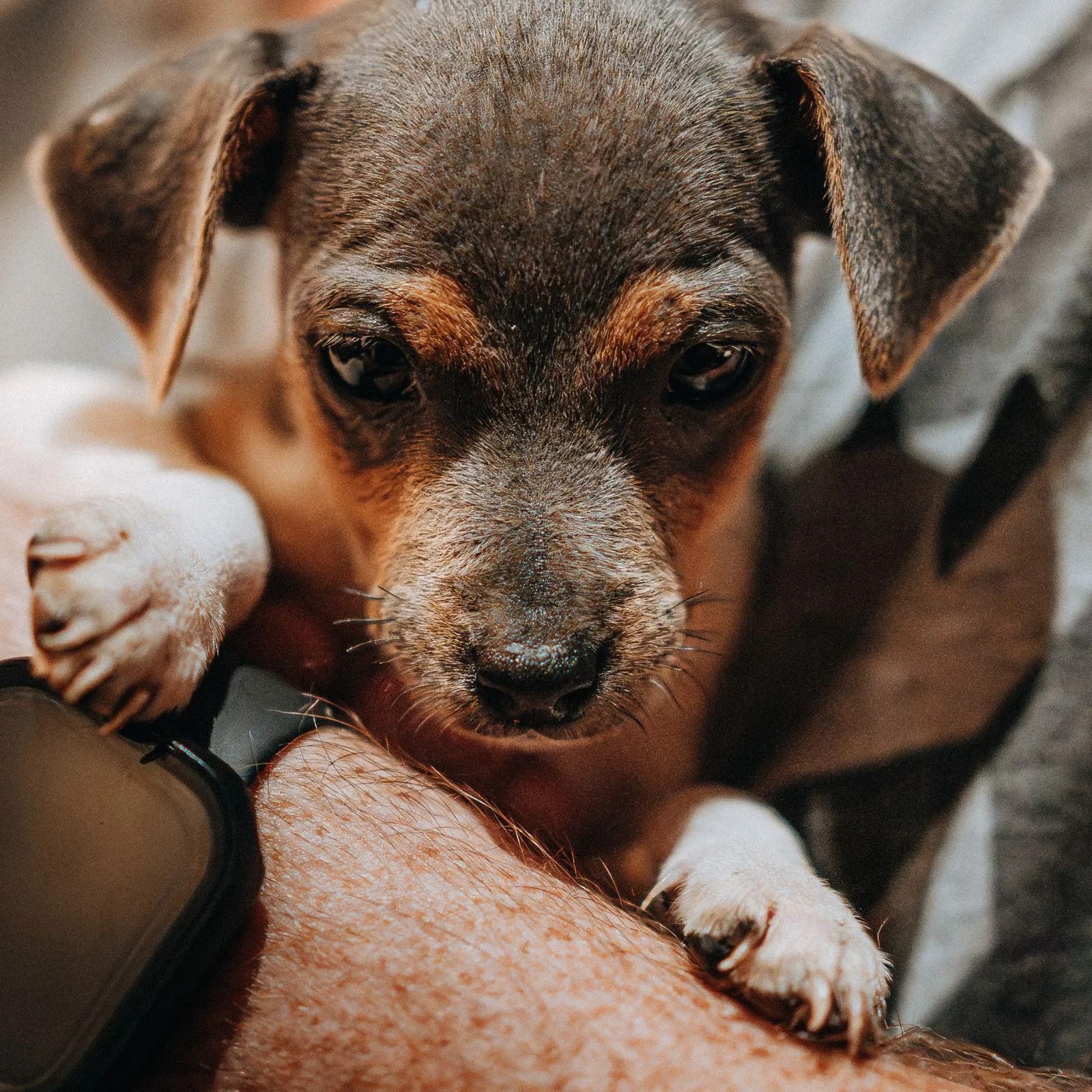
Everything a breeder does before a litter leaves is prediction. Health screening, pedigree analysis, temperament assessment and the choice of mate are all attempts to forecast what two dogs will produce together, made with incomplete information and under the pressure of a season that will not wait. The forecast is testable, but not yet, and when it becomes testable it will be in places you do not control. That separation — the decision at one end of a dog’s life, the verification at the other — is the structural problem this area exists to solve.
A breeder who places eight puppies in good homes and never asks again has a program built entirely on intention. A breeder who knows at what age the hips of nine offspring from two combinations were scored, which three developed recurring skin disease, which two became steady working dogs, and which one was rehomed at fourteen months and why, has something to reason with. The second breeder did not necessarily make better decisions at the time. Only the second breeder can find out.
Follow-up depends on work done long before it starts. If the eight-week notes were never written, there is nothing to compare the adult dog against; if the microchip numbers and the buyers’ contact details were never organized, the cohort cannot be reassembled. Record-keeping is the groundwork, and it is the one part of this chain that cannot be done retrospectively.
What this area covers
The chain begins with the homes. Staying in contact with puppy buyers deals with keeping a relationship with twenty or thirty households alive for a decade without becoming an intrusion. Three articles then cover what you ask them about: collecting health and longevity data, following up temperament and behavior and tracking conformation and working results. A fourth, fertility in the offspring, summarizes what research can and cannot tell you about reproduction in the generation you bred.
Analysis comes next, moving outward in three steps. Evaluating the whole litter treats the litter as a unit rather than as a collection of anecdotes about the two most visible puppies. Evaluating the combination asks the harder question of whether the pairing produced something neither parent produced alone. Evaluating the dam and sire over time judges each parent as a producer, across several partners and litters, which is the only level at which a confident judgment is possible.
What you learn is of limited use if it stays with you, which is why reporting and sharing health data covers how results reach breed clubs, health schemes and registries — including the results nobody enjoys submitting. The last three articles close the loop. Making the next generation’s breeding decisions turns the evidence into choices about which offspring and which lines continue. Revising your breeding goals rewrites the aims you began with, now that reality has had its say. The post-litter evaluation template is where all of it is written down in a form you will still be able to read in five years.
The four kinds of evidence a litter produces
Health and longevity data are the slowest and the most valuable. Age at death, cause of death, diagnoses and screening results accumulate over a whole lifetime, and most of what matters arrives after breeders have usually stopped asking. Population studies give the context your own handful of dogs cannot: life-table work on primary-care veterinary records in the United Kingdom estimated life expectancy at birth of around 11.2 years overall, with wide variation between breeds. Against a figure like that, your own offspring become interpretable.
Behavior evidence is the most abundant and the most confounded, because every one of your offspring has been raised by somebody else. Conformation and working results are the most formally documented, through show critiques, breed-specific descriptions and working trials, but they come only from the offspring somebody chose to enter — a selected subset by definition. Reproductive data are the sparsest, since only a fraction of any litter is ever bred from.
The four differ in how much weight they can carry, and keeping them separate is part of thinking clearly. A screening result in a public register such as the Orthopedic Foundation for Animals and its Canine Health Information Center program is a different class of information from an owner’s recollection of a limp, and a championship title is different again from a judge’s written critique. All four are worth having; none means the same thing.
Where to begin, whatever the litter’s age
If the litter is three months old, the work is almost entirely contact: confirming that every home can be reached, agreeing how often you will be in touch, and asking the first questions while the answers are still easy to give. Nothing you learn now is evaluation; you are building the instrument.
If the litter is one to two years old, the first real data arrive. Adult health screening becomes possible, behavior has settled into something steadier than adolescence, and the dogs that will be shown or worked have usually begun. The first honest comparison between your eight-week notes and the adult dogs can now be made, and it is often sobering.
If the litter is three to five years old, you can begin to assess the combination and the parents, because enough offspring have been through enough of life. At eight years or more you are in the part of the picture most breeders never see: longevity, late-onset disease and what the line produces over a lifetime. Older litters are not lost causes; a cohort you stopped following at two can usually be partly reconstructed, as long as the homes are still findable.
What one breeder’s material can and cannot show
A single litter is a sample of perhaps five to nine individuals from one pairing, raised in different households and observed by people with different standards. It can show that something is present — a bite fault, a temperament trait, a disease — which is genuinely useful. What it cannot do is establish a rate, a heritability or a difference between two combinations: the numbers are too small, and chance in a single litter is large enough to produce almost any pattern.
This is not an argument against keeping your own records, but for reading them alongside breed-level data and being precise about language: your material supports statements of the form “associated with” and “occurred in”, not “causes”. Where a breed club or register publishes aggregated results, your litters become one contribution to a dataset that can support conclusions no individual breeder can reach alone.
Which data exist, and who may see them, varies. Some registries publish all results and some only normal ones; some health schemes are administered by kennel clubs, others by veterinary bodies or independent foundations; and the hundred-odd members of the Fédération Cynologique Internationale each issue their own pedigrees and recognize one another’s, which makes offspring data both international and uneven. Find out what your breed and jurisdiction actually offer before assuming abundance or scarcity.
Even large surveys struggle to hear from every home: in the UK’s 2004 purebred health survey, only about a quarter of questionnaires came back, and some breeds returned fewer than one in twenty. Your own follow-up will have the same problem in miniature, which is why the relationship you build at placement matters as much as the questions you ask. And when a home does report a health or behavior concern, the first step is the owner’s own veterinarian; record what the vet found, not only what the owner noticed.
Handing the results back to strategy
The point of all this is a decision. When a litter has been evaluated, the output is a set of inputs: this combination is worth repeating or is not, this bitch produces better than she looks and this dog does not, this priority was wrong, this risk was underestimated. Those inputs belong in your breeding strategy, which is where the next combination is chosen, and in your breeding goals, which is where you decide what you are selecting for in the first place. The breeding goals worksheet is designed to be rewritten rather than filed.
Breed-level planning works the same way on a longer timescale. The Royal Kennel Club’s breed health and conservation plans, for example, were designed to set each breed’s health priorities from evidence in the veterinary and scientific literature and health research, with monitoring and review built in so the priorities change as new evidence arrives. An individual program is a small version of the same cycle: collect, evaluate, revise, breed again. The loop is the method, and everything in this area exists to make one turn of it possible.
The FCI’s international breeding strategies ask that screening results — good and bad — be published in open registries, and encourage breeders and breed clubs to work with scientists on genetic health. Sharing what your offspring became, including the disappointing results, is how one breeder’s small sample becomes part of evidence that can support conclusions.
Work on it
A few minutes here will teach you more than re-reading the article.
Ask yourself
- For your most recent litter, how many of the homes could you reach this week without searching for a phone number?
- Which of the four kinds of evidence are you currently collecting, and which have you never systematically asked about?
- What was the last breeding decision you changed because of something an offspring became, rather than something a pedigree suggested?
Find out & check
- Look up what your own registry or breed club publishes about offspring: screening results, show critiques, working results, estimated breeding values, and whether abnormal results appear.
Do one thing
- Pick your oldest litter and write down, from memory, what you know about each offspring. The gaps in that list are your follow-up plan.
Was this article helpful?
Anonymous. We do not store your name, email or IP address.
Sources & further reading
- The Royal Kennel Club — Kennel Club launching Breed Health and Conservation Plans. royalkennelclub.com
- Wiles, Llewellyn-Zaidi, Evans, O’Neill & Lewis (2017), Canine Genetics and Epidemiology 4:8 — Large-scale survey to estimate the prevalence of disorders for 192 Kennel Club registered breeds. doi.org
- Orthopedic Foundation for Animals — CHIC programs. ofa.org
- Fédération Cynologique Internationale — Presentation of our organisation. fci.be
- Teng, Brodbelt, Pegram, Church & O’Neill — Life tables of annual life expectancy and mortality for companion dogs in the United Kingdom. nature.com
- Fédération Cynologique Internationale — International Breeding Strategies. fci.be
- Adams, Evans, Sampson & Wood — Methods and mortality results of a health survey of purebred dogs in the UK. pubmed.ncbi.nlm.nih.gov
Where evidence is limited, recommendations rest on established practice and expert judgment, and may be updated as knowledge develops. Follow-up practice in particular is largely a matter of convention rather than research: there is no body of work establishing how often to contact owners, which questions give the most reliable answers, or how many offspring a breeder needs before a judgment about a combination becomes sound, and the population figures quoted here describe whole populations rather than any individual line.
Next steps
- Read next: Staying in contact with puppy buyers.
- Related: Placing each puppy: matching homes and dogs.
- Looking ahead: Making the next generation’s breeding decisions — where this area’s conclusions become the starting values for your next combination.