Fertility is the trait where a breeder’s own figures feel most persuasive and are least trustworthy — the effects are real at breed level, and nearly invisible in the handful of litters any one kennel produces.
The most important first
- In a genotyped cohort of Golden Retrievers, each 10 percent rise in genomic inbreeding was associated with roughly one fewer live puppy per litter, in a model that explained about a tenth of the variation in litter size.
- Across 227 breeds, the mean estimated inbreeding coefficient was 0.249, and only twelve breeds fell below 0.10, so most pedigree populations already sit above the levels at which reproductive effects have been measured.
- In one breed’s national registry of 2,717 whelpings, litter size declined significantly in bitches over five years old, and bitches over four at their first whelping had smaller first litters.
- Birth weight in a dataset of 1,013 Labrador litters had a direct heritability of 0.17 to 0.21 and a maternal additive component of 0.22, so the dam’s own contribution is as large as the puppies’ genes.
- Heritability describes how variation is distributed in a population; it does not predict what one bitch will produce. Read alongside inbreeding, relatedness and genetic diversity and infertility in the bitch and dog.
What fertility means in the offspring generation
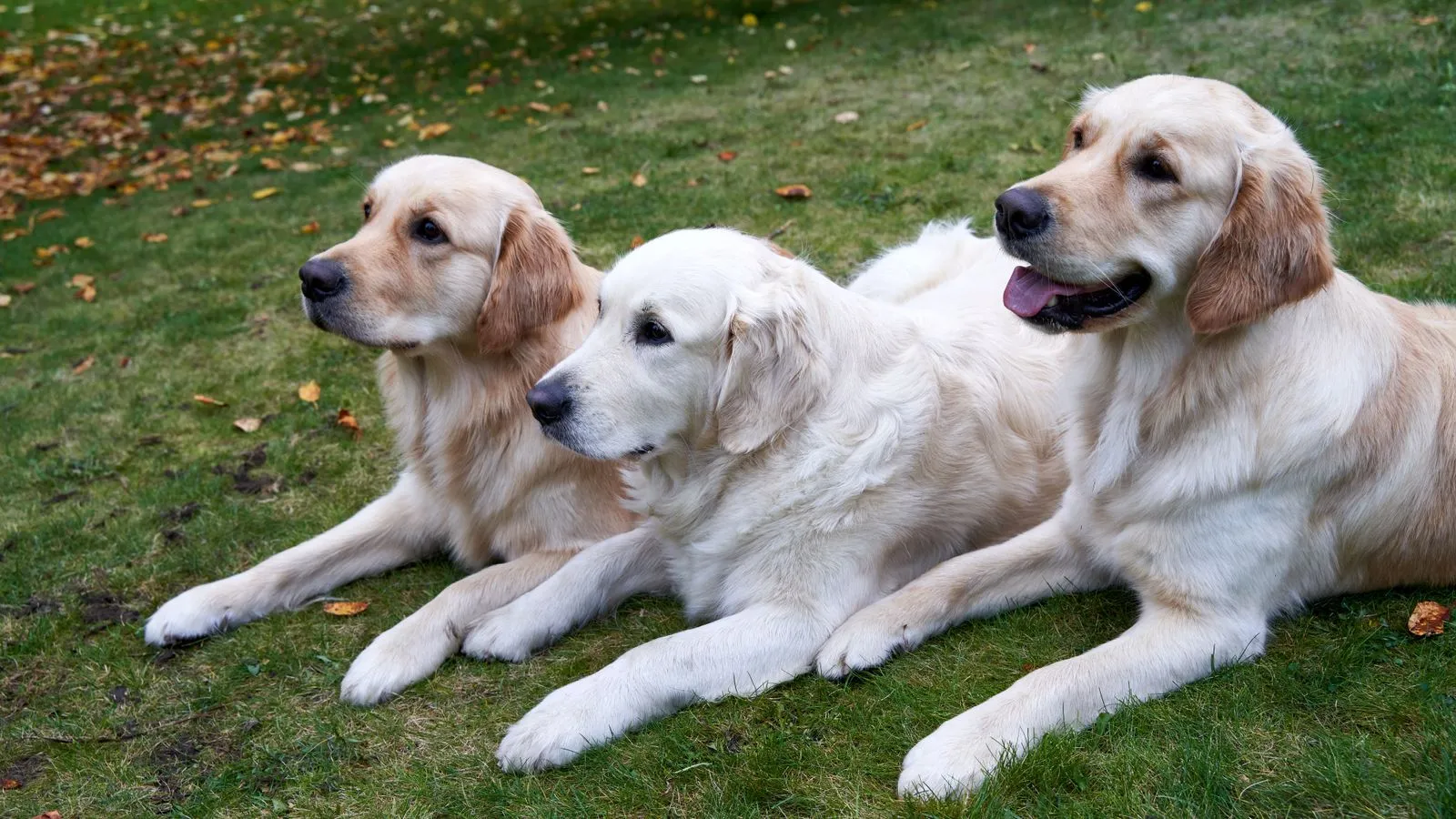
When breeders use the word fertility they usually mean one thing: whether a bitch conceives. Evaluating fertility in offspring covers considerably more. It includes whether they cycle regularly, conceive when mated inside the fertile window, carry to term, whelp without assistance, produce litters of a size that is ordinary for the breed, and raise them. Each of those is a separate trait with its own causes, and they do not move together reliably. A bitch can conceive easily and whelp badly, or need three attempts and then raise ten puppies without trouble.
This matters because the question a breeder wants answered is narrower than the question the research answers. You want to know whether a combination produced daughters who breed well. The literature mostly describes how variation in litter size or conception is distributed across a population, and what that variation is associated with. Treating those as interchangeable is where most confident conclusions about fertility go wrong.
Separate inherited from managerial explanations before looking at any numbers. A large share of what presents as infertility comes from mistimed matings, undetected reproductive infection, or a stud dog whose semen quality was never assessed, rather than from anything the offspring inherited. The diagnostic work described in infertility in the bitch and dog comes first; genetic interpretation comes last, and only on what remains.
Before you read a run of small or failed litters in a line as inherited, rule out the common causes with your veterinarian. Mistimed mating is the most frequent reason a fertile pair produces nothing. In bitches, Brucella canis is the main infectious cause of late pregnancy loss and infertility; in males it can inflame the testicles and prostate. Brucellosis spreads between dogs through mating and contact, can occasionally infect people, and is reportable in some US states. Ask for both dogs to be tested before every mating, and record the test date with the litter.
On the male side, prostate infection, a recent fever or heat stress, and testicular tumors can all lower semen quality, so a stud whose matings keep failing needs a veterinary examination and semen evaluation before anyone blames the bitches. And a pregnancy loss, an abortion, or a vaginal discharge that continues after a loss is a matter for your veterinarian straight away, not only an entry in your records.
Inbreeding and litter size: the clearest signal
The most direct evidence linking genetics to reproductive output concerns inbreeding. In a study drawing on a Golden Retriever lifetime cohort, 93 bitches were genotyped on a 220,000-marker array and produced 99 litters between them. Genomic inbreeding, measured from runs of homozygosity, ranged from 0.187 to 0.479 with a mean of 0.316. It was negatively associated with the number of live puppies born, and the authors estimated roughly one fewer puppy per litter for every 10 percent increase in inbreeding.
Two features of that result deserve as much attention as the headline. The model explained about a tenth of the variation in litter size, so around nine-tenths of the differences between those litters came from something else. And the authors describe the analysis as preliminary: one breed, 66 bitches that whelped, a narrow range of body size, and no significant effect on conception rate at all.
At breed level the pattern is broader but blunter. An analysis combining DNA testing of 49,378 dogs with insurance morbidity data found a mean adjusted inbreeding coefficient of 0.249 across 227 breeds, and higher veterinary morbidity in the more inbred groups: around 1,282 care events per 10,000 dog years at risk below 0.125, rising to 1,626 above 0.25. The correlation was modest, several breeds broke the pattern, and the authors are explicit that breed averages were used rather than individual measurements. It is an association across populations, not a mechanism demonstrated in individual dogs.
For guard rails that do not depend on your own numbers, the FCI’s international breeding strategies are a useful reference: avoid heavy inbreeding, never mate siblings or parent to offspring, and keep any one dog’s offspring below about 5 percent of the breed’s registered puppies over five years. Population geneticists commonly treat a rate of inbreeding of about 1 percent per generation as the upper limit, above which harmful effects are expected.
Heritability is not prediction
Heritability is the most misread statistic in dog breeding. It is the proportion of the observed variation in a trait, in one population at one time, attributable to additive genetic differences. It is not the proportion of any individual’s result caused by genes, and it says nothing about which of your bitches carries what.
A large guide dog dataset shows both the use and the limit. Across 1,013 Labrador litters and 7,827 puppies, direct heritability of birth weight was estimated at 0.17 to 0.21, with a maternal additive component of 0.22. The dam’s own genetic contribution to her puppies’ birth weight was as large as the puppies’ own. The same analysis found each additional puppy associated with about 11 grams less birth weight, and a parity effect that rose to around the second or third litter and then fell.
Those are stable parameters built on thousands of records, and they still do not allow anyone to rank two bitches. A heritability of 0.2 means selection works slowly across a population over generations. Applied to a single animal with four litters behind her, it means almost nothing.
Age, parity and the range of the data
Registry studies give the clearest picture of age. A retrospective analysis of the Drever in Sweden covered 2,717 whelpings in the national registry, with a mean of 5.00 registered puppies per litter and a standard deviation of 2.31. In the registry data, litter size declined significantly in bitches over five years of age, and bitches over four at their first whelping had smaller first litters than those bred at two or three.
The Golden Retriever cohort, by contrast, found no significant relationship between age and litter size. Our reading — the authors do not test this — is that the difference most likely reflects the range of the data: that cohort spanned ages one to seven with most bitches young, while the registry spanned full reproductive careers across thousands of litters. Two honest studies can disagree because they sampled different slices of the same reality, which is worth remembering whenever a single paper appears to settle something.
How much data a difference needs
That standard deviation of 2.31 puppies is the number to keep. It means litters within one breed routinely differ by two or three puppies for reasons no one can identify. If one of your bitches averages six puppies over four litters and her half-sister averages five over three, you have a difference of one puppy against background variation of more than two, on seven litters. That is not a finding; it is noise with a story attached.
The same study shows what detection takes. The one professional kennel in the dataset did produce larger litters than other breeders of the breed, 5.87 registered puppies against 4.93, a difference of about one puppy that the authors found statistically significant — and the comparison rested on the kennel’s 224 whelpings set against a registry of 2,717. Whelping problems were recorded only for that kennel’s own litters, where about 6 percent of whelpings involved dystocia and about 5 percent ended in a cesarean, and those counts were far too small to analyze further. A breeder producing two litters a year will never assemble that material. This is arithmetic, not a failure of rigor.
Where your own records still earn their place
None of this makes your records worthless; it changes what they are for. They are not a dataset for testing hypotheses about your lines. They are a description of what happened in your kennel, and the raw material that makes breed-wide data possible.
Record what registries do not capture: matings that produced nothing, the timing method used, resorptions, whelping difficulty, assistance given, cesareans and the reasons for them, and losses with their causes. Those fields are missing from almost every national dataset, which is exactly why breed health projects ask breeders for them. The record-keeping habits that make this possible must be in place before the litter.
Then take the decisions your sample size can support, which are structural rather than individual. Population geneticists suggest holding the rate of inbreeding to no more than about 1 percent per generation, and limiting how much any one dog contributes; the Fédération Cynologique Internationale recommends that no dog produce more than 5 percent of a breed’s puppies over five years. Those choices you can make correctly alone, because they do not require you to have detected anything. For everything else, read the breed’s combined data, with the caveats set out in health databases and interpreting results, and contribute to it rather than interpreting your own corner of it.
In practice
A breeder of a medium-sized breed keeps three related bitches. The eldest has produced four litters averaging seven puppies; her daughter has had two litters, of four and five; a half-sister, bred for the first time at five, had three. The breeder’s instinct is that the daughter has inherited poor fertility, and she considers removing her from the program. Setting the records out properly changes the picture: both of the daughter’s matings were timed by counting days from the first sign of estrus rather than by progesterone testing, and one was a single mating; the half-sister was bred late, which the registry data on her breed associate with smaller first litters; and the three bitches account for nine whelpings in total, against a breed standard deviation of more than two puppies. She keeps the daughter, times the next mating properly, and sends all nine litters’ figures to the breed health coordinator, where they join several hundred others and finally mean something.
(Illustrative, composite scenario.)
When to call your vet
- A bitch from your line loses a pregnancy, especially late, or has a discharge that continues after a loss.
- Two or more matings to a proven partner fail without a clear timing explanation.
- A stud dog has swollen or painful testicles, is reluctant to mate, or has not had a semen evaluation before use.
- A bitch has not come into season by the expected age, or cycles at unusual intervals.
- You need brucellosis testing before a mating or before bringing a new dog into the kennel.
- If in doubt, call — your vet would rather hear from you early.
Work on it
A few minutes here will teach you more than re-reading the article.
Ask yourself
- How many whelpings have I personally recorded, and what is the smallest difference between two of my bitches that I could distinguish from ordinary variation on that number?
- For each litter that was smaller than expected, do I know how the mating was timed and how many matings there were?
- Which of my reproductive observations exist nowhere except in my own notebook?
Find out & check
- Find out what reproductive data your breed club or national registry collects, what the breed’s mean litter size is, and whether anyone has published a figure for the rise in kinship per generation in your breed.
Do one thing
- Send one breed health coordinator or registry the reproductive figures from your last three litters, including the matings that failed.
Was this article helpful?
Anonymous. We do not store your name, email or IP address.
Sources & further reading
- Chu E. T., Simpson M. J., Diehl K., Page R. L., Sams A. J. & Boyko A. R. — Inbreeding depression causes reduced fecundity in Golden Retrievers. pmc.ncbi.nlm.nih.gov
- Bannasch D., Famula T., Donner J., Anderson H., Honkanen L., Batcher K., Safra N., Thomasy S. & Rebhun R. — The effect of inbreeding, body size and morphology on health in dog breeds, Canine Medicine and Genetics 2021;8:12. doi.org
- Gavrilovic B. B., Andersson K. & Linde-Forsberg C. — Reproductive patterns in the domestic dog: a retrospective study of the Drever breed, Theriogenology 2008;70(5):783–794. doi.org
- Schelling C., Gaillard C., Russenberger J., Moseley L. & Dolf G. — Heritabilities for the puppy weight at birth in Labrador retrievers. pmc.ncbi.nlm.nih.gov
- Fédération Cynologique Internationale — International Breeding Strategies. fci.be
- Lewis T. W., Abhayaratne B. M. & Blott S. C. — Trends in genetic diversity for all Kennel Club registered pedigree dog breeds, Canine Genetics and Epidemiology 2015;2:13. link.springer.com
- Davidson A. P. (MSD Veterinary Manual) — Infertility in Small Animals. merckvetmanual.com
- MSD Veterinary Manual — Brucellosis in Dogs. merckvetmanual.com
Where evidence is limited, recommendations rest on established practice and expert judgment, and may be updated as knowledge develops. The correlations and heritabilities summarized here describe populations, not individual dogs: a heritability estimate or an association with inbreeding tells you what selection can achieve across a breed over generations, and cannot be used to predict what any one bitch or dog will produce.
Next steps
- Read next: Evaluating the whole litter.
- Related: Inbreeding, relatedness and genetic diversity.
- Return to the area hub: Closing the loop: follow-up and the next generation.