Your puppy has just left the only home, the mother and the littermates it has ever known, so the first week is less about teaching and more about helping it feel safe, learning its rhythm and starting the routines you will keep for months.
The most important first
- Go straight to the toilet spot when you arrive, then show the puppy its bed, water and pen, and let it explore a small area with you nearby. The rest of the house can wait.
- Keep the first days quiet: few visitors, short play sessions, plenty of sleep. Puppies this age can sleep up to 18–20 hours a day.
- Expect crying the first nights. Sleeping in or next to your bedroom and taking the puppy out at night when it needs to go helps far more than leaving it to cry alone.
- Start the routine on day one: the same meal times and food as the breeder, toilet trips after sleeping, eating and play, and the same rules from everyone in the house.
- See your veterinarian within the first few days, and bring the records from your breeder. Many breeders’ contracts ask for a check within a set number of days.
The journey home
If you can, collect your puppy in the morning so it has the whole day to settle before the first night. Bring a second person, so one of you can drive and the other can sit with the puppy, and a crate or carrier with bedding, spare towels, paper towels and a bag for accidents. On a long journey, plan short breaks somewhere quiet, away from places other dogs use, because the puppy is not yet fully vaccinated. Your breeder may send a blanket or toy that smells of the litter; put it in the crate. The breeder’s side of this day is described in the first journey and the first days at home.
The first hour
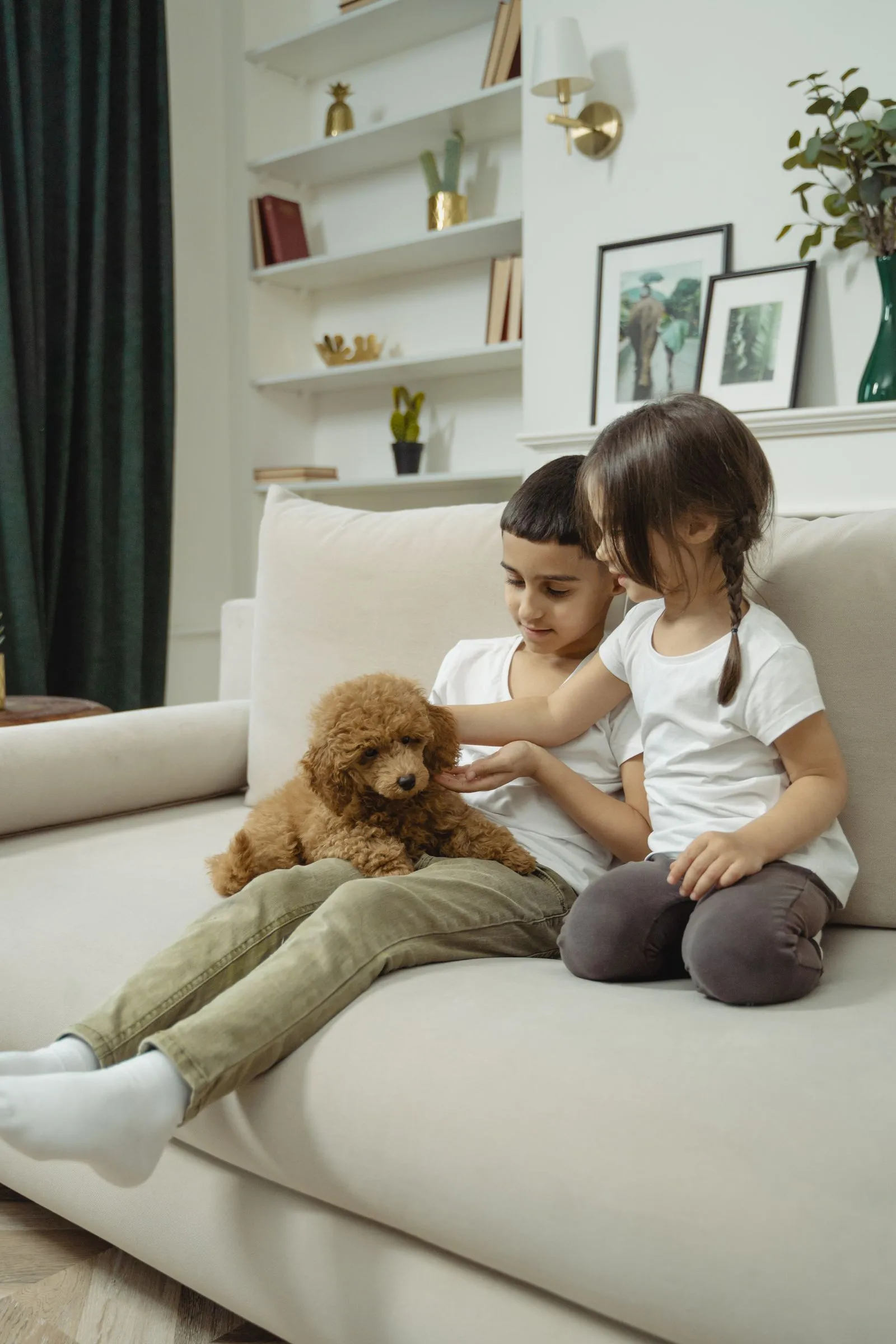
Carry the puppy straight to the spot you have chosen for its toilet and give it a few minutes. If it goes, praise it quietly. Then bring it inside and show it the essentials: where its bed or crate is, where the water is, and where it can play. The American Kennel Club suggests letting a new puppy explore under supervision, but not giving it the run of the house on the first day. Freedom is easier to give later than to take away. Close doors and use gates to keep the area small, safe and easy to clean — the preparation is in before your puppy comes home.
Keep the first days quiet
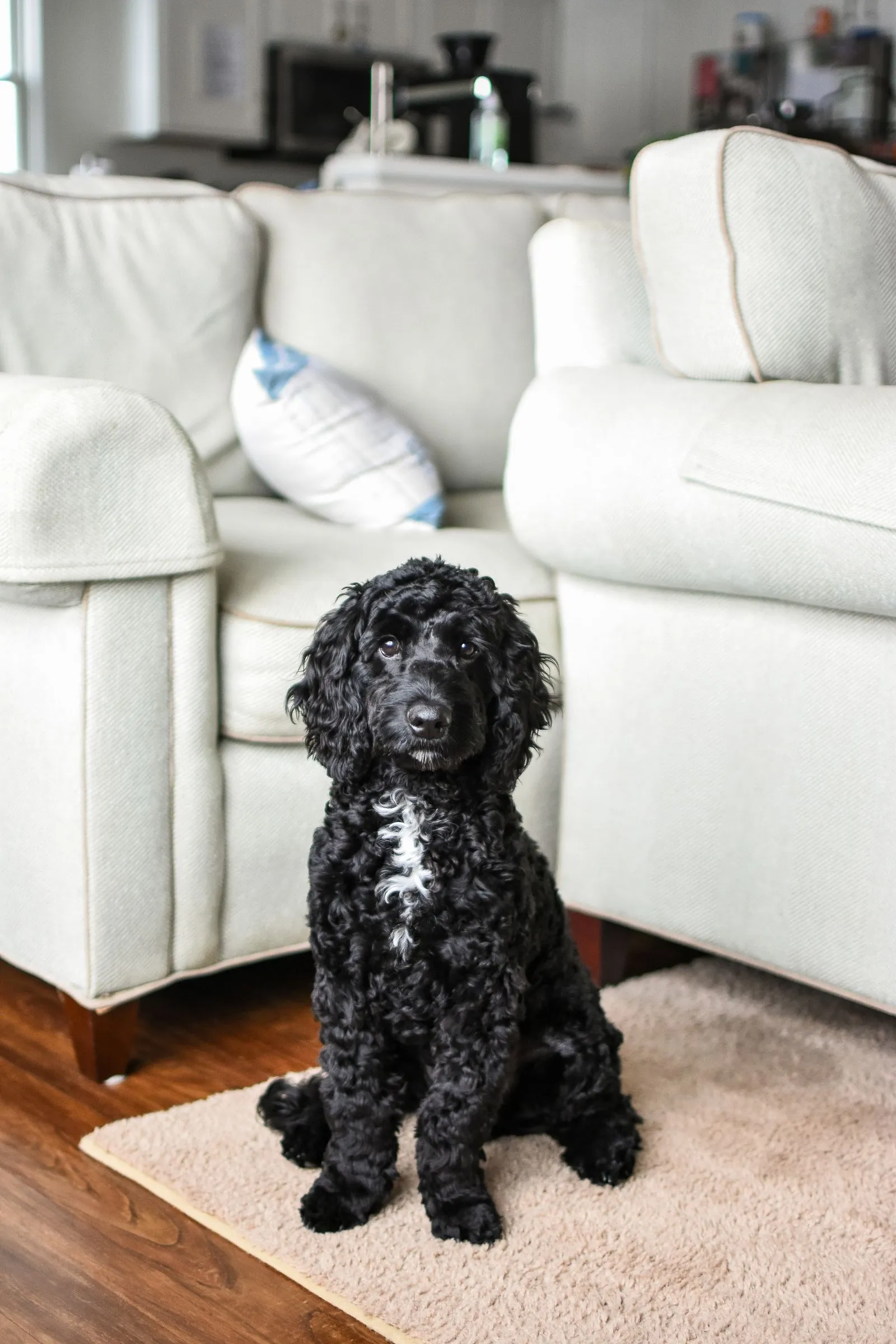
Everyone will want to meet the puppy. PDSA advises keeping the home calm and avoiding visitors for the first few days, and the AKC points out that too much handling at once is stressful. Let the puppy come to people rather than passing it from lap to lap. Keep play sessions short and let it sleep whenever it wants: PDSA notes that puppies may sleep 18–20 hours a day. Children need clear rules from the start: sit on the floor to cuddle, let the puppy walk away, never wake it, and always with an adult present.
If you have another dog or a cat, the AKC recommends supervised, short introductions and making sure the cat always has a high or separate place to escape to. Do not let the puppy pester an older dog that wants to be left alone. Feed animals apart, and pick up toys and chews the older dog values, so there is nothing to argue over.
The first night
Most puppies cry on the first nights, and that is normal: they are worried and alone for the first time. PDSA advises sleeping in the same room as your puppy for the first few nights and comforting it rather than ignoring it, because ignoring a frightened puppy can make it feel more isolated. Put the crate or pen next to your bed with the breeder’s blanket inside. Take the puppy out last thing at night, and expect to go out again during the night for the first weeks; a puppy that wakes and fusses after a few hours often simply needs the toilet. Keep night trips calm, quiet and boring: out, toilet, praise, back to bed.
In practice
A family’s nine-week-old puppy cries for an hour the first night in a crate in the kitchen. On the second night they move the crate next to their bed with the breeder’s blanket inside, take the puppy out at midnight and again at 4 a.m., and it settles within minutes each time. Over the next three weeks they move the crate a little farther from the bed every few nights. By the fourth week the puppy sleeps through until six in its crate in the hall.
(Illustrative, composite scenario.)
Start the routine
Puppies learn fastest when every day looks the same. Keep feeding the same food at the same times your breeder used, at least for the first weeks. Take the puppy to its toilet spot when it wakes, after meals and drinks, after play and before bed, and reward it the moment it goes in the right place. Give it short, regular rest periods in its pen or crate during the day, so being alone for a few minutes becomes normal early. Write the routine down so that everyone in the house does the same thing.
Expect your puppy to miss its littermates for a while, and be patient with it. It may eat a little less the first day or two, and its stools may be a bit softer after the journey. If it stops eating, vomits, has diarrhea that does not settle, or seems flat and weak, call your veterinarian rather than waiting — the signs are in when to call the vet.
The first vet visit
Book the first check for the first few days. The AKC notes that breeders often ask for an examination within three days in their contracts. Bring all the records your breeder gave you — vaccination and worming dates, the microchip number — and, if the practice asks, a fresh stool sample. The veterinarian will examine the puppy from nose to tail and talk to you about vaccinations, parasite control, feeding, microchip registration and when to come back. In one US study of newly adopted pets, dogs that had been to a veterinarian were far more likely still to be in their home six months later than dogs that had not. The visit is also the right moment to ask about everything you are unsure of.
Socialization starts now, carefully
The first weeks at home fall inside the most important period for socialization. The American Veterinary Society of Animal Behavior describes the first three months of life as the primary window, and recommends that puppies start meeting people, sounds and safe places before their vaccinations are complete, in ways that keep infection risk low. AAHA’s life stage guidelines also note that many puppies go through a fear period around eight to ten weeks, which is often exactly when they move home, so keep new experiences gentle and positive, and never force a frightened puppy to face something. Carry it to watch the world from your arms, invite calm visitors once the first few days have passed, and ask your veterinarian which places and dogs are safe to meet before vaccination is finished.
And keep your breeder in the loop. A short message with a photo and a question or two at the end of the first week is welcome news for any good breeder, and often the fastest way to an answer.
Work on it
A few minutes here will teach you more than re-reading the article.
Ask yourself
- Is the area my puppy can use small, safe and easy to clean, or have I given it too much house too soon?
- Does everyone at home follow the same routine and rules?
- Do I know where my puppy will sleep tonight, and who gets up if it needs the toilet?
Find out & check
- Call your veterinary practice and book the first check for the first few days, and ask what to bring.
Do one thing
- Send your breeder a photo and a short update at the end of the first week, with any questions you have.
Was this article helpful?
Anonymous. We do not store your name, email or IP address.
Sources & further reading
- American Kennel Club (Stephanie Gibeault, MSc, CPDT) — Time to Get a New Puppy? Here’s What You Need to Do. akc.org
- PDSA — Your first day (and night) with a new puppy. pdsa.org.uk
- American Kennel Club (Mara Bovsun) — Puppy's First Vet Visit. akc.org
- American Kennel Club (Mara Bovsun) — How to Potty Train a Puppy. akc.org
- American Veterinary Society of Animal Behavior — Position Statement on Puppy Socialization. avsab.org
- American Animal Hospital Association (Bartges J et al.) — 2012 AAHA Canine Life Stage Guidelines. J Am Anim Hosp Assoc 48:1–11. aaha.org
- American Humane Association — Keeping Pets (Dogs and Cats) in Homes: A Three-Phase Retention Study, Phase II (2013). americanhumane.org
Where evidence is limited, recommendations rest on established practice and expert judgment, and may be updated as knowledge develops. Follow your breeder’s written plan for food and routine, and ask your own veterinarian about vaccinations, parasite control and where your puppy can safely go before its vaccinations are complete. This is general information and does not replace advice from your veterinarian.
Next steps
- Read next: When to call the vet: warning signs in a young puppy.
- Related: Before your puppy comes home.