Every breed is an answer to a question someone once had — a job that needed doing, a terrain that needed a certain kind of dog, a task that rewarded a particular build and temperament. That original purpose is the most reliable compass a breeder has. When you judge your dogs against what the breed was made to do, rather than only how it looks or what sells, most of the harder decisions start to point the same way.
The most important first
- Every breed was shaped by a purpose; the way it looks follows from what it was built to do.
- The breed standard describes a working dog, not a beauty template — it helps to read it that way.
- “Fitness for function” — whether a dog can still do what the breed is for — is a question of both integrity and welfare.
- When appearance drifts away from function, a breed slowly stops being itself.
- Your own goals are best built from your breed’s purpose, not from the ring or the market.
Every breed is an answer to a question
Most breeds did not begin as looks. They began as work. A breed that had to run down quarry over open ground was built light and fast; one that had to pull, guard, retrieve from cold water or move stock all day was built for that instead. The coat, the size, the outline, the temperament — these were consequences of the job, refined over generations by people who needed the dog to perform.
Most breeds were developed to do a job: hunting, herding, guarding, pulling, retrieving. Companion breeds have a job too, and for them the job is companionship. A toy dog should still be able to breathe, move, see and give birth comfortably, and to enjoy a full life with its family. Fitness for function applies to every breed.
Knowing your breed’s original purpose is not nostalgia. It is the reference point that tells you which traits are essential and which are incidental — and it is the first thing a responsible breeder gets clear about, because everything in Area 2 (goals, selection, combinations) is built on top of it.
The standard describes a working dog
A breed standard can read like a checklist of appearances, but almost every clause in it traces back to function. Angulation and movement describe a dog that can work without breaking down. Chest and lung room describe stamina. Coat describes protection from a specific climate or terrain. Even proportions usually encode a job.
Reading the standard for function — asking what was this feature for? — changes how you weigh it. A trait that exists to let the dog work is one you protect. A trait that has crept in purely as fashion is one you treat with more suspicion. The standard is best used as a description of a capable dog, not as a template for a decorative one.
In practice
A breeder of a water-retrieving breed has a line that wins well — but notices the younger dogs no longer take readily to water, and tire quickly when they do. Nothing in the ring flagged it; the dogs look right. Testing the puppies against the job the breed was made for reveals what the show results hid, and reshapes what the breeder selects for next.
(Illustrative, composite scenario.)
Fitness for function: the test that keeps a breed honest
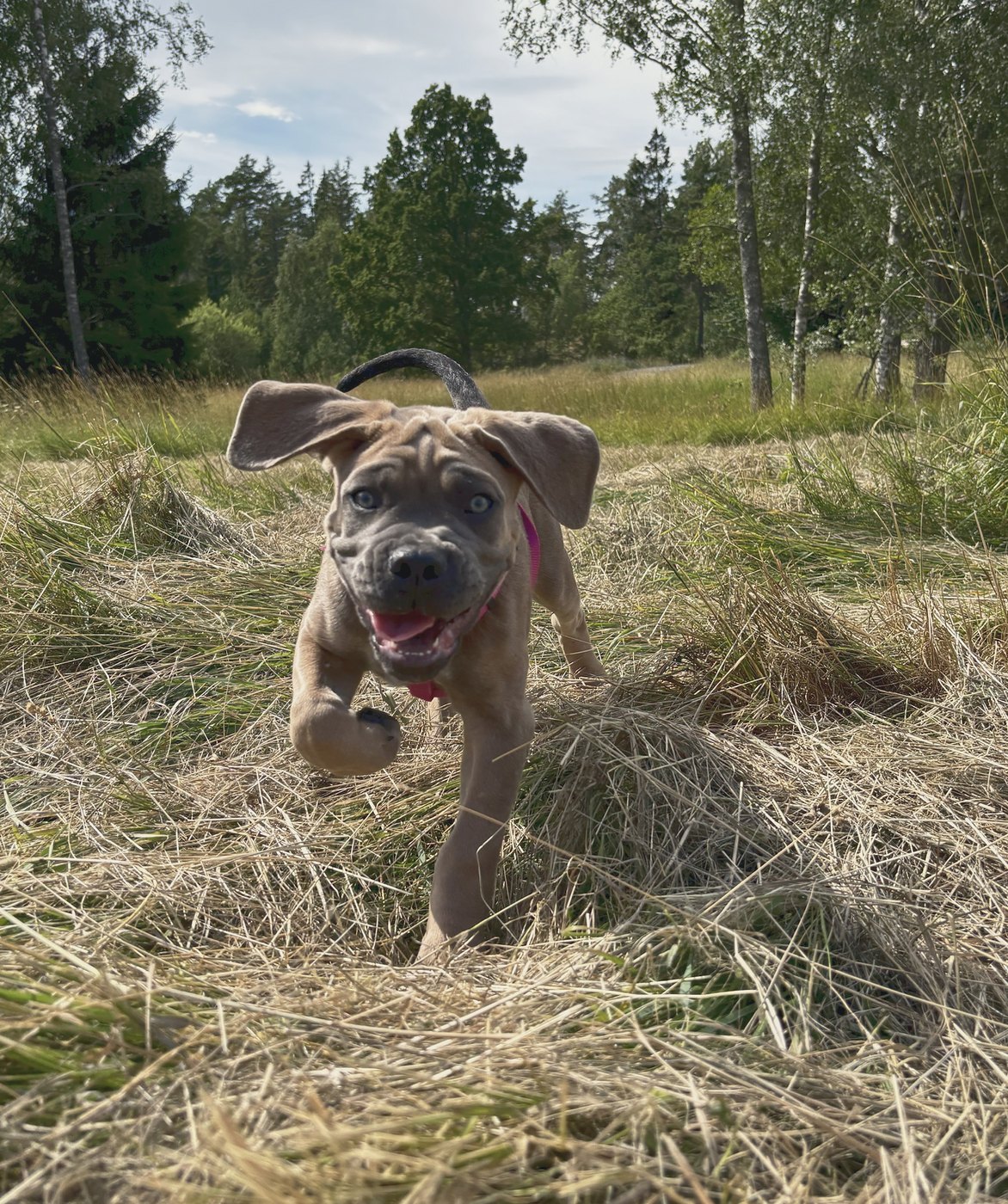
“Fitness for function” is a simple, demanding idea: can the dog actually do — or credibly do a version of — what the breed exists to do? Can it move, breathe, work and reproduce as its purpose requires?
It matters for two reasons. It keeps the breed itself — in our view, a breed that can no longer perform its function has quietly become a different animal wearing the same name. And it is a welfare safeguard: a dog built to function is, as a rule, a dog built to be sound and comfortable. This is the same ground covered from the ethics side in Animal welfare and breeding ethics and from the evidence side in the five domains evidence summary; here the point is simply that function is the standard against which “improvement” should be measured.
When appearance drifts from function
Breeds change, and not all change is loss. But there is a particular drift worth naming: selecting harder and harder for a look that shows well, until the feature that wins is detached from — or actively works against — what the dog was built to do. A coat bred so heavy it needs constant management and can make it harder for the dog to stay cool; an outline exaggerated past the point of easy movement; a head shape prized in the ring that the dog pays for in daily life.
The corrective is not to freeze a breed in the past. It is to keep asking function’s question of every trend: does this help the dog do what it is for, or only help it win? When the honest answer is “only win,” that is the moment to hold the line.
The best-documented example is the shortened muzzle. Research shows that the risk of obstructed breathing rises as the muzzle gets shorter. Affected dogs tire quickly, cope poorly with heat and may breathe noisily even at rest. A 2009 review of the 50 most popular UK breeds found that every one had at least one feature of its standard linked to a health problem. That is why the FCI’s breeding rules state that breeding must not exaggerate breed features in ways that impair functional health, and why several kennel clubs have revised their standards.
In practice
Over several generations, a breed’s coat has been bred fuller and more profuse because it photographs beautifully and catches a judge’s eye. The dogs now need hours of grooming and struggle in summer heat — a feature that began as practical protection, pushed past its purpose. A breeder who reads the coat as function rather than ornament dials it back toward what the dog can actually live in.
(Illustrative, composite scenario.)
From breed purpose to your own goals
Breed purpose is the input; your breeding goals are what you build from it. Before you get to specific combinations, health priorities or type, the question is: what does my breed need to be able to do, and which of those qualities am I committed to protecting?
Answering that turns an abstract standard into a working brief for your program — and it is exactly where Area 2 picks up, taking breed purpose and turning it into measurable goals, selection criteria and combination planning.
Work on it
A few minutes here will teach you more than re-reading the article.
Ask yourself
- If I had to state my breed’s original purpose in one sentence, could I — and do my dogs still fit it?
- Which parts of the standard am I treating as “looks” that are really about function?
- Am I selecting toward the ring and the market, or toward what the breed is for?
Find out & check
- Find your breed’s full standard and its documented history, and mark the clauses that describe function.
- Find out whether working, field or aptitude evaluations exist for your breed, and what they actually test.
- Check, honestly, whether your dogs could do a realistic version of the job the breed was made for.
Do one thing
- Write your breed’s purpose in one sentence, and list three functional traits you will not let slide.
Was this article helpful?
Anonymous. We do not store your name, email or IP address.
Sources & further reading
- Fédération Cynologique Internationale — International Breeding Strategies (fitness for function, health and breed conservation). https://www.fci.be/medias/ELE-STR-en-941.pdf
- Fédération Cynologique Internationale — International Breeding Rules of the FCI. https://www.fci.be/medias/ELE-REG-en-15497.pdf
- American Kennel Club — Dog Breeds Sorted by Groups. https://www.akc.org/public-education/resources/general-tips-information/dog-breeds-sorted-groups/
- The Royal Kennel Club — Breed standards. https://www.royalkennelclub.com/breed-standards/
- United Kennel Club — Breeder’s Code of Ethics. https://www.ukcdogs.com/breeders-code-of-ethics
- American Kennel Club — AKC Sports. https://www.akc.org/sports/
- Packer RMA, Tivers MS (2015) Strategies for the management and prevention of conformation-related respiratory disorders in brachycephalic dogs. Veterinary Medicine: Research and Reports 6:219–232. https://www.dovepress.com/strategies-for-the-management-and-prevention-of-conformation-related-r-peer-reviewed-article-VMRR
- Asher L, Diesel G, Summers JF, McGreevy PD, Collins LM (2009) Inherited defects in pedigree dogs. Part 1: Disorders related to breed standards. The Veterinary Journal 182(3):402–411. https://doi.org/10.1016/j.tvjl.2009.08.033
Where evidence is limited, recommendations here rest on established practice and expert judgment, and may be updated as knowledge develops.
Next steps
- Read next: Canine anatomy and physiology: a breeder’s foundation — the structure that function depends on.
- Related: Animal welfare and breeding ethics · Reading the breed standard: type, function and interpretation.
- Return to the area hub: Becoming a responsible breeder: the complete foundation.