A dog breeding strategy is what turns good intentions into good dogs. Before genetics, before reproduction, a serious breeder decides what they are trying to achieve and how they will judge whether they are getting there — and then makes every mating serve that aim. This guide is the map to that work: how goals, honest evaluation, pedigree and planning fit together into a program rather than a series of one-off litters.
The most important first
- A program is planning across generations, not one litter at a time.
- It starts with clear, honest goals and a way to measure progress.
- Evaluation — of type, temperament, function and health — is the engine; honesty is the fuel.
- Combinations (linebreeding, outcrossing) are tools in service of the goals, not the starting point.
- This builds on Area 1’s foundation and feeds into genetics and reproduction next.
On this page
- What a dog breeding strategy actually is
- The five moving parts of a program
- Where evaluation fits
- From a single mating to a program
- Where to start
What a dog breeding strategy actually is
A strategy is simply a considered answer to three questions: what do you want your dogs to be, how will you recognize it, and how will you get there over time? It sits above any single litter. Without it, even good individual decisions drift — a lovely litter here, a fashionable stud there — and the line goes nowhere in particular. With it, each combination is a deliberate step, and each result teaches you something for the next.
This is the strategic layer that Avidog, SKK and other serious programs put before the genetics: goals, measurement and follow-up first, mechanics second.
The five moving parts of a program
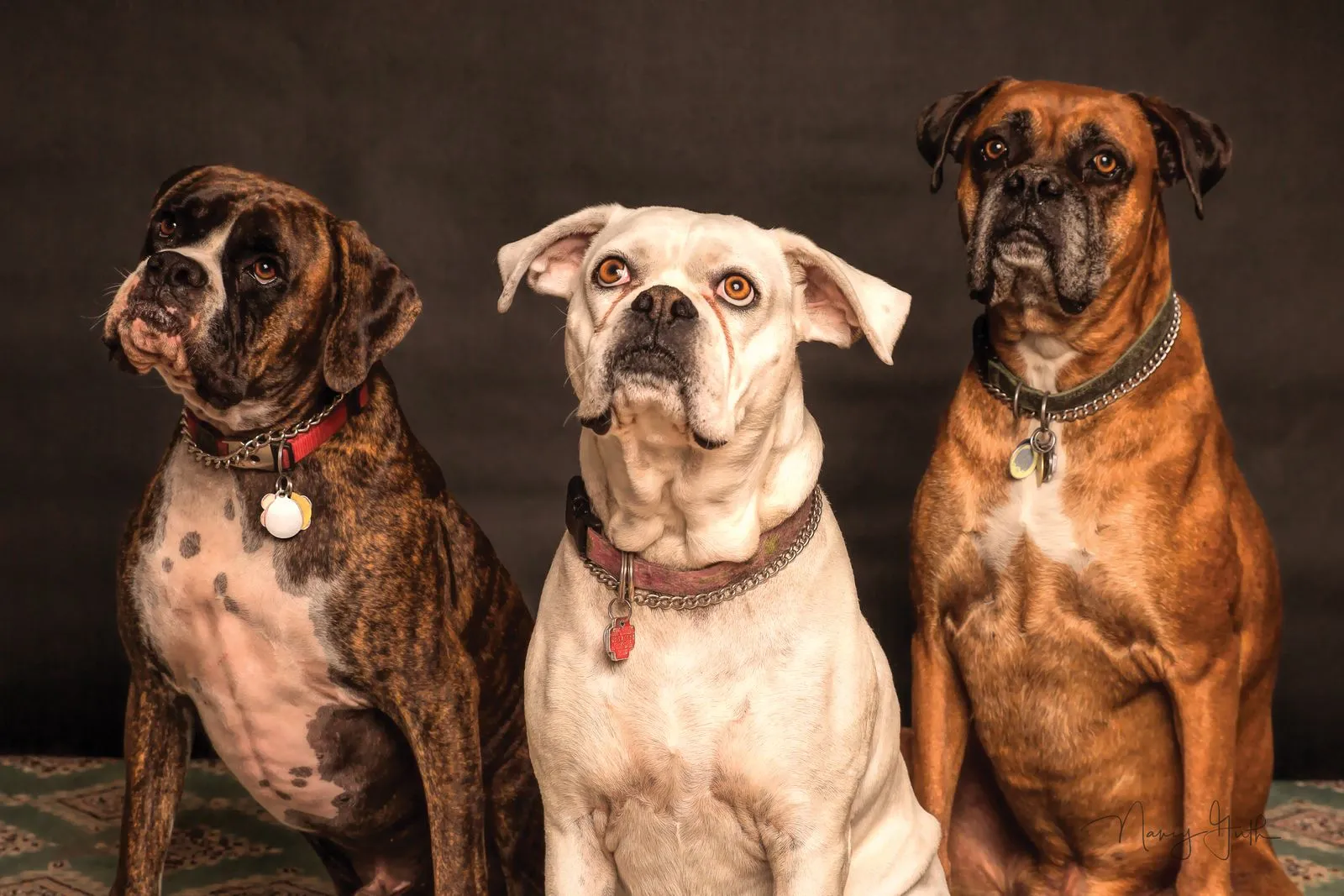
A breeding program has five parts that work together, each with its own guide in this area.
First, goals — turning your values into measurable priorities, covered in Setting breeding goals. Second, the breed standard, your reference for type and function — see Reading the breed standard. Third, evaluation of your dogs: conformation, temperament and working ability, and the honest overall judgment in Evaluating breeding stock. Fourth, analysis of what’s behind the dog — pedigree and family analysis. And fifth, planning: the breeding systems you use and the long-term program you build.
Genetic diversity
Every program also draws on, and affects, the breed’s shared gene pool. Research on dog pedigrees found that heavy use of a few popular sires was the mating practice most likely to spread inherited disorders. The FCI asks breeders to avoid this “matador breeding,” to avoid heavy inbreeding, and never to mate full siblings or a parent to its offspring. As a guide, it suggests no dog should produce more than 5% of the puppies registered in its breed over five years. Linebreeding and outcrossing are tools; how often you use any one dog matters just as much.
Where evaluation fits
If goals are the destination, evaluation is how you read the map — and it only works if you are honest. Almost every part of this area comes back to seeing your own dogs clearly, faults and all, rather than as you wish they were. That discipline, first met as “kennel blindness” in the foundation, is what separates a program that improves from one that just continues.
Evaluation is strongest when it uses data beyond your own kennel: open health registries, your breed club’s recommended screening (in the US, the OFA’s CHIC protocol), and estimated breeding values where they exist. Researchers recommend combining these rather than relying on any single test, because selecting hard on one result can quietly create other problems.
From a single mating to a program
The shift from breeding a litter to running a program is a shift in time horizon. A litter asks “which two dogs?” A program asks “where is this line going over the next five to ten years, and does this mating move it there?” It also closes a loop: the results of each litter feed back into your goals and your next decision — the cycle completed in follow-up and evaluation. Strategy and reproduction and genetics are not separate; strategy is what points them somewhere.
Keep the same records for every litter — health results, temperament notes, and how the puppies are doing in their homes over the years. Those records are what let each litter inform the next, and they are valuable to your breed club’s health work too.
Where to start
If you are building a program for the first time, work through this area in order: goals, standard, evaluation, pedigree, systems, long-term plan. If you already breed, treat it as a tune-up — most programs have a strong part and a weak one, and the weak one is usually either measurable goals or honest evaluation. Either way, the genetics that make it all work sit in the next area, and the reproduction that carries it out in the one after.
Work on it
A few minutes here will teach you more than re-reading the article.
Ask yourself
- Could I describe my breeding program’s direction in two or three sentences — or do I mostly decide litter by litter?
- Which of the five parts (goals, standard, evaluation, pedigree, planning) is my strongest, and which my weakest?
- Do my matings serve a plan, or react to what’s available and fashionable?
Find out & check
- Find out where your line stands today on your breed’s key priorities — honestly.
- Check whether you have written goals at all, or only ones in your head.
Do one thing
- Sketch a one-paragraph direction for your program over the next five years. You’ll sharpen it as you work through this area.
Was this article helpful?
Anonymous. We do not store your name, email or IP address.
Sources & further reading
- Fédération Cynologique Internationale — International Breeding Strategies. https://www.fci.be/medias/ELE-STR-en-941.pdf
- The Royal Kennel Club — The Kennel Club code of ethics. https://www.royalkennelclub.com/about-us/about-the-rkc/what-we-do/the-royal-kennel-club-rules-regulations-and-codes/the-royal-kennel-club-code-of-ethics
- Leroy G, Baumung R (2011) Mating practices and the dissemination of genetic disorders in domestic animals, based on the example of dog breeding. Animal Genetics 42:66–74. https://doi.org/10.1111/j.1365-2052.2010.02079.x
- Farrell LL, Schoenebeck JJ, Wiener P, Clements DN, Summers KM (2015) The challenges of pedigree dog health: approaches to combating inherited disease. Canine Genetics and Epidemiology 2:3. https://link.springer.com/article/10.1186/s40575-015-0014-9
- The Royal Kennel Club — Estimated breeding values (EBVs). https://www.royalkennelclub.com/health-and-dog-care/health-dog-care/health/getting-started-with-health-testing-and-screening/estimated-breeding-values/
- Orthopedic Foundation for Animals — CHIC Program. https://www.ofa.org/about/chic-program/
- American Kennel Club (Elaine Waldorf Gewirtz) — Proud to Be Purebred: Breed Standards, the Breeder’s Blueprint. https://www.akc.org/expert-advice/dog-breeding/proud-to-be-purebred-breed-standards-the-breeders-blueprint/
Where evidence is limited, recommendations rest on established practice and expert judgment, and may be updated as knowledge develops.
Next steps
- Read next: Setting breeding goals: turning values into measurable priorities.
- Related: Becoming a responsible breeder · Breed purpose and function.
- The genetics that underpin combinations are covered in the Genetics area.
What the kennel clubs say
Some national clubs ban these matings outright. The Swedish Kennel Club (SKK), for example, does not allow father–daughter, mother–son or full-sibling matings.
Source: Swedish Kennel Club (SKK), Basic rules (Grundregler), in force from January 1, 2026.
Last updated: November 8, 2026
Rules change, so always check with your own kennel club.