A first show is a big day for a young dog: new smells, crowds, other dogs, a stranger’s hands on its mouth and body, and a handler who may be nervous too — so the best preparation is not grooming or clothes but months of short, positive practice that make the ring feel familiar, and a clear plan for keeping your dog healthy and comfortable on the day.
The most important first
- Check eligibility first. Minimum ages, registration and class rules differ between kennel clubs and shows; many championship classes start at six months or older.
- Start handling practice early, long before six months: standing, moving on a loose lead, and being examined by strangers.
- Join a handling or ringcraft class. Both AKC and The Royal Kennel Club recommend them for beginners.
- Protect your dog’s health. Shows are places where many dogs meet, and respiratory infections spread there.
Last updated: November 8, 2026
Who can enter
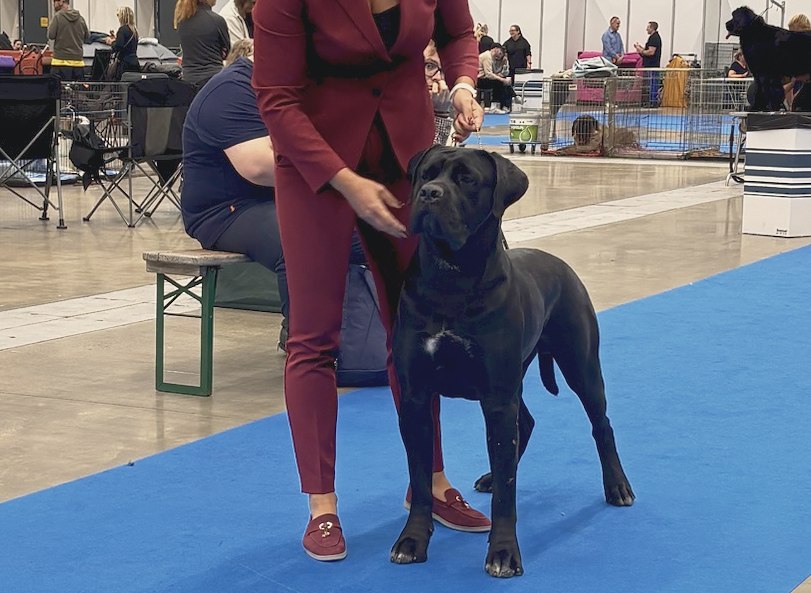
Every registry sets its own classes, minimum ages and eligibility rules, and individual shows publish their own schedules. The box below compares a few of them; read the rules for the shows you plan to enter, and check with your own kennel club.
What the kennel clubs say
AKC (USA): dogs must be at least six months old on the day of the show, of an AKC-recognized breed, AKC-registered and not spayed or neutered. AKC also runs a 4–6 month beginner puppy competition.
UKC (USA): offers conformation classes for altered purebred dogs as well as entire ones, and does not allow professional handlers.
Royal Kennel Club (UK): dogs must be at least six months old on the first day of the show; training can start earlier.
FCI shows: at the 2026 European Dog Show in Sweden, run under FCI regulations and the Swedish Kennel Club’s rules, the puppy class is for dogs 6–9 months and unofficial, the junior class 9–18 months, and the intermediate, open, working and champion classes start at 15 months. Some FCI shows also hold a minor puppy class: at the 2025 World Dog Show in Finland it was for dogs 5 to under 7 months, with the puppy class at 7 to under 9 months. Check the schedule of each show.
Other national clubs, such as the CKC in Canada and Dogs Australia, publish their own classes and age limits.
Source: AKC · UKC · Royal Kennel Club · European Dog Show 2026 (FCI/SKK) · World Dog Show 2025. National kennel clubs may set stricter rules; always check with your own kennel club.
Last updated: November 8, 2026
Rules last checked: November 8, 2026
We checked this page against the official sources listed below on the date above. Rules can change after that date, and no single page can cover every situation, so something that matters to you may have been amended since, or may not be covered here at all. Before you rely on it, check these as well:
- Your registry: the current show rules, classes and eligibility requirements
- The show schedule: classes offered, closing dates and any health or vaccination rules for that event
- Travel to another country: entry rules for foreign-registered dogs and the animal health rules for the journey
Last updated: November 8, 2026
Start with the right kind of show
The Royal Kennel Club describes a ladder of show levels: companion shows are relaxed fundraising events, open shows are a common first step for registered pedigree dogs, and championship shows are the highest level. AKC links beginners to its match program and a 4–6 month beginner puppy competition. Matches and small local shows are a low-pressure way to find out how your dog copes before you travel far or enter a big event.
Handling classes and ringcraft
AKC suggests attending a show first and then taking a handling class at a local club. The Royal Kennel Club strongly recommends ringcraft classes, which teach the basics: walking calmly on a lead, standing for the judge, and being examined by a stranger.
What to practice at home, in short sessions with food rewards:
- Stacking. Standing still in the position your breed is shown in, for a few seconds at first.
- Gaiting. Trotting on a loose lead in a straight line, a triangle and back to the judge.
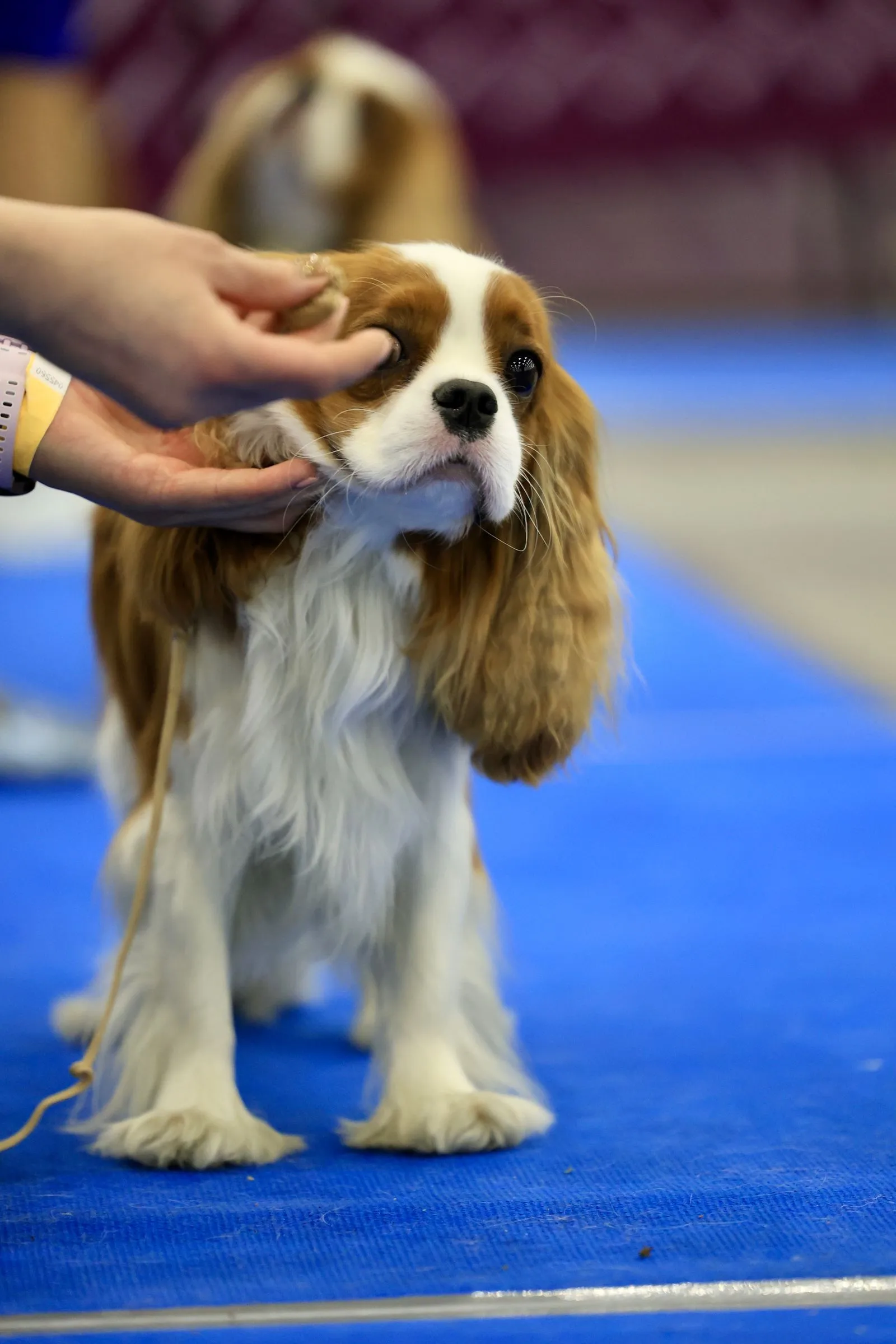
- The judge’s exam. Being touched all over by a stranger, with the lips lifted to show the bite, and for males, a hand checking that both testicles are present.
- Being on a table, for small and medium breeds.
- Show environments. Crates, crowds, applause, clippers and dryers.
This builds on the early handling and socialization a puppy should have from its breeder. The American Veterinary Society of Animal Behavior notes that the first 12 weeks are the most important window for socialization and that poor socialization increases the risk of later fear and avoidance. A puppy that has learned that new people and places are good news is much easier to show.
Health on show day
Shows bring many dogs from many places together indoors. The American Veterinary Medical Association lists dog shows and agility events among higher-risk settings for canine influenza during outbreaks, and notes that infected dogs can spread the virus before they show signs and for up to four weeks.
- Vaccinations up to date, and ask your veterinarian which optional vaccines make sense for a show dog where you live.
- Your own water and bowl, and no shared toys.
- Stay home if your dog is coughing or sneezing, and tell the club if illness follows a show.
- Watch the temperature. Benching areas, parked cars and summer rings can get hot.
Do not show a bitch who is in whelp or nursing a litter, and check your registry’s rules for bitches in season.
In practice
A breeder keeps a promising eight-month-old for herself and enters a local open show. At the first class the young dog freezes when the judge reaches for its mouth. She withdraws from the next show, goes back to weekly ringcraft, and asks friends to practice the exam at home with treats. Two months later the dog stands happily for the judge, and she still counts the first show as a success: it showed her what to practice.
(Illustrative, composite scenario.)
What to bring
- Entry confirmation, registration details and vaccination record
- Show lead, crate and mat, water and bowl, treats and poop bags
- Grooming kit appropriate for your breed, and a towel
- Shade and cooling in summer, warm bedding in winter
- Your own food and water, and something to sit on
Work on it
A few minutes here will teach you more than re-reading the article.
Ask yourself
- Does my young dog enjoy being touched by strangers?
- Can it trot on a loose lead past other dogs?
- Do I know my registry’s entry rules?
Find out & check
- Find the nearest handling or ringcraft class and the next match or small show.
Do one thing
- Ask a friend to do a “judge’s exam” with treats three times this week.
Was this article helpful?
Anonymous. We do not store your name, email or IP address.
Sources & further reading
- American Kennel Club — Conformation. akc.org
- The Royal Kennel Club — New to dog showing? royalkennelclub.com
- United Kennel Club — Conformation. ukcdogs.com
- American Veterinary Medical Association — Canine influenza. avma.org
- American Veterinary Society of Animal Behavior (2008) — Position statement on puppy socialization. avsab.org
- The Royal Kennel Club (2022) — Beginner’s guide to dog showing. royalkennelclub.com
- Swedish Kennel Club (SKK) — European Dog Show 2026: classes. skk.se
- World Dog Show 2025, Finnish Kennel Club — Classes. wds2025.fi
Where evidence is limited, recommendations rest on established practice and expert judgment, and may be updated as knowledge develops. Show rules change; always check the current rules of the registry and show you are entering.
Next steps
- Read next: Tracking conformation and working results.
- Related: Breed purpose and function · Infection control and biosecurity for the litter.
- Return to the guide: Breeding goals and strategy.