Evaluating breeding stock is the moment all the separate assessments — type, conformation, temperament, health — come together into a single honest judgment: should this dog be bred, and to what? It is also where breeders most often deceive themselves. This guide is about reaching a whole, honest verdict on a dog, and about the discipline that makes it possible.
The most important first
- A breeding verdict weighs the whole dog, not its best feature.
- Every dog has faults; the question is which you can live with and which you must fix.
- “Kennel blindness” is the default — build habits that push back on it.
- Judge a dog by what it produces, too, not only how it looks.
- Loving a dog and breeding a dog are two decisions — keep them apart.
How to evaluate breeding stock as a whole
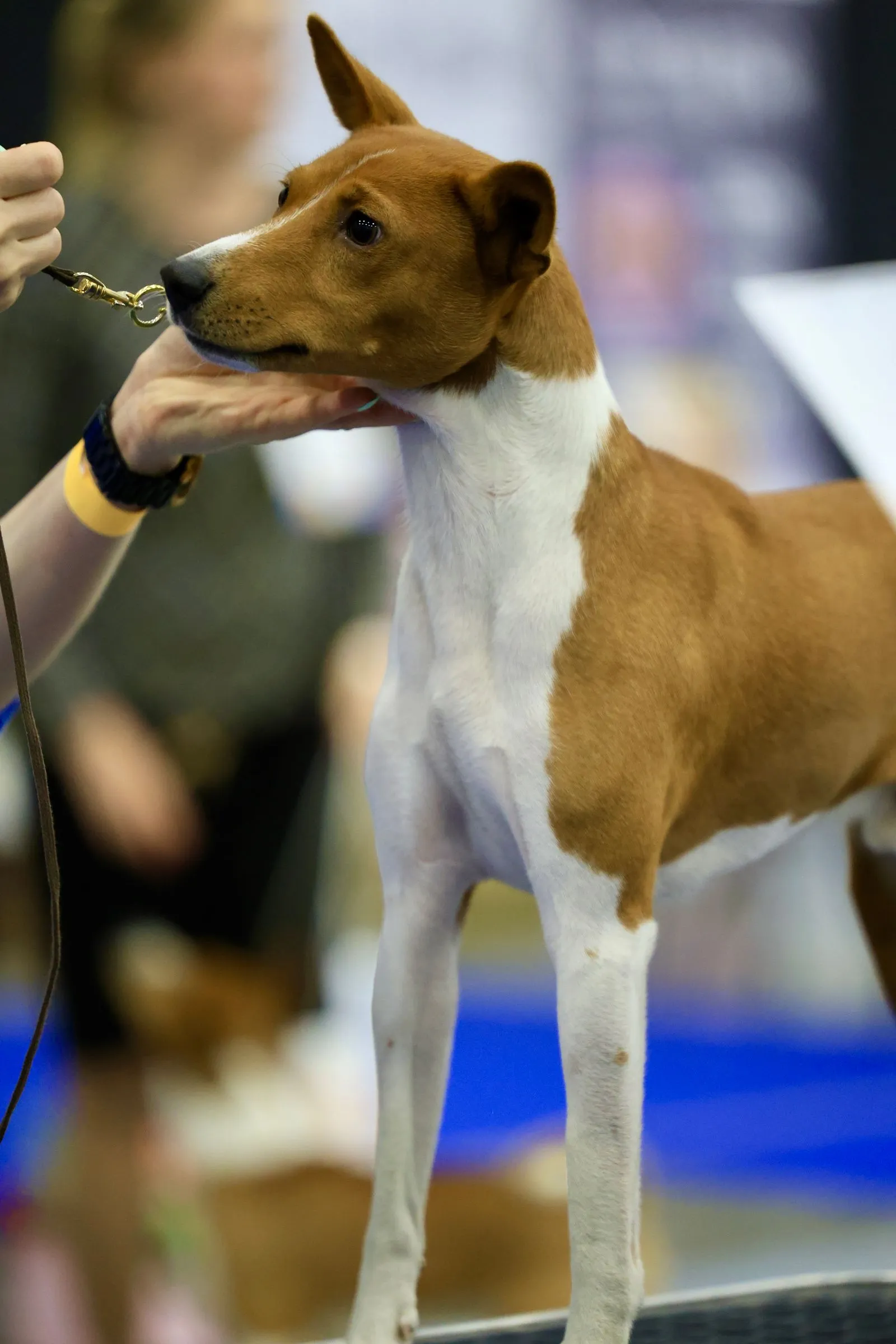
A dog is not its best feature. Evaluating breeding stock means holding health, temperament, type, conformation and function together and asking what the dog is, on balance, and what it would bring to a mating. A stunning mover with a poor temperament, or a lovely head on an unsound body, is not a “yes” with an asterisk — it’s a dog whose faults have to be weighed honestly against its virtues, in light of your goals. The point isn’t to find a perfect dog; there aren’t any. It’s to know this dog truly enough to breed it well or not at all.
Faults: which to accept, which to fix
Since no dog is faultless, evaluation is really the art of choosing which faults you can carry and which you must breed away from. That decision follows your priorities: a fault in a non-negotiable (functional health, screening results, temperament) is disqualifying; a fault in a preference may be acceptable if paired with a mate that complements it. Naming faults precisely — not “a bit weak behind” but “short upper arm, steep croup” — is what lets you fix them, because you can then choose a mate who is genuinely strong exactly there.
For health, rely on evidence rather than impressions. Find out which screening tests your breed club recommends — in the US, the OFA’s CHIC program lists them breed by breed — and read the actual results in the open registry. A CHIC number only shows that the required tests were done and published; it does not mean the results were normal. For temperament, the FCI is explicit: a dog with excessive fearfulness or aggression without provocation should not be bred.
In practice
A breeder adores their young bitch and would call her “faultless” if asked. Forced to list faults precisely for a mentor, they find three — and immediately understand what to look for in a stud. The honesty didn’t diminish the dog; it made her breedable with a plan.
(Illustrative, composite scenario.)
Kennel blindness, and how to beat it
The hardest part of evaluation is not knowledge but honesty about the animals we love. Kennel blindness — first met in the foundation — is the slow drift into seeing your dogs as better than they are. It isn’t a flaw of character; it’s the default, and it needs active countermeasures: written goals and faults, outside eyes you actually listen to, health data over impressions, and a willingness to say “not this one” about a dog you adore. Judging a dog also by what it produces — not just how it looks — is one of the most honest checks of all.
In practice
A dog wins well and the breeder is sure he’s their best sire. Looking coldly at his offspring across several litters, though, a pattern of soft toplines appears. The dog is lovely; his breeding record is telling a quieter, more honest story — and a good breeder listens to it.
(Illustrative, composite scenario.)
Look beyond the individual dog
A single dog’s results are only part of the picture. Siblings, parents and offspring tell you more about what a dog is likely to pass on. Where estimated breeding values exist — for example, the Royal Kennel Club’s hip and elbow EBVs — they combine relatives’ results and are a better guide than one dog’s score alone; check their confidence level. Avoid deciding on a single DNA test: excluding every carrier of one condition can narrow the gene pool and raise the frequency of other problems. A carrier can often be bred safely to a mate tested clear, with your vet’s or breed club’s guidance.
Reproductive soundness
Being able to mate, whelp and raise a litter naturally is part of fitness to breed. The FCI recommends retiring bitches that cannot whelp naturally or care for their puppies, and advises against using artificial insemination to compensate for a dog’s physical inability to mate. Discuss your dog’s reproductive history with your veterinarian before planning another litter.
Talk to your vet when planning: review screening results and general health before any breeding decision, and discuss any bitch with a difficult whelping, cesarean or problems caring for a previous litter.
Work on it
A few minutes here will teach you more than re-reading the article.
Ask yourself
- Can I list my favorite dog’s real faults as precisely as its virtues?
- Do I weigh the whole dog, or let one outstanding feature carry my verdict?
- Am I judging my dogs by what they produce, not only how they look?
Find out & check
- Find out how your best dog’s offspring have actually turned out, across litters.
- Check your own verdicts against a mentor willing to disagree with you.
Do one thing
- Write an honest, whole-dog evaluation of one breeding animal — virtues and precise faults — and share it with someone who’ll be straight with you.
Was this article helpful?
Anonymous. We do not store your name, email or IP address.
Sources & further reading
- Fédération Cynologique Internationale — International Breeding Strategies. fci.be
- The Royal Kennel Club — The Kennel Club code of ethics. royalkennelclub.com
- Orthopedic Foundation for Animals — CHIC Program. ofa.org
- The Royal Kennel Club — Estimated breeding values (EBVs). royalkennelclub.com
- Farrell LL, Schoenebeck JJ, Wiener P, Clements DN, Summers KM (2015) — The challenges of pedigree dog health: approaches to combating inherited disease. Canine Genetics and Epidemiology 2:3. link.springer.com
- MacLean EL, Snyder-Mackler N, vonHoldt BM, Serpell JA (2019) — Highly heritable and functionally relevant breed differences in dog behaviour. Proceedings of the Royal Society B 286:20190716. doi.org
- Ilska J, et al. (2017) — Genetic characterization of dog personality traits. Genetics 206:1101–1111. doi.org
Where evidence is limited, recommendations rest on established practice and expert judgment, and may be updated as knowledge develops.
Next steps
- Read next: Pedigree and family analysis.
- Related: Setting breeding goals · Becoming a responsible breeder.
- Return to the area hub: Building a breeding program.