If you walk your dog near pine trees in southern Europe in late winter, or near oaks in parts of the UK and northern Europe in early summer, you may meet lines of hairy caterpillars crossing the path — and they are one of the most urgent dangers a curious dog can find.
The most important first
- Pine processionary caterpillars are mainly active from January to May; oak processionary caterpillars from April to July.
- Their hairs sting: dogs are usually hurt in the mouth, by licking or picking up caterpillars.
- Tongue swelling and necrosis (tissue death) are the main dangers.
- Time matters: the sooner a dog is treated, the better the outcome.
- Keep your dog away from processions, nests and the ground beneath infested trees.
Last updated: November 8, 2026
Last updated: November 8, 2026
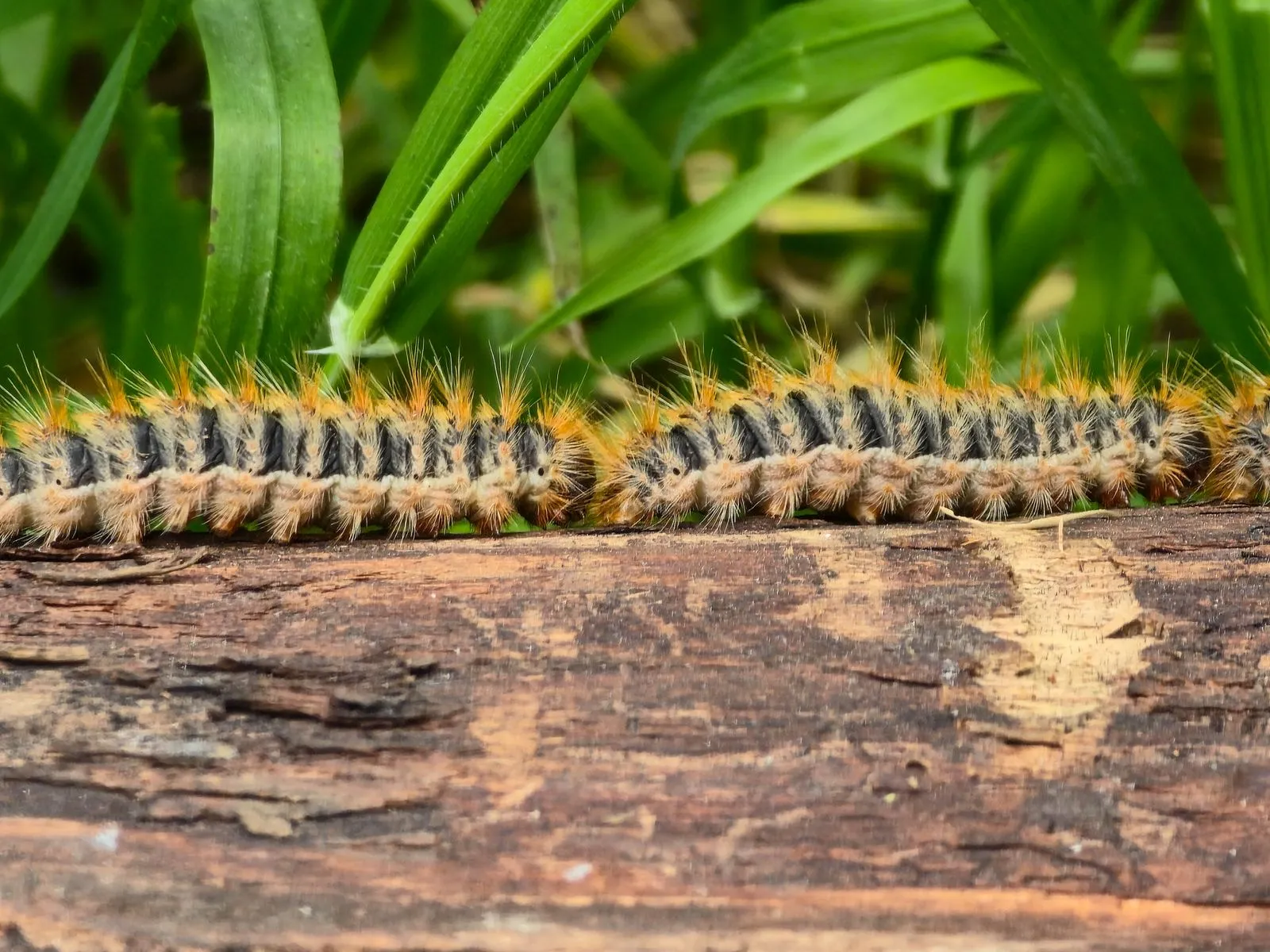
Two caterpillars, two seasons
France’s food and environmental safety agency, ANSES (2024), describes two species:
- Pine processionary (Thaumetopoea pityocampa): orange-brown caterpillars that feed on pines, Atlas cedar and related trees. In France the risk is mainly from January to May, with some activity from October to December in oceanic regions.
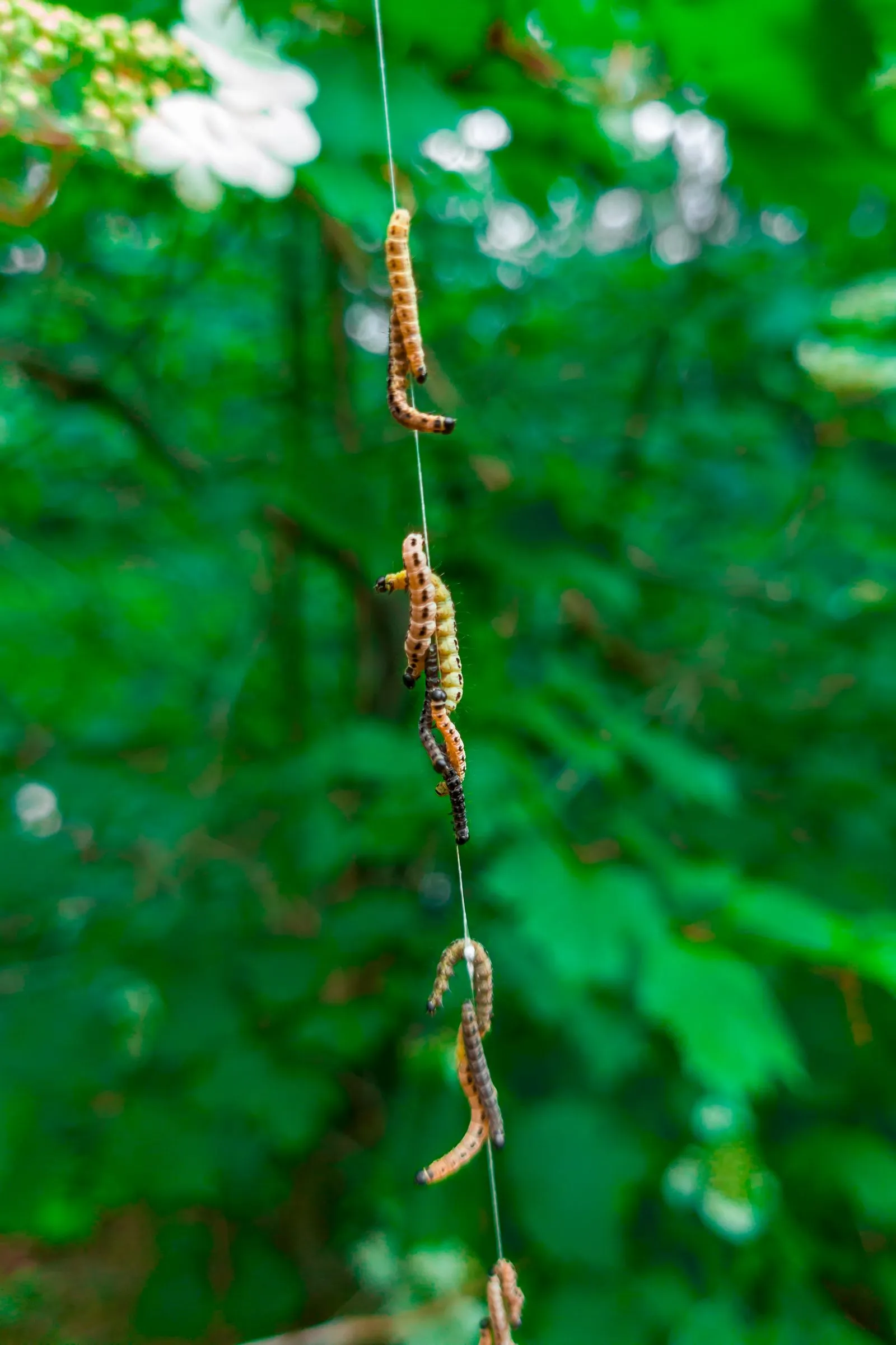
- Oak processionary (Thaumetopoea processionea): silvery-grey caterpillars on deciduous oaks, mainly from April to July.
The pine species is widespread around the Mediterranean, and Kaszak and colleagues (2015) note that a related species is also present in Poland, especially near the Baltic coast. In the UK, Forest Research reports that the greatest risk from oak processionary caterpillars is May to July — but hairs can stay on old nests and be blown about at any time of year.
Why they are so dangerous for dogs
The caterpillars are covered in tiny stinging hairs. ANSES reports that almost all animal cases in France involved the pine species, that dogs accounted for about 92% of cases, and that injuries are mainly in the mouth, often from licking or eating caterpillars. Forest Research adds that dogs can pick up hairs on their paws and then lick them off.
In a study of 109 dogs treated at a French veterinary school, Pouzot-Nevoret and colleagues (2017) found:
- Tongue lesions — from swelling to severe necrosis — in 86% of dogs.
- Vomiting in almost half, and breathing difficulty in a few.
- 97% survived, but over a third of those followed up had permanent tongue damage.
- Timing was crucial: dogs treated more than 6 hours after contact were far more likely to develop tongue necrosis, and the best results came when treatment began within 6 hours.
In a Portuguese study of 41 dogs, Niza and colleagues (2012) found that all dogs drooled, had difficulty swallowing and showed signs of pain, and concluded that treatment should ideally begin within 2 hours of contact.
The eyes can be affected too. In a study of 140 dogs in Spain, Costa and colleagues (2016) described inflammation of the cornea and inside the eye after contact with caterpillar hairs; almost all cases resolved with treatment.
Signs to watch for
- Sudden drooling, pawing at the mouth or licking the lips.
- A swollen tongue, lips or face; a tongue that looks pale, dark or blotchy.
- Difficulty swallowing, vomiting or signs of pain.
- Breathing difficulty.
- Red, painful or squinting eyes after a walk near pines or oaks.
In practice
A family walking their young Labrador in a pine park in southern Spain in February sees him sniff at a line of caterpillars. Minutes later he starts drooling and pawing at his mouth. They carry him back to the car without touching his mouth with bare hands, call the nearest vet on the way and are seen within the hour. His tongue is swollen but heals over the following weeks.
(Illustrative, composite scenario.)
Prevention
ANSES and Forest Research advise:
- Keep pets away from caterpillars and nests, and avoid trees with nests.
- Use a lead in parks and woods with pines or oaks during the season, and train working dogs to leave caterpillars alone.
- Don’t touch caterpillars or nests yourself — have nests in your garden removed by a professional.
- Watch the ground, not just the trees: caterpillars travel in lines across paths and lawns.
If you travel with your dog to southern Europe in late winter or spring, ask about local processionary activity before walking in pine areas. See also Garden dangers for dogs.
When to call your veterinarian
- Immediately if your dog may have touched, licked or eaten a processionary caterpillar or nest — don’t wait for signs to get worse.
- Any sudden swelling of the tongue, lips or face, or breathing difficulty.
- Red, painful eyes after a walk near infested trees.
- Tell the vet you suspect processionary caterpillars, as Forest Research advises.
- If in doubt, call — your vet would rather hear from you early.
Work on it
A few minutes here will teach you more than re-reading the article.
Ask yourself
- Are there pines or oaks on my regular walks?
- Would my dog leave a caterpillar if I asked?
- Do I know the nearest emergency vet on my walking routes?
Find out & check
- Save your vet’s emergency number and the nearest out-of-hours clinic in your phone.
Do one thing
- Practice a reliable “leave it” before the season starts.
Was this article helpful?
Anonymous. We do not store your name, email or IP address.
Sources & further reading
- ANSES (2024) — Beware of stinging hairs from processionary caterpillars! anses.fr
- Forest Research — OPM Manual 2: Public and animal health advice. forestresearch.gov.uk
- Pouzot-Nevoret C, Cambournac M, Violé A, et al. (2017) — Pine processionary caterpillar Thaumetopoea pityocampa envenomation in 109 dogs: a retrospective study. Toxicon 132:1–5. doi.org
- Niza ME, Ferreira RL, Coimbra IV, et al. (2012) — Effects of pine processionary caterpillar Thaumetopoea pityocampa contact in dogs: 41 cases (2002–2006). Zoonoses and Public Health 59:35–38. doi.org
- Costa D, Esteban J, Sanz F, Vergara J, Huguet E (2016) — Ocular lesions produced by pine processionary caterpillar setae (Thaumetopoea pityocampa) in dogs: a descriptive study. Veterinary Ophthalmology 19:493–497. doi.org
- Kaszak I, Planellas M, Dworecka-Kaszak B (2015) — Pine processionary caterpillar, Thaumetopoea pityocampa Denis and Schiffermüller, 1775 contact as a health risk for dogs. Annals of Parasitology 61:159–163. doi.org
Where evidence is limited, recommendations rest on established practice and expert judgment, and may be updated as knowledge develops. This is general information and does not replace advice from your veterinarian.
Next steps
- Read next: Garden dangers for dogs.
- Related: A first aid kit for dog owners · Bee and wasp stings.
- Return to the guide: For your puppy buyers.