If your dog suddenly leaves drifts of fur on the floor every spring and fall, you are probably watching a seasonal shed — normal, healthy and, for double-coated breeds, often dramatic.
The most important first
- Seasonal shedding is normal: many dogs shed most in spring and fall.
- It usually lasts a few weeks to a couple of months.
- Brush more often during the shed, with tools that suit the coat.
- Don’t shave a double coat to stop shedding — it doesn’t, and it can damage the coat.
- See your vet if you see bald patches, itching, sores or a dull, thin coat.
Last updated: November 11, 2026
Why dogs shed with the seasons
According to the American Kennel Club (AKC), dogs that shed seasonally lose most hair in spring, when they drop their heavier winter coat, and in fall, when they shed lighter hair to make way for thicker insulation. The AKC explains that changes in daylight and temperature trigger hormonal responses that signal the coat to change, and that a shedding season typically lasts a few weeks to a couple of months.
Not every dog follows the calendar. The AKC notes that dogs kept indoors with steady artificial light and temperature may shed lightly all year, and that dogs in warmer climates may shed year-round rather than only in spring and fall. Some thick double-coated breeds, such as Golden Retrievers, are more likely to shed all year.
Double coats and “blowing coat”
A double coat has an outer layer of guard hairs and a soft, dense undercoat. A veterinarian writing for Vetster (Myers, 2024) explains that double-coated breeds often “blow” their undercoat in the spring and fall, losing it in large amounts. It can look alarming, but normal shedding leaves healthy skin underneath.
What helps
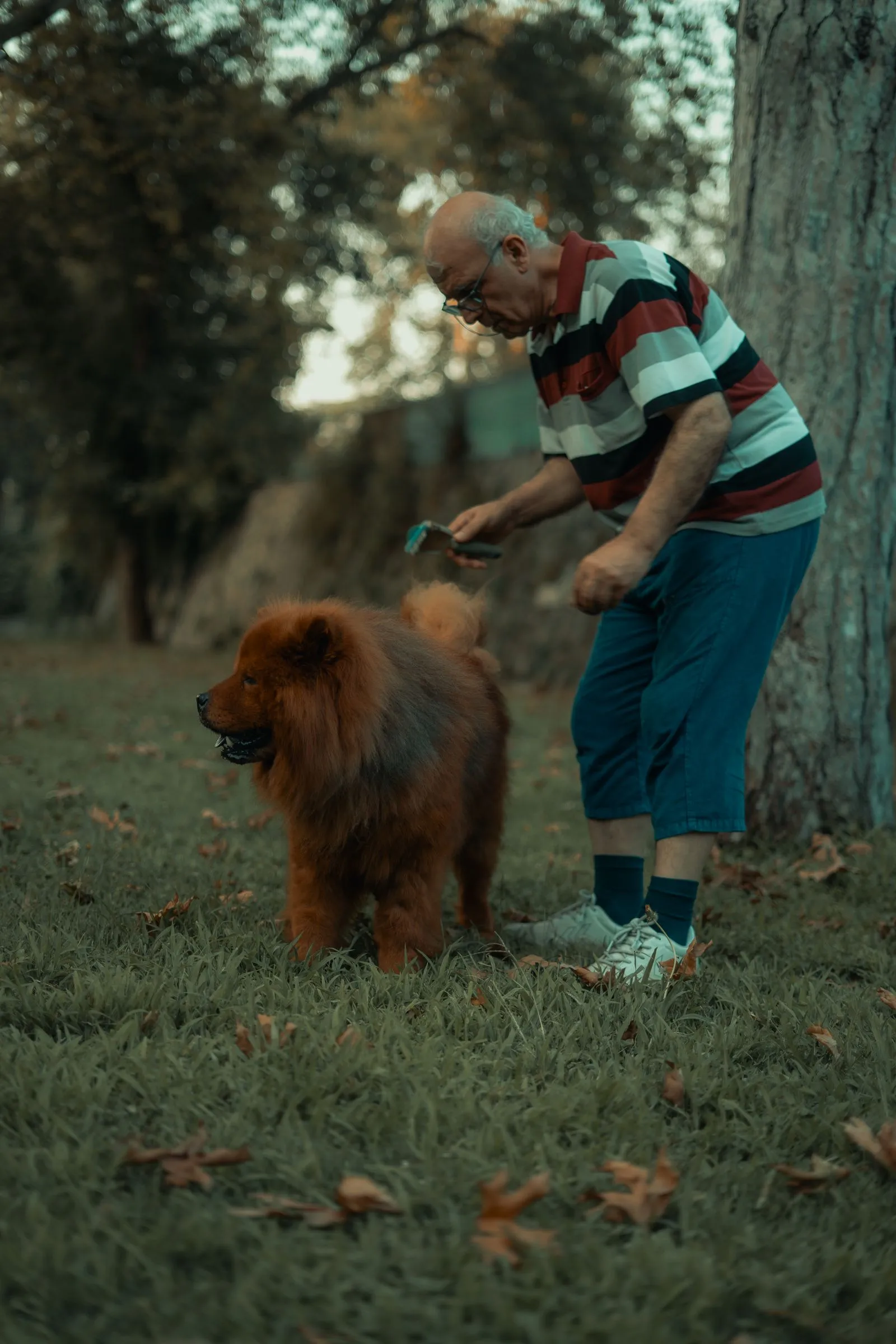
Brush more often. A guide from Purdue University’s Canine Welfare Science team (Croney, 2026) suggests brushing dogs with thick undercoats once or twice a week, and more during the spring and fall sheds. The AKC suggests that heavy shedders may need brushing several times a week, or daily, at the peak.
Use the right tools:
- Short coats: a natural-bristle brush or grooming glove (AKC).
- Double coats: a slicker brush followed by a comb, and a coat rake or de-shedding tool at the peak of the shed (AKC). Purdue warns that de-shedding tools can irritate or cut the skin if used carelessly.
- Mats: small mats can often be worked out slowly by hand; leave large or tight mats to a groomer or vet (Purdue).
Make brushing pleasant. Purdue recommends getting puppies used to brushing early, keeping sessions short, brushing when the dog is relaxed — after a walk, for example — and pairing it with treats.
Bathe sensibly. The AKC advises not to overdo baths, as frequent bathing can dry the skin and coat; a de-shedding shampoo when the dog actually needs a bath can help.
Groom indoors in spring. Vetster advises against brushing double-coated dogs outdoors in spring, as loose fur can harm nesting birds and other wildlife — a contained space such as a bathroom is easier to clean.
Why shaving isn’t the answer
The AKC advises against shaving a double coat. Shaving doesn’t stop shedding, and it can damage the topcoat, raise the risk of skin problems and sunburn, and harm the undercoat that insulates the dog in winter and keeps the skin cool in summer. Regrowth after clipping can also be slow and uneven: in a study of Siberian Huskies, Diaz and colleagues (2006) found that two months after clipping, hair on the lower back had regrown proportionally less than on the thighs, and neither brushing nor a topical melatonin treatment sped up regrowth. See also Summer heat and dogs.
When it isn’t just shedding
Vetster lists signs that hair loss may be more than normal shedding:
- Bald patches or unusually thin areas.
- Itchy, red, flaky, crusty or sore skin, or a bad smell.
- A dull coat or broken hairs.
Possible causes include skin infections, allergies, parasites such as fleas, stress, poor nutrition, hormonal disorders and genetic skin conditions. The AKC adds hypothyroidism and allergies to the list of conditions to rule out. Some breeds have specific problems: in a study of 211 Pomeranians in the Netherlands and Belgium, van Hensbergen and colleagues (2025) found that males and dogs with a woolly coat were more likely to develop alopecia X, a non-itchy hair loss caused by the hair cycle stopping.
In practice
A family’s young Shiba Inu starts losing tufts of undercoat in April, and their sofa disappears under fur. Their breeder explains that he is blowing his coat, shows them how to use a slicker brush and comb, and suggests short daily sessions with treats in the bathroom. Three weeks later the shed is over — and the skin underneath was healthy throughout.
(Illustrative, composite scenario.)
When to call your veterinarian
- Bald patches or thinning areas.
- Itching, red or sore skin, scabs, flakes or a bad smell.
- A dull or brittle coat that doesn’t improve after the shed.
- Hair that doesn’t grow back months after clipping.
- If in doubt, call — your vet would rather hear from you early.
Work on it
A few minutes here will teach you more than re-reading the article.
Ask yourself
- Does my dog have a single or a double coat?
- Do I have the right tools for that coat?
- What does the skin look like under the loose hair?
Find out & check
- Ask your breeder or groomer to show you how to brush your dog’s coat properly.
Do one thing
- Book short brushing sessions into your week before the next shed begins.
Was this article helpful?
Anonymous. We do not store your name, email or IP address.
Sources & further reading
- American Kennel Club — Dog shedding: what to expect and how to manage it. akc.org
- American Kennel Club (Meyers H) — How to groom a double-coated dog. akc.org
- Vetster (Myers J, 2024) — Is your dog’s spring shedding normal? vetster.com
- Croney CC (2026) — Dog brushing and coat care. Purdue University Canine Welfare Science. caninewelfare.centers.purdue.edu
- Diaz SF, Torres SM, Nogueira SA, Gilbert S, Jessen CR (2006) — The impact of body site, topical melatonin and brushing on hair regrowth after clipping normal Siberian Husky dogs. Veterinary Dermatology 17:45–50. doi.org
- van Hensbergen I, van den Broek J, van Amersfort K, van der Lee A (2025) — Evaluation of phenotypic risk indicators for the development of alopecia X (hair cycle arrest) in Pomeranian dogs in the Netherlands and Belgium. Veterinary Dermatology 36:196–204. doi.org
Where evidence is limited, recommendations rest on established practice and expert judgment, and may be updated as knowledge develops. This is general information and does not replace advice from your veterinarian.
Next steps
- Read next: Seasonal allergies in dogs.
- Related: Fleas on puppies and dogs · Dog sunburn and sun protection.
- Return to the guide: For your puppy buyers.