Three specific postpartum conditions account for most genuine emergencies in the weeks after whelping — knowing their distinct signs means you can act on the right one quickly, rather than treating every symptom the same way.
The most important first
- Mastitis: a hot, hard, painful mammary gland, sometimes with fever and refusal to nurse from that gland — needs antibiotics.
- Metritis: foul-smelling discharge with fever and lethargy, most often following a difficult or assisted whelping or retained tissue — needs antibiotics and possibly more.
- Eclampsia: restlessness and muscle tremors progressing toward seizures, most common 1–4 weeks postpartum in small breeds with large litters, though it can occur in any breed and even late in pregnancy or during whelping — this is a true emergency requiring immediate IV calcium.
- Don’t give oral calcium supplements during pregnancy “just in case” — current evidence suggests this may increase eclampsia risk rather than prevent it.
- All three conditions can deteriorate quickly; when in doubt, call rather than wait to see if it resolves.
Mastitis: infection of the mammary gland
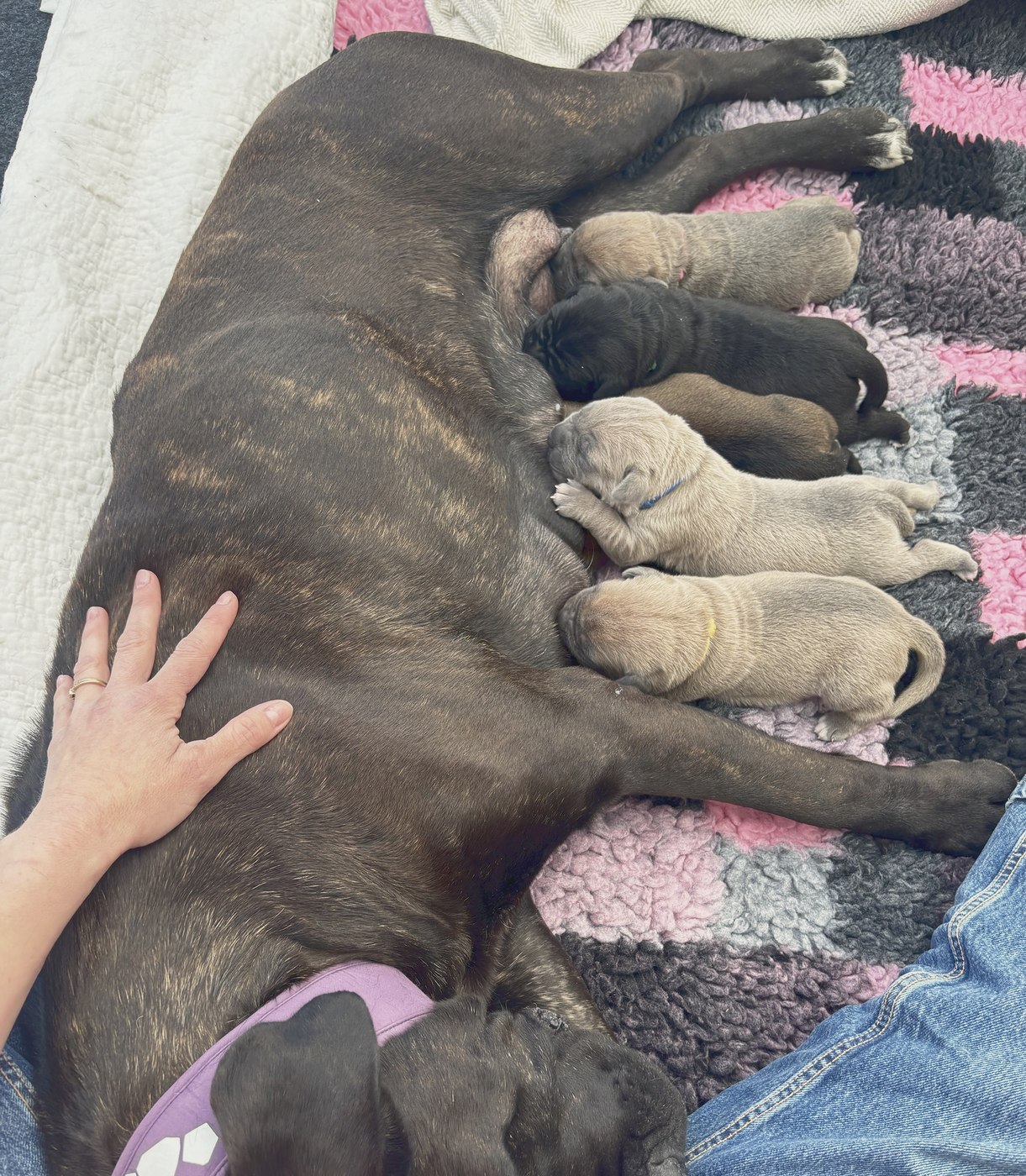
Watch for a mammary gland that’s firm, hot, and painful to the touch, sometimes alongside fever, loss of appetite, and the dam refusing to let puppies nurse from that particular gland. Milk from an affected gland can range from looking normal to blood-tinged or visibly abnormal. It’s usually bacterial, and treatment is a course of antibiotics alongside warm compresses; your vet will advise whether the puppies should keep feeding from the affected gland. Often it is gently milked out by hand while the puppies use the others. A gland that’s ruptured, forming an abscess, or showing dead (necrotic) tissue is a surgical emergency, not something to manage with antibiotics alone.
Mastitis can spread to other glands and, in severe cases, lead to a blood infection (sepsis). A dam with a sore gland who is also quiet, feverish (above 103 °F / 39.5 °C) or off her food needs to be seen that day. Some mild cases show no obvious gland changes at all, and the only clue is puppies that stop gaining weight. Keeping the bedding clean and the puppies’ nails trimmed, and checking every day that all glands are being suckled, helps prevent it.
Metritis: infection of the uterus
Metritis typically shows as foul-smelling, dark discharge alongside fever, lethargy, loss of appetite, and reduced milk production — a marked change from the normal lochia covered in the dam’s first 24 hours, which shouldn’t smell foul or increase in volume at any point in the weeks after whelping. Metritis most often follows a long, difficult or assisted whelping, or fetal or placental tissue left in the uterus; a missing placenta on its own is a less common cause. Any discharge that starts to smell or increase is a reason to call. Treatment is guided by culture results where possible, combined with supportive care such as IV fluids, and medication (oxytocin or, in a hospital setting, other uterine-clearing drugs) to help the uterus expel any remaining contents.
Eclampsia: a true emergency
Eclampsia — dangerously low blood calcium, also called puerperal tetany — most commonly appears 1 to 4 weeks postpartum, during the period of peak lactational calcium demand, and is significantly more common in small breeds with large litters. It progresses from restlessness and heavy panting, to a stiff gait and visible muscle tremors, and without treatment can progress further to seizures and a dangerously high temperature. This progression can happen quickly, which is why eclampsia is treated as a true emergency rather than something to monitor overnight. It usually appears in the first month of nursing, most often around two to three weeks, but it can also happen late in pregnancy or during whelping, and can occur in any breed or litter size.
While you get her to the vet
Take the puppies away from her so they stop drawing milk, keep her somewhere calm and quiet, and go straight to your vet or nearest emergency clinic. Do not try to give calcium tablets or liquid by mouth to a dog that is trembling, stiff or seizing. It works far too slowly and she could choke. If she feels very hot, ask the clinic on the phone how to cool her safely on the way.
After treatment
Once she is stable, your vet will usually ask you to keep the puppies off her for about 12–24 hours and hand-feed them. Depending on their age, the vet may suggest supplementing or starting weaning early. Eclampsia tends to come back in later pregnancies, so record it in her breeding file and discuss it with your vet before planning another litter.
In practice
A breeder of a small-breed dam with a large litter notices restlessness and heavier panting than usual about two weeks after whelping, and initially assumes the dam is just tired from nursing. Recognizing this specific combination — small breed, large litter, this stage postpartum, restlessness and panting — as a possible early sign of eclampsia, rather than ordinary tiredness, is what prompts a same-day vet visit instead of a wait-and-see approach.
(Illustrative, composite scenario.)
A note on calcium supplementation
It may seem intuitive to supplement calcium during pregnancy to prevent eclampsia later, but current veterinary guidance suggests the opposite — supplementing calcium before whelping can suppress the body’s own calcium-regulating hormone response, potentially making eclampsia more likely rather than less. Calcium supplementation is appropriate during lactation, and especially after an eclampsia episode, but should be a decision made with your vet rather than a precaution taken independently during pregnancy.
Prevention is mostly about feeding: a complete lactation diet offered freely, fresh water at all times, and, for big litters, supplementing the puppies with milk replacer and offering solid food from around three to four weeks to reduce the drain on the dam.
When to call your vet
- Restlessness, heavy panting, a stiff gait, trembling or seizures in a nursing dam: possible eclampsia. Take the puppies off her and go now.
- A gland that is hot, hard, painful or discolored, especially if she is also quiet or off her food.
- A temperature above 103 °F (39.5 °C) at any point after whelping.
- Discharge that smells foul or increases at any point in the weeks after whelping.
- She stops eating, vomits, seems lethargic or loses interest in the puppies.
- Puppies stop gaining weight or cry constantly: sometimes the only sign of mastitis or low milk.
- If in doubt, call — your vet would rather hear from you early.
Work on it
A few minutes here will teach you more than re-reading the article.
Ask yourself
- Would I recognize the distinct early signs of each of these three conditions, rather than treating all postpartum symptoms the same?
- Does my breed or this litter size put the dam at elevated eclampsia risk?
- Am I clear that calcium supplementation during pregnancy is generally not advised?
Find out & check
- Find out your vet’s guidance on calcium supplementation specifically for your dam, during both pregnancy and lactation.
Do one thing
- Check the dam’s mammary glands and general demeanor daily through the first month postpartum, not just in the first few days.
Was this article helpful?
Anonymous. We do not store your name, email or IP address.
Sources & further reading
- Merck Veterinary Manual — Mastitis in Small Animals. merckvetmanual.com
- Merck Veterinary Manual — Metritis in Small Animals. merckvetmanual.com
- Merck Veterinary Manual — Eclampsia in Small Animals. merckvetmanual.com
- VCA Animal Hospitals — Eclampsia in Dogs. vcahospitals.com
- Merck Veterinary Manual — Periparturient Problems in Bitches and Queens. merckvetmanual.com
- PDSA — Whelping: a guide to your dog giving birth. pdsa.org.uk
- Cornell University Riney Canine Health Center — The Normal Whelping Process. vet.cornell.edu
Where evidence is limited, recommendations rest on established practice and expert judgment, and may be updated as knowledge develops. This is general information, not a substitute for immediate veterinary care during an actual whelping emergency.
Next steps
- Read next: When to call the vet during and after whelping.
- Related: The dam’s first 24 hours after whelping · Lactation and milk production.
- Return to the area hub: Whelping: the complete guide from first contractions to recovery.