Good hygiene in the first weeks is one of the more effective, low-cost things you can do to protect a litter — and knowing where to draw the line means you don’t overcorrect into isolation that gets in the way of normal development later.
The most important first
- Isolating the dam and litter from other dogs — during the last few weeks of pregnancy and the first three weeks postpartum — meaningfully reduces exposure to serious infections like canine herpesvirus.
- Bedding should be soft, warm, easy to clean, and high-traction; avoid loose blankets (smothering risk) and materials like hay or shavings that can irritate skin or eyes.
- Limit visitors and outside-dog contact during the first three weeks specifically, since carrier dogs can shed infectious agents without showing any signs themselves.
- Keep the umbilical stump clean and dry, and check it daily for signs of swelling, discolouration, or discharge.
- After around three weeks, biosecurity can ease as deliberate human handling and socialization become genuinely important for the puppies’ development.
Why isolation in these early weeks matters
Keeping the dam and litter away from other dogs — starting in roughly the final three weeks of pregnancy and continuing through the first three weeks after whelping — is a core piece of protecting against serious infectious risks like canine herpesvirus, covered in neonatal infections and illness. This matters especially because dogs shedding infectious agents often show no outward signs of illness themselves, so “the visiting dog looks healthy” isn’t a reliable safety check.
Bedding and the whelping area
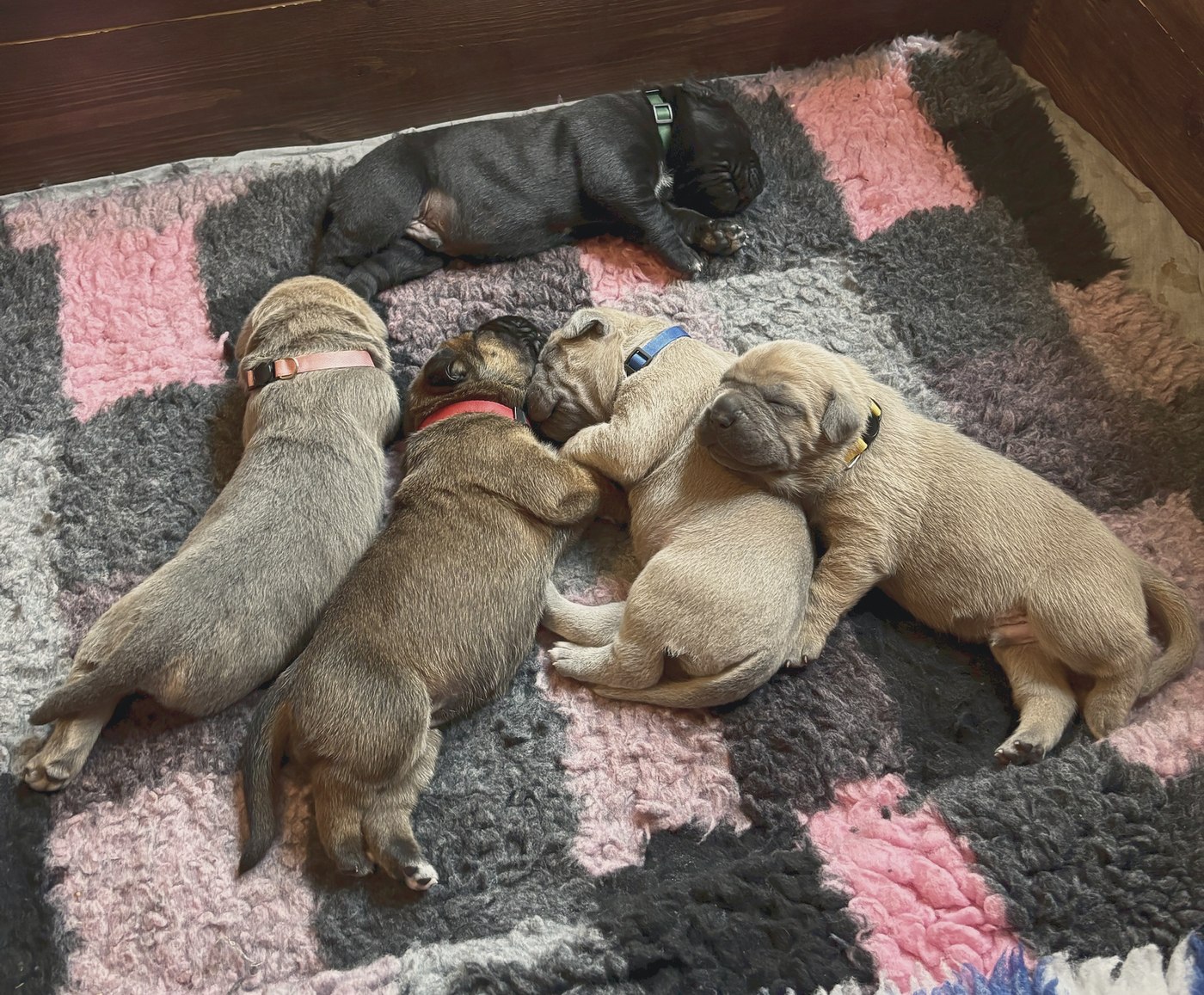
Bedding should be soft, warm, offer good traction for puppies trying to move, and be easy to clean or replace — avoid loose blankets, which carry a smothering risk, and materials like hay, straw, or wood shavings, which can irritate skin and eyes. Keeping the box’s temperature consistent, as covered in warmth and the whelping-box microclimate, is itself part of good hygiene practice, since both excess heat and excess humidity can contribute to problems beyond just discomfort.
Choose cleaning products with care. Some common viruses, parvovirus in particular, survive for months in the environment and are not reliably killed by many everyday or quaternary-ammonium disinfectants. Veterinary guidance is to remove visible dirt first, then apply a product proven against parvovirus, such as correctly diluted household bleach (roughly 1:30) or an accelerated hydrogen peroxide or potassium peroxymonosulfate product. Follow the label contact time, rinse, and let everything dry before puppies go back. Keep humidity moderate, around 55–65%. Very warm, damp air is hard on newborn lungs.
Limiting visitors and outside contact
Because infectious agents can be carried and shed by dogs that appear completely healthy, limiting visiting dogs — and being thoughtful about human visitors who’ve had recent contact with other dogs — during the first three weeks specifically reduces real exposure risk during the window when puppies are most vulnerable.
Hands are the most common route. Everyone, including you, should wash their hands before handling the puppies and after touching any other dog. Visitors who have been around other dogs should change clothes and shoes or wear clean coverings. Decide in advance where you would separate a dog or puppy that becomes unwell, away from the litter.
In practice
A breeder is asked by an excited friend to bring their own healthy-looking dog over to meet a new litter at ten days old. Understanding that a visiting dog showing no signs of illness isn’t the same as a dog carrying no infectious risk is what leads the breeder to politely decline visits from other dogs until the litter is a few weeks older, even though the visiting dog seems perfectly fine.
(Illustrative, composite scenario.)
Umbilical cord care
Keeping the umbilical stump clean and dry, and checking it daily in the first week for swelling, discolouration, or discharge, helps catch a developing infection (omphalitis) early — a stump that looks abnormal is worth mentioning to your vet promptly rather than waiting to see if it resolves.
At birth the cord is usually trimmed to about 1 cm. A healthy stump dries quickly, usually within about a day, and the skin around it should not be red. Many vets dip the stump in an iodine solution soon after birth; ask your vet which product they recommend. Redness spreading onto the belly, swelling, discharge or a smell are reasons to call your vet the same day.
Knowing when to ease off
Strict biosecurity shouldn’t run indefinitely — by around three weeks, as immune risk drops and puppies enter a period where deliberate human handling and early socialization genuinely matter for their behavioral development, it’s appropriate to start easing restrictions. The goal throughout is proportionate caution during the highest-risk window, not permanent isolation.
The herpesvirus risk falls once puppies are around three weeks old and can hold their body temperature better, so handling and early socialization can increase. Protection from the dam’s antibodies against other viruses, such as parvovirus, fades over the following weeks, before vaccination takes over. Keep up handwashing and footwear hygiene for visitors well beyond three weeks.
When to call your vet
- A puppy’s umbilical stump is red, swollen, smelly or discharging, or redness spreads onto the belly — call the same day.
- A puppy stops nursing, cries persistently, or feels cool (below about 95 °F / 35 °C in week 1).
- Diarrhea or vomiting in any puppy, or in more than one dog in the household — isolate and call.
- The dam has a fever above 103 °F (39.5 °C), a smelly discharge, or hot, hard or painful mammary glands.
- A dog in the household, or one the litter has had contact with, falls ill with an infectious-looking illness in the weeks around whelping.
- A puppy dies suddenly — keep the body refrigerated (not frozen) and ask your vet about a post-mortem.
- If in doubt, call — your vet would rather hear from you early.
Work on it
A few minutes here will teach you more than re-reading the article.
Ask yourself
- Do I have a clear policy for visitors and outside dogs during the first three weeks?
- Is my whelping area bedding both hygienic and genuinely safe (no smothering or irritation risk)?
- Do I know when to start easing restrictions in favor of socialization?
Find out & check
- Find out your vet’s specific guidance on visitor and outside-dog policy for your particular situation.
Do one thing
- Set a clear, written visitor policy for the first three weeks before your next litter arrives.
Was this article helpful?
Anonymous. We do not store your name, email or IP address.
Sources & further reading
- Merck Veterinary Manual — Canine Herpesvirus Infection. merckvetmanual.com
- American Kennel Club (with Fran Smith DVM PhD DACT) — Best Practices for Whelping & Caring for Newborn Puppies. akc.org
- Merck Veterinary Manual — Management of the Neonate in Dogs and Cats. merckvetmanual.com
- Merck Veterinary Manual — Canine Parvovirus. merckvetmanual.com
- Merck Veterinary Manual (Dog Owner version) — Canine Herpesvirus. merckvetmanual.com
- VCA Animal Hospitals — Herpesvirus in Dogs. vcahospitals.com
- The Royal Kennel Club — Welfare Standard for Adult Dogs and Puppies. royalkennelclub.com
Where evidence is limited, recommendations rest on established practice and expert judgment, and may be updated as knowledge develops.
Next steps
- Read next: Neonatal emergencies: hypothermia, hypoglycemia and fading puppy.
- Related: Neonatal infections and illness.
- Return to the area hub: The neonatal period.