Evacuating one dog is a matter of grabbing a leash; evacuating a kennel — adults, a heavily pregnant bitch, a two-week-old litter and all their records — is a logistics exercise, and the time to plan it is before hurricane, flood or wildfire season, not when the evacuation order arrives.
The most important first
- Leave early. Rapid-onset disasters leave no time to go back for animals.
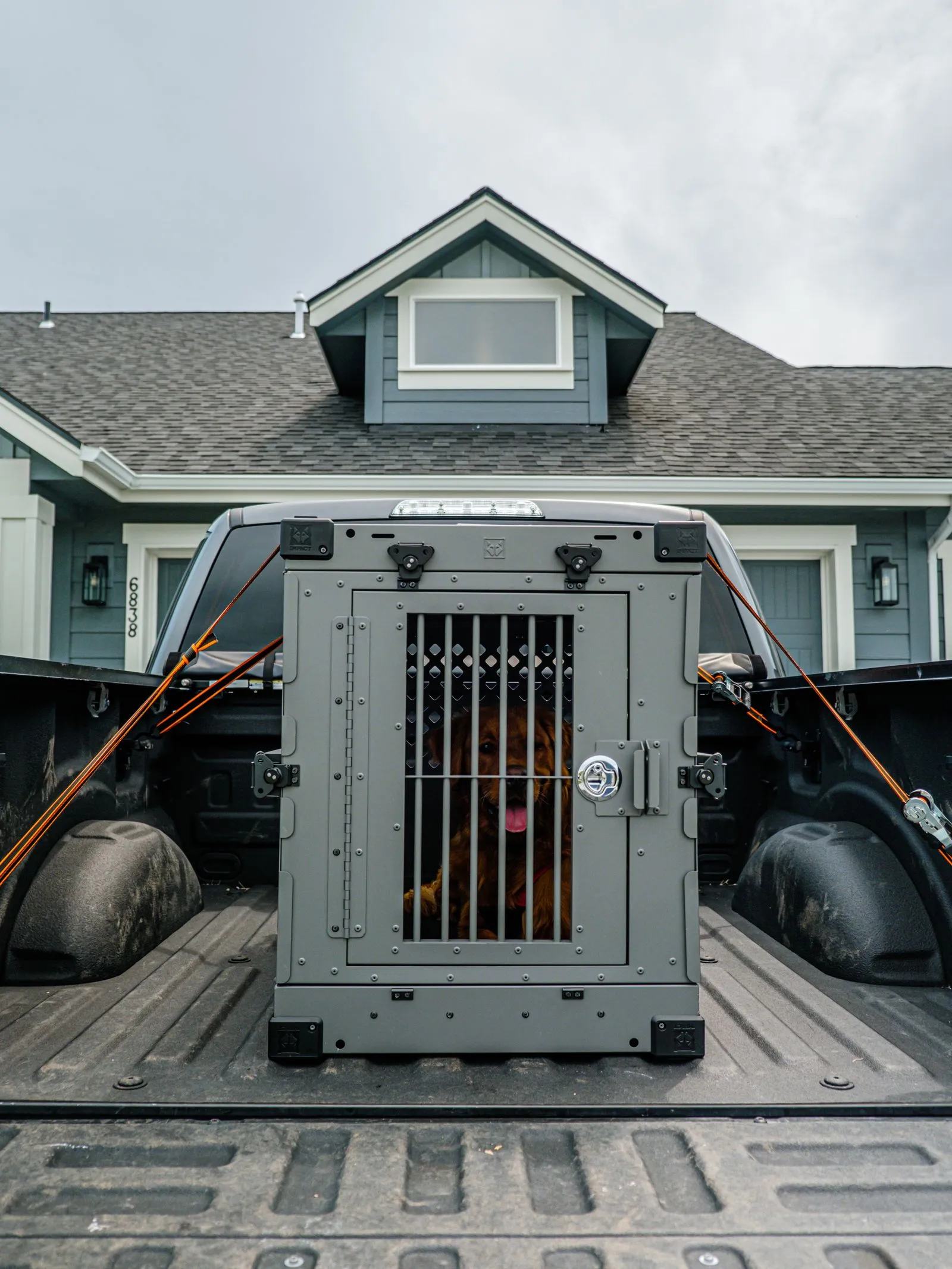
- Plan transport for every dog, with crates, and a separate plan for whelping and litters.
- Arrange destinations in advance: another breeder, a boarding kennel, a vet clinic or family outside the risk area.
- Keep records and ID ready to grab: microchip numbers, vaccination records, medication lists, photos.
- Practise loading and leaving at least once before the season.
Last updated: November 8, 2026
Why kennels need a plan
Heath and Linnabary (2015), reviewing animal issues in US disasters, write that no other factor contributing to human evacuation failure is as much under emergency managers’ control, when a threat is imminent, as pet ownership — people delay or refuse to leave without their animals. For a breeder with many dogs, that dilemma is multiplied.
After Hurricane Katrina in 2005, the US passed the Pets Evacuation and Transportation Standards (PETS) Act in 2006, requiring state and local emergency plans to include pets and service animals. Interviewing officials involved in the response to Hurricane Harvey in 2017, Glassey (2018) found a positive cultural shift towards including companion animals in emergency response — but public shelters still can’t be counted on to take a whole kennel.
Fast-moving disasters are the hardest. Colorado’s Marshall Fire on 30 December 2021 killed more than 1,000 pets. Irvine and Andre (2023), interviewing owners whose animals died, found that the fire’s speed and timing meant many owners simply couldn’t get home to rescue them — not that they didn’t care.
A 2025 scoping review of 57 studies by Moslehi and colleagues concluded that many disaster programs still focus on people and overlook pets, so owners need their own plans.
Building your kennel evacuation plan
Start with the kennel emergency plan template and adapt it to your risks.
1. Know your risks and your trigger. Hurricane, flood, wildfire, extreme heat, power loss? Decide in advance what will make you leave — a watch, a warning, a fire danger rating, a river level — and leave at that point, before an order.
2. Transport for everyone. Count crates and vehicle spaces against your maximum number of dogs, including litters. Have a second driver and a backup vehicle.
3. Destinations. Arrange at least two places outside the risk area that can take your dogs: another breeder, a boarding kennel, a veterinary clinic, friends or family. Confirm each season.
4. Whelping and litters. A litter under four weeks needs warmth, a whelping box or crate that keeps puppies together and safe, and the dam with them. Plan where they will go and how they will travel. If a bitch is due during the season, talk to your vet about where she could whelp if you have to leave.
5. Records and ID. Keep a waterproof grab file and a cloud copy: microchip numbers, registration and vaccination records, medication lists and current photos of each dog. Lord and colleagues (2009) found that when microchipped strays couldn’t be reunited with their owners, the most common reason was an incorrect or disconnected phone number — check every dog’s registration is current.
6. Supplies. At least several days of food, water, medications, bowls, leashes, collars with tags, waste bags, cleaning supplies, crate bedding and a first aid kit.
7. People. Who will help, who has keys, and who will be called if you are away? Share the plan with them.
8. Practise. Run a timed drill. Most breeders discover their plan takes much longer than they thought.
In practice
A breeder in a wildfire-prone area sets her trigger at the first “watch and act” alert. In spring she arranges with a breeder friend two hours away to take her dogs, buys two extra crates and a battery-powered heat mat for litters, and runs a drill: loading eight dogs takes 45 minutes instead of the 15 she expected. She prepacks the car with crates for the rest of the season.
(Illustrative, composite scenario.)
If you can’t take every dog
Plan for this before it happens, with your vet and local emergency management. The AVMA provides disaster planning resources, including a disaster plan workbook, that can help structure business continuity planning for animal facilities. Never leave dogs tied up or shut in crates in a building at risk.
See also kennel crisis and contingency planning.
When to call your veterinarian
- Before the season, to discuss pregnant bitches, litters and dogs on medication.
- To get copies of vaccination and medical records for your grab file.
- After an evacuation, for dogs that have been exposed to smoke, floodwater, heat or injury.
- If any dog is coughing, breathing fast, limping or off food after the event.
- If in doubt, call — your vet would rather hear from you early.
Work on it
A few minutes here will teach you more than re-reading the article.
Ask yourself
- How long would it take me to load every dog right now?
- Where would a two-week-old litter go?
- What is my trigger to leave?
Find out & check
- Confirm two evacuation destinations for this season.
Do one thing
- Run a timed loading drill this month.
Was this article helpful?
Anonymous. We do not store your name, email or IP address.
Sources & further reading
- Heath SE, Linnabary RD (2015) — Challenges of Managing Animals in Disasters in the U.S. Animals 5:173–192. doi.org
- Glassey S (2018) — Did Harvey Learn from Katrina? Initial Observations of the Response to Companion Animals during Hurricane Harvey. Animals 8:47. doi.org
- Irvine L, Andre C (2023) — Pet Loss in an Urban Firestorm: Grief and Hope after Colorado’s Marshall Fire. Animals 13:416. doi.org
- Moslehi S, Tavan A, Narimani S, Soleimanpour S (2025) — Progress and challenges in pet management in disasters: recommended strategies for developing countries – a scoping review. BMC Veterinary Research 21:562. doi.org
- Lord LK, Ingwersen W, Gray JL, Wintz DJ (2009) — Characterization of animals with microchips entering animal shelters. Journal of the American Veterinary Medical Association 235:160–167. doi.org
- American Veterinary Medical Association — Disaster preparedness. avma.org
Where evidence is limited, recommendations rest on established practice and expert judgment, and may be updated as knowledge develops. Always follow instructions from local emergency services. This is general information and does not replace professional advice.
Next steps
- Read next: Kennel emergency plan template.
- Related: Kennel crisis and contingency planning · Raising a litter in summer.
- Return to the guide: Kennel operations guide.