A puppy is not a scaled-down dog where medication is concerned — it is a patient with an immature liver and kidneys, a body weight that changes weekly, and almost no margin for a dose that is out by a factor of two.
The most important first
- Every dose is calculated on current body weight, and a puppy’s weight changes week by week — weigh before dosing rather than reusing last two weeks’ number.
- Human painkillers have no place in a puppy: ibuprofen, paracetamol, naproxen and aspirin all carry serious risks in dogs, and the margin between a dose and a harmful dose is narrow.
- Young puppies metabolize and clear drugs differently from adults, so both dose and interval may differ — that is a veterinary calculation, not an adjustment you make at home.
- Never use medication left over from another dog, another species or another litter.
- A call to the vet goes far better when it starts with age, weight, temperature and a timeline than with an impression.
Building the relationship before you need it
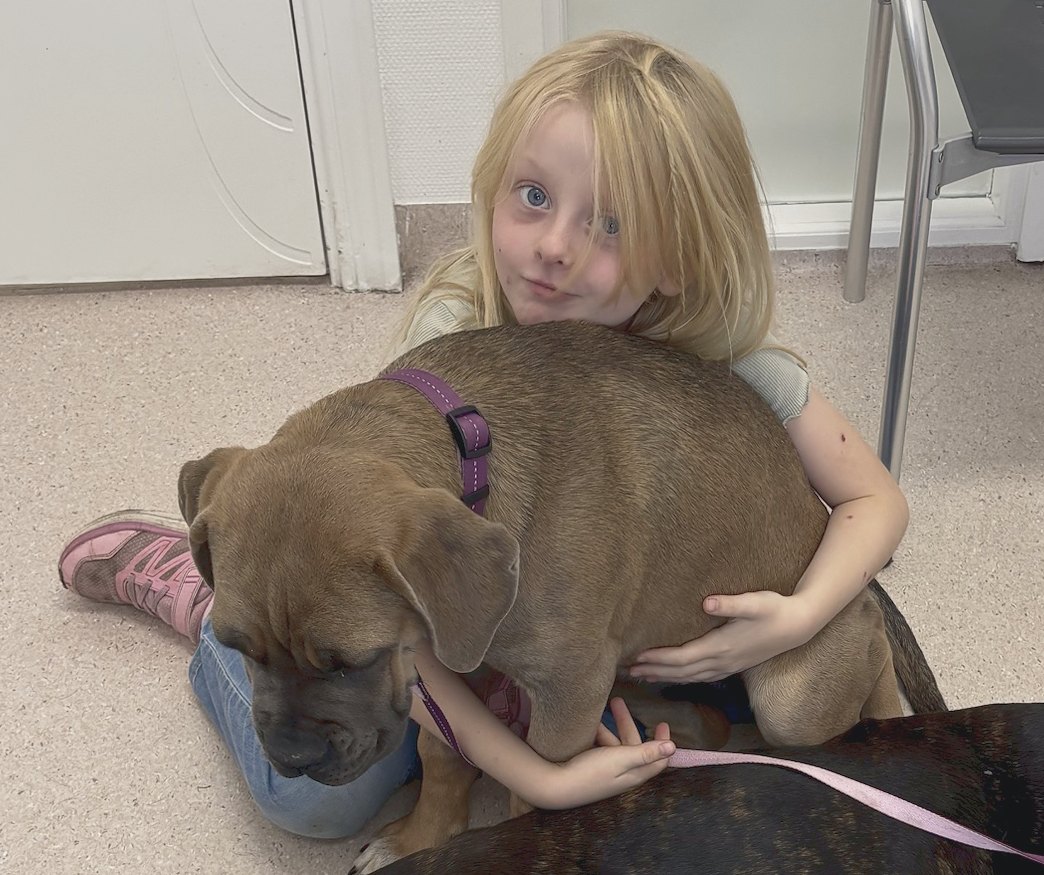
The most useful veterinary care a breeder arranges is arranged in advance: a practice that sees breeding cases, a conversation before the litter arrives about worming and vaccination schedules and the pre-sale check, and clear knowledge of the out-of-hours arrangements — who answers, where you drive to, how long it takes at three in the morning. Write it down and put it where anyone in the house can find it.
It is also worth having the difficult conversation early. Knowing in advance what you would authorize, and what it is likely to cost, means that a decision about intensive care for a fading puppy or an emergency cesarean is not being made for the first time under pressure.
What to tell the vet
Triage depends on specifics. Have ready: the puppy’s age and current weight, its weight trend over recent days, its temperature if you can take one, what and when it last ate, a description of the stools, how many puppies in the litter are affected, and when it started. That is the difference between “a puppy seems off” and a picture a vet can act on — and it is why a thermometer, a scale and a notebook belong in the puppy room rather than in a drawer somewhere.
Dosing, and why weight is the whole problem
Veterinary medicines for puppies are dosed per kilogram, and puppies gain weight continuously through this period. A dose worked out two weeks ago is simply the wrong dose now, and in the smallest breeds the error runs the other way — a fraction of a tablet intended for a much larger dog is not a proportionate dose.
Young puppies also handle drugs differently. Liver and kidney function are still maturing, which affects how a drug is metabolized and how long it stays in circulation, so pediatric protocols sometimes differ from adult ones in both amount and interval. Specific protocols exist for neonates and young puppies, including particular antibiotic choices for suspected sepsis and situations where vitamin K is given — but they belong to the veterinarian who has examined the puppy. This article deliberately gives no doses.
After any medicine, watch for vomiting, diarrhea, black or bloody stool, pale or yellowish gums, or a puppy that stops eating. If you see any of these, stop the medicine and call your vet. Never give two anti-inflammatory medicines together, or an anti-inflammatory with a steroid, unless your vet has prescribed both.
In practice
A breeder with a restless, clearly uncomfortable seven-week-old puppy reaches for the household painkillers and reasons that a quarter of a tablet must be proportionate to a puppy’s size. It is not a proportionate dose — it is a dose that risks gastrointestinal ulceration and kidney injury on top of whatever was already wrong. The call that should have been made first was to the vet, who can prescribe something formulated for the species and the weight.
(Illustrative, composite scenario.)
Human medicines: why the answer is always no
Non-steroidal anti-inflammatory drugs made for people are among the most common causes of accidental poisoning in dogs, and they are frequently given by well-meaning owners rather than eaten by accident. Ibuprofen inhibits the same prostaglandins that maintain normal gastrointestinal, kidney, liver and clotting function in dogs. Even small repeated amounts have caused stomach ulcers in dogs, and larger amounts damage the kidneys and nervous system and can be fatal. Paracetamol is toxic to dogs at high doses and far more dangerous again to cats, which cannot metabolize it. Naproxen has a half-life of around 74 hours in dogs, so it accumulates. Aspirin causes gastric ulceration with prolonged use.
The practical rule is short: nothing from the human medicine cabinet, ever, without a veterinarian telling you to. And the same caution applies to veterinary products used outside their license — parasite treatments not licensed for a puppy’s age or weight, medicines prescribed for a different dog, or anything left over from a previous litter.
If a puppy chews into a blister pack or has been given a human painkiller, call your veterinarian or a pet poison helpline straight away, even if the puppy seems fine. Have the packet ready, with the strength and your best estimate of how much is missing. Early treatment makes a real difference, and signs such as vomiting or black stools can take hours to appear. Don’t try to make the puppy vomit unless a veterinarian tells you to.
Records, and what goes to the buyer
Write down every treatment as it happens: which puppy, what product, what dose, what date, and why. You need it to avoid duplicating or missing doses across a litter, your vet needs it to make sense of the history, and much of it goes home with the puppy so the new owner and their vet can continue rather than restart. Worming and vaccination records are covered in parasites and worming schedules and vaccination and immunity in puppies; the paperwork that travels with each puppy is pulled together in the pre-sale health checklist.
Note any reaction, even a mild one, next to the treatment entry. The new owner’s vet will want to know about it before giving the same product again. Keep every medicine for people and animals in a closed cupboard the puppies cannot reach.
When to call your vet
- A puppy has swallowed, or been given, any human medicine — call immediately, even without signs
- Vomiting, black or bloody stool, pale or yellow gums, or loss of appetite after any medicine
- A puppy has received a dose meant for a heavier puppy, or a second dose by mistake
- Swelling of the face, hives or collapse after a vaccine or medicine — this is an emergency
- You are unsure whether a parasite product is labeled for the puppy’s age or weight
- If in doubt, call — your vet would rather hear from you early.
Work on it
A few minutes here will teach you more than re-reading the article.
Ask yourself
- Do I know my practice’s out-of-hours route — the number, the address and the drive time?
- Could I give a vet age, current weight, weight trend and temperature for any puppy in the litter right now?
- Is there anything in my kennel cupboard that was prescribed for a different dog?
Find out & check
- Find out from your vet which products are appropriate to keep on hand for a litter, and which they would rather you never used.
Do one thing
- Clear out leftover and out-of-date medication, and write the emergency number somewhere permanent.
Was this article helpful?
Anonymous. We do not store your name, email or IP address.
Sources & further reading
- Merck Veterinary Manual — Toxicoses From Human Analgesics in Animals. merckvetmanual.com
- VCA Animal Hospitals — Ibuprofen Poisoning in Dogs. vcahospitals.com
- Merck Veterinary Manual — Management of the Neonate in Dogs and Cats. merckvetmanual.com
- US Food and Drug Administration — Get the Facts about Pain Relievers for Pets. fda.gov
- VCA Animal Hospitals — Breeding for Dog Owners: Caring from Birth to Weaning. vcahospitals.com
- WSAVA Vaccination Guidelines Group — 2024 Guidelines for the Vaccination of Dogs and Cats. wsava.org
Where evidence is limited, recommendations rest on established practice and expert judgment, and may be updated as knowledge develops. No dosing guidance is given here by design: medicines for puppies are prescribed and dosed by a veterinarian who has examined the animal, and licensing differs between countries.
Next steps
- Read next: Vet checks, microchipping and registration.
- Related: Common illnesses in the growing litter · Dental care from puppy to senior: brushing, chews and vet cleanings.
- Return to the area hub: Raising a healthy litter.