The handover looks like a single afternoon, but almost everything that decides how it goes — whether the puppy has been in a car, whether the buyer has read the paperwork, whether the microchip is registered to anyone at all — was settled, or left unsettled, in the two weeks before it.
The most important first
- Plan backwards from the day: the puppy’s last two weeks, the buyer’s preparation and the paperwork each have their own deadline, and none of them can be done on the doorstep.
- Age is a floor, not a readiness test. In England, licensed breeders may not sell a puppy before eight weeks of age and the government advises buyers not to take one younger, while the American Kennel Club notes that eight to ten weeks is when most breeders send puppies home — but an individual puppy may need longer.
- Get the puppy used to what the day will contain: a crate, a short car journey, a few minutes alone, a collar and leash, being handled by strangers.
- Send the documents ahead. A buyer reading a contract for the first time with a puppy on their lap is not reading it.
- In the UK all dogs must be microchipped and registered on a database by eight weeks old; check the record before the day, not during it.
From one breeder to another
One copy per puppy, ready for handover day.
The six parts of this guide on one printable checklist, with fields for each puppy and space for the buyer’s details, so nothing is missed while the car is waiting.
✓ Unlocked
You’re in. Your checklist is ready.
Download it below. The other free PDFs are unlocked too: logs, planners and score sheets, built on veterinary research and generations of breeding experience.
Download the free PDF →A4 versionSee all free PDFsThe puppy handover checklist
Use this puppy handover checklist for breeders on the day itself, one copy per puppy. Each section is something the buyer should leave with, or something you should have agreed before they drive away. The reasoning behind each step is in the rest of this article.
1. Documents
In the folder, one copy for you and one for the buyer.
- Sales contract in its final form, sent to the buyer ahead of the day so they can read it at home (see sales contracts and consumer law)
- Signed contract, one copy for each party
- Receipt for every payment, including the deposit, showing the balance as settled
- Registration papers and pedigree, or written confirmation of what will follow and by when
- Microchip number checked against the paperwork, and the database details
- Who starts the transfer of keeper details on the microchip database: you or the buyer
- Veterinary health check from the last week, with the findings recorded (see pre-sale health checklist)
- Vaccination and deworming record, with the dates given and the next due dates
- Copies of both parents' health screening results
- Insurance certificate or cover note, activated before collection if that is required (see insurance and liability)
2. Puppy pack
What travels home with the puppy.
- Enough of the current food for the first days, so nothing changes at once
- Scent blanket from the dam and littermates, sealed in a bag
- A familiar toy or chew from the litter area
- Collar and leash that fit, and a crate or carrier for the journey (see crate, travel and short separations)
- Weight chart from birth, for the new veterinary practice
- The free printable sheet Keep it out of reach, on what puppies swallow and what to do
- Everything else on the full puppy pack checklist
3. Food and routines
Written down, so the first week can look like the last one.
- Feeding plan: food, amount per meal, number of meals and times
- How to change food gradually if the buyer plans to switch later
- Daily routine: toilet times, naps, play and bedtime (see house-training and daily routines)
- What the puppy already knows: crate, car rides, a few minutes alone, being handled
- Plan for the first night: where the puppy sleeps and who is nearby
- Travel plan home confirmed in writing: who drives, who sits with the puppy, the length of the journey and where they will stop (see the first journey and the first days at home)
4. Health information
What the buyer needs to know before they leave.
- Next due dates for vaccination and deworming, repeated back by the buyer
- The buyer knows when to see their own veterinarian, who sets the schedule from here
- Warning signs that mean calling a vet the same day (see when to call the vet)
- Places and dogs to avoid until the vet says the puppy is protected: dog parks, pet stores, public relief areas, dogs of unknown vaccination status
- How to keep socializing safely during the vaccination course
- Any health notes for this puppy: findings from the vet check, treatments given, anything to watch
5. Follow-up
Agreed before the buyer drives away.
- A short message from you on the evening of the handover
- When you will check in during the first week and the first month (see staying in contact with buyers)
- What the contract says if the puppy cannot stay: return, buy-back or rehoming help (see buy-back, returns and rehoming)
- How the buyer can reach you with questions, and that they are welcome to (see educating your puppy buyers)
6. Contacts
Filled in and handed over with the folder.
- Breeder: Name, phone, and the times you prefer to be called
- Buyer's veterinary practice: Name and phone; check it is open in the days after handover
- Nearest emergency veterinary clinic: For nights and weekends
- Microchip database: Name, phone or website
- Insurance: Company and policy number, if any
- Registry or breed club: If registration will follow
Choosing the day, not just the date
The earliest legal date is rarely the right one to plan around. In England, the statutory guidance for licensed sellers is explicit that puppies under eight weeks may not be sold and must stay with their mother until then unless she dies or staying puts them at risk; other jurisdictions set their own minimums, and some set none. Treat whatever applies to you as the floor and look at the individual puppy: is it eating the current food reliably, stable in weight, well in itself, and coping with short separations from its littermates? A puppy that has just had a setback — a stomach upset, a fright, a veterinary procedure — can wait a few days, and the buyer should know in advance that you might ask them to.
Other registries and countries use similar floors. Dogs Australia does not allow members to transfer a puppy under eight weeks within Australia without approval. In the United States, federal rules do not allow regulated businesses and carriers to transport puppies commercially before eight weeks of age and weaning, and many states set their own minimum sale age. A veterinary check in the last week before handover is the best confirmation that this particular puppy is ready. For toy and small breeds, check that the puppy is eating every meal and gaining steadily. A puppy that has had a wobbly, low-energy spell should be checked and given extra time.
Then choose the day around the first week rather than your own schedule. A handover early in the week, early enough in the day that the puppy arrives in daylight, with the buyer at home for the following days, gives everybody a gentler start than a Friday evening before the buyer’s first day back at work. Check that their own veterinary practice will be open in the days that follow. Book one puppy per appointment, and allow time: an unhurried handover takes one to two hours, and a buyer who feels rushed will call you with every question the next morning.
The puppy’s last two weeks
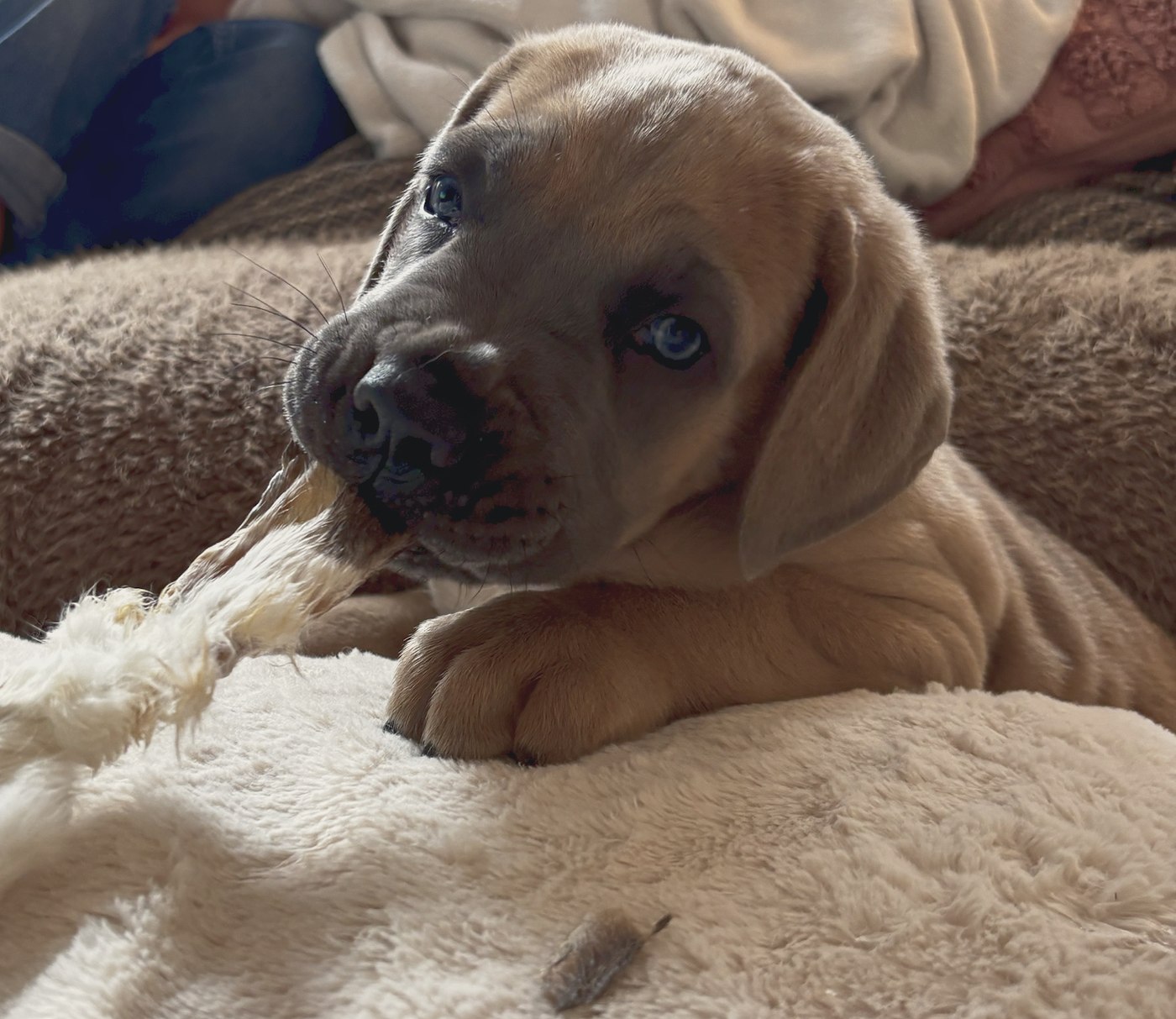
The American Kennel Club’s advice for the six-to-eight-week period reads as a rehearsal of the handover: keep open crates in the play area and feed puppies individually in them, take them for short car rides in a crate, keep handling feet and toes, and let them wear a collar and drag a leash under supervision while you play with them. Each of those turns something the puppy will meet on the day — a crate in a strange car, a stranger’s hands, being fed alone — into something it has met before. The groundwork is in crate, travel and short separations and handling and body-handling exercises.
Two details matter more than they look. The first is scent: the Royal Kennel Club suggests placing a blanket with the dam and puppies four or five days before rehoming, then cutting it into squares and sealing each in a bag so the puppy arrives somewhere new with something that smells of home. The second is stability. Keep the last days boring — same food, same feeding times, same toilet routine described in house-training and daily routines — so that the only thing changing on the day is the place.
Preparing the buyer
A buyer who arrives prepared makes the day about the puppy rather than a list of logistics. A week or two before, send them what they need to get ready: what food to buy and where, what a sensible crate or pen size is, where the puppy should sleep for the first nights, how to make a room safe for a puppy that chews, and what the first week should and should not contain. The American Kennel Club recommends that breeders make sure buyers know how to continue socialization and training, and tell them plainly that they can call with questions. Tell buyers which risks to avoid until their vet says the puppy is protected: dog parks, pet stores, public relief areas and dogs whose vaccination status they don’t know. Also tell them what to keep doing. Veterinary behavior and vaccination guidelines agree that safe socialization should continue during the vaccination course: calm visitors, known vaccinated dogs, short car rides, being carried to new places, and a well-run puppy class once the first vaccination is done. Their own veterinarian sets the schedule.
Ask them to confirm, in writing, how they will travel home: who is driving, who is sitting with the puppy, how long the journey is, and where they will stop. That conversation is the start of the first journey and the first days at home, and it is far easier to have on a Tuesday than on the drive.
Paperwork done before the day
Every document that can be finished in advance should be. The contract goes to the buyer in its final form in time for them to read it at home and ask questions — see sales contracts and consumer law. The veterinary check and the per-puppy records in the pre-sale health checklist are complete and copied. Any free insurance that must be activated before collection has been activated, as described in insurance and liability. The microchip is registered, and you know whether the database transfer to the new keeper is started by you or by them. In England, the statutory guidance for licensed pet sellers (Schedule 3 of the 2018 licensing regulations) also requires a puppy contract and information pack to be provided at the point of sale, and the sale to be completed in the presence of the purchaser on the premises. For licensed dog breeders, Schedule 6 and the breeding guidance require the buyer to be told the puppy’s age, sex and veterinary record, and the sale to take place from the premises where the puppy was born and reared.
Assemble the pack itself using the puppy pack checklist; the reasoning behind each item is in documents and the puppy pack.
In practice
A breeder hands over three puppies on the same Saturday, forty minutes apart. The second family arrives early while the first are still signing, and the third puppy — the only one not yet crate-conditioned because there had been no time — screams for the whole ninety-minute drive home. For the next litter the breeder spreads handovers across four weekdays, sends every contract a week ahead, and adds two short car journeys a week to the last two weeks’ routine. The phone calls on the evening of handover drop from several to almost none.
(Illustrative, composite scenario.)
What the kennel clubs say
Some kennel clubs require their own forms. The Swedish Kennel Club (SKK), for example, requires members to use sales contracts with content set by SKK, to attach a veterinary certificate no more than seven days old on the day of delivery, and to hand over the registration certificate at the sale.
Source: Swedish Kennel Club (SKK), Basic rules (Grundregler), in force from January 1, 2026.
Last updated: November 8, 2026
Rules change, so always check with your own kennel club.
On the day itself
Keep the order fixed so nothing is skipped when emotions are running high. Let the buyer see the puppy with its mother and littermates first; in England, a prospective buyer may only view a puppy together with its mother, and in any case it is the last time they will see the puppy in context. Walk through the pack together rather than handing it over closed — health record, deworming and vaccination dates, feeding plan, contract, registration papers — and ask them to repeat back the next due date and the feeding routine. Sign the contract, take the balance, issue the receipt, and confirm the microchip number against the paperwork one final time. Give the puppy a last chance to toilet before it goes in the crate.
Then let them go without a long farewell in front of the puppy, and send a short message that evening. The handover is where the sale ends and the relationship described in educating your puppy buyers begins.
Puppy handover checklist: common questions
What should a puppy go home with?
A folder with the signed contract, receipts, registration papers or a written note on when they will follow, the microchip details, the vaccination and deworming record with next due dates, and a recent veterinary check. Add a puppy pack with the current food, a scent blanket from the litter, a familiar toy, a fitted collar and leash, and a written feeding plan and daily routine.
When should I send the contract to the buyer?
Send it in its final form a week or two before the handover, so the buyer can read it at home and ask questions. A buyer reading a contract for the first time with a puppy on their lap is not really reading it.
How old should a puppy be at handover?
Check the minimum age where you breed and sell. In England, for example, licensed breeders may not sell a puppy before eight weeks of age, and the American Kennel Club notes that most breeders send puppies home at eight to ten weeks. The age is a floor, not a readiness test: a puppy that is not eating well, not gaining or has just been unwell can wait a few days.
Who transfers the microchip registration?
It depends on the database the puppy is registered with, and on the rules where you live. Check with the database before the day whether you or the new owner starts the transfer of keeper details, and write it down on the checklist so nothing is left to chance.
Is the puppy handover checklist free?
Yes. It's free with your email: download it in US Letter or A4, print one copy per puppy and use it for your own litters.
When to call your vet
- In the last week before handover: book a health check for every puppy and record the findings.
- If a puppy goes off its food, loses weight or has diarrhea in its final days: delay the handover and call.
- If a small puppy has a weak, trembly or very sleepy spell, even once.
- If a puppy coughs, has a runny nose or eyes, or seems lethargic.
- If you are unsure whether a puppy is ready to travel the planned distance.
- If in doubt, call — your vet would rather hear from you early.
Work on it
A few minutes here will teach you more than re-reading the article.
Ask yourself
- Has every puppy I am about to place been in a crate in a moving car, and been alone for a few minutes, before the day it leaves?
- Could my buyers tell me today what food to buy and how the first night will work — or am I planning to explain that at the door?
- Which of my handover tasks currently happen on the day only because I never scheduled them earlier?
Find out & check
- Find out the minimum age for selling a puppy and the microchipping and registration deadlines where you breed, and check who initiates the transfer of keeper details on the database your puppies are registered with.
Do one thing
- Write a two-week countdown for the next litter, with each task — scent blanket, contract sent, insurance activated, chip checked, buyer’s travel plan confirmed — on a named date.
Was this article helpful?
Anonymous. We do not store your name, email or IP address.
Sources & further reading
- American Kennel Club — Puppy Socialization: Preparing 6-to-8 Week Old Puppies for New Homes. akc.org
- American Kennel Club — Puppy Socialization and Preparing for New Homes: 8–12 Weeks. akc.org
- The Royal Kennel Club — What to put in a puppy pack for new owners. royalkennelclub.com
- GOV.UK — Get your dog or cat microchipped. gov.uk
- UK Government — Selling animals as pets licensing: statutory guidance for local authorities. gov.uk
- The Animal Welfare (Licensing of Activities Involving Animals) (England) Regulations 2018, Schedule 6 — Specific conditions: breeding dogs. legislation.gov.uk
- American Veterinary Society of Animal Behavior — Position Statement on Puppy Socialization (2008). avsab.org
- Dogs Australia — Code of Practice (July 2023). dogsaustralia.org.au
Where evidence is limited, recommendations rest on established practice and expert judgment, and may be updated as knowledge develops. Minimum ages, microchipping deadlines and point-of-sale requirements quoted here are those of England and the UK and are examples, not a standard. This is general information, not legal or financial advice: requirements differ between countries and change over time — have your own documents reviewed by a qualified professional in your jurisdiction.
Next steps
- Read next: Puppy pack checklist.
- Related: Crate, travel and short separations · Before your puppy comes home: what to buy and how to get ready.
- Return to the area hub: From first inquiry to settled puppy.