Most of what a breeder knows was given to them by someone who had no obligation to do it — which is the strongest argument there is for taking the other half of the exchange seriously.
The most important first
- Mentorship is treated as an obligation rather than a kindness in several kennel club codes; the Canadian Kennel Club’s requires members to educate and encourage newcomers to purebred dogs.
- A mentor’s value lies in judgment and in the questions they ask, not in instructions; decisions about your own dogs stay yours, including the ones they would make differently.
- Continuing education is increasingly formalized: the FCI asks members to run breeder education programs, preferably annually, and some national breeder programs, such as the AKC’s Bred with H.E.A.R.T., attach an annual education requirement to enrollment.
- The hardest thing to learn alone is what is wrong with your own dogs — the problem some breeder courses name directly as kennel blindness. See evaluating breeding stock.
- Agree scope before the relationship starts, on both sides, and see education for dog breeders for the individual side of learning.
Mentorship is a function, not a favor
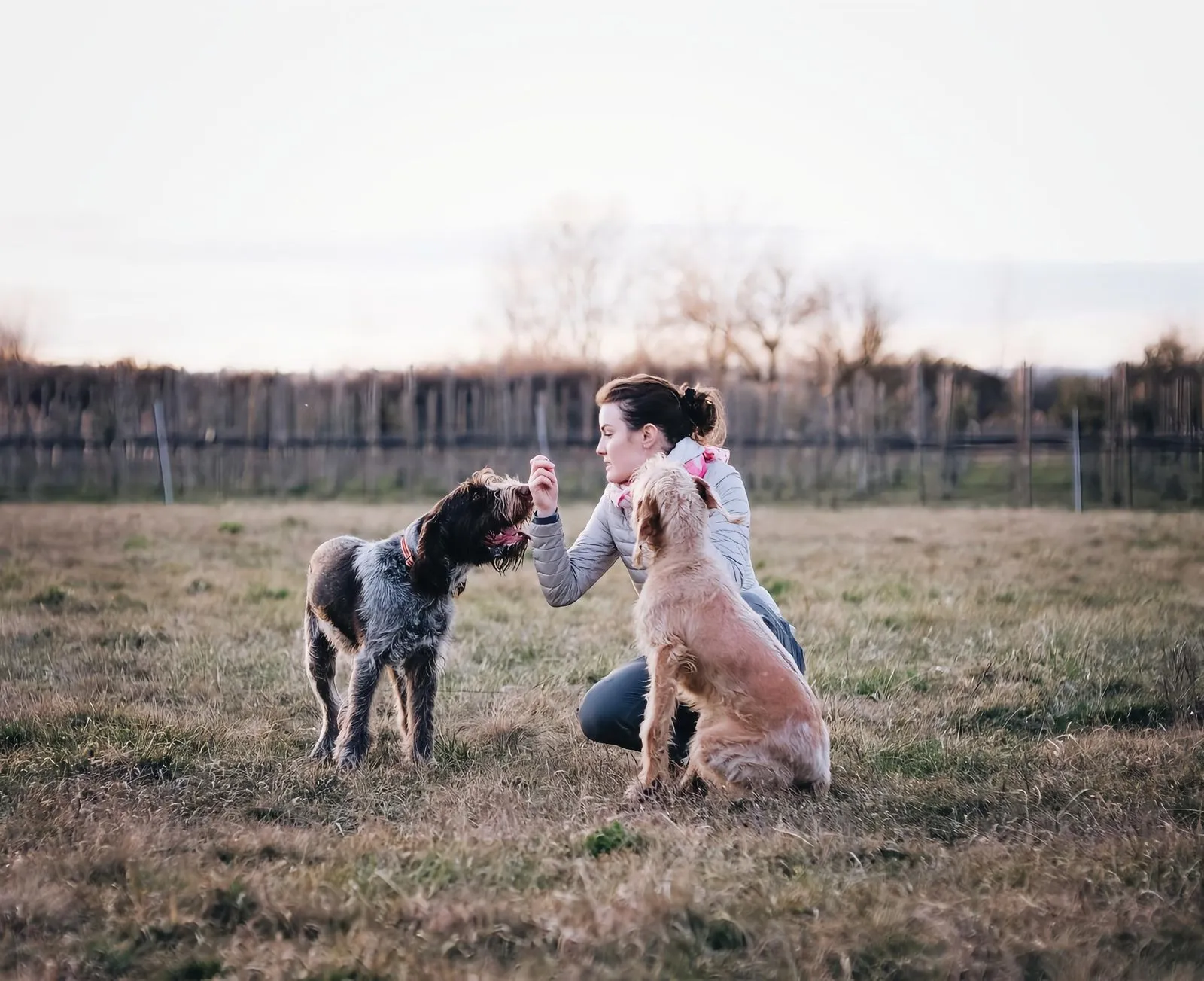
It is tempting to treat mentorship as personal generosity. The kennel clubs do not. The Canadian Kennel Club’s code of ethics obliges members to educate and encourage newcomers, whether pet owners, exhibitors or breeders. The FCI’s international breeding strategies go further: they prefer education to strict breeding regulation, on the grounds that heavy rules risk reducing genetic diversity and driving out conscientious breeders, and they name knowledge, honesty and cooperation as the foundations of healthy breeding.
If education is the main mechanism by which a breed’s practice improves, the quality of mentoring is a population-level variable rather than a private arrangement. It also means a mentor who passes on a confident falsehood does real harm, and that the obligation to keep learning does not stop when you start teaching.
Within a kennel, mentorship is also succession: someone has to be able to run your dogs when you cannot, and the knowledge that lives only in your head is the part that cannot be handed over in an emergency.
Several kennel clubs now build ongoing education into their breeder programs. In the US, breeders enrolled in the AKC’s Bred with H.E.A.R.T. program agree to complete four continuing education units every twelve months, through approved online or in-person courses, seminars or conferences. The FCI recommends that its member clubs offer breeder education, ideally every year. Check what your own national club or breed club requires or offers — the requirement, if there is one, is usually attached to a breeder program rather than to ordinary membership.
Finding a mentor, and what to ask for
Parent clubs that formalize this set their own thresholds. The American Kennel Club’s guidance for club mentor programs leaves each club to fix the numbers but lists the dimensions: years in the breed, litters bred, champions produced, years of club membership, with weight given to breeders certifying that they complete the health testing the club requires. Those are reasonable criteria to apply informally if your breed has no scheme.
Experience alone is not sufficient. Look for someone whose dogs you would be content to own at nine years old rather than at nine months, who talks about their failures in specific terms, and who is still curious; a breeder who has bred for thirty years and learned nothing new in twenty is a historical record rather than a mentor.
Ask for something specific rather than for mentorship in general: a named question, a litter to help whelp, an honest assessment of your stock, or a show spent beside them hearing what they are looking at. Open-ended requests are usually declined because they cannot be scoped. It also helps to have more than one mentor, since breed knowledge, reproductive practice and buyer handling rarely sit in the same person.
Structured schemes outside the US work the same way. The UK’s Royal Kennel Club, for example, runs a mentor scheme for breed health coordinators in which mentees pick a mentor by stated expertise, say at the start what help they need, and give feedback at the end. National clubs in FCI countries and breed clubs elsewhere often run their own breeder courses; ask yours what exists before you rely on informal advice alone.
What a mentor can and cannot settle
The useful boundary runs between information, judgment and decision. Information a good mentor hands over freely: which lines carry what, how a particular kennel’s dogs mature, how a test is done, what a critique means. Judgment they offer and you weigh: whether a bitch is good enough, whether a combination makes sense. Decisions stay with the person who will keep the dog, place its puppies and answer for it in fifteen years.
This matters most where the mentor has an interest. Someone who owns the stud dog, co-owns your bitch or has a stake in the club politics around a line is not a neutral adviser, and the conflict need not be malign to be real. Named out loud, on either side, the advice becomes usable rather than suspect.
It matters too where the question is clinical or legal. Mentors are not veterinarians or lawyers, and the advice most likely to cause harm is confident breeder-to-breeder guidance about medication, dosing or contracts. Those questions go to the relevant professional in your own country.
A mentor can tell you what worked in their kennel; they cannot examine your bitch. Questions about breeding timing, such as when progesterone results mean it is time to mate, a difficult whelping, a sick puppy or a medication belong with your veterinarian, even when the mentor has seen the same thing many times. A good mentor will say so themselves.
Being a mentee worth the time
The main currency is follow-through. Someone who answers a long message with a thank-you and then does nothing will not be answered twice. Report back: what you did, what happened, what you would do differently. That closes the loop that makes mentoring satisfying, and it is how you find out which advice was good. Be straightforward about disagreement too — quietly ignoring advice and then presenting the outcome as independent reasoning damages a relationship more than arguing does.
Do not outsource your reading. A mentor complements structured learning rather than replacing it: several kennel clubs offer free or low-cost breeder courses covering anatomy, genetics, whelping and nutrition, and some tie an annual education requirement to their schemes. The floor is to read something each year that you did not choose because it agrees with you.
Becoming a mentor who is useful
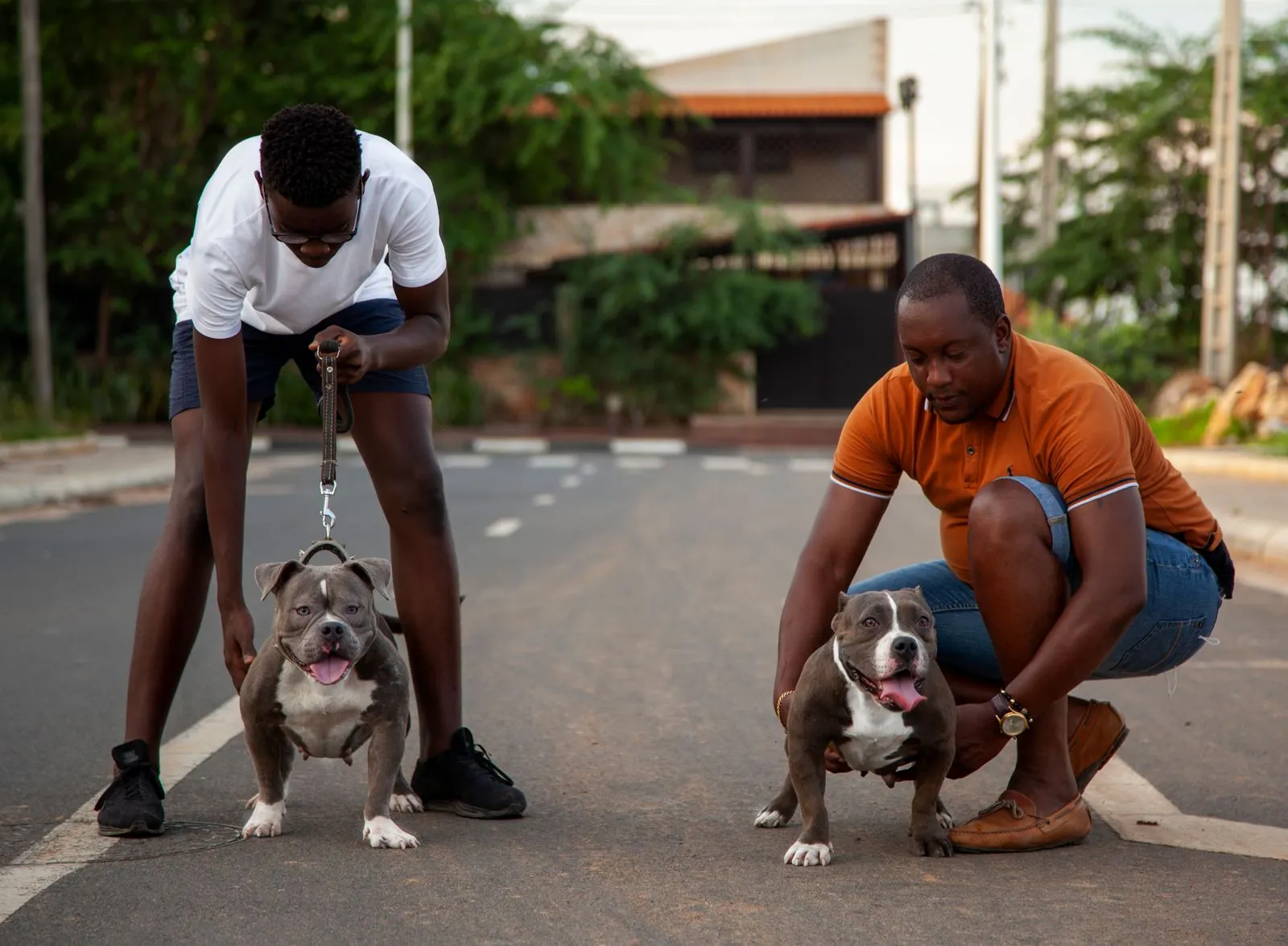
Formal programs describe the work plainly. The AKC’s mentor guidance lists sharing webinars, videos and reading, running or joining a discussion group, explaining the club’s health testing requirements and helping arrange testing, guiding a new breeder through registering a litter, advising on placing puppies including a sales contract, and reaching out to young people entering the breed. It is a modest list, mostly administrative scaffolding around a few judgment calls.
Scope it before you start. Say what you are offering — a season, a litter, questions by email within a few days — and what you are not; say that you will not decide matings for them, and that you will tell them plainly when you think something is a mistake. Unbounded arrangements end in resentment on one side or dependence on the other.
Then be honest in a specific way: about your own failures, the dogs of yours that did not work out, and the limits of what you know. Courses that address kennel blindness exist because recognizing faults in your own stock is the skill least amenable to self-teaching, and a mentor who models that candor teaches more by example than by instruction. The ethical frame sits in responsible dog breeding.
Keeping the knowledge after the relationship ends
Mentorships end, often without being ended: people move, fall out, retire or die, and the knowledge goes with them. Write things down while the relationship is live — not a transcript, but the specific judgments, such as why this bitch was not bred or what they look for in a shoulder, recorded in your own words and dated alongside your kennel records.
The same logic applies to what you pass on. An answer is worth more with the reasoning attached, and the reasoning is what survives into the next generation of breeders. Over a career that record is a larger contribution to a breed than any individual litter.
In practice
A breeder in her third year asks an established exhibitor for help and gets nowhere with a general request. She asks again, narrowly: would she look over two bitches at a show in March and say honestly whether either is worth breeding from. The answer is yes, and the assessment is blunt — one has a front she would not breed from, the other is worth a careful dog. The breeder reports back in June with what she decided and why, including the part where she disagreed and had the bitch assessed by someone else, who sided with the mentor. Four years later the breed club asks her to take on a newcomer. She offers one litter’s worth of time, says so in writing, and keeps a dated note of every judgment she passes on, so the newcomer can check it later.
(Illustrative, composite scenario.)
Work on it
A few minutes here will teach you more than re-reading the article.
Ask yourself
- Who would tell you the truth about your worst dog, and when did you last ask them?
- What have you learned in the past year that changed a decision, rather than confirming one?
- If you stopped breeding tomorrow, what would be lost that exists nowhere but in your head?
Find out & check
- Find out what breeder education your national kennel club or breed club offers, whether any of it is required for a scheme you belong to, and what it costs; provision ranges from free online courses to mandatory programs and differs between countries.
Do one thing
- Write down three judgments you were given by someone more experienced, with the reasoning attached, and put them where your kennel records are.
Was this article helpful?
Anonymous. We do not store your name, email or IP address.
Sources & further reading
- American Kennel Club — Breeder Mentor Qualifications. akc.org
- American Kennel Club — Bred with H.E.A.R.T. requirements. akc.org
- American Kennel Club — Bred with H.E.A.R.T. FAQs. akc.org
- American Kennel Club — AKC Breeder Education Expands with New Courses (2017). akc.org
- Fédération Cynologique Internationale — FCI International Breeding Strategies. fci.be
- Canadian Kennel Club — Code of Ethics. ckc.ca
- The Royal Kennel Club — Breed Health Co-ordinator mentor scheme. royalkennelclub.com
Where evidence is limited, recommendations rest on established practice and expert judgment, and may be updated as knowledge develops. Nothing here is research-based: we found no published research on mentorship among dog breeders, and what follows draws on kennel club codes, mentor program documents and common practice. What education is available or required varies widely between countries and breeds, from nothing at all to a mandatory course before a litter can be registered.
Next steps
- Read next: Education for dog breeders.
- Related: Responsible dog breeding.
- Return to the area hub: Running a kennel: operations, records and resilience.