This page pulls together every specific vet-call trigger from across this area into one place — useful to review in advance, and to check quickly if you’re not sure whether what you’re seeing is a reason to call.
The most important first
- During labor: strong straining for 20–30 minutes with no puppy, weak straining for about 2 hours, or more than about 2 hours between puppies with more expected.
- During labor: green or black discharge before the first puppy is an emergency (call immediately), as is foul-smelling discharge.
- Just after whelping: straining again once whelping seems finished, or a placenta unaccounted for after 24 hours.
- First weeks postpartum: a hot painful mammary gland, foul-smelling discharge with fever, or restlessness and tremors in a small-breed dam.
- The general rule: if you’re genuinely unsure, call and describe what you’re seeing — that’s a better use of your vet’s time than waiting.
Before labor starts
- No sign of labor by about day 70 after the first mating (or about day 66 from the LH surge, or the due date your vet calculated from ovulation testing).
- Her temperature has dropped (normal in late pregnancy is 99.5–102.5 °F / 37.5–39.2 °C, and it typically falls below about 99 °F / 37.2 °C before labor) and labor has not started within 24 hours.
- Green or black discharge before any puppy has been born: an emergency, call immediately.
During labor
- Stage 1 lasting more than about 24 hours without progressing to visible straining.
- Strong, persistent straining for 20–30 minutes with no puppy delivered.
- Weak, occasional straining for about 2 hours without a puppy, especially before the first puppy. Never wait more than 4 hours.
- More than about 2 hours between puppies when you know or expect more remain.
- Green or black discharge before the first puppy has been born: an emergency, call your vet immediately. Later in the whelping, green discharge should be followed promptly by a puppy.
- Foul-smelling discharge, or a fever above 103 °F (39.5 °C), at any point during labor.
- A puppy, or its bubble-like sac, visible at the vulva for more than about 15 minutes without being born. Call, and don’t pull unless your vet tells you how.
- More than a few drops of fresh red blood.
- Vomiting, collapse, visible exhaustion, or obvious distress or pain.
Full detail: when whelping doesn’t go to plan: warning signs and the stages of labor.
Immediately after whelping
- Straining again once you believe whelping has finished — can indicate a retained puppy or placenta.
- A placenta count that doesn’t match your puppy count, unresolved after 24 hours.
- Foul-smelling or increasing-volume discharge, rather than the normal, gradually lightening lochia.
- A dam who refuses to nurse, shows no interest in the puppies, or seems unusually unwell.
- A temperature above 103 °F (39.5 °C).
- Any puppy that is not breathing well, is too weak to suckle, or cries constantly. Every puppy needs to nurse within the first 24 hours to get colostrum.
- Any puppy that has lost weight, or not gained, after its first 24 hours.
- Any stillborn puppy. Your vet may want to check the dam and the rest of the litter.
- After a cesarean: her temperature goes above 103 °F (39.5 °C) (a rise of 1–2 °F / about 0.5–1 °C in the first one to three days is expected); the wound becomes red, swollen, wet or starts to open; or bloody discharge lasts longer than about a week or starts to smell.
Full detail: the dam’s first 24 hours after whelping.
In the first weeks postpartum
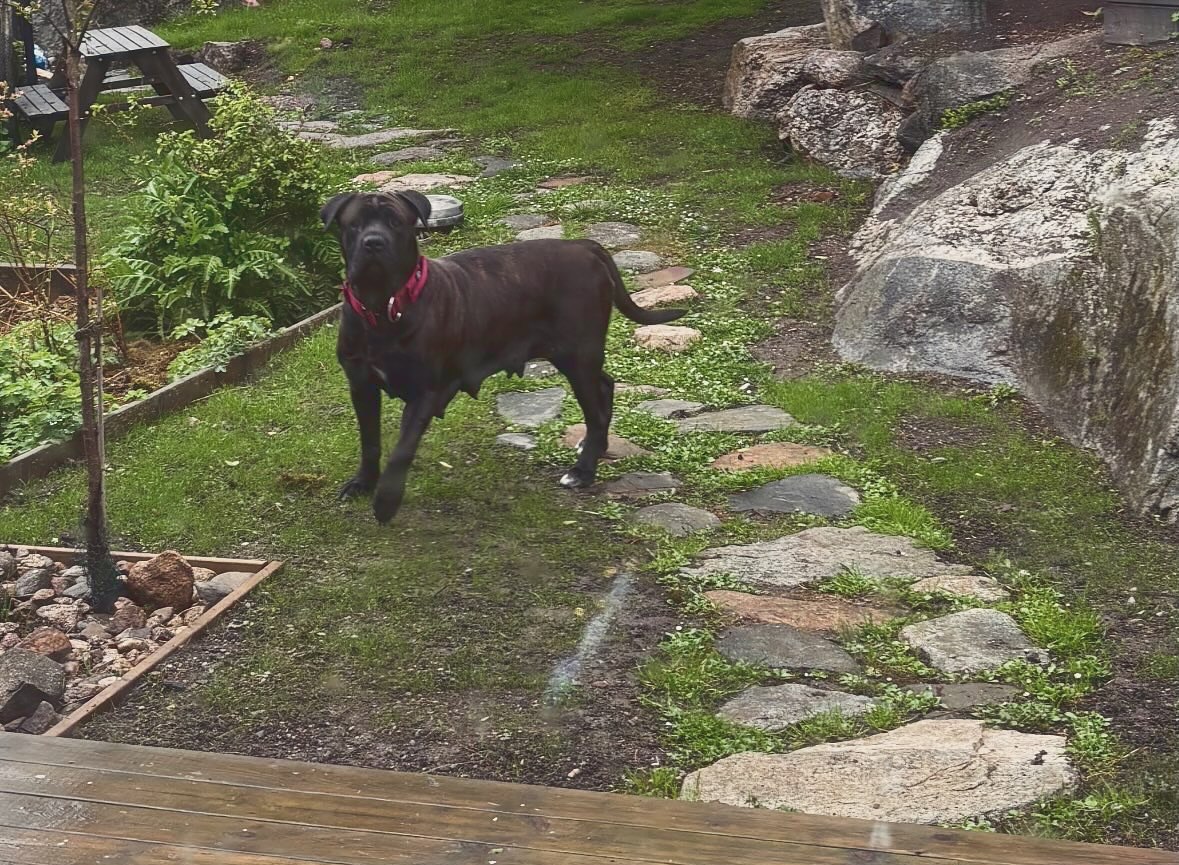
- A mammary gland that’s hot, hard, or painful, especially with fever or refusal to nurse from that gland — possible mastitis.
- Foul-smelling discharge with fever, lethargy, or reduced milk production — possible metritis.
- Restlessness, heavy panting, or muscle tremors and stiffness, particularly in a small-breed dam with a large litter, 1 to 4 weeks postpartum — possible eclampsia, a true emergency.
Full detail: postpartum complications: mastitis, metritis and eclampsia and lactation and milk production.
The general principle
Every threshold on this page exists because it’s the point where waiting starts to cost something — for the dam, the puppies, or both. None of these require you to be certain something is wrong before you call; describing what you’re seeing to your vet and letting them help you judge it is always a reasonable use of a phone call, even if it turns out to be nothing.
When to call your vet
- Green or black discharge before the first puppy: an emergency, call immediately.
- Strong straining for 20–30 minutes, or weak straining for about 2 hours (never more than 4), with no puppy.
- More than about 2 hours between puppies when more are expected.
- No labor within 24 hours of the temperature drop, or none by about day 70 after the first mating (about day 66 from the LH surge).
- A temperature above 103 °F (39.5 °C) at any stage, during labor or after.
- A puppy that has not nursed within 24 hours, or is losing weight after day 1; a nursing dam who trembles, pants heavily or walks stiffly.
- If in doubt, call — your vet would rather hear from you early.
Work on it
A few minutes here will teach you more than re-reading the article.
Ask yourself
- Could I recall the key thresholds on this page without looking them up, in the moment?
- Do I have my vet’s contact details, including after-hours, somewhere I can find instantly?
Find out & check
- Find out whether your vet prefers a call at the first uncertain sign, or only once something is clearly wrong.
Do one thing
- Bookmark or print this page alongside when whelping doesn’t go to plan before labor begins.
Was this article helpful?
Anonymous. We do not store your name, email or IP address.
Sources & further reading
- Cornell University Riney Canine Health Center — The Normal Whelping Process. vet.cornell.edu
- Merck Veterinary Manual — Periparturient Problems in Bitches and Queens. merckvetmanual.com
- Merck Veterinary Manual — Dystocia in Small Animals. merckvetmanual.com
- Cornell University Riney Canine Health Center — Dystocia in Dogs: Understanding Difficult Births. vet.cornell.edu
- Merck Veterinary Manual — Labor, Delivery, and Postpartum Care in Bitches and Queens. merckvetmanual.com
- AKC Canine Health Foundation — Whelping and Dystocia (podcast transcript, Dr Cindy O’Connor). akcchf.org
- PDSA — Whelping: a guide to your dog giving birth. pdsa.org.uk
- VCA Animal Hospitals — Caesarean Sections in Dogs: Post-Operative Instructions. vcahospitals.com
Where evidence is limited, recommendations rest on established practice and expert judgment, and may be updated as knowledge develops. This is general information, not a substitute for immediate veterinary care during an actual whelping emergency.
Next steps
- Related: every article in this area links back here for a quick timing check.
- Return to the area hub: Whelping: the complete guide from first contractions to recovery.
- This completes the Whelping & the Bitch’s Aftercare area. Next: the Neonatal period.