Canine labor moves through three distinct stages — but stage two and three overlap in practice. Knowing what’s actually happening inside each stage, and roughly how long it should take, is what lets you tell normal progress from a stall worth calling the vet about.
The most important first
- Stage 1 (cervical dilation) typically lasts 6–12 hours, but can run as long as 24–36 hours in some bitches.
- The pre-labor temperature drop (below 99°F/37.2°C) signals stage 1 is beginning, with labor usually following within about 24 hours.
- In stage 2, a puppy usually follows hard straining fairly quickly; up to about 2 hours of rest between puppies is still normal.
- Strong straining for 20–30 minutes with no puppy, or more than about 2 hours between puppies with more expected, are both reasons to call your vet.
- Stage 3 (placenta delivery) alternates with stage 2 rather than happening afterward — count placentas as you go.
Stage 1: cervical dilation
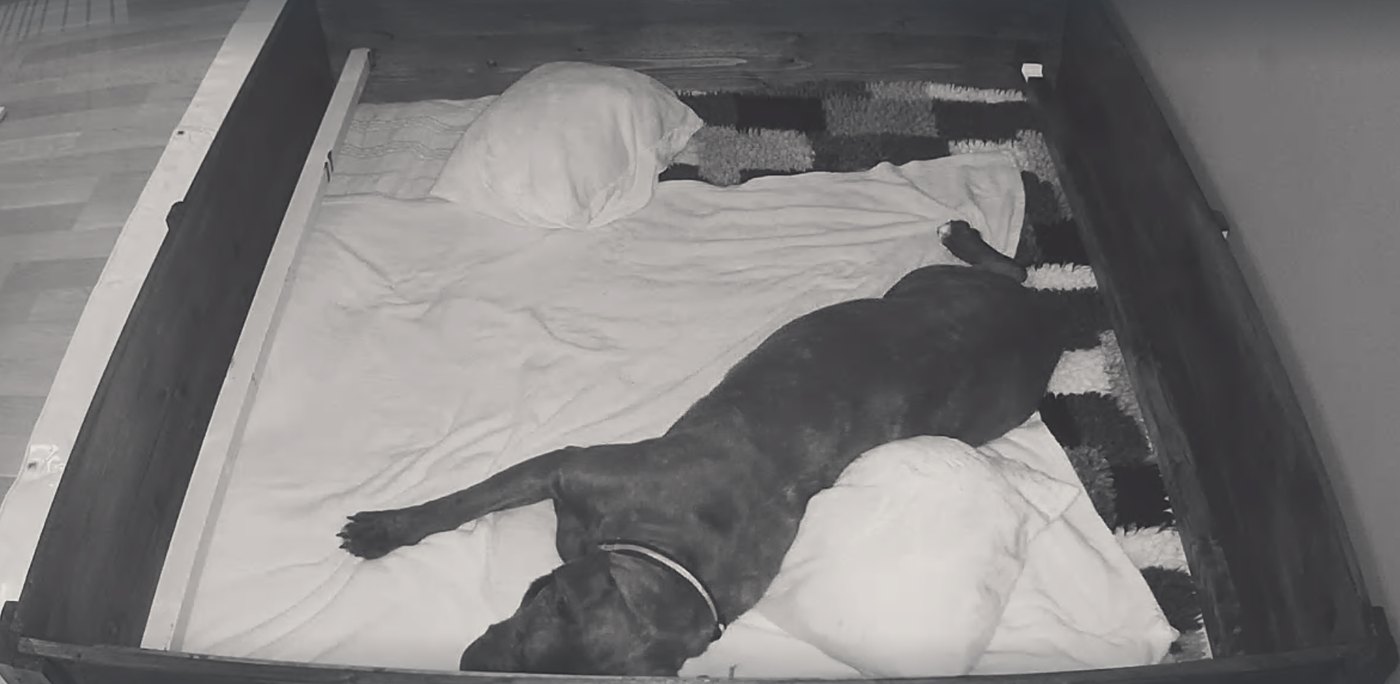
Stage one is largely an internal process — the cervix dilates and uterine contractions become progressively more organized — but it’s rarely invisible from the outside. Expect restlessness, nesting behavior, panting, loss of appetite, and occasionally vomiting, while vaginal discharge stays clear and mucous rather than bloody or green. This stage typically lasts 6 to 12 hours, though some bitches take as long as 24 to 36 hours, which is part of why signs that whelping is near — especially the temperature drop — matter more than a strict clock for judging where things stand.
If she has shown clear stage 1 signs for about 24 hours, or labor has not started within 24 hours of the temperature drop, and she still is not straining, call your vet. A long stage 1 can be the first sign that labor is not establishing properly.
Stage 2: delivering puppies
Once hard, visible abdominal straining begins, a puppy usually arrives fairly quickly — often within minutes. Between puppies, gaps of 0 to 30 minutes are typical and up to two hours is still considered within normal range — labor doesn’t proceed at an even pace, and a longer gap on its own isn’t automatically a problem. Two specific patterns are worth calling your vet about: strong straining for 20–30 minutes with no puppy delivered, or the bitch resting calmly for more than about 2 hours when you know or expect more puppies remain.
In practice
A breeder times a 45-minute gap between the third and fourth puppy and starts to worry. Because the bitch is resting calmly rather than straining, and 45 minutes falls well inside the normal range for a pause between puppies, this isn’t yet a reason to call — strong straining without progress for 20–30 minutes would be the more specific trigger.
(Illustrative, composite scenario.)
Other reasons to call during stage 2: weak or on-and-off straining for about 2 hours with no puppy (never wait more than 4 hours), and green or black discharge before the first puppy, which is an emergency — call immediately. Later in the whelping, if dark green discharge appears and no puppy follows within about 15–30 minutes, call.
Presentation and what’s normal
Both head-first (anterior) and tail-first (posterior/breech) presentations are normal in dogs — breech births make up a substantial share of canine deliveries and aren’t automatically a complication. What matters more than which end comes first is whether the legs are extended straight; a puppy with legs folded back is more likely to cause a genuine delivery problem than a straightforward breech presentation.
Stage 3: delivering the placentas
Rather than following stage 2 as a separate phase, stage 3 alternates with it — placentas are typically passed either still attached to a puppy or shortly after, and the two stages continue together until the whole litter and all placentas have arrived. Keeping a running count of placentas against puppies born, as covered in monitoring and documenting the whelping, is the practical way to track this rather than waiting for an obvious “placenta stage.”
When labor stalls: a brief note on uterine inertia
Labor that doesn’t progress as expected — contractions that never properly establish, or contractions that start normally and then weaken before the litter is complete — is generally described as uterine inertia, and it is the most common reason a whelping needs veterinary help. It is seen more often in older bitches and with very small or very large litters. This is covered in full in when whelping doesn’t go to plan; the practical takeaway here is that the timing markers above (20–30 minutes of strong, unproductive straining, or more than about 2 hours of rest with more puppies expected) are what should prompt the call, not a general sense that things feel slow.
Your vet can examine her, check her calcium and blood sugar, and take an x-ray to count the remaining puppies before deciding on treatment or a cesarean. Never give any medication to “help labor along” without your vet’s direction.
How long the whole process takes
Once the first puppy is born, most bitches finish within roughly 6–12 hours. If whelping has not finished within 24 hours, she needs veterinary attention even if she seems comfortable.
When to call your vet
- Stage 1 signs for about 24 hours, or no labor within 24 hours of the temperature drop.
- Strong straining for 20–30 minutes without a puppy.
- Weak or on-and-off contractions for about 2 hours with no puppy — never wait more than 4 hours.
- More than about 2 hours between puppies when more are expected.
- Green or black discharge before the first puppy — call immediately.
- Whelping not finished within 24 hours, or a fever above 103 °F (39.5 °C).
- If in doubt, call — your vet would rather hear from you early.
Work on it
A few minutes here will teach you more than re-reading the article.
Ask yourself
- Could I distinguish stage 1 restlessness from active stage 2 straining if I saw them right now?
- Do I know the two specific timing triggers — unproductive straining and extended rest — that mean it’s time to call the vet?
- Am I clear that stage 3 happens alongside stage 2, not afterward?
Find out & check
- Find out whether your vet wants a call at the first sign of stage 1, or only if something seems off.
- Check that you have a reliable way to time both contractions and gaps between puppies.
Do one thing
- Write down the two timing triggers above somewhere you’ll actually see them during labor.
Was this article helpful?
Anonymous. We do not store your name, email or IP address.
Sources & further reading
- Cornell University Riney Canine Health Center — The Normal Whelping Process. vet.cornell.edu
- UC Davis School of Veterinary Medicine — Whelping in the Bitch. healthtopics.vetmed.ucdavis.edu
- Merck Veterinary Manual — Whelping and Queening in Bitches and Queens. merckvetmanual.com
- Merck Veterinary Manual — Labor, Delivery, and Postpartum Care in Bitches and Queens. merckvetmanual.com
- Merck Veterinary Manual — Dystocia in Small Animals. merckvetmanual.com
- Cornell University Riney Canine Health Center — Dystocia in Dogs: Understanding Difficult Births. vet.cornell.edu
- Linde Forsberg C, Persson G (Acta Veterinaria Scandinavica, 2007) — A survey of dystocia in the Boxer breed. doi.org
Where evidence is limited, recommendations rest on established practice and expert judgment, and may be updated as knowledge develops. This is general information, not a substitute for immediate veterinary care during an actual whelping emergency.
Next steps
- Read next: Monitoring and documenting the whelping.
- Related: What a normal whelping looks like · When whelping doesn’t go to plan: warning signs.
- Return to the area hub: Whelping: the complete guide from first contractions to recovery.