In Czechia, the Animal Protection Act sets a maximum number of litters and a minimum age for taking puppies from their mother for every dog breeder, and adds record-keeping duties for breeders with three or more bitches, while the Veterinary Act requires a microchip before a puppy is offered for sale and registration in a central dog register.
The most important first
- Every dog breeder must keep to a maximum of three litters per bitch in any 24 months, and puppies may not be taken from their mother before 50 days of age.
- Puppy mills (množírny) — breeding in unsuitable conditions and numbers that cause suffering — are banned, whether or not the breeder aims for profit.
- Breeders with three or more bitches, club breeders and anyone breeding for profit must fill in a litter record within seven days of birth, keep sales records for three years, and give each buyer a copy of the litter record and care information.
- A breeder who keeps three or more bitches older than 12 months must notify the regional veterinary administration within seven days.
- A puppy must be microchipped before it is offered for sale or handed over, and at the latest by three months of age, and entered in the central dog register.
- Dogs may not be sold or handed over to a new owner in public places, except at public animal events.
Last updated: November 8, 2026
Rules last checked: November 8, 2026
We checked this page against the official sources listed below on the date above. Rules can change after that date, and no single page can cover every situation, so something that matters to you may have been amended since, or may not be covered here at all. Before you rely on it, check these as well:
- The implementing decree: the minimum and maximum breeding ages and the conditions for breeding premises are set by a ministry decree; check the current version.
- Your regional veterinary administration: notifications and inspections are handled regionally; ask how it wants you to report.
- The central dog register: the register is run by the Chamber of Veterinary Surgeons; check with your veterinarian that every puppy is entered.
- EU rules: the EU welfare and traceability regulation applies in Czechia from 2028 — see the European Union page.
- Business obligations: a breeding business has registration and tax obligations of its own.
Check the current rules at the source before each breeding year and before any sale that is new to you, such as a first litter or a first buyer in another state or country. Ask the authority in writing when the answer matters, and keep a dated note of what you checked and what you were told.
Last updated: November 8, 2026
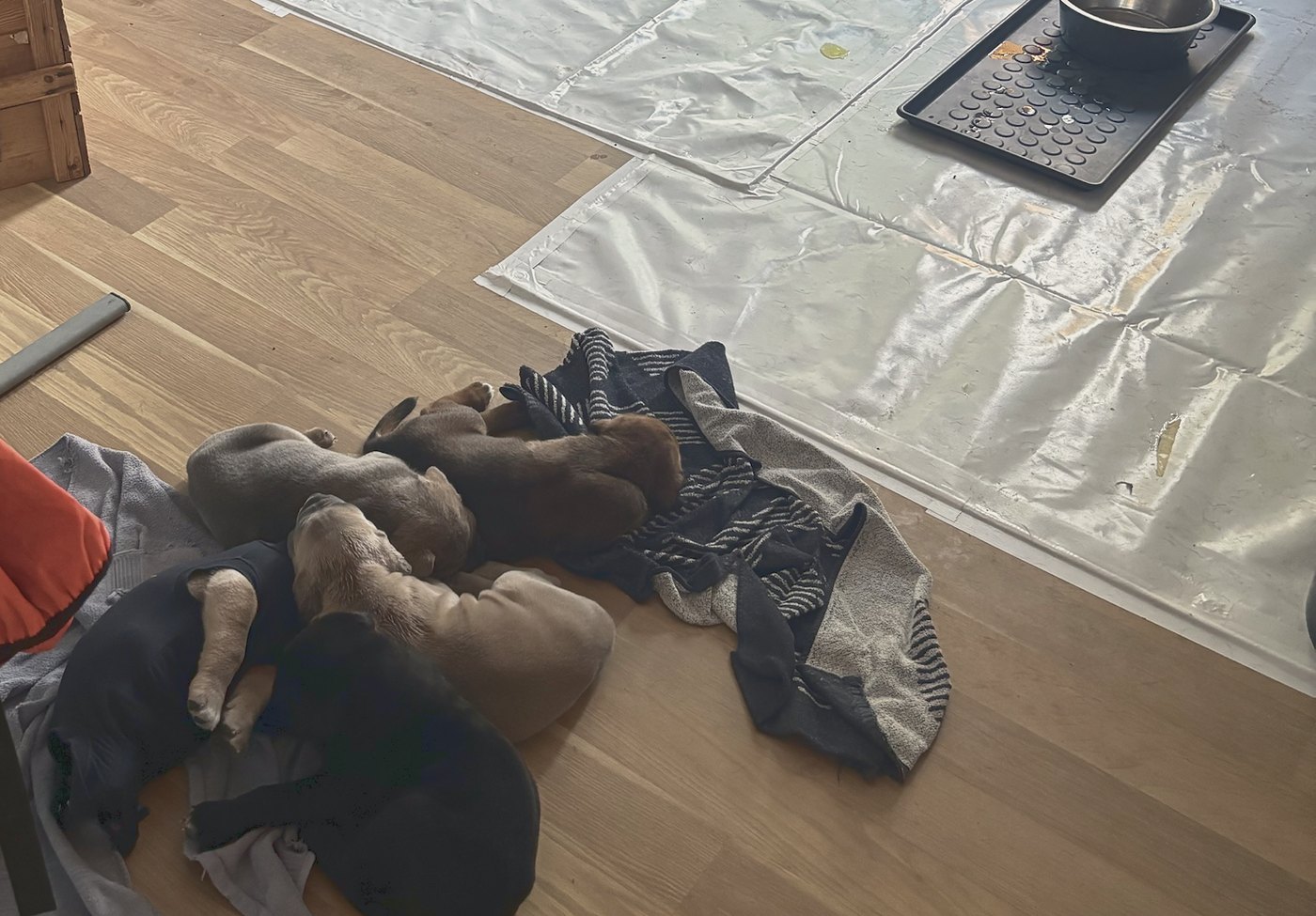
Breeding limits in the Animal Protection Act
Section 7a of the Animal Protection Act (Act No. 246/1992 Coll., consolidated version of April 1, 2025) bans puppy mills: keeping and breeding dogs or cats in a facility, including a flat, in unsuitable conditions that cause them suffering, and in numbers that do not let them meet their physiological, biological or behavioral needs. A facility counts as a puppy mill even if breeding or profit is not the keeper’s main aim.
The same section sets conditions for everyone who keeps a breeding dog:
- a bitch may nurse only as many puppies as her health allows, and the breeder must hand-rear the other viable puppies;
- a bitch may have no more than three litters in any 24 months;
- puppies may not be taken from the bitch before 50 days of age.
Breeders in clubs, businesses, anyone breeding for profit and anyone who keeps three or more bitches must also follow the ministry’s implementing rules on the minimum and maximum age of dogs for breeding. Our article on litter limits and age rules compares limits in other countries. The general structure of breeding law is in laws, regulations and kennel clubs.
Litter records and sales records
Breeding associations and their members, businesses, anyone breeding for profit and anyone who keeps three or more bitches must:
- fill in a litter record (evidenční list vrhu štěňat) within seven days of the birth, on the ministry’s form, and add each puppy’s microchip number within seven days of chipping;
- keep the litter record for at least three years;
- when selling or giving away a puppy under six months, keep a record of sold and given puppies for three years, give the new owner information on how the puppy has been fed and how to care for it, and hand over a copy of the litter record for that puppy.
The litter record shows the breeder’s details, where the dogs are kept, the mother’s breed, name, date of birth and chip or tattoo number, the puppies’ date of birth, number and deaths after seven days, each puppy’s chip number, name and sex, and the vaccinations, deworming and other veterinary treatment given before the transfer. Keep it with your kennel records.
Selling a puppy
Section 7b bans selling or handing over a dog to a new owner in public places, except within a public animal event, and in certain other places listed in the Act.
Under Section 4 of the Veterinary Act (Act No. 166/1999 Coll., consolidated version of January 1, 2026), every dog must carry a microchip, except dogs with a legible tattoo made before July 3, 2011. The breeder of a newborn puppy must have it microchipped before it is offered for sale or handed over to a new owner, and at the latest by three months of age. Dogs must be vaccinated against rabies between three and six months of age and then revaccinated, and the chip number must be recorded in the vaccination document.
Notifying the veterinary administration
Under the Veterinary Act, a breeder who keeps three or more female dogs older than 12 months must notify the regional veterinary administration in writing or through the State Veterinary Administration’s information system within seven days of reaching that number, stating how many dogs are kept and where.
The central dog register
The Veterinary Act also sets up a central dog register, run by the Chamber of Veterinary Surgeons. The keeper must make sure that a newborn puppy is entered in the register at the same time as it is microchipped, and that rabies vaccinations, changes of owner and permanent changes of address are entered, at the latest at the next rabies vaccination. Only private veterinarians make the entries, within seven working days.
The EU rules
Czechia follows the EU rules on pet movement, and the new EU regulation on the welfare and traceability of dogs and cats will apply here from 2028. Both are set out on our European Union page. See also exporting puppies and international sales.
What the kennel clubs say
ČMKU is the club listed for Czechia by the FCI. In FCI countries, national kennel clubs set their breeding rules on top of the FCI’s International Breeding Rules, which themselves set no age or litter limits. The legal limits on this page — three litters in 24 months and puppies from 50 days — apply to every breeder, whether or not the litter is registered with a club.
Source: FCI, International Breeding Rules. National kennel clubs may set stricter rules.
Last updated: November 8, 2026
Not confirmed, but worth noting
- The minimum and maximum breeding ages. These are set by a ministry decree, which we did not open.
- ČMKU’s own rules. We could not open ČMKU’s breeding regulations.
- The places where sales are banned. Section 7b refers to further places listed elsewhere in the Act, which we did not check in detail.
We could not confirm these points in the official text on the date checked, so treat them as questions to put to your authority, not as rules.
Last updated: November 8, 2026
In practice
A breeder in Czechia keeps a young bitch from her last litter and, when it turns 12 months, has three bitches over that age. She notifies the regional veterinary administration within the week, starts using the ministry’s litter record form, books her veterinarian to microchip and register the next litter well before the puppies are offered for sale, and plans collection at her home, not at a parking lot or a market.
(Illustrative, composite scenario.)
Work on it
A few minutes here will teach you more than re-reading the article.
Ask yourself
- Does each of my bitches stay within three litters in 24 months?
- Do I keep three or more bitches over 12 months, and have I notified the veterinary administration?
- Does every buyer get a copy of the litter record and care information?
Find out & check
- Read the current implementing decree on minimum and maximum breeding ages, and your breed club’s rules.
Do one thing
- Download the ministry’s litter record form and fill it in for your next litter within seven days of the birth.
Was this article helpful?
Anonymous. We do not store your name, email or IP address.
Sources & further reading
- e-Sbírka — Act No. 246/1992 Coll. on the protection of animals against cruelty, consolidated version of April 1, 2025 (sections 7a and 7b). e-sbirka.gov.cz
- e-Sbírka — Act No. 166/1999 Coll. on veterinary care (Veterinary Act), consolidated version of January 1, 2026 (sections 4 and 5e–5g). e-sbirka.gov.cz
- Portál veřejné správy — Central dog register (CEP): registering a dog at the keeper’s request. portal.gov.cz
- Obec Skuhrov — Compulsory microchipping of dogs (municipal information, January 2020). skuhrov-huntirov.cz
- Your Europe — Travelling with pets and other animals in the EU. europa.eu
- Fédération Cynologique Internationale — International Breeding Rules of the FCI. fci.be
Where evidence is limited, recommendations rest on established practice and expert judgment, and may be updated as knowledge develops. This is general information, not legal or financial advice: requirements differ between jurisdictions and change over time — confirm the current rules with the authority named here and have your own situation reviewed by a qualified professional where you breed.
Next steps
- Read next: Breeding and selling puppies in Germany.
- Related: Breeding and selling puppies in Poland · Pre-breeding regulatory checklist: what to confirm before you breed.
- Return to the area hub: Becoming a responsible breeder.