A breeding program is only as good as the everyday life behind it. Long before whelping boxes and pedigrees, there is a simpler question: do your dogs have good lives? How your breeding dogs are housed, exercised, fed and kept company shapes their health, their temperament, and the puppies they will one day raise. This guide is about that daily life — the welfare of the dogs themselves. The buildings, records and business of running a kennel are a separate subject, covered in Area 12.
The most important first
- Breeding dogs are dogs first: they need the same good life as any well-kept companion, not “kept for breeding” conditions.
- The five domains are a practical way to audit daily life — nutrition, environment, health, behavior, and the mental state those produce.
- Space, enrichment, exercise and real company are welfare essentials, not extras.
- Good nutrition and preventive health are husbandry basics that shape reproduction and puppies later.
- What counts is the outcome — a good life — not one particular housing model.
Breeding dogs are dogs first
It is worth stating plainly, because the phrase “breeding dog” can quietly lower expectations. A dog kept for breeding needs exactly what any dog needs to live well: comfort, company, exercise, stimulation, and a sense of security. Its role in a program does not reduce what it is owed; if anything, the dogs a whole program depends on deserve particular care.
The everyday test is a fair one to hold yourself to: would I be content if this were the life my dog lived, day in and day out? If the honest answer wavers, that is information.
Good husbandry includes routine veterinary care: a full checkup at least once a year (more often for older dogs), vaccination and parasite control on a schedule your vet sets, and dental care. Body-condition score each breeding dog regularly. On the common 1–9 scale, aim for 4–5, because bitches that are too fat or too thin face more problems in pregnancy and whelping.
A home, not just housing
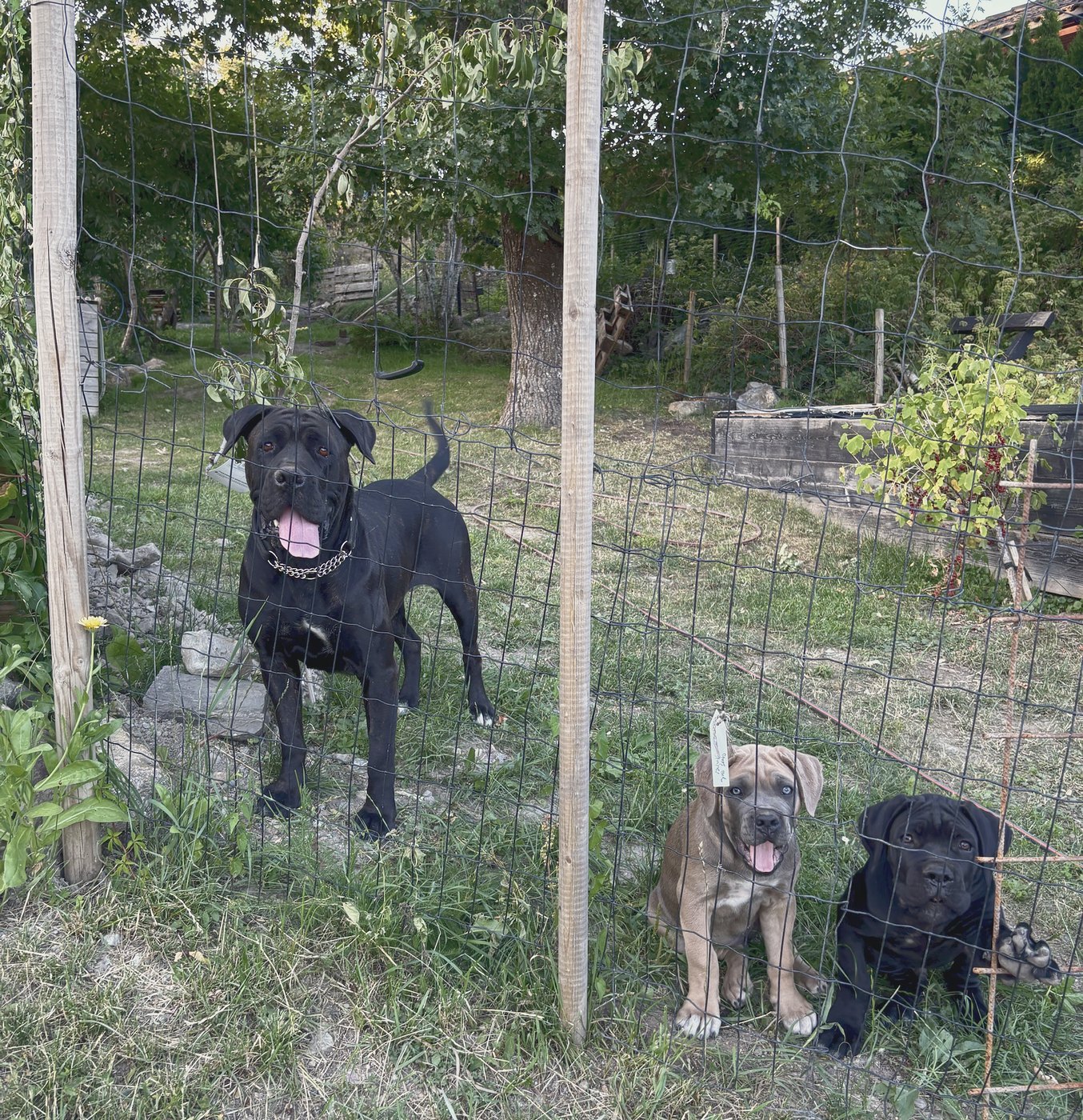
Good welfare does not require one specific setup. Some excellent breeders keep their dogs fully in the house; others use well-designed kennel facilities with generous access to the outdoors and to people. What matters is not the model but the outcome — whether the dog’s day contains enough space, comfort, safety and interest.
Practically, that means room to move and rest properly, protection from cold, heat and damp, clean and comfortable places to sleep, and an environment with enough variety that a dog is not simply waiting between events. Enrichment — things to do, investigate and solve — is not a luxury layered on top of housing; for a social, intelligent animal it is part of what housing is for. (The specifics of the puppies’ environment are covered separately in Area 8.)
Floors matter more than they look. They should be non-slip, easy to clean and dry, because slippery floors strain joints and damp floors can cause sore, inflamed feet. Give every dog soft bedding and a resting place apart from where it eliminates. Research from Purdue University’s canine welfare group sums it up: barren spaces raise stress, and choice (a place to hide, a different surface, a view) lowers it.
In practice
A breeder with a separate, spotless kennel building realizes the dogs spend most of the day there alone, seeing people mainly at feeding and cleaning. Nothing is neglected — but nothing is enriched either. Bringing the dogs into more of the household’s daily life, in rotation, changes their temperament noticeably, and the breeder felt the litters that followed were calmer and better socialized.
(Illustrative, composite scenario.)
Exercise, company and a normal social life
Dogs are social animals, and breeding dogs are no exception. Regular, appropriate exercise helps keep them physically sound — which matters for reproduction, pregnancy and whelping — and genuine company keeps them behaviorally sound. A dog that lives with enough human contact, sees the wider world, and has normal social experiences is not only happier; it is a better parent and passes more stable temperament and habits to its puppies.
This is where “kept for breeding” conditions do real harm. A dog isolated from normal life may be physically maintained and still be behaviorally impoverished — and many breeders find that this shows up in the whelping box. Socialization and stability are not only puppy topics; they start with how the parents themselves live.
Some laws now set minimums. In England, licensed breeders must exercise adult dogs at least twice a day away from their sleeping area, and provide enrichment and social contact. Treat rules like this as a floor, not a goal. Chewing and foraging items are cheap and useful. In one study of breeding kennels, dogs given suitable chews had healthier gums and teeth. Rotate toys so they stay interesting.
Telling a good life from an adequate one
It is easy to audit welfare on a negative standard — is the dog hungry, cold, sick, frightened? Harder, and more important, is the positive standard the five domains point to (see Welfare frameworks and the five domains): is the dog thriving? A dog can be fed, clean and healthy and still be flat, under-stimulated and under-exercised.
Useful quality-of-life signals are behavioral: a dog that plays, explores, engages with people, rests easily and recovers quickly from mild stress is usually doing well; persistent dullness, withdrawal, repetitive behaviors or reluctance to engage are worth taking seriously. Checking each dog against the five domains once in a while — rather than waiting for a problem — is a simple way to catch the gap between adequate and good.
Watch for signs that a dog is not coping: pacing, circling, spinning, excessive barking, licking itself raw, or hiding and not approaching people. These signs deserve action, not just a note in the log. Have the dog checked for pain or illness, then change its environment and routine. Ask your vet about referral to a veterinary behaviorist if the behavior continues.
In practice
A retired brood bitch is, on paper, fine — well fed, clean, healthy, no complaints. But she has grown flat and disengaged. Adding daily walks, a little training for its own sake, and a place in the household turns “adequate” into “good” within weeks. The negative checklist had nothing to flag; the positive one did.
(Illustrative, composite scenario.)
Where husbandry ends and kennel operations begin
There is a natural boundary worth drawing. This guide is about the dogs’ quality of life — how they live and whether they are well. The operational side of a kennel — facilities and equipment, hygiene and biosecurity protocols, record-keeping, budgeting, insurance and contingency planning — is its own body of knowledge, covered in Area 12 (Kennel operations). The two connect closely, but keeping them distinct helps: one asks “are the dogs living well?”, the other asks “is the kennel run well?”
One part of quality of life belongs here, though: retirement. Prepare every breeding dog for life after breeding from the start of its career. Dogs that already know household routines, car rides, strangers and everyday noises settle into pet homes far more easily. Decide on your retirement criteria in advance, share the dog’s records with its new family, and be ready to take it back if the placement does not work out.
When to call your vet or a veterinary behaviorist
- A dog starts pacing, circling, spinning or self-licking, or becomes withdrawn or fearful. Rule out pain or illness first.
- A dog loses or gains weight, or its body condition moves outside about 4–5 on the 1–9 scale.
- A dog has sore, red or swollen feet, pressure sores or skin problems from its housing.
- A dog is limping, stiff or reluctant to exercise.
- A dog is due for its annual health check, or a breeding dog is approaching retirement and needs a plan.
- A dog stops eating, has diarrhea or vomiting that lasts more than a day, or seems unwell.
- If in doubt, call — your vet would rather hear from you early.
Work on it
A few minutes here will teach you more than re-reading the article.
Ask yourself
- Would I be content if the life my average dog lives on an average day were my own dog’s whole experience?
- Which of my dogs gets the least attention, exercise or enrichment — and why has it ended up that way?
- Am I auditing welfare on a “not suffering” standard, or a “thriving” one?
Find out & check
- Run each dog through the five domains once (use the checklist from the five domains evidence summary).
- Find out what exercise and enrichment your specific breed actually needs — it varies widely.
- Check what daily life genuinely looks like for your dogs during the hours you are not actively with them.
Do one thing
- Pick the dog with the thinnest day and add one real improvement this week — a longer walk, a training session, more household time.
Was this article helpful?
Anonymous. We do not store your name, email or IP address.
Sources & further reading
- Mellor DJ, Beausoleil NJ, et al. (2020) The 2020 Five Domains Model: Including Human–Animal Interactions in Assessments of Animal Welfare. Animals 10(10):1870. https://doi.org/10.3390/ani10101870
- The Royal Kennel Club — The Kennel Club code of ethics. https://www.royalkennelclub.com/about-us/about-the-rkc/what-we-do/the-royal-kennel-club-rules-regulations-and-codes/the-royal-kennel-club-code-of-ethics
- Purdue University Canine Welfare Science (Croney Research Group) — Environmental Enrichment. https://caninewelfare.centers.purdue.edu/environment/enrichment
- Purdue University Canine Welfare Science (Croney Research Group) — Environmental sources of stress for kenneled dogs: space and flooring needs. https://caninewelfare.centers.purdue.edu/resource/environmental-sources-of-stress-for-kenneled-dogs-space-and-flooring-needs-croney-research-group/
- Purdue University Canine Welfare Science (Croney Research Group) — Retiring & Rehoming. https://caninewelfare.centers.purdue.edu/environment/rehoming-environmental
- UK legislation — The Animal Welfare (Licensing of Activities Involving Animals) (England) Regulations 2018, Schedule 6 (breeding dogs). https://www.legislation.gov.uk/uksi/2018/486/schedule/6
- Merck Veterinary Manual — Routine Health Care of Dogs. https://www.merckvetmanual.com/dog-owners/routine-care-and-breeding-of-dogs/routine-health-care-of-dogs
- WSAVA Global Nutrition Committee — Body Condition Score chart, dog. https://wsava.org/wp-content/uploads/2025/06/WSAVA_BCSCat_BCSDog_Nutrition_250612.pdf
Where evidence is limited, recommendations here rest on established practice and expert judgment, and may be updated as knowledge develops.
Next steps
- Read next: Laws, regulations and organizations: the rules every breeder works within.
- Related: Welfare frameworks and the five domains, applied to breeding · Kennel operations · Behavior, development & enrichment · Exercise, environment and daily life during pregnancy.
- Return to the area hub: Becoming a responsible breeder: the complete foundation.