The reason socialization has a deadline and worming does not is that a puppy’s willingness to accept novelty is not constant — it rises, peaks and then declines on a schedule you can plan around but cannot postpone.
The most important first
- Scott and Fuller’s 1965 framework is still the standard: neonatal from birth to roughly two weeks (about 13 days), transitional from roughly two to three weeks, socialization from roughly three weeks to about 12 weeks, juvenile from about 12 weeks to sexual maturity. All of these are approximate ranges that vary by breed and by individual puppy.
- The sensitive period for socialization is conventionally given as roughly three to twelve or fourteen weeks, though reported end points vary; learning continues more slowly after that, and development stays rapid through at least 20 weeks.
- The boundaries are gradual, not sharp — treat the ages as a planning framework, not as gates that open and shut on a given day.
- AVSAB’s position statement (2008) describes the first three months as the primary and most important time for socialization, and as the period when sociability outweighs fear.
- Most puppies leave at around eight weeks, roughly the midpoint — you hold the first half of the window and the new owner holds the second.
Where the framework comes from
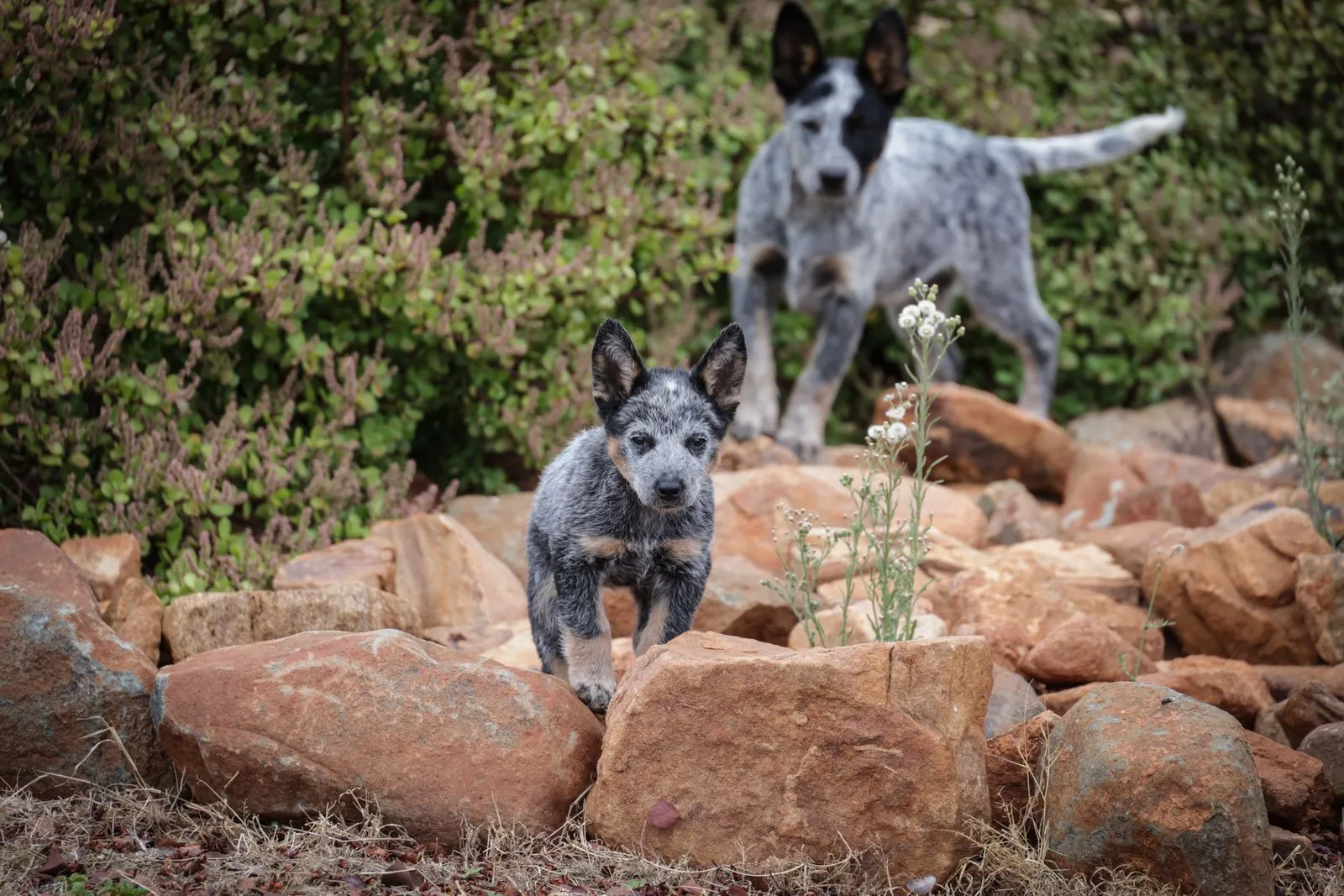
A framework of developmental stages based on Scott and Fuller’s 1965 work at Jackson Laboratory is still the one used to describe canine development, and the Merck Veterinary Manual sets it out in four parts. The neonatal period runs from birth to around 13 days, with closed eyes and ears and limited motor ability. The transitional period, roughly 13 to 19 days, is when eyes and ears open, perceptual abilities increase and puppies start eliminating without maternal stimulation. The socialization period, from about 19 days to 12 weeks, is characterized by increased play and social attachment; weaning ends around seven weeks and puppies become bolder explorers. The juvenile period begins at about 12 weeks and runs to sexual maturity, and it is here that attraction to unfamiliar people begins to decrease and avoidance responses become heightened.
Treat every one of these ages as approximate. The Merck manual itself gives the start of the socialization period both as about 19 days and as about three weeks, and individual puppies, and breeds, move through the stages at different rates.
That last point is worth rereading: the decline in openness to strangers is not a training failure appearing at four months but a normal developmental change, and work done before it is easier than work done after it.
The early periods double as health checkpoints. Eyes and ears usually open toward the end of the second week, and by the end of the transitional period puppies start eliminating without the dam’s help. A puppy that is clearly behind its littermates on these milestones, or on gaining weight, should be seen by your veterinarian. Developmental delay is sometimes the first sign of illness.
The start of the useful window is set by perception. The AVMA’s literature review describes a puppy’s eyes and ears as well developed by three weeks, and says exposure to relevant stimuli should begin with the puppy raiser by or before three weeks of age and then continue with the owner. Readiness for real environmental exploration comes later, at around eight to nine weeks.
Why the edges are blurred
Compare sources and you will find the window given as three to twelve weeks, three to fourteen weeks, and sometimes with rapid development described as continuing to twenty. This is not sloppiness; the underlying change is a gradient. The AVMA’s literature review reports that puppies are most responsive to learning from exposure to unfamiliar dogs between 3 and 14 weeks, and that puppies not exposed to unfamiliar environments until after 14 weeks may lose that flexibility and may remain fearful in those situations. The same review describes development continuing rapidly through at least 20 weeks, and AAHA’s 2015 behavior guidelines place rising wariness of new objects and places (neophobia) at roughly 10–12 to 16–20 weeks. The Merck Veterinary Manual adds a practical warning: waiting to socialize until maternal antibodies have waned, at around 16 to 20 weeks, misses the window.
The numbers differ; the practical picture does not. Peak receptiveness falls in the first three months, there is a marked drop-off somewhere around 14 weeks, and learning continues after that but more slowly. Plan for the early figure and treat anything later as a bonus.
The ages in this framework come from a mix of older laboratory work and later observational studies. Much of the evidence shows associations rather than cause and effect, and reviews describe their conclusions as tentative. Use the ages to plan, and watch the individual puppy. Veterinary behavior guidelines say plainly that assuming exposure only matters inside fixed periods is incorrect, because puppies develop at different rates.
Fear, and when it starts to matter
The reason the window closes is fear. AVSAB’s position statement frames the first three months as the period during which sociability outweighs fear, and that is what makes it the primary window of opportunity to adapt to new people, animals and experiences. As the balance tips, the same novel thing that would have been investigated at seven weeks may be avoided at sixteen.
Fear is not absent before that tipping point, though, and this is where breeders sometimes over-simplify. AAHA’s 2015 behavior guidelines describe fear responses to people and unfamiliar species becoming more likely from about five to seven weeks onward, through to about twelve weeks — inside the socialization period, not after it — and the Merck Veterinary Manual describes the socialization period as a time of heightened sensitivity to stress in which frightening experiences should be avoided. The idea that puppies cannot be frightened while the window is open is not supportable, and the popular notion of a precisely dated “fear period” rests on weaker evidence than its confident presentation suggests. Openness and sensitivity coexist here, which argues for graded exposure rather than volume; what to do when something goes wrong belongs to fear, recovery and building resilience.
Research comparing breeds shows that the timing differs: in one study, Cavalier King Charles spaniels showed fear-related avoidance later than German shepherds and Yorkshire terriers. Puppies that meet unfamiliar places only after about 14 weeks may adapt less readily and can remain fearful in those situations.
In practice
A breeder does thorough exposure work up to eight weeks and hands over confident puppies with a written list of everything they have met. One buyer, worried about infection, keeps the puppy at home until the vaccination series finishes at sixteen weeks. At six months that dog is the most cautious of the litter. Nothing in the breeder’s half of the window was wasted — but the second half was never spent, and the list alone did not say that it was the buyer’s to spend.
(Illustrative, composite scenario.)
Splitting the window with the buyer
If the window runs to roughly fourteen weeks and puppies go home at around eight — the minimum the AVMA review recommends — you hold a little under half of it. Your own work therefore needs to be front-loaded and deliberate, using the socialization checklist and the principles in habituation and environmental exposure rather than hoping variety happens. And the handover has to transfer the remaining task explicitly, with dates: what the puppy has met, what it has not, and how few weeks are left.
That conversation is where the vaccination overlap has to be handled honestly, because the most receptive weeks fall before the vaccination series is complete: current vaccination guidelines give the final puppy dose at 16 weeks or older, with a further booster at or after about 26 weeks. AVSAB’s position is that socialization before full vaccination should be the standard of care, and that classes can start as early as seven to eight weeks provided a puppy has had at least one set of vaccines seven days beforehand and a first deworming. That is a judgment about relative risk, not a dismissal of disease risk — the route is managed exposure, planned alongside sound infection control and biosecurity.
Work on it
A few minutes here will teach you more than re-reading the article.
Ask yourself
- Do I know, in days rather than impressions, when my current litter entered the socialization period?
- Does my handover tell the buyer how many weeks of the window remain, not just what the puppy has already met?
- Am I front-loading exposure into weeks three to eight, or leaving most of it until the puppies seem ready?
Find out & check
- Find out from your vet what controlled exposure they consider appropriate in your area before the vaccination series is complete, and what they want you to avoid.
Do one thing
- Write the dates for three weeks, eight weeks and fourteen weeks of age for your current or next litter on the same sheet as your worming and vaccination dates.
Was this article helpful?
Anonymous. We do not store your name, email or IP address.
Sources & further reading
- Merck Veterinary Manual — Social Behavior of Dogs. merckvetmanual.com
- American Veterinary Medical Association (AVMA) — Literature review: Socialization of puppies and kittens (2024). avma.org
- American Veterinary Society of Animal Behavior (AVSAB) — Position Statement on Puppy Socialization (2008). avsab.org
- American Animal Hospital Association (AAHA) — 2015 AAHA Canine and Feline Behavior Management Guidelines. aaha.org
- Morrow, M. et al., Journal of Veterinary Behavior 2015;10(4):286–294 — Breed-dependent differences in the onset of fear-related avoidance behavior in puppies. pure.psu.edu
- Howell, T. J., King, T. & Bennett, P. C., Veterinary Medicine: Research and Reports 2015;6:143–153 — Puppy parties and beyond: the role of early age socialization practices on adult dog behavior. pmc.ncbi.nlm.nih.gov
- World Small Animal Veterinary Association (WSAVA) — 2024 Guidelines for the Vaccination of Dogs and Cats. wsava.org
- The Royal Kennel Club, Assured Breeders — Puppy pack template. royalkennelclub.com
Where evidence is limited, recommendations rest on established practice and expert judgment, and may be updated as knowledge develops. Reported ages for developmental periods vary between sources and describe gradual transitions rather than fixed boundaries.
Next steps
- Read next: Socialization: the breeder’s most important behavioral work.
- Related: How the puppy brain and behavior develop.
- Return to the area hub: Behavior and development.