The relationship with your veterinarian is settled long before the night it matters — the breeders who get calm, competent help at three in the morning are usually the ones who did the talking in daylight.
The most important first
- A professional relationship is built through routine visits, not emergencies; in many jurisdictions a vet may only treat or prescribe for an animal they already know from a recent examination.
- Settle before the first mating who covers nights, whether the practice performs cesarean sections, and where it refers reproductive work it does not do itself.
- Advice is only as good as the information you bring, which makes record-keeping a clinical tool rather than administration.
- Your work is accurate observation and clear reporting, not diagnosis; the boundary for treatment is covered in veterinary care and medication for puppies.
Choose the practice before you need it
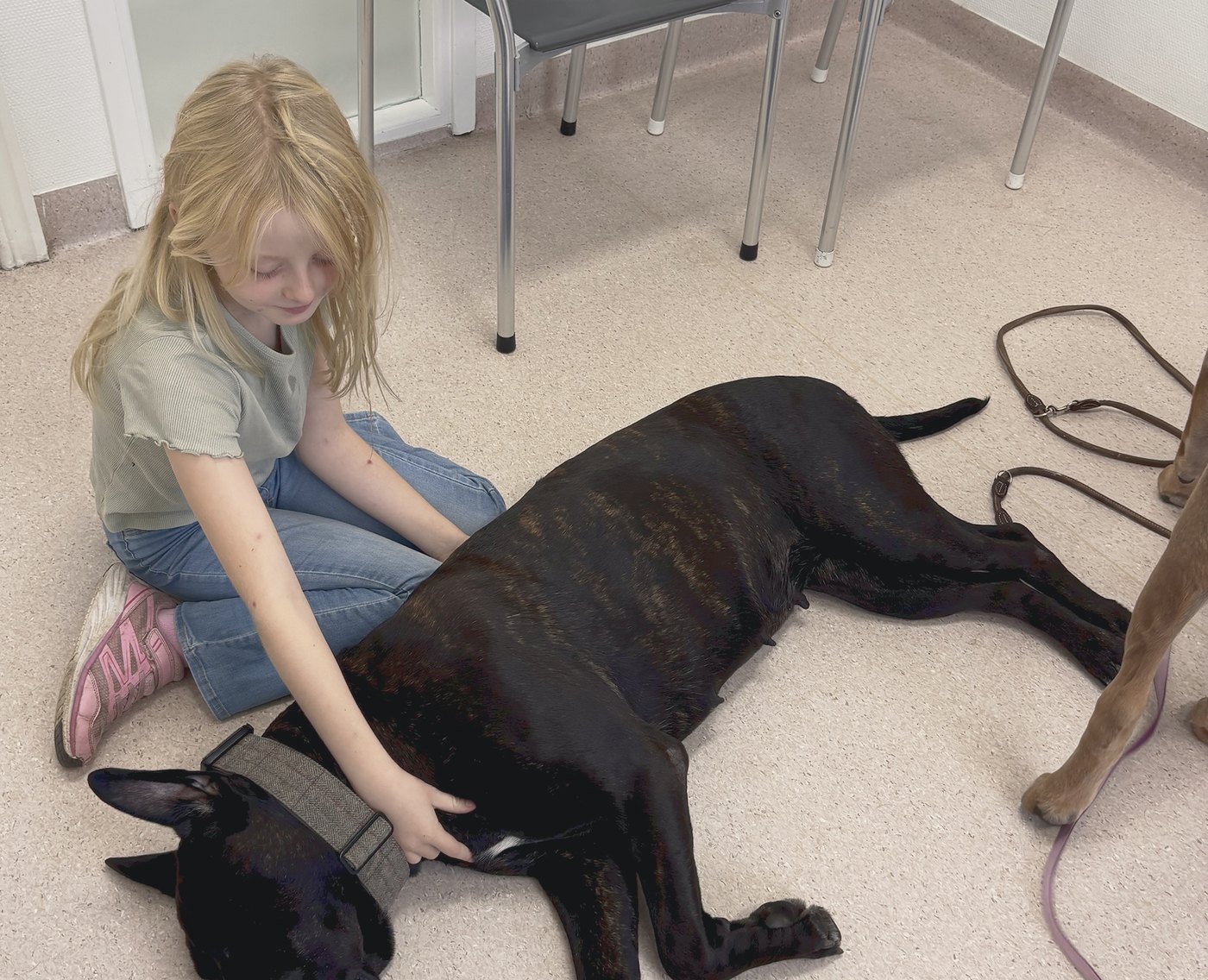
Most breeders inherit a practice rather than choose one. The clinic is nearby, it vaccinated the first dog, and it is still there when the first litter arrives. That is a reasonable starting point, but it is not the same as having established that the practice can do reproductive work, or wants to: a vet who sees two whelpings a year is in a different position from one who sees two a month.
The natural moment to find out is the pre-breeding examination, which veterinary reference guidance describes as the opportune point for input on breeding practice as well as on the individual dog. Ask how often the practice manages planned matings, progesterone timing, dystocia and neonatal care, and what it refers onwards; a vet who says an infertility work-up belongs with a specialist is doing the job well. The useful outcome is a named referral route with a distance and a number, written down rather than remembered. See pre-breeding health checks for what the examination should cover.
Use the pre-breeding examination to set the pattern. Your vet will typically take a history, examine the bitch (including a vaginal examination), check that core vaccinations are current, and screen for canine brucellosis before each planned breeding. Bring the stud dog’s test results too.
What to agree in advance
Four things are worth settling explicitly: who answers out of hours and from which premises; whether cesarean sections are performed and by whom; how an emergency arrival at night works, payment included; and whether the practice will see a whole litter at short notice, which is a different ask from seeing one adult. Geography belongs here too, so drive the route to the emergency facility once, in the dark, before you need it.
Be realistic about what these understandings are. In most countries they are not contracts, and no practice can promise a particular surgeon on a particular night; what the conversation buys is the absence of surprise. Some kennel club schemes formalize part of it — The Kennel Club’s guidance for its Assured Breeders scheme, which closed on 31 December 2024, asked members to keep a relationship with a regular vet so emergency care could be obtained promptly, and to work to a veterinary health plan covering annual examinations, vaccination and parasite control. Comparable expectations appear elsewhere, though the wording differs, and in some countries the same ground sits in licensing instead.
Ask for the practice’s out-of-hours arrangements in writing: which clinic covers nights and weekends, its address and phone number, its hours, what it can do (for example, a cesarean at 3 a.m.), and roughly what an emergency visit costs to start. In the UK, practices are required to give clients these details; elsewhere, most will if asked. Save the number in your phone and on the kennel emergency plan.
Prepare the visit so the information is usable
The biggest improvement most breeders can make to their veterinary care costs nothing. Arrive with a timeline rather than a story: dates of estrus and mating, progesterone values with sampling dates, temperatures with times, daily weights, what you saw and when, what you have given and at what dose. A vet reading that can form a differential in two minutes; one listening to an anxious narrative must extract the same facts by interrogation, under time pressure, with you upset.
This is where kennel records stop being paperwork. The weight chart showing a neonate static for eighteen hours, the log showing a temperature drop two days earlier than you remembered, the note that the previous litter also produced a cleft palate — these change clinical decisions. Keep dated numbers if you keep nothing else.
Protocols are decisions, not downloads
Breeders circulate protocols: vaccination schedules, worming intervals, disinfectants, supplements. Most originate somewhere sensible and then travel without their reasoning. The WSAVA vaccination guidelines are explicit that they are broad guidance rather than mandatory or minimum standards, meant to be adapted locally, with non-core vaccine choices made through a considered conversation between veterinarian and owner.
There is a clinical reason the adaptation matters. Maternally derived antibody interferes with early vaccination, and its level varies both between litters and between puppies in the same litter, which is why guidance points towards a series of doses with the final one at sixteen weeks or later rather than a single fixed age. Local disease pressure and the age at which puppies leave shift the answer further. So bring an inherited protocol to your vet as a question: this is what I do, here is why, does it make sense here.
Current WSAVA guidance gives puppy core vaccines every two to four weeks, with the last puppy dose at 16 weeks or older, and then a further dose at or after 26 weeks rather than waiting a full year. This protects the minority of puppies whose maternal antibodies blocked the earlier doses. Your vet will adapt the schedule to local disease risks; give buyers the plan in writing.
Being a good client without being the clinician
The asymmetry is worth naming. You know the breed, the line, this bitch’s previous three whelpings and what normal looks like in your hands; your vet knows medicine. Each holds information the other cannot get, and the consultations that go well are the ones where both halves arrive. In practice that means reporting accurately rather than diplomatically, giving informed consent rather than deference, following through, being reachable, and paying — and not arriving with a diagnosis assembled from a breeder forum and asking for ratification.
Disagreement happens and need not become conflict. Say it out loud and early: I think this bitch is in trouble and you think she is not, help me understand why. Then ask what the reasoning is and what would change your mind, because a vet who can name the finding that would shift the plan has given you something to watch for. A second opinion is legitimate and works better declared than concealed. Where you pressed for intervention and were wrong, say so; credibility with a practice is cumulative, and it is what buys you the benefit of the doubt later.
Where your own action has to stop
Every breeder develops practical skills, and none of them makes you a clinician. What a lay person may hold and administer varies substantially between jurisdictions: prescription-only medicines, oxytocin, antibiotics and controlled drugs are treated differently in the United Kingdom, the EU member states, the United States, Canada and Australia, as is whether a breeder may keep an emergency box at all.
Authority to prescribe generally depends on an existing professional relationship with that animal, one more reason the routine visits matter. When to stop managing and start traveling is covered in when to call the vet during whelping and the postpartum period.
In the US, prescription and off-label use of medicines is tied to a valid veterinarian-client-patient relationship: the vet must know the animal, take responsibility for the decision and be available for follow-up. Keeping leftover medication “for next time” or using another dog’s prescription bypasses that, and it is often illegal as well as risky.
In practice
A breeder planning a maiden bitch’s first litter for the spring books the pre-breeding examination in October rather than February. She learns that her practice performs cesareans only in working hours and routes night calls to a hospital forty minutes away, that progesterone samples go to a laboratory with a two o’clock cut-off, and that the nearest vet with a reproductive interest works at a third clinic. She writes all three down, drives the night route once in November, and asks the practice to note that a litter is planned. In March, with one puppy delivered and the bitch then straining strongly for twenty minutes without producing another, her call to the emergency hospital lasts ninety seconds: breed, age, weight, mating dates, confirmed ovulation, time of the first puppy, temperature, what she has seen. She is told to leave now; nothing about it was clever, it was arranged in autumn.
(Illustrative, composite scenario.)
When to call your vet
- Strong straining for 20–30 minutes with no puppy, or weak, intermittent contractions for about 2 hours with no puppy (never wait more than 4 hours).
- More than about 2 hours between puppies when more are expected, or labor has not started within 24 hours of the temperature drop.
- Green or black discharge before the first puppy — this is an emergency; call immediately.
- The dam has a temperature above 103 °F (39.5 °C), foul-smelling discharge, heavy bleeding, or stops eating or caring for the puppies.
- A newborn is cold, weak, crying constantly, not nursing, or not gaining weight (aim for at least 1.5 × birth weight by day 7).
- A puppy or adult has repeated vomiting or diarrhea, especially with blood or lethargy.
- If in doubt, call — your vet would rather hear from you early.
Work on it
A few minutes here will teach you more than re-reading the article.
Ask yourself
- If a bitch needed a cesarean at two in the morning next Tuesday, where would she go, who would operate, and how long is the drive?
- When your vet last gave advice you disagreed with, did you say so at the time, or afterwards to other breeders?
- Which of your protocols have you discussed with a veterinarian, and which did you inherit?
Find out & check
- Confirm with your practice or national regulator which medicines you may lawfully keep and administer yourself where you live; the rules differ markedly between countries.
Do one thing
- Put one page at the front of your kennel file: practice name, out-of-hours number, emergency hospital address with driving time, referral contact, client account number.
Was this article helpful?
Anonymous. We do not store your name, email or IP address.
Sources & further reading
- American Veterinary Medical Association — The veterinarian-client-patient relationship (VCPR). avma.org
- US Food and Drug Administration — The Ins and Outs of Extra-Label Drug Use in Animals. fda.gov
- Royal College of Veterinary Surgeons — 24-hour emergency first aid and pain relief (supporting guidance). rcvs.org.uk
- Merck Veterinary Manual — Management of Reproduction: Dogs and Cats. merckvetmanual.com
- MSD Veterinary Manual — The Breeding Soundness Examination in Dogs and Cats. msdvetmanual.com
- Merck Veterinary Manual — Labor, Delivery, and Postpartum Care in Bitches and Queens. merckvetmanual.com
- WSAVA Vaccination Guidelines Group — 2024 Guidelines for the Vaccination of Dogs and Cats. wsava.org
- The Royal Kennel Club — Kennel Club announces registrations model update and closure of the ABS (July 2024). royalkennelclub.com
Where evidence is limited, recommendations rest on established practice and expert judgment, and may be updated as knowledge develops. Little here is research-based: how breeders and veterinarians work together is professional practice rather than a studied question, and the law on prescribing and lay administration of medicines differs enough between countries that anything said here about what you may do yourself must be checked locally.
Next steps
- Read next: Pre-breeding health checks.
- Related: When to call the vet during whelping and the postpartum period.
- Return to the area hub: Running a kennel: operations, records and resilience.