Most adult dogs that carry canine herpesvirus never show more than a runny nose, but in a litter under three weeks old the same virus can kill puppies within a day of the first signs, which is why its prevention is built into the weeks before and after whelping rather than left until something goes wrong.
The most important first
- Puppies are most at risk in their first three weeks. The Merck Veterinary Manual describes deaths mostly at one to three weeks of age, with losses that can reach the whole litter.
- Signs come on suddenly: a puppy stops nursing, cries as if in pain, becomes weak, and may have a runny nose, diarrhea or red spots on the gums. Death can follow within 24–48 hours. Call your veterinarian at once if you see any of this, or if more than one puppy fades.
- The virus is common and often silent in adults. Many healthy dogs carry and shed it, so you cannot rely on your own dogs being free of it.
- Isolate the bitch for three weeks before and three weeks after whelping, away from dogs outside your household, with good hand hygiene for everyone who handles her or the puppies.
- Warmth matters. The virus multiplies best at the lower body temperature of newborns, so keeping the whelping box warm, as your veterinarian advises, is part of prevention.
What canine herpesvirus is
Canine herpesvirus (CHV-1) is a virus that spreads through close contact with nose, mouth and genital secretions. The Merck Veterinary Manual describes it as widespread, with studies finding antibodies in anywhere from 20% to 98% of dogs, and notes that many infected dogs shed the virus without showing any signs. In adults it usually causes nothing more than mild nasal discharge, eye inflammation or genital irritation, if anything at all. The virus does not survive long outside the body and is killed by most disinfectants, so spread needs close contact: a nose-to-nose greeting, shared bedding, or hands that go from one dog to another.
Why newborn puppies are so vulnerable
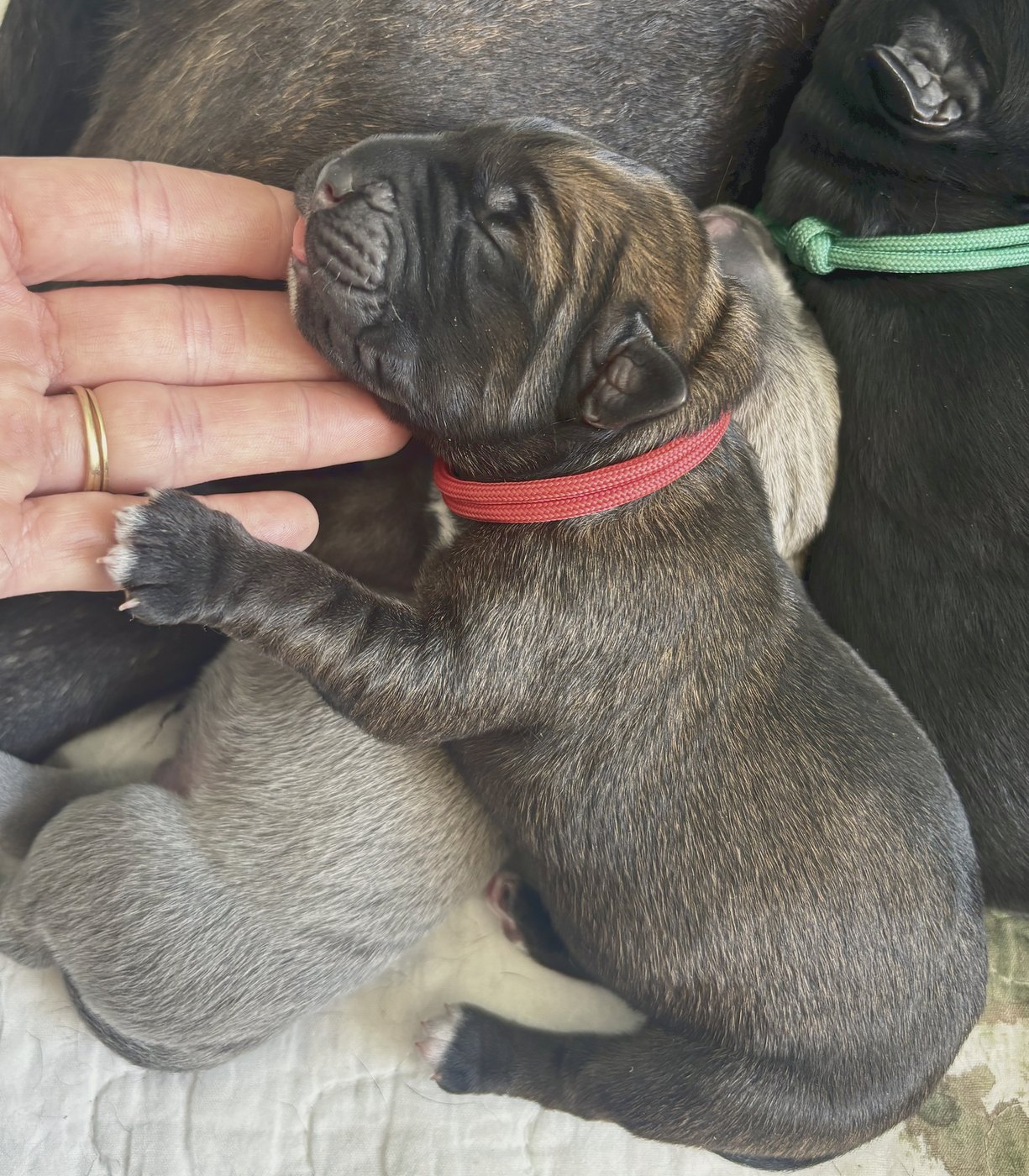
The danger is almost entirely to puppies in their first weeks. Newborns cannot fully control their own body temperature for their first weeks, as Merck’s guide to managing the neonate explains, and Merck also notes that the virus multiplies more efficiently at the slightly lower body temperature of a neonate. That is why deaths cluster at one to three weeks of age and why natural resistance improves after about three weeks. UC Davis School of Veterinary Medicine notes that the greatest risk is when a bitch with no previous exposure is infected in the last three weeks of pregnancy. Puppies can then be infected before birth, during whelping, or from contact with the dam or other dogs in their first days.
A bitch infected during pregnancy may abort or deliver some puppies stillborn, often with few or no signs in herself. Merck adds that her future breeding is usually successful: bitches that have been infected develop antibodies, and later litters receive protection through colostrum. That protection depends on each puppy getting enough colostrum early, which is covered in colostrum and passive immunity.
Signs in a litter
CHV is one of the causes behind the pattern breeders call fading puppy syndrome, and Merck considers it a possible cause of any sudden death or failure to thrive in a newborn puppy. Signs described by Merck, UC Davis and the American Kennel Club include:
- A puppy that stops nursing or nurses weakly.
- Persistent crying, often with signs of belly pain.
- Weakness, lethargy or poor coordination.
- Diarrhea.
- Nasal discharge, trouble breathing, or sticky, inflamed eyes.
- Small red spots on the gums, or a red rash on the skin.
- Sudden death of one or more puppies, sometimes without warning.
Fever is usually absent, so a normal temperature does not rule it out. The course is fast: the AKC, quoting virologist Dr. James Evermann of Washington State University, notes that affected puppies often die within 48 hours of the first signs. Do not wait to see how a weak puppy does overnight. Call your veterinarian or an emergency clinic straight away, keep the litter warm, and tell the clinic how many puppies are affected. If a puppy dies, ask your veterinarian about a post-mortem examination and testing, because knowing the cause protects the rest of the litter and your next one. The general signs of a failing newborn are in neonatal emergencies.
Prevention: the six-week window
There is no vaccine available in the United States or Canada. A vaccine for pregnant bitches has been licensed in Europe, but the AKC describes its protection as short-term, and availability varies, so ask your veterinarian whether it is an option where you live. For most breeders, prevention rests on management:
- Isolate the bitch from dogs outside the household for the last three weeks of pregnancy and the first three weeks after whelping. Merck calls this the most effective measure, and the AKC recommends it regardless of whether the bitch has been exposed before.
- No shows, trials, classes, dog parks or visiting dogs during that window, and no outside dogs in the whelping room.
- Hand hygiene: wash your hands and change clothes after handling other dogs, especially young dogs or dogs with a cough or runny nose, before touching the bitch or the puppies.
- Visitors wait until the puppies are past three weeks, and even then should not come straight from other dogs.
- Keep the whelping area clean, and keep the bitch’s stress low.
- Keep the puppies warm. Follow your veterinarian’s guidance for the temperature in the whelping box and room, measured at puppy level, as in warmth and the whelping box microclimate. Overheating is also dangerous, so do not improvise extra heat without advice.
Merck notes that complete avoidance of exposure is not realistic for most dogs, because the virus is so common and so often silent. The aim is to stop new exposure at the time it does most harm. The same window protects against other infections too, and fits with the routines in hygiene and biosecurity in the neonatal period.
In practice
A breeder takes her bitch, due in three weeks, to a busy weekend show “just to watch”. Ten days after the litter is born, two puppies stop nursing and cry, and both die within a day. The veterinarian sends one for post-mortem testing, which confirms canine herpesvirus; the rest of the litter is kept very warm on veterinary advice and survives. For her next litter the breeder blocks out six weeks on the calendar — three before and three after the due date — with no shows, no visiting dogs and a hand-washing station by the whelping room door.
(Illustrative, composite scenario.)
Treatment
Once a puppy shows signs, treatment is difficult and outcomes are poor. UC Davis notes that antibiotics do not work against viruses, that some antiviral treatments have been tried experimentally, and that supportive care — warmth, hygiene, nutrition and low stress — helps but may not be enough. Merck describes raising the temperature of the environment for exposed littermates, ideally before they show signs, as a way to reduce losses; this is a decision for your veterinarian, not something to attempt at home. Puppies that survive may have lasting damage to organs and should be followed closely by your veterinarian.
After a loss
Losing puppies to CHV is devastating, and it is not a sign that you are a careless breeder; the virus is everywhere and often invisible. A bitch that has lost a litter to it is generally better protected next time, because she has developed antibodies. Talk to your veterinarian before the next mating about timing, isolation and whether vaccination is available where you live, and record what happened in your kennel records.
Work on it
A few minutes here will teach you more than re-reading the article.
Ask yourself
- Is the six-week isolation window in my calendar for my next litter, and does everyone in my household know about it?
- Where would my visitors and my other dogs’ contacts come from during those weeks?
- Do I know what I would do, and whom I would call, if a three-day-old puppy stopped nursing tonight?
Find out & check
- Ask your veterinarian what temperature to keep the whelping box at for your breed, whether a CHV vaccine is available where you live, and whether they would want a post-mortem if a puppy dies.
Do one thing
- Put a hand-washing station and a “no outside dogs” sign at the door of your whelping room before the next litter is due.
Was this article helpful?
Anonymous. We do not store your name, email or IP address.
Sources & further reading
- Merck Veterinary Manual — Canine Herpesvirus Infection. merckvetmanual.com
- UC Davis School of Veterinary Medicine — Herpes Infection in Dogs. vetmed.ucdavis.edu
- American Kennel Club (Caroline Coile, PhD, with Dr. James Evermann, PhD) — Canine Herpesvirus. akc.org
- Swedish Veterinary Agency (SVA) and SLU — Canine herpes virus and perinatal mortality (research project, 2024–2026). sva.se
- Merck Veterinary Manual — Management of the Neonate in Dogs and Cats. merckvetmanual.com
Where evidence is limited, recommendations rest on established practice and expert judgment, and may be updated as knowledge develops. A weak or fading newborn puppy needs a veterinarian straight away; nothing on this page replaces that. This is general information and does not replace advice from your veterinarian.
Next steps
- Read next: Neonatal emergencies: hypothermia, hypoglycemia and the fading puppy.
- Related: Hygiene and biosecurity in the neonatal period.
- Related: Exercise, environment and daily life during pregnancy.
- Return to the area hub: The neonatal period: a complete guide.